On November 23, 1962, at 2:45 p.m., 12-year-old Charlie Cavalaro Jr. climbed into the back seat of his father's Cadillac on Youngstown's North Side. His younger brother, 11-year-old Tommy, slid in beside him. Their father, Charles "Cadillac Charlie" Cavalaro Sr., 60, silver-haired and dressed in an expensive suit, turned the ignition key.
The engine roared to life. One second passed. Two seconds. Then the world exploded.
The blast lifted the Cadillac three feet off the ground and sent the hood flying 50 feet into the air. Windows shattered for two blocks. Neighbors sprinted from their homes to a scene from hell. The car was a twisted metal coffin. Tommy was killed instantly. His father died in the wreckage. Charlie Jr., thrown clear by the force of the explosion, lay on the pavement with a destroyed hip and his face covered in blood and gasoline. He barely survived, but his childhood was over.
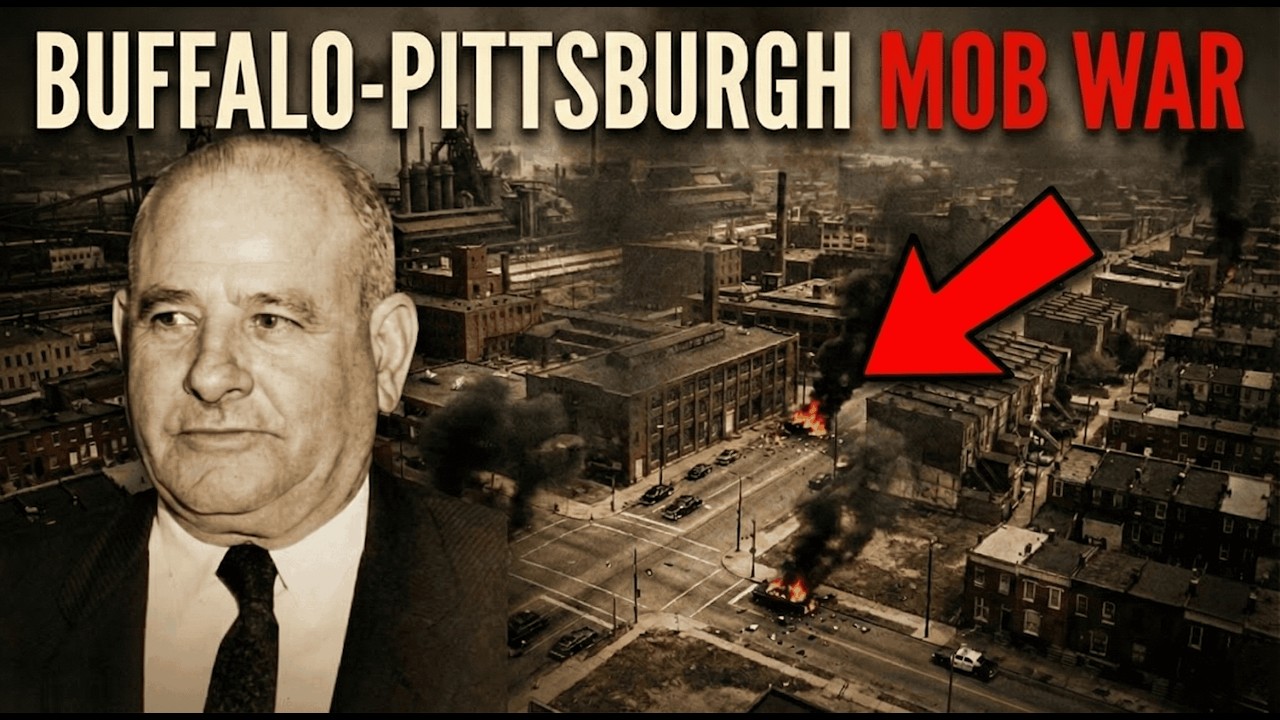
This was not just another mob hit. It was the murder of a child, and it marked the end of the bloodiest mob war in American history — a war that left more than 50 bodies scattered across one Ohio city and turned Youngstown into "Bomb City, USA."
The story of how two crime families, Pittsburgh and Cleveland, fought a 20-year battle for control of a blue-collar steel town caught in the middle is a story of greed, old-country blood feuds, and a city so corrupt that the Saturday Evening Post called it "Crime Town, USA."
To understand how Youngstown became America's most dangerous mob battleground, you have to go back to 1910. Steel mills stretched as far as the eye could see, their furnaces painting the sky with 15-foot flames. The valley twisted through northern Ohio like a corridor of fire and prosperity, drawing immigrants by the thousands — Poles, Greeks, Italians, and Slovaks who worked 12-hour shifts in mills so hot you could fry an egg on the floor.
By the 1920s, Youngstown's streets were lined with after-hours joints where steel workers drank bootleg whiskey and played barbut, a Turkish dice game the locals loved. Watching over it all, dressed in white-brimmed hats and armed with stilettos, were the capos and wise guys who ran the numbers — or "the bug," as Youngstown called it.
But Youngstown was too small to have its own family. Unlike New York, Chicago, or Detroit, it could not sustain an independent operation. It needed a sponsor, which meant it became contested territory. By 1950, as gambling and bootlegging mushroomed into a multi-million-dollar industry, the Pittsburgh family and the Cleveland family began circling. Both wanted Youngstown. Neither would back down. That is when the bombs started.
The real war begins with one man: Sandy Naples. Born Giuseppe Naples in 1921 in Colarro, Italy, a hilltop town halfway between the heel and boot of the Italian peninsula, he had Neapolitan roots — not Sicilian, not Calabrian. That distinction would matter.
Sandy came to America as a boy, settled in Youngstown, and by the 1940s was running policy games out of the Center Sandwich Shop on the North Side. Policy was simple: you picked three numbers, and if they hit, you won. In Youngstown, everyone played. Steel workers bet their lunch money, housewives bet their grocery cash, and even kids ran numbers for pocket change.
By 1955, Sandy Naples was the policy king of Youngstown, pulling in $30,000 a month — roughly $284,000 in today's money, every single month. He did not kick up to Pittsburgh. He did not kick up to Cleveland. He ran his own show. That was his first mistake.
His second mistake was partnering with Vincent "Vince" Dairo, a Cleveland-connected operator who ran Cicero's restaurant downtown. Dairo was flashy and loud, drove a new convertible, and wore expensive suits. Sandy was quieter and more careful. Together they controlled 70 percent of Youngstown's gambling, with cops on the payroll, judges in their pocket, and even the chief of police looking the other way.
For a while it worked. But the old families in Pittsburgh and Cleveland were watching, and they wanted their cut. In the mafia, you can operate independently for a while, especially in border territories, but eventually someone with power and soldiers notices. Then you get a visit, a polite conversation, a friendly suggestion: pay us 20 percent and we will protect you. Refuse, and you will not live long enough to regret it.
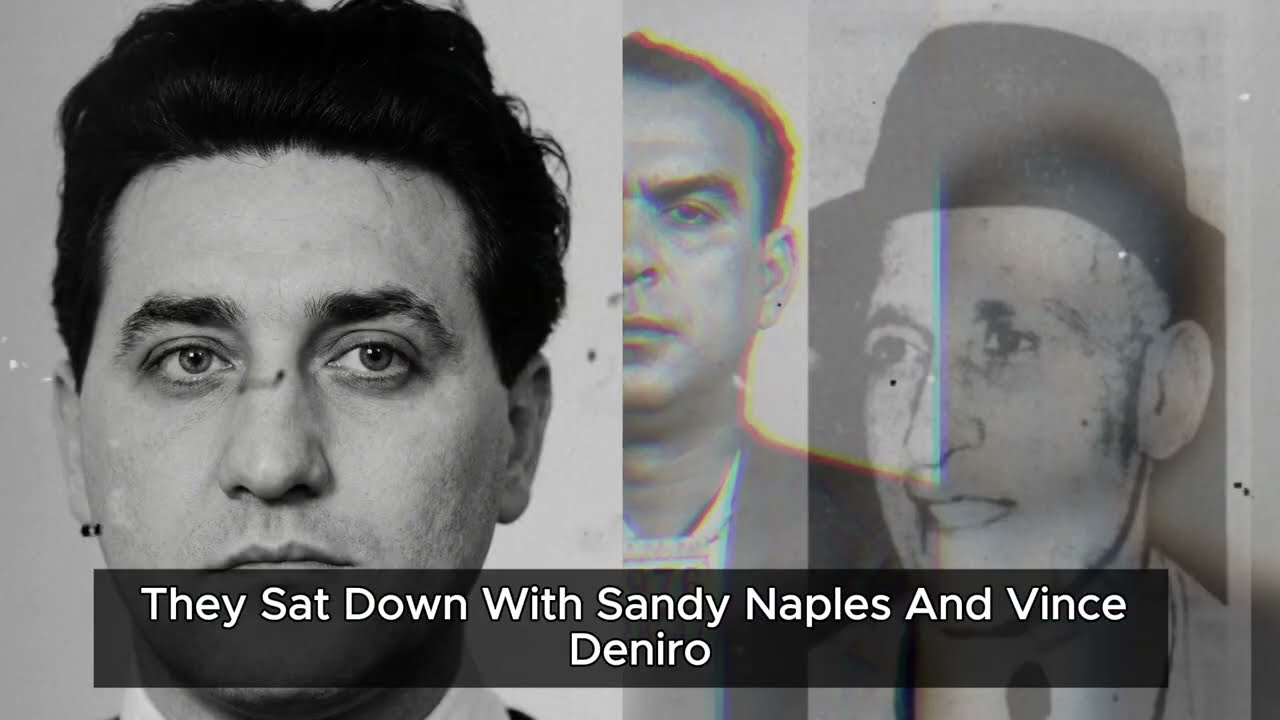
In 1958, representatives from both families came to Youngstown. Pittsburgh sent "Big Dom" Mallamo, a hulking Calabrian enforcer who ran the Brier Hill Social Club. Cleveland sent men connected to Jack LaVolei, a ruthless Sicilian known as "Blackie" or "Jack White," who would later become boss of the entire Cleveland family. They sat down with Sandy Naples and Vince Dairo. The message was simple: this is our territory now, and you work for us.
Vince Dairo saw the writing on the wall. He aligned with Cleveland, started kicking up his percentage, and played the game. Sandy Naples refused. He told them he had built the operation from nothing, that Youngstown was not Cleveland or Pittsburgh territory, and to go to hell. That was his third mistake — and his last.
On March 11, 1960, at 9:30 p.m., Sandy Naples pulled up to his girlfriend's house on Youngstown's North Side. Mary Anne Vancich, 26 years old and beautiful, was waiting for him on the front porch. Sandy stepped out of his car carrying flowers. He was 39, at the peak of his power, untouchable — or so he thought.
Two men stepped from the shadows with shotguns and opened fire at point-blank range. Sandy went down first, his chest torn open. Mary Anne screamed and tried to run. They shot her in the back, and she fell across the porch steps, still breathing. Then they walked up and shot her again, execution style. Both were dead within 60 seconds. The killers vanished into the night. No witnesses came forward, and no arrests were made.
Everyone knew who ordered it. Three days before the murder, there had been a sit-down between Pittsburgh and Cleveland representatives at a restaurant in Niles, Ohio, just outside Youngstown. They discussed the Sandy Naples problem and agreed on a solution. He had to go. And so he went.
Sandy's death should have ended it. That is how these things usually work: you kill the boss, you take over his operation, everyone moves on. But Sandy Naples had three brothers — Billy Naples, Jimmy "Jinx" Naples, and Joey Naples. In the mafia, blood means everything. The Naples brothers did not go to the cops. They did not file a lawsuit. They declared war, and Youngstown became a killing field.
The first to die was Vince Dairo. On July 17, 1961, at midnight, Dairo left his restaurant and walked to his car parked on Market Street downtown — a late-model convertible, top down, on a beautiful summer night. He slid behind the wheel, turned the key, and the bomb detonated. The explosion blew out windows 50 yards away. Dairo's body was shredded, his head nearly severed. His car burned for 20 minutes before firefighters could approach. Investigators found 12 sticks of dynamite wired to the ignition. It was overkill — a message. This is what happens when you betray your friends. This is what happens when you side with Cleveland.
The Naples faction had struck back, but Cleveland was not going to let that stand. Enter Julius Moyo, a bomb specialist and craftsman who could wire a car so precisely that it would detonate exactly when he wanted. Cleveland hired him, paid him $5,000, gave him a list of targets, and Moyo went to work.
Billy Naples was next. On July 1, 1962, Billy, Sandy's younger brother, 34 years old and running the family's gambling operations, knew he was marked. He had survived two previous attempts on his life. He checked his car every morning for bombs, varied his routes, and never stayed in one place too long. But Moyo was patient. He waited until Billy let his guard down for just one moment.
Billy climbed into his car outside a social club on the North Side. He checked under the hood. Nothing. He checked under the chassis. Nothing. He got in, turned the key, and the blast tore through the vehicle. Investigators found his body 30 feet from the wreckage. The bomb had been placed under the driver's seat, not under the hood or attached to the ignition — a new technique, and Moyo's signature. The press reported it was the 75th bombing in Youngstown in a decade.
The Naples brothers regrouped. They still had soldiers, money, and rage. They targeted Cleveland-connected operators all over Youngstown — small-time bookies, loan sharks, anyone who had sided against them. Bodies started piling up. A gambler was found in his car, shot six times in the face. A bookie was discovered in a ditch outside town, hands tied, throat cut. An enforcer was gunned down in broad daylight outside a diner. The violence spiraled out of control. The FBI opened an investigation it called Operation Cav. But before it could make progress, the war reached its horrifying climax.
Charlie Cavalaro Sr. was a survivor. Born in Sicily in 1902, he entered America illegally through New Orleans in 1921 and worked his way up through Rochester, Buffalo, and Pittsburgh. He had done "heavy work" — mob code for killing. Charlie was not an earner. He was muscle.
In Pittsburgh, he had been part of a crew that killed two of the Volpe brothers in a bloody mob war. That murder triggered retaliation that reached all the way to New York. The Commission got involved. Pittsburgh boss John Bazzano was called to a meeting in Brooklyn. He thought he was being honored. Instead, they ice-picked him to death and dumped his body on the side of the road.
After that, Charlie's crew was marked. They were all supposed to die, but Albert Anastasia, the Lord High Executioner himself, intervened. Anastasia liked Charlie, sponsored him, brought him into the family, and saved his life. One of Charlie's partners stayed in Pittsburgh and was murdered shortly after. Charlie moved to New York, worked under Anastasia, then did jobs for Detroit, and eventually settled in Youngstown.
By 1960, he was 60 years old. He ran a pool hall and operated barbut games. He had a wife and two young sons. He thought his killing days were behind him. But Charlie had made a fatal error. He had aligned with Cleveland and taken their side in the war against the Naples family.

In November 1962, Julius Moyo wired his Cadillac with 12 sticks of dynamite placed directly under the driver's seat. Moyo later confessed that he knew Charlie's sons would be in the car. He did not care. The bomb was designed to kill everyone inside.
When the Cavalaro Cadillac exploded on that cold November afternoon, it sent shock waves far beyond Youngstown. A child was dead. Tommy Cavalaro, 11 years old, was killed by the mafia. Charlie Jr. survived but would endure 30 surgeries over the next five years. His hip was destroyed. Doctors said he would never walk again. He proved them wrong, but the scars, physical and psychological, would last forever.
The Saturday Evening Post ran a cover story titled "Crimetown, USA," noting that Youngstown had had 75 bombings and 11 killings in a decade and that no one seemed to care. The national media descended. Congress held hearings. The FBI tripled its Youngstown presence. And the mob war finally, mercifully, came to an end.
Why did it stop? Not because of law enforcement. Not because of public outrage. It stopped because the killing of Tommy Cavalaro was bad for business. The Commission in New York sent word: enough. Too much heat, too much attention. You are destroying a profitable territory. Sit down and divide it.
And that is exactly what happened. In January 1963, representatives from Pittsburgh and Cleveland met in a smoke-filled room in Warren, Ohio. John Larocca represented Pittsburgh. Jack LaVolei represented Cleveland. They drew invisible lines across a map. Cleveland would control the east side of Youngstown and the suburbs. Pittsburgh would control the west side and the Brier Hill neighborhood. The Naples family, what was left of it, would operate under Pittsburgh's protection.
Kelly Mannarino, a Pittsburgh underboss, personally sponsored Joey Naples, the youngest brother, and made him a soldier in the Pittsburgh family. By the mid-1980s, the Cleveland faction got Vince Dairo's old operations. Youngstown was officially divided. The war was over, but the damage was done.
Between 1950 and 1970, Youngstown experienced at least 82 car bombings. Fifty-three people were murdered in mob-related killings. Not one arrest led to a conviction. Zero.
The FBI investigated. It had informants, wiretaps, and even a top-echelon informant, a made member feeding them information. But every time agents built a case, witnesses disappeared, evidence vanished, judges were bribed, and juries were intimidated.
In 1963, an FBI agent named Stanley Peterson wrote a memo to J. Edgar Hoover describing Youngstown as the most corrupt city in America. Peterson had cultivated a source, an Italian man who had been offered induction into the local mob. The source told Peterson he wanted no part of it: "My brothers are members and I don't like the guy who runs it." But Hoover wrote back with an extraordinary order: use your persuasion techniques. If the offer comes up again, persuade him to take it. Hoover wanted a mole inside the Youngstown mob. And he got one.
That informant revealed something stunning. Youngstown was not really controlled by Cleveland or Pittsburgh. It was split between two Italian factions that operated semi-independently: the Sicilians connected to Cleveland and the Calabrians connected to Pittsburgh. They worked together when it suited them and killed each other when it did not. They held induction ceremonies in a basement in Canfield, Ohio. They made their own members. And for nearly two decades, they operated with near-total impunity.
By the 1970s, the old guard was dying off. The steel mills were closing, the money was drying up, and a new generation of mobsters was taking over — men like Lenny Strollo, who would become the last great mob boss of Youngstown, men who traded bombs for corruption and replaced violence with political control.
This story ends with Charlie Cavalaro Jr., 12 years old, lying on a stretcher outside his destroyed home. His father dead, his brother dead, his body broken. FBI agents took photos of him in the hospital and used those images in training manuals for decades. This is what happens when the mob goes too far. This is what happens when greed and rage replace discipline and order. This is what happens in Bomb City, USA.
Charlie Jr. never spoke about the bombing for 61 years — not to reporters, not to documentary filmmakers, not even to his own family. He buried the trauma deep and built a life. He worked. He married. He had children. He became a grandfather.
Then, in 2023, he finally told his story. He met with the last surviving FBI agent who worked the Cavalaro bomb case, Ceil Moses, 89 years old, who had been sent to Youngstown by Bobby Kennedy himself. They sat together and relived that day.
Charlie described hearing the explosion, feeling the heat, waking up on the ground, unable to move, unable to understand why his brother was not answering him. Moses described the crime scene, the forensic evidence, the 12 sticks of dynamite, the precise wiring, and the intentional placement to maximize casualties. He described how the FBI knew who ordered the hit but could never prove it in court, how witnesses were too terrified to testify, and how judges were too corrupt to convict. He described the frustration, the rage, and the sense that Youngstown was a lost cause, a city where the mafia had won.
But the mob did not win. They destroyed themselves. By 1963, Youngstown was a wasteland. The bombings had scared away legitimate businesses. Insurance companies refused to cover properties. Investors pulled out. The steel industry was already in decline, and the mob violence accelerated it. By the 1980s, Youngstown's population had dropped by 30,000. The mills were shuttered. The downtown was boarded up. The mob had killed the golden goose.
What happened to the men who started this war? Julius Moyo, the bomb maker, was himself killed in 1963, shot six times in a Cleveland alley. No one was ever charged. Jack LaVolei, the Cleveland underboss who helped orchestrate Sandy Naples's murder, became boss of the Cleveland family in 1976. He died in federal prison in 1985, serving a 17-year sentence for racketeering and murder. Kelly Mannarino, the Pittsburgh underboss who divided Youngstown, died of natural causes in 1980, and his faction faded into obscurity.
Joey Naples, Sandy's youngest brother, operated quietly in Youngstown until August 19, 1991, when he was shot to death in a mob hit. He was 70 years old. No one was ever charged. Jimmy "Jinx" Naples, the brains behind the family, died peacefully in 1996, having outlived all his enemies.
Charlie Cavalaro Jr. is alive today, living quietly and rarely speaking about the past. But he agreed to one interview in 2023. He stood on the exact spot where his garage once stood, where the bomb exploded, where his childhood ended. And he said something profound.
"I don't hate them. I don't hate the men who did this. They were products of a system, a culture, a world where violence was currency and loyalty was measured in blood. But I'll never understand how they could put a bomb in a car knowing two children would be inside. That's not mafia. That's not honor. That's just murder."
The Youngstown mob war lasted 20 years. It claimed at least 50 lives. It terrorized an entire city. And it exposed the lie at the heart of the American mafia — the lie that there were rules, that civilians were off limits, that honor meant something. Youngstown proved that when territory and money were at stake, there were no rules. There was only survival, only power, only the cold mathematics of violence.
In the end, everyone lost. The Naples family was destroyed. The Cleveland family was weakened. The Pittsburgh family fragmented. And Youngstown, once a thriving industrial powerhouse, became a ghost town, a cautionary tale, a reminder of what happens when organized crime is not just organized but total — when corruption is not the exception but the foundation, and when fear is not a tactic but a way of life.
Today, if you drive through Youngstown, you can still see the remnants: empty storefronts, abandoned houses, rusting factories. The Brier Hill neighborhood, once the heart of the Italian community, is largely demolished. The Center Sandwich Shop where Sandy Naples ran his empire is long gone. The social clubs are closed. The restaurants are shuttered. But the memory remains.
Old-timers still talk about the bombings, about the bodies, about the days when you checked under your car every morning before turning the key, when you heard an explosion and knew without asking that someone had just been murdered, when the mafia was not a movie or a TV show but the government, the real power, the force that controlled everything.
The FBI eventually broke Youngstown's mob in the late 1990s. An agent named Bob Kroner spent 20 years building cases. He used wiretaps and informants and relentless pressure. He flipped soldiers. He arrested bosses. He sent Lenny Strollo, the last great don of Youngstown, to prison for 13 years. Strollo cooperated and testified against corrupt politicians, judges, and cops. The entire system collapsed. But by then it did not matter. Youngstown was already dead. The mob had not just controlled the city; they had cannibalized it, drained it dry, and left it a husk. When they finally fell, there was nothing left to save.
What is the lesson? Violence, no matter how organized, eventually consumes itself. Greed, no matter how lucrative, eventually destroys its source. Corruption, no matter how pervasive, eventually collapses under its own weight.
Sandy Naples refused to pay tribute, and it cost him his life. Billy Naples sought revenge, and it cost him his life. Vince Dairo chose sides, and it cost him his life. Charlie Cavalaro took a contract, and it cost his son's life. Julius Moyo built bombs, and it cost him his life. Every single one of them believed they were smart enough, tough enough, connected enough to survive. Every single one of them was wrong.
And the city they fought over, Youngstown, Ohio, paid the highest price of all. It became Bomb City, USA — Crime Town — a place where for 20 years the mafia was the law, and where, when the smoke finally cleared and the bodies were buried, nothing remained but ruins and regret.