On Valentine's Day in 1979, FBI agents entered a house in Kansas City and went straight to the basement. They were not looking for a body or hidden cash. They came for paperwork: stacks of handwritten notes so cryptic they looked like a child's scribbling, kept by a mob enforcer named Carl DeLuna.
Those notes would help convict mob bosses in four different cities and end the Mafia's grip on Las Vegas. The strange part is why a killer ever bothered to write any of it down.
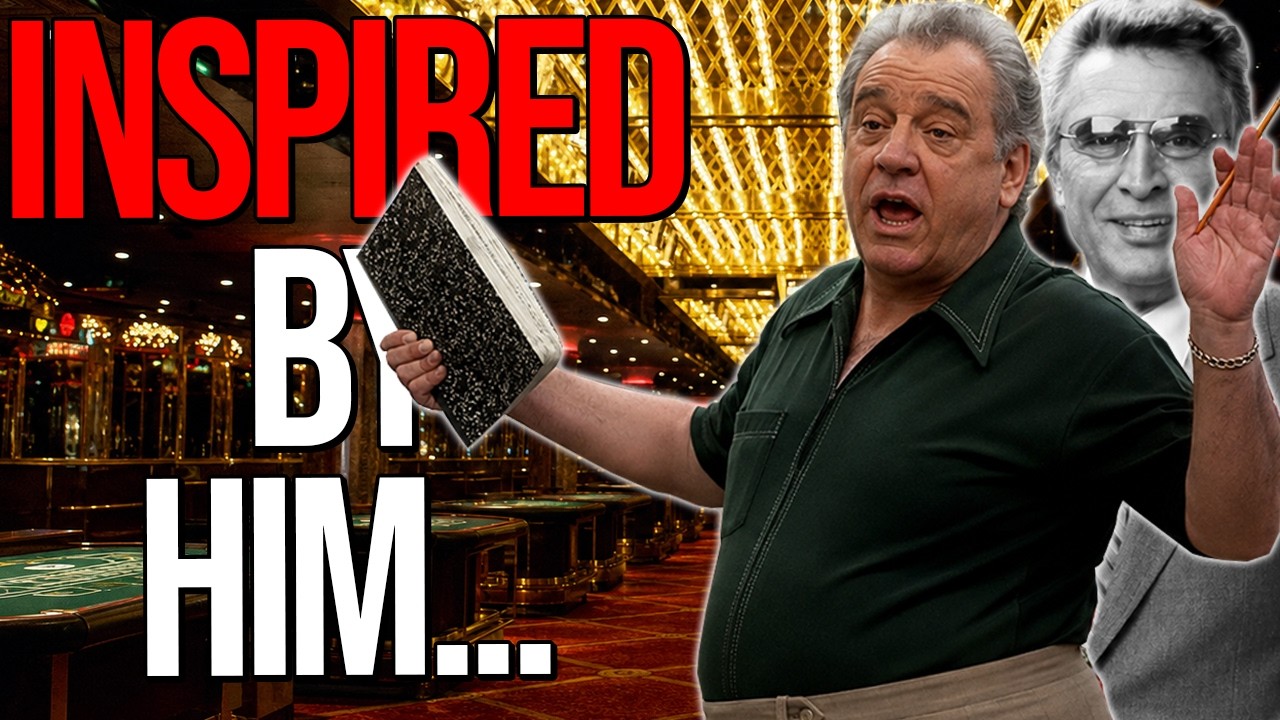
If you have seen the movie Casino, you have already met a version of this man without knowing it. Martin Scorsese put him in the film as Artie Piscano, the ranting grocer who scribbles every expense into a little book while his mother yells at him.
In the movie, he is comic relief, the character audiences rolled their eyes at between the scenes with Robert De Niro and Joe Pesci. The grocer with the notebook was real. His name was Carl DeLuna, and he was not comic relief.
He was a man who ordered people shot, and he was the man whose handwriting buried everyone at the table.
Twenty years before those agents came down his basement stairs, DeLuna was not keeping books for anyone. He was the muscle. In the 1950s, he was an armed robber and an occasional hit man on the north side of Kansas City, the kind of man boss Nick Civella kept around for work nobody wanted a record of.
Civella was the real kingpin of Kansas City. DeLuna never ran the family. He ran the fear. Fear, it turned out, was a promotion track.
He got his big move up the way many men in that world did: somebody else screwed up. In 1960, two of Civella's people botched the killing of a government witness named Kenneth Sheets. DeLuna did not botch things. Civella moved him up, and before long Carl DeLuna was the underboss of the Kansas City crime family.
He did not rise on charm or brains. He rose because he was reliable. In that world, reliable meant you did the job and you did not miss.
So how does a Kansas City enforcer end up controlling Las Vegas? The movie shows the answer and then buries it under two and a half hours of neon. Las Vegas in the 1970s was not really run from Las Vegas. The casinos were in Nevada. The orders came from the Midwest.
That back room full of grumbling old men in the film, deciding the fate of a billion-dollar city over red sauce, was not a joke. That was the actual chain of command. DeLuna was the man holding the ledger for it.
Here is how the machine got built. A businessman named Allen Glick, through a company called Argent, bought four Las Vegas casinos: the Stardust, the Fremont, the Hacienda, and the Marina. He bought them with a $62 million loan from the Teamsters pension fund.
Over the next few years, the fund would pour roughly $146 million into the operation in total. Union retirement money was quietly turned into casino ownership.
Glick was the name on the paperwork. The men who ran the money underneath him were mob figures, and Glick knew exactly whose permission he needed to sign anything.
The face of the operation in Vegas was Frank Rosenthal, the man De Niro plays in the movie. Rosenthal really did run the casinos, and he really did run the skim with precision. His muscle was Tony Spilotro, the man Pesci plays.
Everything audiences remember from that film is real. What the film never tells them is that neither of those two men kept the record that convicted everyone. That was happening back in Kansas City at DeLuna's kitchen table.
Casino spends its runtime on the men holding the cash in Nevada because that is where the cameras and the showgirls are. But Rosenthal could not approve a hire without a nod from back east. Spilotro answered to Chicago, not to himself.
The people who decided who ran the casinos and who ended up in a hole in the desert were the grumbling old men in that back room and the man writing down what they decided. Hollywood put its stars out in the neon. The actual power sat in the Midwest, in a house with a finished basement.
The method of stealing from a casino was more boring and more brilliant than the movie makes it look. You take the cash before anybody counts it. That is the entire trick.
A casino executive named Carl Thomas taught the mob the method, and the FBI eventually got him on tape teaching it. The skim took tens of thousands of dollars a week off the top before the count. More money came from the slot machines by rigging the scale that weighed the coins, so the official number always came in light.
At the Stardust alone, one slot scheme took somewhere between $7 million and $15 million over two years. That was just the coins. The genius of it was that nothing looked stolen. The money simply never existed on paper.
Somebody still had to physically move all of it. The movie turns that part into desert graves and buried bodies. Some of that really happened out west. But most of the skim traveled the dull way, in suitcases and on commercial flights, carried by couriers who looked like anybody else in the terminal.
The violence out west protected the system, but it was never the system itself. The real machine was bookkeeping, and the man running the books was tracking every dollar for four families at once.
Stolen cash had a problem the movies skip past: you have to split it. Four families had their hands out. Kansas City, Chicago, Cleveland, and Milwaukee all expected their exact cut every month, down to the dollar.
Nobody trusted anybody, because they were criminals, and trusting criminals is how you end up short. Somebody had to keep track. Somebody had to be the accountant for a conspiracy that spanned half the country.
That somebody was Carl DeLuna. He was the go-between, the single man who linked the Kansas City, Chicago, Cleveland, and Milwaukee bosses to Rosenthal in the counting rooms out west.
And he did the one thing you are never supposed to do in that business. He wrote it down. All of it.
He kept careful records of the split, cryptic little notes with code names like Tiger, Dude, and Tommy sitting next to numbers, tracking who got what and when. He even logged his own plane tickets and hotel bills because he wanted to be reimbursed, exactly like the grocer in the movie.
That detail Scorsese did not invent. He just added a scolding mother and played it for laughs.
Over in Vegas, the front for the Kansas City end of the skim was a man named Joseph Agosto, who ran the Follies Burlesque Show at the Tropicana as his cover. Agosto physically controlled the Tropicana skim and fed the cash back to Civella.
By 1978, the money was flowing and nobody had been caught. That is where things stopped being funny. Carl DeLuna was never only the bookkeeper. He came up as the muscle, and the muscle never really retires.
That year, a rival crew, the Sparrow brothers, started pushing into Civella turf during a war over Kansas City's River Quay District. The River Quay was a nightlife strip on the north side that the mob had been fighting over for years.

There had already been a wave of bombings and arson fires. Whole nightclubs were blown to rubble, and most of the businesses had shut down or burned. By the time DeLuna got involved, the neighborhood was a ruin.
DeLuna handled the Sparrows the way he handled problems before he learned to keep books. On the night of May 16, three masked men carrying shotguns walked into a bar on Admiral Boulevard and opened fire.
Michael Sparrow was killed. His brother Joe was wounded. Carl Sparrow bolted for the door and took a shotgun blast in the back on the sidewalk. He survived, paralyzed for the rest of his life.
It was the most aggressive gangland killing Kansas City had seen since the Union Station Massacre of 1933. When a title calls this man deadly, that is what it means. Not a number on a spreadsheet, but a man calmly sending shotguns into a crowded bar over a piece of territory.
What stands out about that night is how routine it must have felt to him. Just another problem handled before dinner by a man who would go home and update his notes.
The irony runs through the whole story. The same care that made DeLuna valuable, the meticulousness, the never missing a detail, was the exact thing that destroyed everyone around him. While he was ordering that ambush, the FBI was already listening.
Agents had been trying to pin the Sparrow violence on the Civellas. Instead, they stumbled onto something far bigger. In June 1978, agents bugged the Villa Capri, a restaurant on Independence Avenue that Civella liked.
There, for the first time, they heard the mob openly discussing the Las Vegas skim. Carl "Cork" Civella, Nick's brother, and DeLuna himself were talking numbers.
It almost did not work. The agents later complained they could barely make out the conversation over the jukebox, which kept blasting "Stayin' Alive." The Bee Gees nearly saved the Kansas City Mafia.
A few months later, in another bugged Kansas City house, agents recorded Carl Thomas walking the Civellas through the skim technique step by step: the scales, the fills, the whole method, like a training seminar for a crime.
Now the FBI had the method on tape, the men on tape, and a name for the operation. They called it Strawman.
Then came Valentine's Day 1979. That morning, agents arrested a courier at the Kansas City airport carrying about $80,000 in skim cash, physical proof in a bag walking through a terminal.
The same day, they drove to DeLuna's house and went straight for the basement. There it was. The paperwork. Stacks of it. Every split, every payment, every code name, in his own hand, waiting to be read.
When Joseph Agosto, the Tropicana front, was eventually squeezed, he flipped and became a government witness. Then, in August 1983, he had a heart attack and died in federal custody. The government's best source of testimony just went away.
It did not matter. An informant can be discredited on the stand. A witness can be frightened into silence, or found in a trunk. But handwriting cannot recant.
The notes told investigators who paid whom, in which city, for exactly how much. DeLuna had assembled the prosecution's case for them years in advance and filed it neatly in his own basement. The house of cards had one architect, and he had left the blueprints lying around.

The trials came in two waves. The first went after the Kansas City core. It produced seven convictions, DeLuna among them.
Nick Civella, the actual boss and real kingpin of Kansas City, never sat in that courtroom. He had died of lung cancer that March, before the trial even began. He beat the case by dying, which is about the only clean exit anyone in this story got.
Everyone else went down. Then Strawman 2, in 1985, reached all the way to Chicago, on evidence tied directly to DeLuna's records. The government convicted Chicago Outfit bosses, including Joseph Aiuppa and Joey Lombardo.
The top men in four cities, men who had spent their entire lives making sure nothing was ever written down, were brought down by the one man among them who wrote everything down.
The Mafia's entire operating system ran on the spoken word. Nothing went on paper, and nothing went on a phone line you could not later deny with a shrug. Omerta was never only about refusing to talk to the cops. It was about leaving no trace at all.
DeLuna broke the deepest rule in the organization, and he did not break it by informing. He broke it by being organized. He was simply too good at his job.
He treated a nationwide criminal conspiracy like a business that needed clean records. In doing that, he handed the government the one thing a hundred wiretaps could never quite deliver: a clear, dated, dollar-by-dollar account that no defense lawyer alive could shake.
So why did he do it? Why does a killer, a man who understood better than anyone that evidence gets people buried, sit down and record the crime in his own hand?
In a business built entirely on cheating, DeLuna's notes were not a diary, and they were not ego. They were insurance. The only way to guarantee that four greedy families each paid their fair share, and that nobody skimmed the skim, was to keep the books yourself.
The ledger was how he protected himself from the other thieves. It made him the one man nobody could cut out, because only he knew the real numbers. It worked perfectly, right up until the morning it did the exact opposite.
The exact thing that kept him alive all those years is what made him the easiest man in the country to convict. There was no informant who cracked, no lucky break from the FBI. The man just kept writing one tidy entry at a time until the file in his basement was thick enough to bury him.
The damage went far past his own family. After the convictions, the other Midwest families cut Kansas City off completely. Every bit of cooperation with the Kansas City family was terminated.
DeLuna did not just sink himself and his boss. He poisoned his own city's standing in the mob for good. The Mafia never got Las Vegas back.
The corporations moved in. The counting rooms filled up with cameras and auditors. The era when four families could quietly split a casino's cash was finished. The most famous mob town in the world stopped being a mob town, and it started with a stack of notes in a basement.
As for the man himself, DeLuna served about 12 years and got out in 1998. Then he did the last thing anyone would expect. He spent his free years gambling in the Kansas City casinos until the Missouri Gaming Commission finally banned him in 2005.
The man who took the mob out of the casinos finished up getting thrown out of one himself, legally, for being exactly who he was. It was a quieter ending than anything Scorsese would ever film.
He died in 2008 at 81, at his daughter's house. Casino gave him a scolding mother and a cash register and turned him into a punchline audiences forget by the closing credits.
The real Carl DeLuna ordered men gunned down in a bar, ran the money for four crime families, and then handed the FBI the case that ended all of it, written out in his own careful hand.
The grocer with the notebook was never the comic relief the movie sold. He was the reason the whole empire came down. And the strangest part is that he did it trying to protect himself.