Filip Müller was born on January 3, 1922, in Sered, then part of Czechoslovakia. He was only 17 years old when the Second World War began on September 1, 1939.
During the war, two major alliances confronted each other: the Axis powers and the Allied powers. The three principal partners in the Axis Alliance were Germany, Italy, and Japan.
In November 1940, Slovakia joined the Axis when its leaders signed the Tripartite Pact. In fulfillment of the requirements of the Axis partnership, Slovakia participated in the invasion of the Soviet Union in June 1941 and declared war on Britain and the United States in December of the same year.
According to a census of December 15, 1940, there were 89,000 Jews in Slovakia at that time. In March 1942, the Slovak state signed an agreement with Germany that permitted the deportation of Slovak Jews.
On March 25, 1942, in the first transport from Slovakia, 999 Jewish unmarried girls between the ages of 16 and 30 were taken from the northern Slovak town of Poprad in cattle wagons to Auschwitz concentration camp. Only six of them returned from captivity.
Slovakia was the first Axis partner to consent to the deportation of its Jewish residents in the framework of the Final Solution. The term "Final Solution of the Jewish Question" was a euphemism used by Nazi Germany's leaders to refer to the mass murder of Europe's Jews.
It brought an end to policies aimed at encouraging or forcing Jews to leave the German Reich and other parts of Europe. Those policies were replaced by systematic annihilation.
Between March and October 1942, some 58,000 Slovak Jews were concentrated in locally established labor and concentration camps, mainly in the camps at Novaky and Vyhne. The Slovak authorities then transported the Jews to the border of the Government General of the German Reich and turned them over to the German SS and police.
One of the main forces behind the deportation of Slovak Jews to Nazi concentration camps in German-occupied Poland was the Slovak prime minister, Jozef Tiso. Virtually all deported Slovak Jews were killed in Auschwitz, Majdanek, Sobibor, and other locations in German-occupied Poland. Only 300 of them survived.
Among the survivors were Alfred Wetzler and Rudolf Vrba, who escaped from Auschwitz in the spring of 1944 and compiled the first detailed report on operations there for general dissemination to the West. Jews who were not deported were granted a presidential exception because they were crucial for the war economy.
During Jozef Tiso's presidency, the Slovak State paid Germany 500 Reichsmarks for every deported Jew for what they called retraining and accommodation. In total, the Slovak State paid Nazi Germany 10 million Reichsmarks for murdering its citizens, the Slovak Jews, in Nazi death camps.
Because Filip Müller was Jewish, at the age of 20, in April 1942, he was sent on one of the earliest Holocaust transports to Auschwitz-Birkenau. In May 1942, Müller was assigned to Block 11, a building used by the Nazi SS to carry out various forms of punishment and torture against prisoners, and while there he was horribly tortured.
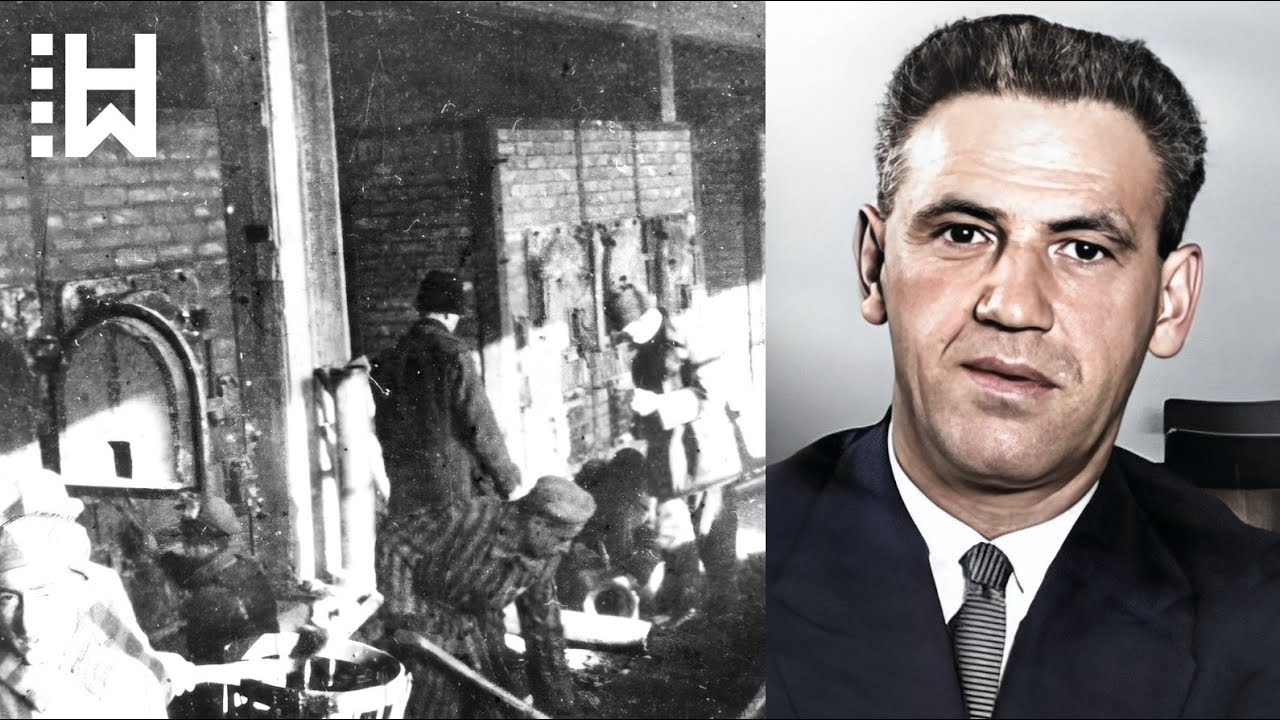
Later he was assigned to the Sonderkommando but worked on the construction of the crematoria and the installation of the gas chambers. Members of the Sonderkommando were then forced by the Germans to work in the crematorium.
In 1943, the four large crematoria and gas chambers in Auschwitz-Birkenau went into operation. The process of selection and murder was carefully planned and organized.
When a train stopped at the platform, the arrivals were lined up into two columns, men and boys in one and women and girls in the other. SS physicians such as Josef Mengele performed a selection. The only criterion was the appearance of the prisoners, whose fate, for labor or for death, was determined at will.
Veteran prisoners gathered the belongings of the new arrivals in an area known as Canada, which consisted of several barracks used to store the stolen belongings of the prisoners. Trucks carried those belongings away, and the rest marched.
Before entering the gas chambers, people were ordered to undress. In crematorium one they undressed either in the yard surrounded by a wall or in the antechamber. Wooden barracks were erected for this purpose at bunkers one and two, and at crematoria two to five there were special undressing rooms.
The SS kept the people fated to die unaware of what awaited them and had the new arrivals believe that they were being sent to the camp where workers were waiting for them, but first they had to undergo disinfection and bathe. Jews were told politely to hang their clothes on hooks, take a shower, and were even promised that they would be provided with soup and herbal coffee.
However, they were taken into the gas chambers, and after the doors were shut, SS men dropped Zyklon B pellets through vents in the roof or holes in the side of the chamber. The victims were dead within 20 minutes.
Johann Kremer, an SS doctor who oversaw the gassings, testified that the shouting and screaming of the victims could be heard through the openings and it was clear that they fought for their lives. After the victims had been murdered, Müller's Sonderkommando unit was tasked with the removal of the bodies and grouping them by size and fatty tissue to facilitate their disposal in the crematoria.
Victims' clothes were collected and disinfected, and all valuables were surrendered to the SS. However, some of these valuables the Sonderkommando would pocket for bartering purposes.
Those who refused to do the terrible work of the Sonderkommando were often thrown alive into burning furnaces. When jewelry or other valuables were found in the possession of one of the members of the Jewish Sonderkommando, the SS would pour gasoline over them and set them on fire. When the prisoners from the Sonderkommando were not working properly, they would immediately be executed.
In April 1944, shortly before the SS began mass deportations of Hungary's Jewish population to the camp, Slovak Jewish prisoners Alfred Wetzler and Rudolf Vrba escaped from Auschwitz and wrote a report providing some of the first reliable eyewitness accounts of the camp. As the most important source for detailed information about the operation of the crematoria and gas chambers served Filip Müller.
The publication of parts of Wetzler and Vrba's report is credited with helping to persuade the Hungarian Regent Miklós Horthy to halt the deportation of Hungary's Jews to Auschwitz, which had been proceeding at a rate of 12,000 a day since May 1944. In less than two months, from May 15 to July 9, 1944, nearly 440,000 Jews were deported from Hungary in more than 145 trains.
Most were deported to Auschwitz-Birkenau, where upon arrival and after selection on a rail ramp about 80 percent of the deportees were gassed on arrival. Horthy ordered a halt to the deportations on July 7, 1944, and by the time they had stopped two days later, almost the entire community of Jews in the Hungarian countryside had died.
Filip Müller, however, still remained in the camp and witnessed numerous atrocities committed by the SS personnel. On one occasion, Müller witnessed Hans Aumeier, the deputy commandant of Auschwitz I concentration camp, shooting Russian prisoners of war and Polish political prisoners in Block 11.
When Aumeier and Maximilian Grabner, a Gestapo chief in Auschwitz who was also present, decided that the shooting was happening too slowly, they would beat the prisoners before they died, saying "faster." If the Polish political prisoners were still calling "Long Live Free Poland" before they died, they were separated and shot in the stomach so that it would take them two to three hours to die.
On one occasion in the Auschwitz camp, Müller saw that the flesh of non-Jewish prisoners who had been executed by shooting was used for various purposes. Those people were often shot in the presence of Dr. Mengele, Aumeier, and Grabner, and then their calves and flesh were immediately put into boxes. On average, six to eight boxes of flesh were collected within a week.
Once, German inspectors with a swastika on their arms visited the camp and asked, in the presence of Aumeier and Grabner, whether it was human flesh. Aumeier replied, "We could also use horse meat, but why should we waste it?"
On March 8 and 9, 1944, the Germans were liquidating the Jews from the Theresienstadt Family Camp, which consisted of a group of Jewish inmates from the Theresienstadt ghetto in Czechoslovakia who were held in the B2B section of Auschwitz-Birkenau. Müller decided to die with them because he felt that there was no reason for him to live any longer. He had also learned a few days previously that the resistance had decided to postpone the uprising yet again.
However, a girl named Jana saw him and pushed him out of the chamber, telling him he needed to live to tell the story of what had happened to the Jews. She told Müller, "We understand that you have chosen to die with us of your own free will, and we have come to tell you that we think your decision is pointless, for it helps no one. We must die, but you still have a chance to save your life. You have to return to the camp and tell everybody about the agonizing death we will go through here. You have to explain to them that they must free themselves from any illusions. They ought to fight; that's better than dying here helplessly. It'll be easier for them since they have no children. As for you, perhaps you'll survive this terrible tragedy, and then you must tell everybody what happened to you."
Jana also told Müller that he must take a gold necklace that she had hidden and give it to her boyfriend Sasha, a Soviet prisoner of war, as a last greeting from her. Before Müller could make an answer to her impassioned speech, the girl took hold of him and dragged him, protesting, to the door of a gas chamber.
He later recalled, "There they gave me a last push which made me land bang in the middle of a group of SS men. One of them recognized me at once and set about me with his truncheon. I fell to the floor, stood up, and was knocked down by a blow from his fist. As I stood on my feet for the third or fourth time, he yelled at me, 'You bloody shit, get it into your stupid head: we decide how long you stay alive and when you die, and not you. Now piss off to the ovens!' Then he socked me viciously in the face so that I reeled against the left door."
When Müller gave Sasha Jana's necklace, he was completely shocked. Müller saw tears in Sasha's eyes. Sasha told him that a few weeks ago he had spoken with Jana and they were still hopeful, if they were to survive Auschwitz, about what they would do. Sasha proposed to her that after the war she should come to him and they would marry. Sasha then broke down and started to cry.
Müller came to believe that he had a duty to stay alive so that he could join other survivors and become a living witness to the horrors of the Holocaust, and he did. Towards the end of World War II, as the Allies advanced and the Nazi regime began to crumble, the Nazis attempted to hide evidence of their crimes by evacuating prisoners from the camps and moving them deeper into the Reich.
These forced evacuations of concentration camp prisoners became known as the death marches. The prisoners had to march over long distances in extremely harsh conditions and were brutally mistreated by the SS guards. Following their explicit orders, they shot hundreds of prisoners who collapsed or who could not keep pace on the march or who could no longer disembark from the trains or ships. Thousands of prisoners died of exposure, starvation, and exhaustion.
On January 18, 1945, Müller and other prisoners could hear the Soviets fighting the Germans only a few kilometers from Auschwitz. In severe winter weather, without adequate clothing, food, or shelter, Müller was evacuated and had to march west. He ended up at the Mauthausen concentration camp and could not believe that he was allowed to leave Auschwitz without being shot, because Sonderkommando units were periodically murdered to eradicate witnesses.
Towards the end of the war, the Mauthausen concentration camp became the destination for evacuations from camps near the front line. Tens of thousands of prisoners arrived on several large transports. Overcrowding, lack of food, and rampant disease led to the mass death of the prisoners in the final months before liberation. Brutal torture and killing of prisoners also continued under the final days of the camp's existence.
During the month of April 1945, kapos at Gunskirchen, which was a subcamp of Mauthausen, acting on the orders of the SS, beat several hundred prisoners to death. At the end of the month, in one of the last gassing operations in the Third Reich, the SS murdered 650 ill prisoners with poison gas in a barracks. Mauthausen's gas chamber remained operative until the very last days of the war.
The SS murdered nearly 3,000 prisoners from the infirmary after a selection on April 20, 1945, and the camp authorities carried out the last mass murder in the gas chamber on April 28, 1945. The victims were 33 Upper Austrian Social Democratic and Communist opponents of the regime.
In early May 1945, some in the SS and the Upper Austria Nazi Party leadership toyed with the idea of forcing the surviving prisoners into the underground tunnels which had been dug for the armaments industry and caving them in with explosives. However, neither the SS nor the Nazi Party zealots carried out these plans.
When on May 5, 1945, American forces liberated the Mauthausen concentration camp, they found hundreds of dead bodies and prisoners who looked like walking skeletons, living in overcrowded, disease-ridden barracks that were covered in excrement. Over 3,000 people were buried in camp cemeteries next to the camp, and in the back of the courtyard there were bodies piled up in one mass that were being chewed up by rats.
Thousands of prisoners were so weak that despite medical care provided by U.S. Army Medical units, they died in the weeks and months following liberation. The liberation of Mauthausen and Gunskirchen allowed around 40,000 surviving inmates to be freed from the appalling conditions they had endured during their internment. One of them was Filip Müller.
After the camp's liberation, Müller moved back to Czechoslovakia and testified at the Auschwitz trial, which began on November 24, 1947, and lasted one month. His testimony at the Auschwitz trial in December 1947 contributed significantly to the conviction of the high-ranking SS officers Hans Aumeier and Maximilian Grabner. He also testified at the second Frankfurt Auschwitz trial in 1964.
His testimony was taken into account in the verdicts against the accused SS officers Hans Stark, Wilhelm Frank, and Franz Lucas. Filip Müller was also cited as a key informant for one of the first books about the Holocaust, "The Death Factory" by Ota Kraus and Erich Kulka, which first appeared in the Czech language in 1946.
In 1979, he wrote his memoir, "Eyewitness Auschwitz: Three Years in the Gas Chambers," which detailed the horror of Auschwitz and the Holocaust. The book is considered one of the most powerful and important testimonies about the Holocaust and the horrors of Auschwitz.
Filip Müller's life and testimony have contributed significantly to the historical understanding of the Holocaust and have served as a reminder of the atrocities committed during that dark chapter of human history. His bravery in bearing witness to the truth has helped to ensure that the memory of the victims and the horrors of the Holocaust are never forgotten.
Even though the Nazis tried to murder all the Jews, they were unsuccessful. Filip Müller's revenge was not only that he survived, but his legacy will live on forever in the form of the testimonies he provided, interviews he gave, and the book he wrote.
Müller's later years were sad, once he spent them living in seclusion, alone with his traumatic memories. When he died on November 9, 2013, in Mannheim, Germany, he was 91 years old. There were many tears shed for Filip Müller.