In February 1945, Joseph Stalin sat down with Franklin Roosevelt and Winston Churchill at Yalta while Marshal Zhukov's armies stood roughly 40 miles from Berlin. Roosevelt wanted Soviet help against Japan. James Byrnes, a member of the American delegation, described the situation bluntly: the question was not what the West would allow the Russians to do, but what the West could persuade them to do.
Stalin arrived at that table already in control of the Baltic states and parts of Romania and Finland. The Red Army had driven the Germans out of Poland. A Polish government formed by Moscow was already in place, and Moscow had been the first to recognize it.
In March, Soviet leaders invited 16 leaders of the Polish resistance to a meeting at Pruszków outside Warsaw, guaranteed their safety, and then arrested them. By May, when Germany surrendered, Soviet forces occupied most of Eastern Europe, and the man commanding them was Stalin.
Over the following years, referendums and elections in Poland were falsified. Polish coal went to the Soviet Union at a fraction of the market price. A Soviet marshal became Poland's defense minister, and Stalin personally amended its constitution. On paper, Poland remained a state. In practice, Stalin had already annexed half of it.
So why did he not take the rest?
The half he did annex came with a pretext. Moscow and Berlin signed a non-aggression pact in August 1939, with a secret protocol dividing Eastern Europe between them. Germany invaded Poland on September 1. On September 7, at a Kremlin meeting recorded in the diary of Comintern chief Georgi Dimitrov, Stalin described Poland at that moment as a fascist state oppressing Ukrainians and Belarusians, and asked whether it would be wrong if its destruction extended the socialist system to new territories and nations.
On September 17, at around three in the morning, Soviet officials handed the Polish ambassador a note stating that the Red Army was crossing the border to protect national minorities. The ambassador refused to accept it. In early November, the Supreme Soviet voted to annex the occupied territories into the Soviet Union. They held more than 12 million people. By one count, only about four in ten were ethnic Poles. The Soviet argument was that Ukrainians and Belarusians needed protection.
In 1940, while the pact was still in force, Stalin annexed the Baltic states as well. The question of who would rule what remained of Poland was already being settled.
In April 1943, the Germans announced they had found mass graves of Polish officers at Katyn, executed three years earlier by the Soviet secret police. The Polish government-in-exile asked the Red Cross to investigate, and Stalin severed relations with it.
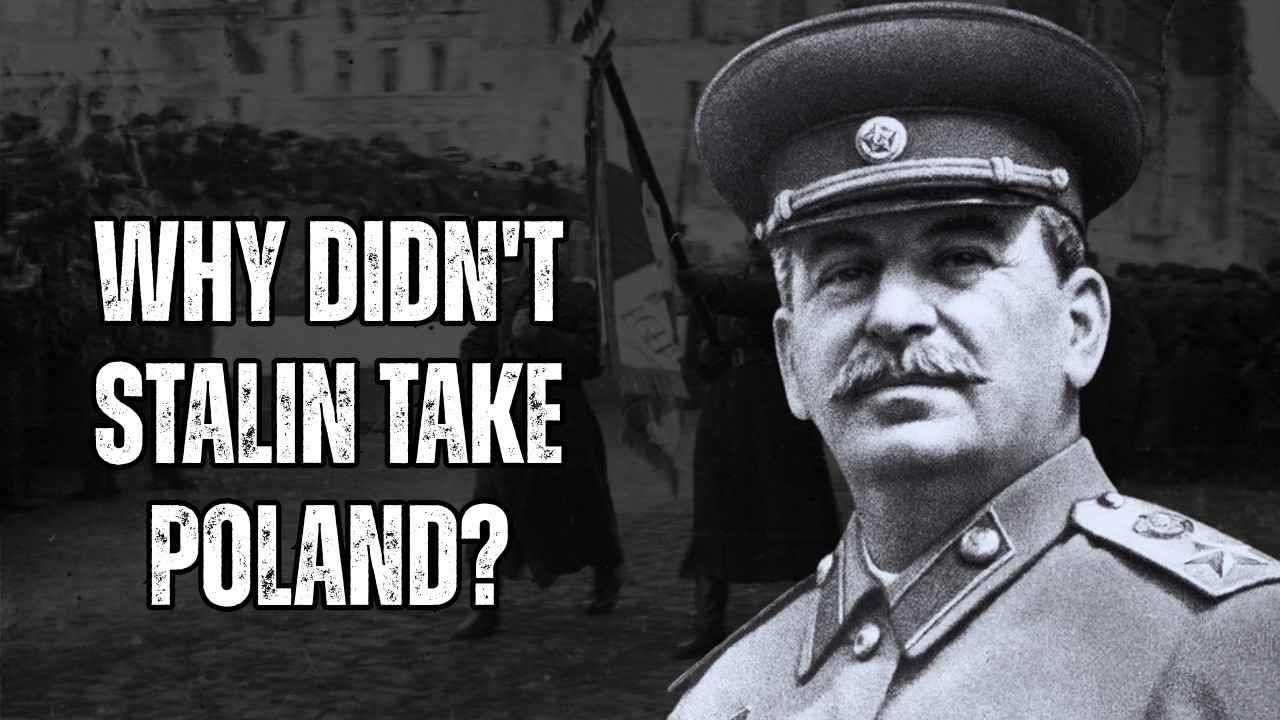
In July 1944, with the Red Army on Polish soil, Moscow Radio announced the formation of the Polish Committee of National Liberation in Chełm. Polish historians note that it was actually created in Moscow a day earlier, and that its members did not reach Chełm until the 27th.
On August 1, underground forces loyal to the government-in-exile rose up against the Germans in Warsaw. The Red Army held its positions across the Vistula, and Stalin refused to allow Western aircraft that were dropping supplies to the city to land at Soviet airfields. Debate continues over whether he deliberately halted the army. The Germans crushed the uprising after 63 days.
By the end of the year, the committee had become a provisional government, and on January 5, Moscow was the first to recognize it.
At Yalta in February, Stalin explained his reasoning on Poland to Roosevelt and Churchill: security. Poland was the corridor through which Germany had marched twice in 30 years. He said Russian armies alone could not close that corridor from the outside. Only Poland's own forces could, so Poland had to be strong, independent, and democratic. He also agreed to reorganize the provisional government and hold what he called free and unfettered elections.
Unlike the Baltic states, Poland was covered by the agreement Stalin signed with Roosevelt and Churchill. No document says that difference settled anything. He kept almost everything he had annexed. Roosevelt and Churchill agreed that the Curzon Line, running along the linguistic majority, would be Poland's new eastern border. The argument for annexing more ended where the Polish-speaking population began.
Six weeks after Yalta, the arrests took place at Pruszków. That April, as the Yugoslav communist Milovan Djilas later recounted, Stalin told him that every party to a war imposes its own social system on whatever land its army reaches.
On April 23, with the Yalta terms on Poland deadlocked, the U.S. ambassador in Moscow, Averell Harriman, told a White House meeting that the Polish communist leader Bolesław Bierut had told Stalin and Molotov how fragile the provisional government was. Harriman said that bringing in a genuine Polish leader like Stanisław Mikołajczyk, the former prime minister of the government-in-exile, would likely mean the end of the group Moscow had chosen.
In June, the sixteen were tried in Moscow. General Leopold Okulicki, the last commander of the Home Army, told the court he wanted friendship with Russia on one condition: that Poland remain independent. He was sentenced to 10 years.
A week later, on the 28th, the provisional government was reorganized to include Mikołajczyk, who returned from London to serve as deputy prime minister. On July 5, Britain and the United States recognized it and withdrew recognition from the London government.
At Potsdam that summer, Poland received German territory in the north and west totaling about 103,000 square kilometers, in exchange for roughly 180,000 lost in the east. The Allies also assigned the German city of Königsberg and its surrounding territory to the Soviet Union. Annexation, then, was still an available option. Stalin used it on German land.
On August 16, the provisional government signed a border treaty in Moscow formally accepting the Curzon Line as the border with the Soviet Union, with minor adjustments in Poland's favor. Stalin's gains in the east now depended on that government's signature.
In early November, Mikołajczyk told an American diplomat that Poland had been forced to sign a coal agreement. Polish coal sold abroad at $8.20 a ton would go to the Soviet Union at $1.20. The deal covered about 12 million tons a year, paid for in Soviet goods which, he said, practically never arrived. Polish researchers say the Kremlin's argument was that the German territories Poland gained were worth more than the eastern lands it lost.
On November 14, Stalin met with the leader of Poland's communists, Władysław Gomułka, accompanied by his party colleague Hilary Minc. Gomułka recorded his notes after the meeting, and a letter Stalin sent to Molotov about the same meeting also survives.
In Gomułka's notes, Stalin looks back to 1920. In the summer of that year, as the Red Army approached Warsaw, the Bolsheviks formed a provisional Polish revolutionary committee to govern occupied territory and proclaim a Soviet republic of Poland. The Red Army was then defeated outside Warsaw and the committee collapsed.
Stalin said Dzerzhinsky, founder of the Soviet secret police, had dreamed of a Soviet Poland. Lenin reluctantly agreed, and they soon realized it was a mistake. For a country that had long been under foreign rule, the choice of Soviet rule was the wrong decision. He treated this as testimony, not as a literal text. That remark does not appear in Stalin's letter.
In the same conversation, Stalin's letter says he advised the Poles not to invite delegates of the Soviet party to their congress, so that opponents would not say Moscow was running it. In Gomułka's notes, he also tells them to cite Mexico, not Russia, as their model for nationalizing industry.
In June 1946, Poland held a referendum on three questions, with the government's slogan "Three times yes." The first question was whether the senate should be abolished. Officially, 68 percent voted yes. The communists' own secret count, cited by historian Andrzej Paczkowski, put it at about 27 percent.
Seven weeks after the vote, leaders of the Polish Socialist Party, part of the government coalition itself, gave Stalin their own estimate in Moscow, according to the Soviet record of the meeting. The government bloc could count on about 28 percent of the vote.
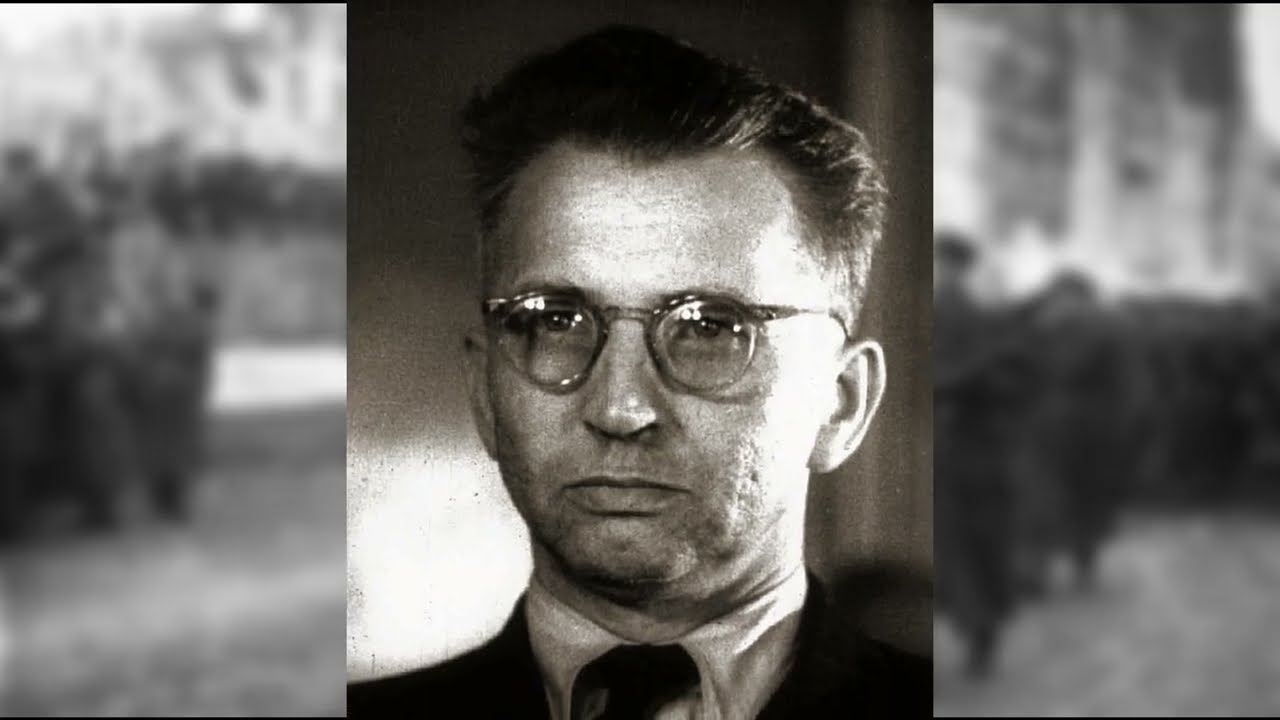
The January 1947 elections were also falsified. Official results gave the government bloc 394 of 444 seats and Mikołajczyk's Peasant Party 28. Britain sent a note saying it could not accept the vote and did nothing more.
In September 1947, nine European communist parties founded the Cominform in Poland to coordinate policy under Moscow's direction. That October, Mikołajczyk learned he was about to be arrested. He left Poland on a British ship.
In June 1948, Yugoslavia was expelled from the Cominform for defying Moscow. That summer, Gomułka, who had spoken of a Polish road to socialism, was removed as party leader. In December, his party merged into a new one, the Polish United Workers' Party.
In November 1949, the strong and independent Poland Stalin had described at Yalta got a Soviet marshal as defense minister: Konstantin Rokossovsky, who had commanded Soviet forces in Poland since the war. Poland gave him the rank of Polish marshal as well. Soviet troops were still on Polish soil.
By then, Stalin had subjected Poland, Hungary, Romania, Bulgaria, Czechoslovakia, and East Germany to communist governments, and none of them became Soviet republics. Historians disagree on whether this was a premeditated plan.
Historian Anne Applebaum, in "Iron Curtain," argues that Moscow aimed to control Eastern Europe as early as the war and that no amount of Western goodwill would have changed that. In her account, early caution was a tactic to avoid alarming the Allies. Norman Naimark, in "Stalin and the Fate of Europe," describes Stalin as more flexible and tolerant of varying degrees of control, including people's democracies, until he read Western moves as a threat and turned toward empire. Poland's timeline fits both interpretations: coalition and talk of a Polish road to socialism at first, then a sharp turn.
In February 1951, Moscow wanted a strip of Polish territory along the border, and even that was done through a treaty. It was signed on the 15th, exchanging 480 square kilometers on each side. Accounts of the deal suggest the Soviet Union was after the coal beneath the strip Poland ceded. About 14,000 Poles lived on that land, and they were resettled.
In the autumn of 1951, Stalin was given the final draft of Poland's new constitution. He made about 50 changes to the preamble and to 22 articles. He struck a phrase in the preamble about working under the leadership of the Soviet Union. He made it name the powers that had partitioned Poland in the 19th century, Russia among them, something the Polish drafters had not dared to do. The state was named the People's Republic of Poland and kept its white eagle.
Historian Krzysztof Persak, who studied the draft, believes the name was probably Stalin's decision. Bierut, the party leader, translated the corrections himself and copied them into the Polish text, so they entered the record as his own. Only a few senior officials knew their real source. The public did not learn of it until the mid-1980s.
So why did Stalin not make Poland part of the Soviet Union? There is no single documented answer, but the pieces are there. His pretext for annexing the east ran out at the Curzon Line. He told the Allies that a strong Polish state would guard the corridor better than Soviet armies alone. According to Gomułka's account, he described the earlier attempt at Soviet rule in Poland as a mistake. And the existence of a Polish state gave him the army, the politics, and the money without Moscow having to bear responsibility for a country that, by the secret government's own statistics, largely rejected it.
The West's promises were conditional only. No memorandum, letter, or decree announcing the decision has surfaced. What remains is the paper. Poland stayed on the map. Its constitution said it was Poland. And the amendments in the margins were Stalin's.