When Adolf Hitler was appointed chancellor of Germany on January 30, 1933, the Nazi movement began tightening its grip on the state. Political opponents were arrested, rival parties were destroyed, and thousands of people were sent to prisons or temporary detention centers.
Within months, those temporary sites evolved into a permanent system of concentration camps, used to isolate anyone the regime considered an enemy. At first, most prisoners were communists, social democrats, and other political opponents.
Over time, Jews, Roma, Jehovah's Witnesses, men persecuted for homosexuality, and many others were also imprisoned. The camps became places of forced labor, starvation, torture, and killing, but they also created career paths for men willing to carry out such violence.
One of those men was a former clerk and World War I veteran who served in several early camps before becoming commandant of Sachsenhausen and later Buchenwald, where he held near-absolute power over thousands of prisoners. He exploited them, stole their property, and ordered the killing of witnesses who could expose him.
His brutality did not trouble his superiors, but his greed eventually crossed a line they could not ignore. Before Nazi Germany collapsed, he would pay for his crimes with his life. His name was Karl Otto Koch.
Karl Otto Koch was born on August 2, 1897, in the city of Darmstadt, then part of the German Empire. His father worked at the local registry office but died in 1905, when Koch was only eight years old.
After leaving school in 1912, Koch completed a commercial apprenticeship and found work as a clerk. Although World War I began in 1914, Koch did not volunteer for the German Imperial Army until two years later.
He fought on the Western Front, where he received, among other decorations, the Iron Cross Second Class, a German military award given for bravery and distinguished service. He was captured by British forces in 1918 and remained a prisoner of war until he returned home the following year.
Koch later found work in banking and insurance. In 1924, he married Katharina Müller, with whom he had two sons, Manfred and Alfred. His repeated affairs led to their divorce in 1931.
That same year, Koch joined the Nazi Party and the SS, a paramilitary organization created to protect Adolf Hitler and other Nazi leaders, which was gradually expanding its role within the movement. After the Nazis came to power in 1933, Koch's SS membership gave him a career and authority he had never possessed before.
He entered the rapidly expanding concentration camp system and spent the following year serving at several early detention sites. Koch also joined the SS Totenkopfverbände, or "Death's Head" units, which were responsible for guarding and administering concentration camps and later extermination camps.
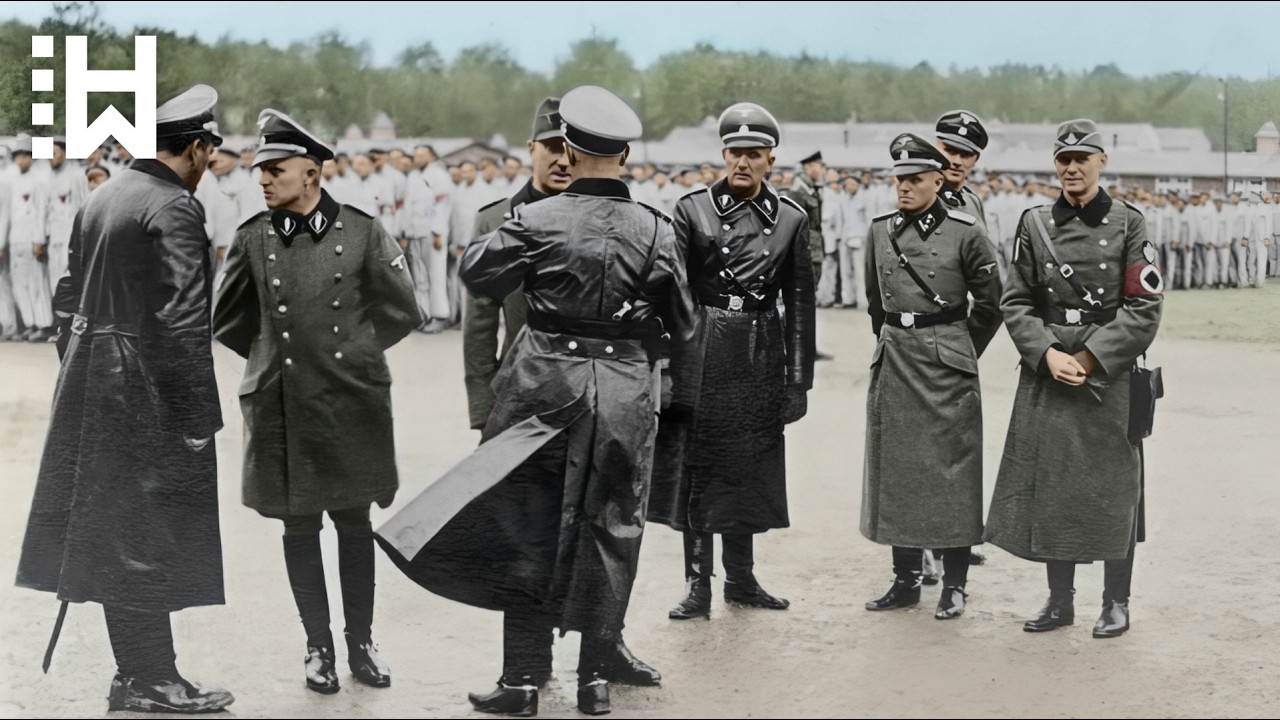
During his service in central Germany's Saxony in 1934, he met Margarete Ilse Köhler, a secretary from Dresden nine years his junior who had belonged to the Nazi Party since 1932. Koch continued to rise through the ranks, and in 1936 he became commandant of Sachsenhausen concentration camp, built near the town of Oranienburg north of Berlin.
His position gave him almost unlimited power over the prisoners held there. Ilse followed him to Sachsenhausen, and the couple married in the camp on May 25, 1937. They had three children: a son named Artwin and two daughters, Gisela and Gudrun.
Gudrun died of pneumonia in February 1941, when she was only four months old. Seven weeks after their wedding, Koch left Sachsenhausen to command Buchenwald, a new concentration camp near the city of Weimar in central Germany.
On July 15, 1937, SS forces brought the first 149 prisoners there by truck from Sachsenhausen. By the end of the year, the camp held more than 2,500 men. They cut trees, laid foundations, and built wooden barracks.
In the limestone quarry, prisoners broke stones with simple tools, pushed loaded carts, and were brutally beaten if they slowed down. Buchenwald was not an extermination center built for mass killing in gas chambers. It imprisoned people the regime considered enemies or undesirables and subjected them to forced labor, hunger, disease, and violence outside the legal system.
This did not mean the absence of systematic killing. Prisoners were executed, killed by lethal injection, or worked and starved to death, while thousands of Soviet prisoners of war were later systematically shot in a converted stable.
One prisoner who survived the war recalled how Karl Otto Koch greeted them at Buchenwald: "So, you are here now. Once you enter this camp, there is no exit. Remember that. You will not leave here alive."
The violence directed at new arrivals was part of a broader punishment system that threatened every prisoner in Buchenwald. Even the smallest alleged infraction could lead to a public flogging, where victims were forced to count each blow aloud.
If they lost count or could no longer speak, the guards often started over, and the beating could prove fatal. Other forms of torture took place away from the eyes of most prisoners, inside the camp prison known as the "bunker," whose 26 cells were rarely empty.
Men held there were locked in darkness, forced to stand all day, hung from cell bars, or killed by lethal injection. The same system that permitted such violence also gave Koch opportunities to enrich himself.
He treated Buchenwald as if it were his own property, exploiting prisoners as unpaid laborers and diverting money and property stolen from them. Cash taken from new arrivals, valuables confiscated from inmates, and funds withdrawn from camp accounts helped finance the luxurious life he and Ilse built for themselves.

The couple lived in a large villa furnished with expensive items, where prisoners served as servants. Koch also forced inmates to build recreational facilities for camp staff and their families. In 1938, they established a zoo near the camp fence with monkeys, brown bears, and deer.
It was funded by money prisoners were forced to hand over, while the animals received better food and protection than the prisoners living nearby. In 1940, forced laborers built an indoor riding hall where Ilse, later known as the "Witch of Buchenwald" for her brutal treatment of prisoners, could train her horse in bad weather.
The Kochs grew wealthy through this exploitation and made no effort to hide their lifestyle. Koch's treatment of prisoners did not trouble his superiors, but stealing from the SS eventually did.
By 1941, suspicions were growing that he had manipulated Buchenwald's accounts and diverted money and property for his own benefit. Walter Krämer, a prisoner who oversaw the camp infirmary, knew how Koch was enriching himself.
He had also secretly treated the commandant for syphilis, a serious bacterial infection usually transmitted through sexual contact that can eventually damage the brain, heart, and other organs. Koch had a history of extramarital affairs, though it is unknown when or from whom he contracted the infection.
Discovery of his condition would have humiliated him and could have harmed his position in the SS, especially since he relied on prisoners rather than official doctors for treatment. Krämer and his assistant Karl Peix knew about the disease Koch wanted to hide and about the financial crimes behind his wealth.
On November 6, 1941, the two men were transferred to a Buchenwald subcamp near Goslar, a town in central Germany, and shot from behind on Koch's orders. Camp records falsely claimed they were killed while trying to escape.
In December of that same year, Josias, Hereditary Prince of Waldeck and Pyrmont, the Higher SS and Police Leader responsible for the region where Buchenwald was located, arrested Koch on corruption charges, but Heinrich Himmler, head of the SS, ordered his release shortly afterward.
Karl Otto Koch was nevertheless removed from Buchenwald and sent to Eastern Europe, while his wife Ilse remained there with their children in an SS settlement. In January 1942, Koch became commandant of a new prisoner-of-war camp near Lublin in German-occupied Poland.
This camp later became the Lublin concentration camp, known as Majdanek, and developed into a site of forced labor and mass killing. When Koch arrived, the complex was still under construction.
About 2,000 Soviet prisoners of war were forced to build its barracks and fences while sleeping in the open with almost no food, and most died within weeks. Conditions remained appalling, while a small number of poorly trained guards left parts of the camp inadequately secured.

On July 14, 1942, 86 Soviet prisoners escaped. Koch blamed the shortage of resources and his staff, but he was held responsible and removed from his post the following month.
He was transferred to administrative work and later served as a liaison between the SS and the German postal service. While Koch held this new position, Josias continued examining the records left behind at Buchenwald.
In the list of dead prisoners, he found the name Walter Krämer and recognized it immediately. Krämer had successfully treated him earlier, and the claim that he was shot while trying to escape now seemed suspicious.
In 1943, the investigation was placed in the hands of Georg Konrad Morgen, a lawyer and judge in the SS court system. He examined camp accounts, property records, and unexplained prisoner deaths.
Large sums of money, about 100,000 Reichsmarks, were found in Koch's personal accounts, far more than his salary could justify, while additional evidence revealed the theft of jewelry, gold, and other valuables. Morgen also linked the former commandant to the killings of Krämer, Peix, and another prisoner murdered to keep them silent.
On August 24, 1943, Koch returned to the family villa next to Buchenwald, where investigators were waiting for him. Karl and Ilse were arrested that night.
Karl Otto Koch had crossed a line that the SS itself was not prepared to tolerate, not because of his treatment of prisoners, but because he stole from the organization and killed witnesses to cover up his crimes. Himmler expected valuables taken from prisoners to be handed over to the state, not kept by individuals.
In September 1944, the trial against Karl Otto Koch began. During the proceedings, he said: "I can find no explanation for my actions except that I was corrupted by my superiors. Everything I proposed and did was approved. I received only praise and decorations. This made me arrogant. I became megalomaniacal at the time."
On December 19, 1944, Karl Otto Koch was convicted of theft and issuing unauthorized killing orders and sentenced to death. Ilse was acquitted for lack of evidence and released after about 16 months in custody.
The wider investigation also implicated Hermann Florstedt, one of Ilse's lovers, who had served under Koch at Buchenwald before later becoming commandant of Majdanek. Florstedt was convicted of corruption and murder and also sentenced to death.
Koch remained in an SS prison in Weimar throughout the winter as American forces advanced toward central Germany. On April 5, 1945, Karl Otto Koch, aged 47, was taken to Buchenwald concentration camp, the same place he had once commanded.
His last words before an SS firing squad shot him were: "Men, aim well." Just six days later, the camp was liberated by the Sixth U.S. Army Division.
The fate of Karl Otto Koch's family was no better. Adolf, his only son, could not live with the shame of his parents' crimes and took his own life in 1967. Shortly afterward, Ilse Koch, who had been sentenced to life imprisonment twice after the end of the war, hanged herself in her cell, leaving a note that said: "I cannot help myself. For me, death is salvation."