In 1974, a London coroner signed the death certificate of 14-year-old Bernadette Whelan, who was crushed to death in a crowd surge at a David Cassidy concert. In November 2017, another medical examination was conducted on Cassidy himself, and the cause of death was listed as liver failure caused by chronic alcohol poisoning. The 43 years between those two deaths were filled with hard liquor, as the television network that had manufactured his fame watched a man slowly poison his own organs. David Bruce Cassidy was born in Manhattan on April 12, 1950.
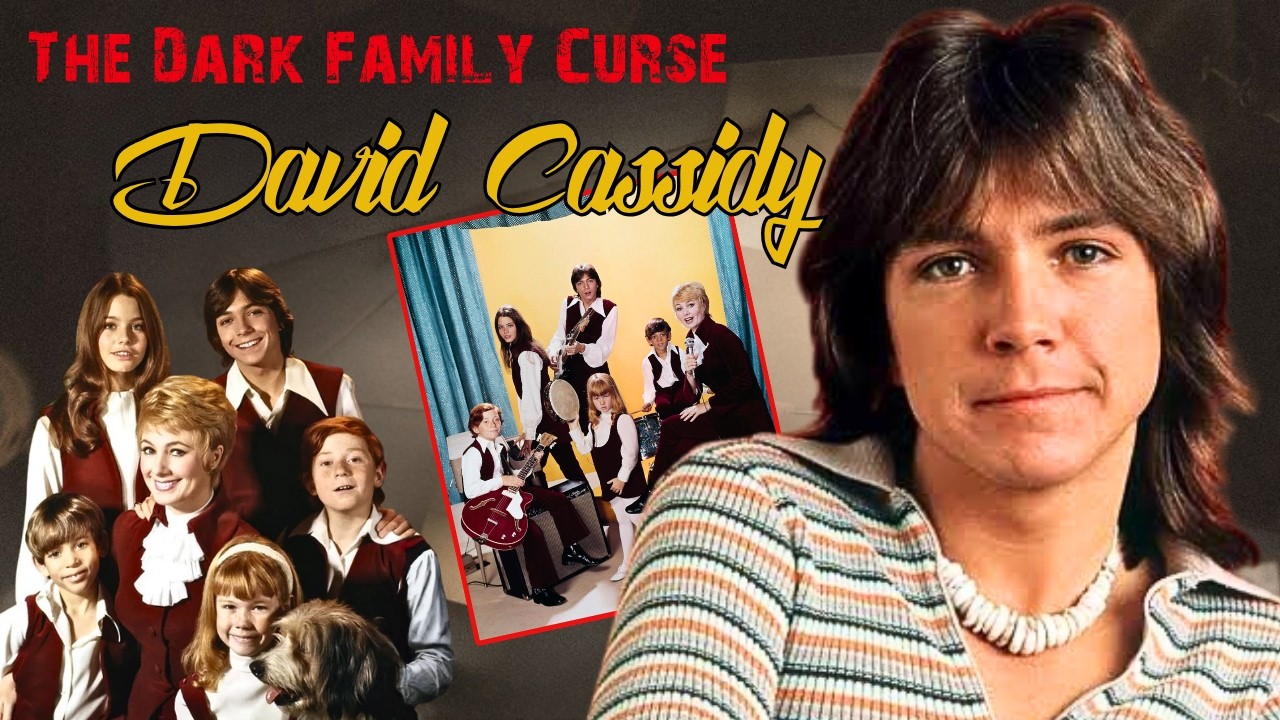
His childhood was shaped by the American theater scene of the mid-20th century. His father, Jack Cassidy, was a highly successful Broadway baritone who suffered from severe, untreated bipolar disorder. His mother, Evelyn Ward, was an active stage and television actress. Both parents were consumed by their demanding careers, and their constant touring left little room for parenting.
David was raised by his maternal grandparents in suburban New Jersey, a stable routine that contrasted sharply with his parents’ erratic visits. This environment created deep emotional detachment in the child, and his primary caregivers proved unpredictable, coming and going based on work contracts rather than his needs. The fragile family collapsed entirely in 1956. Jack’s untreated mental illness and infidelities destroyed the marriage, and the couple separated when David was six.
Jack immediately married rising musical theater star Shirley Jones. In a decision that would have lasting consequences, the parents chose to keep the divorce a secret, and their ongoing tours made the deception easy to maintain. David assumed his father was simply away on another acting job. The lie held for two full years before collapsing publicly in 1958, when eight-year-old David, playing with neighborhood children, was handed a glossy entertainment magazine containing detailed coverage of his parents’ divorce and his father’s remarriage.
He learned about his broken family from neighbors instead of his parents, and the shock turned into a deep sense of betrayal that permanently damaged his ability to trust. After the revelation, Evelyn moved with David to Los Angeles in 1960. He attended Rexford High School in Beverly Hills, graduating in 1968, but despite living in an affluent neighborhood, his personal life lacked stability. He received almost no material or emotional support from his family.
He retreated into isolation, teaching himself to play several musical instruments, and took menial jobs to secure financial independence. After graduation, he moved to New York to live with Jack and Shirley, hoping to build a strong father-son relationship. He briefly attended Los Angeles City College before dropping out to pursue acting full-time. In January 1969, he landed his first professional role in a Broadway musical called “Fig Leaves Are Falling.
” The show was a commercial and critical disaster, closing after just four performances, but it changed his life. His youthful looks caught the attention of casting director Alan Aershman, who arranged a screen test in Los Angeles. By late 1969, Cassidy signed a preliminary contract with Universal Studios and began appearing in guest roles on shows like “Ironside,” “Bonanza,” and “Medical Center. ”
During this period, Jack Cassidy made one of his few constructive contributions to his son’s career, introducing David to Ruth Aarons, a former world table tennis champion who had become a formidable talent manager.
She took over representing David and would become a crucial figure in his life. The turning point came when Aarons secured Cassidy an audition for a new musical comedy series being developed by Screen Gems, a highly profitable television subsidiary of Columbia Pictures. The studio was looking for someone to play Keith Partridge, the eldest son and lead guitarist of a fictional family band. David got the part, but the legal framework of the initial 1969 contract became a notorious example of corporate exploitation.
At nineteen, lacking legal insight, he signed an agreement that heavily favored the studio. He was locked into a fixed salary of $600 per week for the entire first season, with no clauses for compensation tied to the show’s potential commercial success. More damaging, the contract stripped him of basic rights to his own image. The studio claimed 100 percent ownership of his physical likeness, printed name, vocal style, and the precise physical appearance of Keith Partridge.
This meant the studio was legally authorized to mass-produce his image on consumer goods worldwide without paying him any royalties. The exploitative nature of the contract worsened when the production’s creative direction shifted. Initially, Cassidy was hired only to act, with the musical format requiring actors to mime to recordings by professional musicians and anonymous singers. But during pre-production recording sessions, music producer Wes Farrell discovered Cassidy had an exceptional pop vocal range.
The studio immediately pushed him into the recording booth as the show’s lead singer while keeping his salary unchanged, expecting the 19-year-old to shoulder the entire musical burden of the series for his original acting fee of $600 per week. “The Partridge Family” premiered on ABC in September 1970 and became an unprecedented phenomenon. The studio had cast Shirley Jones as the TV mother; because she was David’s real-life stepmother, the entertainment press heavily publicized their actual family relationship. This deliberate marketing strategy blurred the lines between reality and fiction.
By November 1970, the show’s theme song, “I Think I Love You,” had sold over five million copies and topped the Billboard Hot 100, beating out the Beatles’ long-awaited “Let It Be” album. The press quickly dubbed the phenomenon “Cassidy Mania. ” The studio’s mail department received between 25,000 and 30,000 fan letters weekly. His live performances were closer to mass hysteria than concerts.
Tickets to his Madison Square Garden show sold out and sparked riots. In 1972, he drew a record 56,000 spectators to the Houston Astrodome. Because the studio legally owned his image under the 1969 contract, it flooded the global consumer market with David Cassidy merchandise: lunch boxes, thermoses, board games, plastic dolls, bedspreads, even single-use paper dresses aimed at teenage girls. Total revenue from this commercial empire exceeded $500 million in the early 1970s.
However, because he was bound by the original agreement, Cassidy was systematically excluded from the wealth his face generated. Decades later, during a 2011 legal dispute, Cassidy testified under oath that from the half-billion dollars in total merchandising revenue, he had received only about $5 throughout his life. While the studio controlled his image on consumer products, a secondary industry controlled his public image. Teen magazines led by publications like Tiger Beat and 16, which many cultural researchers describe as collaborative extensions of the studio’s marketing department, fabricated innocent, heavily sanitized narratives about David’s private life.
They published stories claiming the 21-year-old rock star’s favorite activities included drinking warm milk before bed and staying home on weekends playing with puppies. This systematic media campaign stripped away the complex reality of a young adult facing sudden wealth and fame, producing a completely neutral, parent-approved product. Maintaining this global empire required physically exhausting work. From Monday to Friday, Cassidy had to arrive at the Screen Gems studio by 6:00 a.
m. and spend the next twelve hours filming. When the director called “cut” at 8:00 p. m.
, his workday was only half over. He was transported to a recording studio where he was required to record lead vocals for Partridge Family albums and his own solo albums, often working past midnight. Weekends offered no rest. On Friday nights he flew across the country to perform massive stadium concerts on Saturday and Sunday, often taking overnight flights back to Los Angeles Sunday night and going straight to the makeup room Monday morning.
The physical consequences were severe: chronic sleep deprivation and significant weight loss. To cope, Cassidy turned to the standard methods of 1970s studio culture, taking powerful stimulants to stay conscious during daytime filming and potent sedatives to force his nervous system to shut down for sleep during flights. His cheerful innocent face on lunch boxes was completely disconnected from the reality of the drug-laden young man. By late 1971, Ruth Aarons identified a critical legal loophole.
Cassidy had been nineteen when he signed the original contract. In California, the legal age of majority was then 21, meaning the contract was technically voidable because he was a minor. Aarons issued an ultimatum to Screen Gems executives: either tear up the 1969 contract and renegotiate fair compensation, or David would immediately walk off the set of the network’s most profitable show. The studio capitulated, and the new contract dramatically improved Cassidy’s financial position.
His weekly television salary increased significantly, and he was finally given a percentage of revenue from live tours, record sales, and merchandise. The victory made him a millionaire, but the restructuring only covered future earnings. The tens of millions generated during the first two years of his peak fame remained permanently in the company’s accounts. Despite the financial correction, the psychological damage worsened.
The fundamental conflict shifted from financial exploitation to severe artistic suppression. Cassidy was a serious musician whose personal tastes aligned with the hard rock and blues rock movements of the era. He admired guitarists like Jimi Hendrix and Eric Clapton and wanted to write music reflecting the complexities of 1960s counterculture. The companies controlling his output forbade him from exploring rock music.
Their financial models were built on a very specific demographic—preteen and early teenage girls—who they served with light, highly polished pop. Cassidy secretly hated the music he was forced to perform. The studio also systematically prevented him from playing instruments on his own recordings. The music for all Partridge Family albums and solo releases was recorded entirely by the Wrecking Crew, the legendary Los Angeles session musicians.
Cassidy was deliberately excluded from the creative process, only entering the recording booth after the backing tracks were complete to add lead vocals. This industrial production approach stripped him of any creative role, and the stark contrast between his artistic ambitions and the sanitized musical identity of Keith Partridge created an acute identity crisis. Determined to smash the polished image created by the studio and teen magazines, Cassidy staged a calculated and aggressive public rebellion. In May 1972, bypassing the teen magazines, he agreed to a controversial interview and photo shoot with Rolling Stone.
Annie Leibovitz photographed Cassidy nude, with the image cropped from the waist up. It was a deliberate visual message: he was no longer a controlled teenager but an independent adult. The accompanying interview destroyed his manufactured image. Cassidyshed his polished media persona, using harsh language, admitting to substance use, and speaking frankly about his personal life on tour.
The strategy backfired. Rock critics dismissed the attempt as a desperate publicity stunt by a fake pop star, while conservative parent groups—the backbone of “The Partridge Family” audience—were outraged by the nudity and drug talk. They organized boycotts against ABC, and major sponsors threatened to pull their lucrative ads. Rather than liberating him, the rebellion made the studio tighten its grip, imposing stricter controls on his public movements and press interactions.
The breaking point of Cassidy’s career came in a deadly way. In early 1974, he embarked on a massive world tour, and the hysteria surrounding his appearances exceeded what existing security infrastructure could handle. The logistical collapse was evident upon his arrival in the United Kingdom: thousands of frantic fans stormed Heathrow Airport, breached security checkpoints, flooded the runway, and surrounded his plane. The situation became so dangerous that commercial airlines formally threatened to ban his flights from British airspace.
On May 26, 1974, the mania reached its tragic peak at London’s White City Stadium. The venue was a sprawling outdoor sports stadium with no divided barriers, no pressure-release barriers, or designated seating on the floor level. The general admission area in front of the stage was a vast, completely unregulated space allowing thousands to gather in one dense mass. The concert attracted an estimated 35,000 people, the vast majority teenage and preteen girls aged 10 to 16.
The moment David Cassidy appeared on stage, a catastrophic surge began. Driven by massive emotional hysteria, thousands of individuals violently pushed toward the front of the stage, generating an uncontrollable wave of kinetic energy. Tons of physical pressure pinned individuals in the front rows against the rigid steel barriers separating the crowd from the stage. Those trapped experienced compressive asphyxiation: the physical pressure on their chests was so severe their rib cages could not expand to draw oxygen into their lungs, causing victims to suffocate while standing, completely immobilized by the mass of bodies around them.
Cassidy immediately recognized the danger. He repeatedly stopped the music mid-song, stepping to the microphone and desperately begging the audience to step back and relieve the pressure. His voice was completely drowned out by the screaming of 35,000 fans unaware of the deadly physics occurring at the barriers. The surge caused over 800 physical injuries, with 30 concertgoers requiring emergency hospitalization.
In the very front row, a 14-year-old girl named Bernadette Whelan absorbed the full force of the crowd’s momentum. Pinned directly against the steel barrier, the intense pressure on her chest stopped her heart instantly, cutting off oxygen to her brain. She went into a deep coma on the spot. Medical staff pulled her from the crowd, and she was rushed to Hammersmith Hospital where she was put on life support.
Despite medical intervention, the cerebral oxygen deprivation caused irreversible brain damage. Four days later, on May 30, 1974, Bernadette Whelan was officially pronounced dead. The subsequent coroner’s inquest delivered a harsh condemnation of the entertainment industry. While legally ruling the death an accident, the coroner did not absolve the corporations of moral responsibility.
The official report stated explicitly that Whelan was a victim of manufactured hysteria, sharply criticizing television networks and music production companies for using calculated psychological methods and intensive media coverage to incite young girls into a frenzy for massive profits. The report also highlighted the industry’s complete refusal to reinvest a fraction of those profits into adequate physical security, ignoring the architectural barriers and crowd management protocols necessary to protect the lives of consumers being actively exploited. News of Bernadette Whelan’s death shattered what remained of Cassidy’s psychological stability. He suffered intense survivor’s guilt.
When he attempted to attend her funeral to pay his respects, British police explicitly prevented him from doing so, fearing his mere presence would trigger further riots. Denied the ability to mourn, Cassidy could only send a bouquet of flowers and a heartfelt apology letter to the Whelan family. The 24-year-old performer, unable to process the horrific reality that his mere presence on stage had directly led to the death of a 14-year-old child, made an immediate decision. He abruptly cancelled the remainder of his hugely lucrative world tour, refusing to step on a stadium stage again.
Shortly after, he formally resigned from “The Partridge Family. ” He retreated into complete isolation, and to numb the memories and guilt, he abandoned his previous chemical coping mechanisms and began relying heavily and exclusively on alcohol. The destruction of Cassidy’s career cannot be fully analyzed without addressing his father’s inherited trauma. Jack Cassidy was a highly talented stage actor who reached his peak in 1964, winning a Tony Award for “She Loves Me.
” But he consistently failed to convert his Broadway prestige into Hollywood success, often relegated to supporting roles. When David achieved worldwide fame and wealth at twenty—achieving what his father had craved his entire life—it caused a catastrophic narcissistic wound. Jack could not accept that his untrained son, performing what Jack dismissed as inferior pop music, had eclipsed his lifelong career in months. Jack’s untreated bipolar disorder, compounded by uncontrolled drinking, produced severe behavioral episodes.
Instead of supporting his son, Jack waged a campaign of emotional sabotage, publicly and privately disparaging David’s work, telling him repeatedly to his face that he lacked real talent and was merely a product of studio engineering. Jack would call David in the middle of the night drunk, just to berate him. Moreover, Jack forbade David from calling him “Dad” in public, fearing that acknowledging an adult son would reveal his true age to casting directors. David responded to this abuse with despair, constantly seeking the approval his father withheld.
He bought Jack luxury cars and expensive gifts, which Jack accepted eagerly, while never offering the affection or professional respect his son craved. The toxic relationship ended abruptly on December 12, 1976. Jack, heavily intoxicated, returned to his West Hollywood apartment and fell asleep on the couch holding a lit cigarette. The cigarette ignited the furniture, and the fire consumed the apartment.
Jack’s body was burned beyond recognition, and authorities had to identify him through dental records and a distinctive family ring. His sudden, violent death closed the door on any possibility of reconciliation, leaving David with the trauma of seeking approval from a father who was gone forever, and amplifying the deep abandonment issues dating back to his New Jersey childhood. Unconsciously imitating his abuser, David spent the next four decades repeating Jack’s destructive pattern: turning to vodka to numb his severe depression, enduring troubled family life through multiple failed marriages, and eventually abandoning his own biological child. Following the White City tragedy and his departure from “The Partridge Family,” Cassidy’s daily life became a severely restricted prison.
Major hotel chains refused his bookings, fearing fan mobs would destroy their lobbies. To avoid crowds and photographers, his security team routinely smuggled him out of venues hidden under heavy equipment covers, in the backs of freight trucks, or curled in the trunks of decoy cars. Instead of luxury suites, his security team secretly checked him into run-down motels along abandoned highways, far from city centers and media attention. These isolated environments created the ideal conditions for chronic addiction to develop.
He endured a constant cycle of severe neurological shocks: during shows, his brain flooded with adrenaline, dopamine, and cortisol while he stood before roaring crowds of fifty thousand. Hours later, he was locked in a cheap motel room in absolute silence and total human isolation. Unable to process the adrenaline naturally, the silence became unbearable. To cope, he began consuming vast amounts of hard liquor alone every night—not socially, but as treatment, using alcohol as a powerful depressant to force his central nervous system to shut down and allow sleep.
As he approached his mid-twenties, Cassidy sought to shed the Keith Partridge persona. He finally gained creative control to pursue his preferred rock music, signing with RCA Records and producing three distinct rock albums. American audiences rejected the evolution outright: radio stations refused airplay, and consumers refused to buy. He attempted a television comeback in 1978 on NBC in a realistic police drama called “David Cassidy: Man Undercover,” playing an undercover cop.
Viewers could not accept the cognitive dissonance of Keith Partridge holding a firearm, ratings collapsed, and the network cancelled the show after ten episodes. The industry that had made him now trapped him in an inescapable mold. He found temporary refuge on the live theater stage, which provided the structure he needed. In 1982, he won critical and commercial success replacing Donny Osmond in the lead role of “Joseph and the Amazing Technicolor Dreamcoat” on Broadway, later starring in London in “Time” and alongside his half-brother Shaun in a highly regarded production of “Blood Brothers.
” In the late 1990s, he capitalized on the booming nostalgia market in Las Vegas, headlining the multimillion-dollar “EFX” show at the MGM Grand and later producing and starring in “The Rat Pack Is Back. ” These profitable shows provided a stable geographical base. But by the 2010s, his carefully managed secret addiction became public knowledge through a series of humiliating, widely publicized arrests that systematically destroyed his remaining professional credibility: a November 2010 DUI arrest in Florida; an August 2013 stop in New York where his blood alcohol level was 0. 10 percent; a January 2014 Los Angeles arrest with a breathalyzer reading of 0.
19 percent, more than twice the legal limit; and a 2015 hit-and-run charge in Florida that led to his license being suspended. The economic consequences were catastrophic. He faced mounting legal fees, court-ordered stints in expensive rehab facilities that failed to produce long-term recovery, massive medical bills for liver failure, and settlements for three lengthy, costly divorces. In February 2015, he formally filed for Chapter 11 bankruptcy, admitting to debts of $2.
14 million. The court ordered the sale of his 7,000-square-foot waterfront mansion in Fort Lauderdale at public auction, and he was forced to liquidate personal possessions from his youth. The star who had generated half a billion dollars for studios in his twenties entered his final years stripped of his fortune. The greatest loss was his capacity for human connection.
In 1986, he fathered a daughter, Katie Cassidy, with former model Sheri Williams. Mirroring Jack Cassidy’s absence, David was entirely absent from Katie’s upbringing, which was handled primarily by her mother and stepfather. In early 2017, with Katie successfully building her acting career, David made a detailed and painful public statement about their relationship: “I have no relationship with Katie. I wasn’t her father.
I didn’t raise her, but there’s no relationship between us. ” This public disavowal of his biological daughter demonstrated his complete emotional collapse. The final tragic chapter began in February 2017 at a small venue called the Canyon Club in Agoura Hills, California. Cassidy took the stage in a state of severe physical and mental confusion.
He slurred his speech, lost his balance and fell off the drum riser, and most shockingly, completely forgot the words and melody of “I Think I Love You,” the anthem he had performed successfully thousands of times over 47 years. Audience members filmed his collapse, TMZ obtained the video, and it went viral. Public reaction was immediate and harsh, condemning him for appearing obviously drunk. Days later, on February 20, 2017, Cassidy gave an exclusive interview to People magazine announcing his immediate retirement from touring.
He attributed his on-stage collapse to a recent diagnosis of early-onset dementia, noting that his mother and grandfather had suffered and died from Alzheimer’s and dementia. The strategy worked brilliantly. Public anger converted to deep global sympathy. He reinforced this narrative on the “Dr.
Phil” show, appearing visibly weak but continuing the deception on national television, claiming he had been hiding his dementia diagnosis for two and a half years and swearing he had not touched a drop of alcohol. This carefully constructed lie was rooted in social stigma: chronic alcoholism is often viewed as a moral failure, while dementia is understood as a blameless medical tragedy. And Cassidy’s fragile ego could not bear the humiliation of admitting that he, the original architect of the sanitized Keith Partridge persona, was drinking himself to death. The clinical biological reality was far uglier than the PR narrative: Cassidy was not suffering from dementia or Alzheimer’s but from hepatic encephalopathy, a direct result of decompensated cirrhosis.
His liver was so scarred from decades of chronic alcohol abuse that it could no longer filter toxins, specifically ammonia, from his bloodstream. The toxins accumulated and traveled directly to his brain, causing severe brain swelling that produced the exact symptoms the public witnessed at Agoura Hills: severe confusion, slurred speech, physical imbalance, and catastrophic memory failure. It was not a dementia episode but an acute neurological response in the final stage of complete liver failure. His attempts to manage chronic pain from severe osteoarthritis, by taking massive doses of over-the-counter anti-inflammatory drugs like naproxen combined with prescription opioids like Vicodin, pushed his already failing liver into acute kidney failure.
His internal organs were progressively shutting down in a condition known as hepatorenal syndrome. In early November 2017, his condition collapsed entirely. He was admitted to intensive care in a Fort Lauderdale hospital, suffering simultaneous acute liver and kidney failure. A specialist medical committee assessed that his body was too weak to survive the trauma of a double organ transplant and removed him from the national transplant list.
The medical goal shifted from life-saving intervention to end-of-life palliative care. Days before his complete surrender, Cassidy made a final phone call to Saralena Weinfield, a television producer working on an A&E documentary project called “The Last Session” about his life. The recording of this call stands as his last statement. His voice was hoarse and exhausted, stripped of all media artifice.
“There’s no signs of dementia at this point of my life,” he admitted directly. “It was full-blown alcoholism. The truth is I lied about my drinking. I did it to myself to hide the sadness and emptiness.
”
Upon learning her father was dying in intensive care, Katie Cassidy flew to the Florida hospital. Disregarding years of public rejection, emotional absence, and the profound trauma of abandonment, she chose to sit quietly by his hospital bed, holding his hand during his final moments. David Cassidy died on November 21, 2017, at age 67, of multiple organ failure. In the days following his death, Katie shared his last words with the public.
He lifted his head from the hospital bed and whispered: “Such a waste! “