On April 29, 2011, a woman in a pale powder blue coat walked the length of the nave at Westminster Abbey and took her seat a few feet from the throne of England.
An estimated two billion people watched her do it. The cameras found her within the first minute, because the cameras had been briefed on exactly who she was.
She was the mother of the bride. By every written rule of the occasion, she belonged in that seat as surely as the archbishop belonged at the altar rail.
And yet, in a certain kind of English drawing room, a single thought was moving from person to person like cold air under a locked door: she should not be here.
No one said it aloud. That was never how these people worked. They had been raised on the principle that stating a thing openly is itself a small act of bad taste.
So the disapproval traveled the way it always traveled among them — in a raised eyebrow, in the half-second pause before a compliment, in the way a surname could be repeated back to you until it came out faintly soiled.
Middleton, spoken with the right weight on it, could be made to carry a whole argument about who had been born inside the building and who had merely been let in through the front door.
Her name was Carol. A little over half a century before that morning, she had been Carol Goldsmith, a girl from a corner of West London that no one in that abbey would have visited on purpose.
Her people were builders and laborers. Behind them, a few generations back, were coal miners in the County Durham pits — men who went underground in the dark, came up gray, and did it again the next morning for the whole of their lives.
She had left school at 16. One of her first real jobs was carrying meals and drinks to strangers at 30,000 feet, walking the aisle of an aircraft in a uniform, being pleasant to passengers who would forget her face before they collected their luggage.
Now her daughter was marrying the man who would one day be crowned king. The granddaughter of pitmen sat inside the oldest ceremonial room the English monarchy owns, while the descendants of dukes watched her from the corners of their eyes.
This is the story of how it happened. It is also the story of the people who spent the better part of a decade making sure it very nearly did not — and of the strange, muted defeat they were handed when it did anyway.
The idea that the palace never really wanted her — that she was endured rather than welcomed, that she was the guest the old families would have struck off the list if the list had ever been theirs to write — is not a fantasy.
There were people close to that wedding who would have been a great deal happier if the Middletons had stayed in Berkshire and sent their good wishes by post.
But that is only one layer of the truth. Underneath it sits a second layer that turns the whole thing on its head: the woman they did not want turned out to be the single person in the entire cast that the family could not do without.
Both things were true on the same morning. Only one of them would still matter a decade later.
To see what was actually being done to her, you have to know something about the way the English upper class fights, which is almost never in the open.
Loud contempt is vulgar, and vulgarity is itself a mark of low origin. So the aristocracy long ago perfected a form of disdain so refined that a person could be taken apart completely without a single rude word being spoken over the teacups.
It runs on signals — on the words you pick and the ones you avoid, on a thousand tiny tells that mean nothing to an outsider and everything to the people raised to read them.
It was through that code, rather than through anything so crude as an insult, that a section of William's world set about establishing over years that the Middletons were not and could not become quite the thing.
There is even a name for the part of the code that lives in language. In the 1950s, the writer Nancy Mitford, drawing on work by a linguist named Alan Ross, laid out the difference between what they called U speech — U for upper class — and non-U speech, the speech of everyone scrambling below.
The categories she published as a half joke have proved almost immortal, because the English never really stopped using them to sort one another on contact.
You do not say toilet. The correct word is lavatory, or loo, and the word toilet marks you on the spot. You do not say pardon when you have not heard something; you say what, or sorry, because pardon is the tell of the striving lower middle class.
Lunch is at midday and never dinner, because dinner at midday belongs to the working man. You do not offer a stranger a pleased to meet you, which is fatal. You say how do you do, which is not a question, and to which the only permitted reply is to say how do you do straight back.
None of it makes the smallest logical sense, and that is the entire genius of it. An arbitrary code can only be learned by being born into it. It is a password with no written copy, and the whole function of a password is to keep the wrong people out.
Carol Middleton, through no fault of her own, said some of the words the wrong way. Her mother had trained her in presentation from the cradle, and the training was very good.
But no course of elocution ever invented can fully sand away the place you started from, if the people examining you are listening hard enough and want badly enough to find the seam.
She was reported over the years to have used the marked words. And in the winter of 2006, at the Grand Parade where the man her daughter was seeing passed out as an army officer in front of the queen, Carol was photographed doing something that a certain kind of observer treated as a full confession.
She was chewing gum. That was the whole event. A woman chewed gum at a parade.
But to the people who were looking for it, the gum was not a small lapse. It was proof — evidence that the family could be dressed for the occasion and still could not be trusted to inhabit it, that the polish stopped at the skin.
A duchess who chewed gum at that parade would have been an amusing eccentric. Carol chewed gum and became a cautionary tale.
The set around William had a joke about the family, and the joke is the code distilled to its purest form. They said the Middletons were "to the manner born."
Said aloud, it is a pun, a nasty little one, and it takes a second to land. The phrase to the manner born means bred to privilege, born already knowing the manners, the real article. Bent into "to the manor born," it becomes a crack about automatic doors — the kind that hiss open when you approach them in a supermarket, the sort of shop where a person might buy the cheap party plates that had made the Middletons their money.
The entire sneer is folded into a single homophone. It says the money is new. It says the money smells of trade. It says these people slid up to the manor rather than being born inside it.
And it manages to say all of that while sounding, to anyone not in on it, like nothing at all. There was an older four-letter acronym some of that world liked too, deployed with a smile about people who had almost but not entirely arrived.
This was the register of the attack on Carol Middleton. No shouting, no confrontation a person could point to and object to. Only the endless, deniable drawing-room labor of making a family understand, through a hundred small signals a week, that it was being permitted rather than accepted — and could have the permission withdrawn at any time.
Here is the part that the people telling the joke could not afford to notice, because noticing it would have meant looking honestly at themselves. Almost none of them had ever worked a day in their lives.
That is the whole thing in a sentence. The families who looked down on Carol Middleton had, in the main, done nothing whatever to earn their position except be born into it.
And the woman they were sneering at had built something real with her own two hands out of nothing at all.
She had taken an ordinary observation — that a parent throwing a 5-year-old's birthday party would happily pay for the plates and the streamers and the little bags of toys, if only someone would gather them into one catalog — and turned it into a company that made her family a fortune.
She had hauled herself and her husband and her three children up through the entire structure of English class in about 20 years, story by story, without once raising her voice or explaining herself to anyone.
That, more than any wrong word, was the offense. Not the toilet, not the gum. The fact that she had climbed the whole building on her own and behaved, once she reached the top floor, as though she had every right to be standing on it.
And the money had a shape the tabloids mostly ignored and the snobs preferred not to mention, because it spoiled the clean story of the shopgirl marrying up.
Her husband, Michael Middleton, was not a working man at all. Behind him stood generations of settled Yorkshire prosperity — the Lupton family on his mother's side, wool merchants and solicitors, civic men of Leeds, people with money held in trusts and their names carved into the right institutions.
It was money from that quarter, kept in reserve for precisely this kind of use, that helped pay the enormous fees when the time came to educate the Middleton children at one of the most expensive schools in the country.
So the family that the aristocracy waved away as arrivistes was, on one side, the very picture of established English respectability, and on the other, the self-made success story the country claims to admire in the abstract and resents in the flesh.
They were the England of the actual present, standing in a building put up for an England that had gone. The chill in the room was the chill of the second thing looking at the first, and understanding on some level it would never say out loud: that the future had already changed hands.
There was one more figure the palace would have to swallow, and he did not do the code at all.
Carol had a younger brother, Gary Goldsmith. Gary was, in almost every particular, the living embodiment of the thing the establishment was most nervous about.
He had made himself seriously rich, self-made in the most literal sense, and having made it, he saw no reason on earth to be quiet about it. He was tattooed. He was loud. He owned a villa on the party island of Ibiza and had given it a painted name that translated roughly as the house of Bang Bang.
In 2009, a Sunday tabloid, The News of the World, sent an undercover reporter to that villa. The reporter came away with secret recordings of Gary at his most relaxed and least guarded, apparently offering his guests drugs and talking freely about his royal connection.
The paper spread it across the nation to maximum effect. It was the family's origins dragged into daylight in the crudest possible form, and it handed the snobs everything they wanted without their having to say a word.
The question that hung over the wedding two years later was whether the awkward brother would be kept off the list. He was not.
Gary Goldsmith sat in the abbey watching his niece marry the heir to the throne — the tattooed Ibiza millionaire among the crowned heads. Because Carol Middleton was not a woman who would disown her own blood to make a room full of aristocrats more comfortable.
That decision tells you more about her than any wrong word ever did.
Now hold all of that in your mind and look again at the woman in the powder blue coat walking up the nave, giving nothing away.
Everything the sneering set had thrown at her for 10 years was in that room with her, and none of it had worked. The wedding was happening. Her daughter was becoming a princess and would one day be queen.
And there was no longer a single thing the code could do about it, because the one act the code had never been able to prevent was two people who loved each other getting married in front of the whole world.
But the story does not end at the altar. And the reason it does not is the reason this whole account exists, because there was a ghost in that abbey and everyone in it knew her name.
Thirty years earlier, the family had done this before. They had taken a shy young English woman, stood her at the center of exactly this kind of wedding in front of exactly these cameras, and then watched — or failed to watch — as the coldness of the man she married and the indifference of the institution around her wore her down in public until she came apart.
She died in a road tunnel in Paris, with the whole world looking on. Her name was Diana.
She was not a nobody who had married up. She had been an earl's daughter, an aristocrat by birth, raised inside the very world the Middletons had spent a century approaching. And her blood had not saved her.
Because the thing that destroyed Diana was never a shortage of breeding. It was isolation. She had gone into the machine young and alone, surrounded by a court that treated her as a problem to be managed, cut off from any family solid enough to hold her together. And the machine did to her what such machines do.
Now the second young woman was walking toward the same position. And on her finger, catching the abbey light, was a deep blue sapphire ringed with diamonds.
It was not a new ring. It had been Diana's own engagement ring, and William had chosen to place it on the hand of the woman he was marrying, so that his mother, as he put it, would not be left out of the great day of his life.
Sit for a moment with what that ring meant, because the whole story is folded inside it. The ring of the first outsider, the one the family had failed to protect, was now on the hand of a second outsider — the great-granddaughter of coal miners, a girl a section of the aristocracy had spent a decade deciding was not good enough.
On the surface, the two women had almost nothing in common. Underneath, they were the same figure exactly: the young English woman brought in to marry the future king and stand at the center of the machine.
And the ring passing from the dead one to the living one was, without anyone framing it so, a question the first outsider had not survived, handed to the second.
The answer, and the argument this whole story is going to make, is that the difference between the two women was not blood or luck or the temperament of the men they married. The difference was the woman in the powder blue coat.
Diana had faced the institution essentially alone. Kate faced it with an intact, close, formidably capable family at her back. And at the head of that family was a mother who had spent her entire life learning exactly how to defend the people she loved against a hostile establishment that thought them beneath it.
The thing the snobs had mocked for 10 years — the Middleton closeness, the mother who was always there, the family that stuck together and would not be shamed apart — was the precise thing the first outsider had died for want of.
The woman the palace never wanted had brought the palace the one thing it had been unable to provide the last time. And it would take the hardest years of all, still to come, to show how completely right she had been to build it.
From here, the story runs from a terrace house in Southall to a sapphire ring in Westminster Abbey, and every step is stranger than the last, because none of it was written in advance.
There was no destiny pulling the granddaughter of pitmen toward a crown. There was a girl born with nothing that anyone in that abbey would have counted as an advantage, and a mother before her, and a grandmother before that.
Three women working in sequence across a hundred years, each one shoving the next a rung higher, none of them ever once in a hurry.
To understand the wedding, you have to go back before the wedding — back before the ring and the university and the school and the business and the money, all the way to the pit villages of County Durham and a family that for two centuries produced exactly one outcome, which was more of the same.
This is the story of the woman who broke that, and of the daughter she aimed at the throne, and of the world that did not want either of them and took them both in the end, because when the moment came it needed them far more than it could bring itself to admit.
It begins, as these things so often do, with a marriage, an airplane, and a young woman who had already worked out the fastest route upward in England — which is to make yourself so useful to the people above you that they forget they were ever meant to look down.
Start with Dorothy, because nothing that follows makes sense without her.
She was Carol's mother, born Dorothy Harrison, and she came out of the Harrison line, the pit people of County Durham, into a life that offered a working-class girl of her generation almost nothing in the way of a future and a great deal in the way of limits.
What she had instead was an idea, and she held it with a stubbornness that would echo down three generations of her family.
The class you were born into in England, Dorothy had decided, was a starting position and not a life sentence. A person with enough nerve, enough patience, and enough attention to the small giveaway details could climb out of it — provided she was willing to work without stopping, and never once let herself be caught wanting it too plainly.
That last part was the whole secret. Wanting it openly was the mistake that gave everything away. Dorothy understood that before her daughter was born, and she pressed the understanding into Carol from the earliest age.
She married Ronald Goldsmith, a builder and laborer, a working man with no pretensions and no capital. The two of them made their home in Southall, in West London, in housing that came with no illusions attached.
This was postwar England, with the ration books barely put away. It was respectable and it was poor, and there was no confusion in anyone's mind, least of all Dorothy's, about which side of the great invisible English line the Goldsmiths lived on.
Carol Elizabeth Goldsmith was born into that house in January 1955. From the beginning, she was her mother's project as much as her mother's child.
Dorothy had firm views about how a girl spoke, how she carried herself, what she might one day be taken for if she got the details exactly right. And those views became the weather of Carol's childhood.
There were corrections at the kitchen table. There was attention to the words. The people who mocked Carol Middleton half a century later, imagining a woman who had blundered upward by luck and a good marriage, never learned this, because it ruined the picture they preferred.
What had actually happened was that Carol had been trained almost from birth in the single most useful skill available to an ambitious English person of modest origin: the skill of appearing to belong somewhere you do not yet belong.
She learned it as a girl. She would spend the rest of her life refining it. And one spring morning she would perform it in front of two billion people without dropping a stitch.
She left school at 16, which was ordinary for a girl of her background and her moment. For a while, the story of Carol Goldsmith reads exactly like the story of a thousand other bright girls in the London suburbs of the early 1970s — a story with a low ceiling and no clear way through it.
She took the jobs that were open to her. Then, in 1974, she was hired by British Airways, and the airplanes changed the shape of what was possible.
It is easy to underrate what that job meant then, because the role has lost its shine in the years since and it did not mean the same thing at the time.
To be an air hostess in the middle of the 1970s was to hold one of the very few positions available to a woman without money that could physically lift her out of the world she had been born into and set her down, for hours at a time, inside a different one.
The people who flew in that decade were people with reasons to cross the world, money and business behind them. And Carol spent her working hours moving among them.
She watched how they behaved. She learned what they ordered, how they spoke to the staff serving them, what separated the ones who were the real thing from the ones who were only performing it — a distinction she would prove unusually sharp at reading for the rest of her life.
The uniform gave her nearness without membership. She was inside the cabin and not of it, close enough to study the manners of a class she had not been born into, and to file away every observation for later use.
When people sneered decades on that Kate's mother had once pushed a drinks trolley for a living, they meant it to end the argument. It was the start of her real education, and she paid attention in a way none of them ever guessed.
It was through the airline that she met Michael Middleton. And here the tidy tale of the shopgirl marrying up runs into a complication that the tabloids flattened and the snobs found convenient to ignore.
Michael was not a working man. He came from Leeds, from a family that had been comfortable and in places prosperous for generations.
Behind him stood the Luptons, his mother's people, a dynasty of Yorkshire wool merchants and solicitors and civic figures — the kind of settled provincial money that keeps its funds in trusts and its name on the walls of the right institutions and does not feel the need to raise its voice.
There was old money on the Middleton side, held in reserve, and it would matter later, because it was money of that sort, put aside for exactly such a purpose, that helped meet the school fees when the children were older.
The marriage that the aristocracy would file as Carol clawing her way up by her fingernails was in truth closer to a merger of two different English strengths. Carol brought the drive and the eye and the appetite for work. Michael brought ballast and settled respectability and a surname with no smell of the pit on it.
The Yorkshire money behind Michael deserves a closer look, because it demolishes the story the snobs told about the Middletons, and almost no one who sneered at the family ever bothered to learn it.
Behind Michael stood the Luptons of Leeds, his mother's people, and the Luptons were not modest. They were a distinguished and wealthy Victorian and Edwardian dynasty — wool merchants and solicitors and civic leaders who had helped build the industrial north and had grown prosperous doing it.
They were philanthropists and public men, involved in the founding and funding of institutions. The kind of established provincial family whose name meant something in its city, and whose money was old enough to be respectable and settled enough to be invisible.
This was not new money with a smell of trade on it. This was several generations of accumulated Yorkshire prosperity, held in the discreet way that established wealth is always held, and it sat in Michael Middleton's background like ballast in the hold of a ship.
The family had paid a heavy price in the Great War, as so many families of that class did, losing sons to the trenches. The losses are recorded in the way such things are recorded among people of standing — in memorials, and in the histories of the institutions they supported.
That is the mark of an established family, not a striving one: that its griefs are written into the civic record, and its name is carved on the walls of the places it helped to build.
The Luptons were woven into the fabric of their city in exactly the way the aristocracy claimed the Middletons could never be woven into anything.
The irony of that is worth sitting with, because it means the family the grand set dismissed as arriviste carried on one side precisely the kind of deep-rooted, established respectability the grand set most respected — and simply did not advertise it.
And the old Lupton money did something concrete generations later, because it was funds from that side of the family, held in trust in the way established wealth so often is, that reportedly helped meet the enormous cost of educating the Middleton children at Marlborough.
Think about what that means for the tidy story of the shopgirl who married up. The school fees that put Kate among the right people — that gave her the friendships and the polish that carried her toward a prince — were paid in part not with new party-supply money, but with old Yorkshire wealth, the accumulated prosperity of a settled and distinguished family reaching forward across generations to fund the education of its descendants.
The Middletons were not, in other words, a family that had appeared from nowhere with a suitcase of new cash. They were a blend, and the blend is the thing the snobs could not see because it did not fit the caricature.
On Carol's side, genuinely self-made success, a fortune built from nothing by talent and effort. On Michael's side, genuinely established old money, generations deep, the very thing the aristocracy claimed to value.
Put the two together and you have a family that was at once everything the country admires about the self-made and everything the establishment respects about the settled. And the aristocracy managed to look at that combination and see only vulgarity — which tells you more about the aristocracy's need to sneer than about the Middletons' actual standing.
The refusal to advertise the Lupton connection was itself part of the family style, and it is revealing. A striving family desperate for acceptance would have made sure everyone knew about the distinguished Yorkshire ancestors, would have deployed the old name and the civic memorials as ammunition against the charge of being trade.
The Middletons did no such thing. They let the snobs believe the caricature, let them think the money was all new and all from party plates, and said nothing to correct the impression — because correcting it would have meant caring what the snobs thought, and caring what the snobs thought was the one thing the family never did.
They had the established pedigree available as a defense, and declined to use it, which is the behavior of people so secure in themselves that they do not need to win the argument, only to win the outcome.
The aristocracy sneered at trade. The Middletons had old money too, and did not bother to mention it. And the not-mentioning was its own kind of victory, because it meant the family kept its dignity while the snobs made fools of themselves attacking a caricature that the truth would have punctured in a sentence.
None of this is to say the established side was what mattered most, because it was not. What mattered most was Carol, and Carol's contribution was the self-made half — the drive and the fortune and the strategic mind.
But the Lupton money is worth knowing about, because it exposes how thin the snobbery actually was, and how little the sneering set understood about the family they had decided to despise.
They thought they were looking at arrivistes with new money and no roots. They were, in fact, looking at a family with both new money and old, both self-made success and established respectability — a combination stronger and harder to place than anything the caricature allowed.
The snobs did not just underestimate Carol's talent. They misread the family's entire composition, and they built a decade of contempt on a misreading.
And the misreading was there for anyone who cared to check, which none of them ever did, because the point of the contempt was never accuracy. The point was to keep the wrong people out, and accuracy about who those people actually were would only have got in the way.
They married in June 1980 at a village church in Buckinghamshire and settled into the ordinary business of a young airline family.
Michael's work moved them around, and for two years in the middle of the decade the whole family was posted abroad to Amman in Jordan, where Michael ran the airline's local operation and the children spent their earliest years under a foreign sun.
Their first daughter had been born in Reading in January 1982, a girl they named Catherine Elizabeth, though the world would come to know her as Kate and would not hear of her at all for another 20 years.
A second daughter, Philippa — always Pippa — followed in 1983. A son, James, arrived in 1987. By then the family was home again, back in Berkshire, and Carol was on the edge of the decision that would change everything: to stop working for other people and start working for herself.
The idea, when it came, was so modest that its later scale is almost funny. Carol had been organizing birthday parties for her own small children, and she noticed — in the way that ambitious people notice things the rest of us walk past — that the whole business was needlessly awkward.
A mother wanting to throw a party for a 5-year-old had to gather the pieces separately: the plates from one shop, the balloons from another, and the little bags of toys and sweets from somewhere else again. There was no good reason it should be so scattered.
Put it all in one place. Match it, choose it, box it, and send it out together, so that an ordinary parent could produce a proper party without a week of running around.
In 1987, the same year her son was born, Carol started a company to do precisely that. She called it Party Pieces, and at the beginning she ran it from a shed and a table in the family home, filling the orders by hand and posting them out herself.
Plenty of people have a small good idea and do nothing with it. What Carol had that the others did not was the thing her mother had drilled into her at the kitchen table in Southall: an appetite for the work, an eye for the detail, and a refusal to be satisfied with where things stood.
The business grew because she made it grow, order by order and year by year — first through the mail-order catalog, and then, when the technology arrived, through the internet, which Party Pieces took up early and used well.
What had begun on a table in a shed became one of the better-known party supply businesses in the country.
The exact fortune it produced was never confirmed, because the firm was privately held and Carol was not in the habit of opening her books to anyone. The figures that circulated in the press, running into the tens of millions of pounds, were guesses dressed up as facts. Whatever the true number, it was more than enough.
It moved the family from a comfortable house to a handsome one in the West Berkshire village of Bucklebury — all soft brick and long gardens, and the deep, unshowy calm that in England signals arrival more reliably than any amount of display.
And it bought the one thing Carol wanted more than houses, which was the right education for her children.
She had grasped something about England that a great many people born into the upper class never have to think about, because they inherit it without effort. Money on its own buys surprisingly little real position in this country.
Money is necessary, but money is common, and the aristocracy has always been perfectly content to look down on people who have more of it than they do.
What money buys, spent correctly, is access. It buys the school, and the school buys the friendships, and the friendships buy the invitations, and the invitations, given a generation to work, buy the only thing that finally counts, which is belonging.
A crude climber spends money on things that show. A clever one spends it on the rooms her children will still be standing in 20 years later.
Carol was the clever kind. And so, with the fortune built out of other people's children's birthday parties, she made the most consequential decision she would take before the wedding itself. She chose the schools.
The path was not as smooth as the later fairy tale liked to pretend, and the roughness is worth keeping, because it shows the family at work.
Before the school that made her, Kate spent a period at a girls' boarding school where, by accounts that surfaced in the press years afterward, she was unhappy, homesick, and reportedly teased. A child who did not click into place and suffered for it.
The Middletons moved her. A problem was identified, and a problem was solved without fuss, by parents who were watching closely and were prepared to act on what they saw.
Kate arrived at Marlborough College in Wiltshire as a slightly awkward and unshowy girl, and over the following years she found her feet.
Marlborough is one of the small number of English schools whose name, dropped correctly into a conversation, does a great deal of work on its own. It is expensive in a way that excludes most of the country, and it educates in the main the children of the professional and moneyed and titled classes — the sons and daughters of the people who run things or own things or descend from people who do.
Underneath the lessons and the sport, a school like that sells the commodity the English upper class guards most jealously, which is each other.
You do not send a child there only to be taught. You send a child there to spend five shaping years surrounded by exactly the people you want that child to know for a lifetime, because those are the friendships that produce the invitations that produce the marriages that keep the closed circle closed.
Kate did well there. She was sporty and well-liked and entirely unthreatening — the kind of pupil teachers remember with warmth and classmates struggle to say a hard word about, even when a reporter turns up years later offering money for one.
She was not glamorous and she was not grand. There was a mild, affectionate school nickname about her being a late developer — precisely the sort of thing said about any teenage girl who has not yet grown into herself, and precisely the sort of thing that would be reprinted in a hundred newspapers a decade on as though it carried some meaning.
What mattered was never how she looked at 17. What mattered was who stood beside her in the school photograph, because those were now the people whose world she belonged to.
By the time she left, two generations of deliberate work — her grandmother's and her mother's — had produced a young woman the English class system could no longer easily place.
She spoke correctly. She carried herself correctly. She had the friends and the references and the unhurried ease of a girl who had grown up entirely inside the right rooms, which by then she had.
The camouflage was complete. And it was into this finished, faultlessly presented young woman that the family's whole hundred-year climb had been poured — at the exact moment she was about to leave for a university on the cold east coast of Scotland, where a particular young man had also, as the whole country knew, chosen to spend the next four years of his life.
In the autumn of 2001, Kate Middleton arrived at the University of St Andrews to read history of art. So did Prince William.
Almost every word of that sentence has since been fought over, and this is exactly the point where the honest version of the story and the tabloid version go their separate ways. So it is worth being careful.
The tabloid version — the one favored by everyone who wanted to believe the worst of the Middletons — held that the whole thing had been arranged. That Carol, having fixed on the prince as the great prize, had steered her daughter toward the same university in the same year: a piece of cold, long-range calculation of almost supernatural precision.
It made a marvelous story. It also required believing that a mother could engineer a chance meeting between two teenagers across four years of shared undergraduate life, on the strength of a course choice the prince had announced to the entire country in advance.
The truth is narrower and stranger than the legend. William had chosen St Andrews, and the choice was public, and when a future king says where he is going to university, a good number of young women abruptly discover an interest in the same institution.
Applications from female students to St Andrews rose that year in a way everyone noticed and no one could quite explain away.
Kate had taken a gap year, spending part of it studying in Florence and part of it on an expedition in Chile. William had taken one too, and so the pair of them landed in the same first-year cohort rather than a year apart.
Whether the family's antennae were tuned to any of this, whether the timing was accident or instinct or something between the two, cannot be established and never will be, because the only people who know are not telling and would have every reason to shade the answer if they did.
The opportunity was there for anyone paying attention, and the Middletons were people who paid attention. Past that, the honest position is that we do not know, and the people who say they do are guessing.
What happened once the two of them arrived is on firmer ground, because it happened in front of other students.
Kate and William were placed in the same hall of residence — the one the students call St Salvator's — and they became friends before they became anything else, which matters more than it looks.
They moved in the same loose group, ate at the same long tables, fell into the easy nearness of first-year life. There was no thunderbolt, or if there was, it did not strike where anyone could see it.
What there was instead was the slow, ordinary business of two young people working out over months that they liked each other rather more than either had planned to.
The moment the story usually fixes on came in the spring of 2002, at a student charity fashion show, where Kate walked a makeshift runway in a sheer dress that has since been discussed at a length wildly out of proportion to the amount of fabric involved, and where William, watching from the front row, is said to have looked at his friend and registered something he had not quite seen before.
Whether it happened exactly like that, or whether ten thousand retellings have polished it smooth, hardly matters now. By the next academic year they were a couple, sharing a flat with two friends, keeping the thing as private as anything involving the heir to the throne could be kept.
The British press had agreed after Diana's death to leave William alone while he was a student, and for once the agreement held. The relationship grew up out of sight.
Then it came out of the shelter of university and into the open, and the open was far harder on it.
They finished at St Andrews, moved to London, and were by any reasonable reading a serious and committed couple. And yet no engagement came, and the years began to stack up.
In the spring of 2007, the thing the snobs had been waiting for finally happened. William and Kate broke up.
The details have stayed private, to the credit of both of them, but the shape of it was clear at the time. They were young. He was 24 and newly an army officer, with a life opening in front of him, and the pressure to commit forever to the woman he had been with since university had started to feel, by the accounts that circulated, like a door closing rather than one swinging open.
There were reports, easy to believe and impossible to confirm, that the disapproval of his own circle had done slow damage over the years — that the endless coded commentary about the Middletons being not quite right had worked its way into the relationship and left a mark.
Whatever the mix of causes, the prince stepped back, and the young woman who had waited so long found herself, in the cruelest possible glare, apparently discarded.
This was the test, and everything the family was made of came down to how the next months were handled.
The obvious move for a young woman in Kate's position — and the move a lesser family might have counseled — was some version of retreat or pursuit. Vanish into wounded seclusion and let the world watch you nurse the humiliation. Or chase: call, be seen to want him back, let the desperation show.
Both would have been fatal. Retreat would have confirmed she was broken. Pursuit would have confirmed she was grasping, and would have handed the sneering set the exact image they craved: the striving girl and her pushing mother scrambling to recover the prize that had slipped the hook.
Kate did neither. And the fact that she did neither, at 25, under that kind of scrutiny, tells you the nerve running through this family was not a flattering story invented after the event. It was real, and it turned up precisely when it was needed.
What she did instead was live. She was photographed in the weeks after the split looking not shattered but luminous, out in London with her sister and her friends, plainly not sitting at home waiting to be forgiven.
She joined an all-female rowing crew training to cross the Channel — a crew the papers promptly nicknamed the Sisterhood. And the image of Kate Middleton dragging an oar through cold gray water with a group of tough, unglamorous women was worth more than any statement she could have released, because it said without a word that she had a spine and a life and would be perfectly fine with or without a prince.
She let herself be seen enjoying her freedom. She said nothing against him. And within a matter of weeks the two of them were seen together again, and by the summer the reconciliation was real.
The split, which the snobs had greeted as their deliverance, had lasted barely a season. And it ended not with the Middletons humbled, but with their standing stronger than before, because the whole country had now watched Kate meet the worst thing that could happen to her and meet it with a composure that shamed the people who had been hoping for her fall.
Carol's hand is all over that outcome, though she left no fingerprints, which was always her way. She has never spoken about that period, never claimed credit, never done anything so crude as confirm that mother and daughter had a plan.
You do not need a confession to recognize the pattern, because it is the same pattern the family had run for a hundred years. Hold the nerve. Do not chase. Do not explain. Let the other side overreach while you stay composed and correct and impossible to fault.
The people who had spent years waiting for the Middletons to give themselves away as desperate had just watched the family meet genuine desperation and give away only steadiness.
The years after the reconciliation were the ones that earned Kate her cruel nickname, and they were harder on her than the outside world understood.
She and William were together, seriously and steadily, but still no ring came, and the weight stretched on through the rest of the decade, while the papers filled the silence with mockery. "Waity Katie," they called her — the girl with no purpose, hanging on for a proposal.
She took a job with a fashion chain, working as an accessories buyer, and helped with the family business. And the papers used even that against her, sneering that she had no real career, that she was killing time, that her only true occupation was the landing of a husband.
The charge was grotesquely unfair, and unfair in a way that gave away the trap she was actually in.
She could not take a serious, demanding public career, because a serious public career would have generated its own headlines and its own complications, and would have been impossible to sustain alongside the scrutiny that already tracked her everywhere.
She could not do nothing either, because doing nothing was the very thing she was being crucified for. No move existed that the press would not punish.
She was a young woman being asked to build a fully realized independent life while also remaining permanently on call for a relationship she was not allowed to so much as discuss — and being mocked daily for failing to square a circle that could not be squared.
While Kate absorbed the mockery, the family took a harder blow from an unexpected direction, and it came through Carol's own brother.
Gary Goldsmith had made himself a fortune in recruitment and technology, self-made in the most literal sense, and having made it, he lived exactly as loudly as the Middletons lived discreetly.
He was tattooed and unfiltered, and fond of a party, and he owned a villa on the island of Ibiza that he had named in painted letters for anyone to read, with a phrase that translated roughly as the house of Bang Bang.
In 2009, The News of the World sent an undercover reporter to that villa, posing as an ordinary guest. The reporter left with secret recordings of Gary at his most relaxed and least careful, appearing to offer his visitors cocaine and talking with cheerful indiscretion about his royal connection.
The paper ran it large. For the Middletons, it was a nightmare aimed at the exact spot they were most exposed, because it dragged their origins into daylight in the crudest possible form: the flashy uncle, and the drugs, and the swagger, and the working-class boy made good who could not be relied on to behave.
The snobs did not have to lift a finger. A national newspaper had said it all for them, in headlines.
The question that hung over the family in the run-up to the wedding, once it came, was whether Gary would be left off the list. And the pressure to leave him off must have been enormous, spoken or not.
He was a fresh public embarrassment, precisely the kind of relative the palace machinery would have found a dozen reasons to keep discreetly out of view. Cutting him loose would have been the easy thing, the safe thing, the thing a family desperate for acceptance might well have done to smooth its own path.
They did not do it. Gary Goldsmith was at the wedding in the abbey, watching his niece marry the future king.
And the decision to have him there says more about who Carol Middleton actually was than a decade of coded contempt about toilets and gum.
She was not a woman who would disown her own family to buy her way into a grander one. The camouflage was a survival skill worn against a hostile world, but it had a floor under it, and the floor was loyalty.
She had come up out of that world. Her brother was still standing in it. And she would not pretend he did not exist to make a room full of aristocrats more comfortable.
When the choice came at the very summit of everything she had built, between her origins and her ambitions, she refused to choose — and took the whole family up with her.
The wait ended in the autumn of 2010, on a holiday in Kenya, beside a remote lake in the shadow of a mountain, where William asked Kate to marry him and Kate said yes.
They kept it to themselves for a few weeks, the way they had kept everything to themselves for years. And then, in the middle of November, the engagement was announced, and the woman the press had spent years calling Waity Katie stopped waiting.
There was a ring. And the ring turned the moment into something larger than one couple's happiness, because it was not new.
William had proposed with the deep blue sapphire that had belonged to his mother — Diana's own engagement ring. And when they were asked about it, he explained the choice in terms that went straight to what he carried.
It was his way, he said, of making sure his mother did not miss the day, of keeping her present at the great moment of his life.
The ring of the first outsider, the aristocrat the family had failed to protect, now sat on the hand of the second — the great-granddaughter of Durham miners. And the passing of it from one to the other set the whole story humming with a meaning that no one on the wedding program had put there on purpose.
The announcement changed the terms of everything overnight. For years the Middletons had lived in a kind of limbo, near the royal family but not of it, tolerated in the antechamber, endlessly assessed. The engagement settled the matter by force.
Kate was going to be a princess and one day a queen, which meant her family was going to be permanently part of the story of the British monarchy, and there was nothing the sneering set could do about it any longer.
The code had failed. All the muttering about wrong words and chewing gum and doors that slide open, all the glossy cruelty about climbing plants, all the years of deniable disdain, had achieved precisely nothing.
Because the one thing the code could never do was stop two people who loved each other from marrying. The aristocracy's whole weapon system was built to keep the wrong people out of rooms. It had no answer at all to the wrong people being welcomed in through the front door by the future king himself.
A royal wedding is not really a wedding. It is a piece of national theater that happens to contain a marriage — a staged assertion of who the monarchy is and what it wants the country to feel.
And every element of it, down to the placement of a single guest, is chosen with the knowledge that the whole world is going to read the arrangement for meaning. Nothing is casual. Nothing is left to chance.
And into this most controlled of all possible events, in the spring of 2011, walked a family that a large part of the establishment had spent a decade regarding as interlopers. They walked in not at the edges but close to the center, because the bride was theirs, and there is no protocol on earth that can hide the mother of the bride.
The planning tells you something before the day even begins. By the accounts that emerged afterward, the Middletons were more involved in this wedding than the family of a commoner bride would traditionally have been — more present in the decisions. And there were reports that they contributed to the considerable costs, which, if true, was a statement in itself: a family that had built its own fortune, declining to stand at its own daughter's wedding as merely grateful guests.
This was Carol operating in the arena she knew best — the arena of detail and presentation and getting things exactly right. And it must have been, for a woman who had spent her whole life managing appearances against a hostile audience, both the great opportunity and the great danger of her life.
Every choice would be examined. Every misstep would be seized on and magnified and used by the people who had never wanted her there as proof that she had never belonged.
She had one chance, in front of the largest audience she would ever face, to answer ten years of coded contempt. And the only acceptable answer was perfection.
In the days beforehand, the commentary fixed with a kind of obsessive relish on the smallest and most revealing question of all, which was whether Carol would curtsy to the queen.
Knowing how to curtsy correctly is one of those pieces of bodily knowledge the upper class absorbs without thinking, and everyone else has to be taught. And the etiquette experts discussed the matter on television with the seriousness of surgeons, because they understood that this one tiny movement would be read by the entire watching country as a verdict on whether the mother of the bride knew how to conduct herself in the presence of the throne.
It was the code one final time, applied now to the body itself. A curtsy too deep would read as groveling and confirm the striving. A curtsy too shallow or badly formed would confirm the ignorance. The margin was almost nothing, and the whole thing was happening in public.
And Carol, who had been preparing for exactly this kind of examination since she was a girl at her mother's table in Southall, got it right. Of course she did. She had spent 40 years learning to pass, and she was not going to fail the final test in front of two billion people.
Her clothes carried an argument of their own. She wore a coat and dress in a soft sky blue, tailored to within an inch of its life. And the designer she had chosen carried a resonance that the people who noticed such things did not miss.
The house had been the favorite of Diana — the label that dressed the last outsider through the years of her marriage. Whether Carol's choice was a deliberate nod, or simply a matter of a mother selecting the most impeccable English tailoring available, cannot be known.
The resonance was there for anyone who wanted to see it: the new outsider's mother, dressed by the old outsider's designer, standing at the center of the same institution that had claimed the first woman and was now claiming the second.
Homage or coincidence, it fitted the deep pattern of the day with an accuracy that was almost eerie. And it was the sort of thing Carol, who missed nothing, would have understood the weight of, even if she never once said so.
Then came the day itself, and the day was, by any measure, a triumph.
The bride came up the aisle in a gown that had been kept secret to the last possible moment — the work of Sarah Burton at the house of Alexander McQueen, lace over satin with long sleeves and a restrained, almost Victorian elegance that silenced even the harshest critics.
And the girl who had once been mocked as figureless and provincial revealed herself in front of the world as a woman of complete and unarguable poise.
She did not promise to obey, following the precedent Diana had set 30 years before. Her brother James stood at the lectern of the great national church and read from scripture — another child of the party supplies fortune, given a central place in the ceremony, his voice steady.
Her sister Pippa followed as maid of honor in a slim ivory gown of her own. And in one of those absurd accidents by which modern media turns the trivial into the immortal, Pippa Middleton's appearance from behind became within hours a global sensation in its own right.
The younger daughter was transformed overnight into an international phenomenon on the strength of a single well-cut dress and the shape it held. The internet gave her a mocking, admiring title. Fan pages appeared. It was ridiculous.
And it was the kind of ridiculous that only happens to families who have arrived. Thirty years earlier, it would have been unthinkable that the sister of a royal bride could become a worldwide talking point in her own right, for reasons that had nothing to do with royalty at all.
And through all of it, seated near the front, composed and upright, giving away absolutely nothing, was Carol.
Come back now to where this whole story started — to the woman in the powder blue coat walking the length of the abbey — and see her differently, because you know now what was standing inside those clothes.
A hundred years of climbing: from the pit villages of County Durham, through a council flat in Southall, up through an aircraft cabin, and a business built on birthday plates, and a school that turned money into belonging.
All of it pressed into one faultlessly presented woman, performing the role of her life in front of the largest audience any of them would ever have.
The composure that had looked at the very start like the natural ease of a woman in her rightful place was in truth the hardest-won thing in the entire building — a discipline drilled across three generations and carried out under a pressure the aristocrats around her had never once had to face, because they had been handed at birth the belonging she had spent her whole life earning.
They watched her from the corners of their eyes and waited for the seam to show. It did not show. That was the point of everything she had ever done.
The frame this whole story hangs on turns out, on the wedding day, to be both true and beside the point at the same time.
It is true in the narrow sense that a section of the world she had married her daughter into would genuinely have preferred she were somewhere else, that the private disdain was real, that had the guest list ever been theirs to write, there were people who would have written her off it.
And it is beside the point in the sense that none of that mattered in the slightest, because the list was not theirs to write, and the wedding went ahead, and Carol stood at the center of it in her powder blue coat and was flawless, and the entire apparatus of coded contempt aimed at her for ten years proved, on the single day it mattered most, completely powerless to touch her.
She was the woman the palace never wanted. She was also, on April 29, 2011, the mother of the bride at the wedding of a future king, seated a few feet from the throne, watching her daughter step into the oldest and most dangerous role the country has to offer.
Both were true on the same morning. Only one of them would still be standing years later. And the years to come would prove which.
The wedding was the vindication. What came afterward was the achievement, and it is the part of the story that matters most, because it is the part that showed what Carol Middleton had actually been building all those years underneath the ambition the snobs could see and dismiss.
She had not been maneuvering her daughter toward a crown for the sake of the crown. She had been assembling, plank by plank across three generations, the one thing that might let her daughter survive wearing it.
You could see the family's influence in the way the young couple chose to live, which by the standards of the institution they belonged to was almost startling in its ordinariness.
In the first years of the marriage, William was a working search and rescue pilot, flying rescue missions out of a base on Anglesey on the wind-scoured coast of North Wales — about as far from the marble corridors of court as it is possible to get and still be in the country.
He and Kate lived there in a rented farmhouse and built a domestic life that had far more in common with the Berkshire world Carol had made than with the gilded isolation that had swallowed Diana.
They did their own shopping. They kept the machinery of the palace at arm's length. Kate pushed a trolley around the local supermarket like anyone else — the daughter of the former air hostess living, for a few years, a life her mother would have recognized.
And the press treated it as a charming curiosity rather than what it was, which was a family raising its guard in the only way that had ever worked.
When the children began to arrive, the pattern held, and it became one of the most discussed features of the new royal generation: the degree to which William and Kate were raising their family the Middleton way rather than the royal way.
Their first son, George, was born in the summer of 2013. A daughter, Charlotte, followed in the spring of 2015, and a second son, Louis, in the spring of 2018.
With each birth, Carol's place as the family's anchor grew firmer. She has said very little about any of it in public, in keeping with the discretion that had always been her signature. And the little she has said, in a rare interview or two, painted the picture of an ordinary doting grandmother — present and hands-on, doing the school runs and the birthday parties and the pantomime trips.
The woman the children turn to as naturally as any child turns to a grandparent they adore, entirely undeterred by the detail that two of those children were destined to be monarchs.
The great-grandchildren of a County Durham coal miner were now third and fourth and fifth in the line of succession to the throne of the United Kingdom. And their grandmother, the girl from the Southall council flat, was the one baking the cakes and organizing the games.
There is something almost impossible to fully take in sitting inside that arrangement. The whole English class story folded into a single family across four generations — the pit and the palace joined by one straight line of women who never stopped climbing and never once, when they reached the top, forgot how to be a family.
Commentators gave the phenomenon a name. They wrote about the "Middletonization" of the monarchy — the slow reshaping of the royal family's private habits by the warmer, closer, more hands-on ways of a self-made Berkshire clan.
And they were right that it was happening, though most of them treated it as a pleasant human-interest angle rather than what it actually was.
It was a survival strategy, authored by a woman who had studied the last catastrophe in forensic detail and had decided it would not be repeated on her daughter.
Every ordinary weekend at Bucklebury, every school run done by a grandmother rather than a member of staff, every unglamorous Sunday lunch cooked in a family kitchen, was a brick in a wall between a young woman and the fate that had destroyed her predecessor.
The aristocracy had bloodlines and titles and the accumulated advantage of centuries. What it had not reliably had, as the wreck of Diana's life had made horribly plain, was the ordinary load-bearing strength of a close family that actually functioned under pressure.
Carol had built one of those from nothing, and it was worth more at the moment of maximum strain than every drop of blue blood in the building.
This is the thing the sneering set never understood and never could, because understanding it would have required them to value something they had been raised to overlook.
For a decade they had measured the Middletons against the standards of blood and breeding, against the code of who says what and who belongs where. And by those standards the Middletons would always come up short, because those standards had been rigged from the start to keep exactly such people out.
The Middletons were playing a different game, and it was a game the aristocracy had forgotten how to play, because it had never needed to.
Diana had entered the machine essentially alone, with no family unit solid enough to hold her together against it. And the machine had done to her what it does.
Kate entered it surrounded, with an intact and formidable family at her back, and a mother at the head of that family who had spent her whole life learning how to defend the people she loved against an establishment that thought them beneath it.
The very thing the snobs had mocked — the Middleton closeness, the mother who was always there — was the exact thing the first outsider had died for want of. And it would take the hardest years of all, the ones still to come, to reveal just how completely Carol had been right to build it before anyone knew it would be needed.
None of this is to pretend that Carol Middleton was a saint, because she was not. And the most serious charge laid against her over the years deserves to be met head-on rather than waved away.
The charge was that she was pushy — that she had managed her children's ascent with a cool and relentless focus, that she was too involved, too present, too obviously the hand on the tiller. That behind the discreet Berkshire exterior sat a woman running a decades-long campaign to place her daughter on the throne and her whole family alongside it.
And the honest answer to that charge is that it is, in its factual core, true.
She was ambitious. She was involved. She did choose the school with an eye to the people it would put her daughter among. She did understand the size of what was possible when Kate met a particular young man. And she did hold the family steady through the long wait with a patience that had strategy inside it.
Anyone who tells you otherwise is being sentimental, and sentimentality has no place in an honest account of how this family actually operated.
The reports of friction with the palace's own machinery followed from the same source. And while the specifics are impossible to confirm, the shape of the tension is easy to believe.
The royal household runs on courtiers — the career officials who have managed the monarchy's affairs for generations, and who guard above almost everything the institution's control over its own members.
Into that world came a mother who was closer to her married daughter than the machinery was used to, who was present in the family's life in a way that did not fit the traditional pattern of standing respectfully back once a daughter had married in.
There were reports over the years of unease among the courtiers about the Middleton influence, of a quiet institutional weariness toward a family that would not keep the customary distance.
Whether those reports were accurate in their details cannot be established from the outside. What can be said is that a certain amount of friction between a hands-on mother and an institution built to absorb its brides completely would have been close to inevitable, because the two were pulling in opposite directions.
The machinery wanted the bride folded in. The mother wanted her daughter held together. And the events of later years would suggest, more and more strongly, that the mother had the better instinct.
Here is where the word pushy has to be examined rather than simply accepted, because the word was never applied evenly.
When a mother from Carol Middleton's background works hard to advance her children, watches the details, positions them carefully, and holds firm through difficulty, the word reached for is pushy — with all its overtones of vulgarity and overreach and knowing one's place and failing to keep it.
When a mother from the aristocracy does precisely the same things, the words reached for are devoted, or shrewd, or an excellent manager of the family's interests.
The behavior is identical. The judgment flips entirely on the question of who is doing it. Ambition in a duchess is stewardship. The same ambition in the daughter of a Southall builder is presumption.
Carol was called pushy in large part because a working-class woman who succeeds at climbing is required, by the unspoken rules, to be punished for the climbing even as she completes it. And the punishment takes the form of a vocabulary that grants aristocrats their drive and denies it to everyone else.
She was guilty of ambition. She was also guilty of being the wrong sort of person to have it. And it was the second charge, dressed up as the first, that the word pushy was really carrying.
The deeper point the critics kept missing is that the ambition in a mother from her background was the most rational response available to her.
She had looked clearly at what the institution did to the outsiders it took in. She had watched, as the whole country had, what happened to the last young woman who married into that family without a wall of support behind her.
A mother who had seen that, and who was now watching her own daughter walk toward the identical position, would have been negligent to be anything other than fiercely, relentlessly, strategically involved.
The snobs saw a social climber grasping for status. What was actually in front of them was a woman who had studied a death and was determined to prevent another one — and who had worked out, correctly, that the only protection the institution could not strip away was a family strong enough to stand between her daughter and the machine.
Call that pushy if you like. It kept a young woman alive and whole in a role that had broken stronger people. And there is a case that it is one of the bravest things anyone in this entire story ever did — though heroic was never a word the sneering set would have allowed her.
The rest of the family, meanwhile, kept rising, each of the children carried further into the world the aristocracy had tried to keep them out of.
Pippa, who had walked out of the abbey a maid of honor and into a global fame she had never asked for, made her own way through the years that followed — writing, taking on the odd public project, and eventually marrying James Matthews, a wealthy financier whose family owned a Scottish estate and a title in waiting.
That carried the younger Middleton daughter further into the landed world than her sister's royal marriage had, in strict terms of blood, taken Kate. The girl the society magazines had reduced to a climbing plant married, in the end, into precisely the kind of family that had once sneered at hers.
James Middleton, the youngest, took a bumpier road, building and rebuilding businesses with mixed fortunes — one of them a novelty company that sent personalized marshmallows through the post — and speaking later, and with real courage, about his own struggles with depression.
He became an unlikely and rather admirable public advocate for mental health, in a family that had always kept its inner life locked away.
The children of the party supplies fortune were now variously the mother of a future king, a fixture of the landed gentry, and a public voice on a subject the establishment had spent centuries pretending did not exist.
Dorothy's grandchildren had gone further than Dorothy, at her most ambitious kitchen-table moment, could plausibly have dreamed.
Through it all, Carol remained what she had always been: present and composed, and giving almost nothing to the outside world. Seen at Wimbledon and at the Christmas gatherings and in the occasional carefully chosen photograph — the grandmother at the center of a family that had, against every prediction, not merely survived contact with the monarchy but strengthened it.
The woman the palace never wanted had become the kind of fixture the palace could no longer imagine doing without. And she had done it the way she had done everything: without raising her voice, without explaining herself, without ever once letting the people who had doubted her see her acknowledge that they had doubted her at all.
The hardest years came late, and they came from two directions at once, and they tested everything the family had built.
The first blow landed on the very thing that had started it all: Party Pieces, the company Carol had begun at a table in a shed in 1987, the business that had funded the schools and the houses and the whole long climb.
It ran into serious trouble as the 2020s wore on. The market had changed, competition had sharpened, and debts had built up. In 2023, the company that had made the Middletons collapsed into administration.
It was sold on out of administration in a rescue deal, the brand passing to new owners. And by the accounts that followed, there were creditors left owed money they would not fully see again.
The engine of the entire ascent had failed. The business that had carried a working-class family up through the whole structure of English class — that had put a girl from Berkshire in the path of a prince, and paid for the polish that let her stay there — ended not in a grand sail but in the quiet machinery of insolvency.
A chapter closed with none of the drama of the chapters it had made possible.
There is a temptation to read that as a fall, and it is worth resisting, because it mistakes what the business had actually been for.
Party Pieces had never been the point. It had been the vehicle. Its job had been to carry the family up, and it had done that job completely. By the time it failed, the thing it had been built to achieve was long finished, and could not be undone by anything that happened to a party supplies company.
The daughter was a princess and the mother of a future king. The grandchildren were in the line of succession. The family was woven permanently into the story of the monarchy.
The collapse of the business took money, and it took a certain amount of pride. But it could not reach back and unpick the ascent, because the ascent was no longer held in the company. It was held in the family. And the family was beyond the reach of any creditor.
James Middleton had known his own share of business trouble over the years — ventures built and struggled with, and in some cases lost — and he had come through them and spoken openly about the toll.
There was a kind of family resilience on display in all of it, a refusal to be defined by a setback that the aristocracy, cushioned by inherited wealth, had never had to develop and would not have understood.
The second blow was far graver. It fell in 2024, and it is where the whole argument of this story is either true or it is not.
That year the family faced serious illness on more than one front. And at the center of it was Kate herself, who underwent major surgery early in the year and then, in a video message that stopped the country, told the public she had been diagnosed with cancer and was undergoing treatment.
It is not the business of this account to go any further into the details than she chose to make public. And the restraint she showed in the way she handled it — the refusal to turn a private ordeal into a spectacle — was of a piece with everything her family had always been.
What matters here is what happened around her while she was ill, because it is the exact thing this whole story has been building toward.
When the worst arrived, the wall was already there. The family Carol had spent three generations assembling. The closeness the snobs had mocked. The mother who was always present. The intact and functioning support that the institution had never been able to provide was in place and holding before the crisis ever came.
Kate did not face the hardest year of her life alone inside a cold machine. She faced it withdrawn into the shelter of her own family — protected, held, allowed to be a frightened person rather than a public performance.
And the difference between that and the isolation that had destroyed the last outsider is the entire distance this story has traveled.
Diana had faced her worst years essentially alone, exposed, with no wall between her and the machinery. And it had killed her. Kate faced hers surrounded, and she came through, and returned later to public life.
The two outcomes are not a matter of luck or temperament. They are a matter of what was standing behind each woman when the pressure became unbearable.
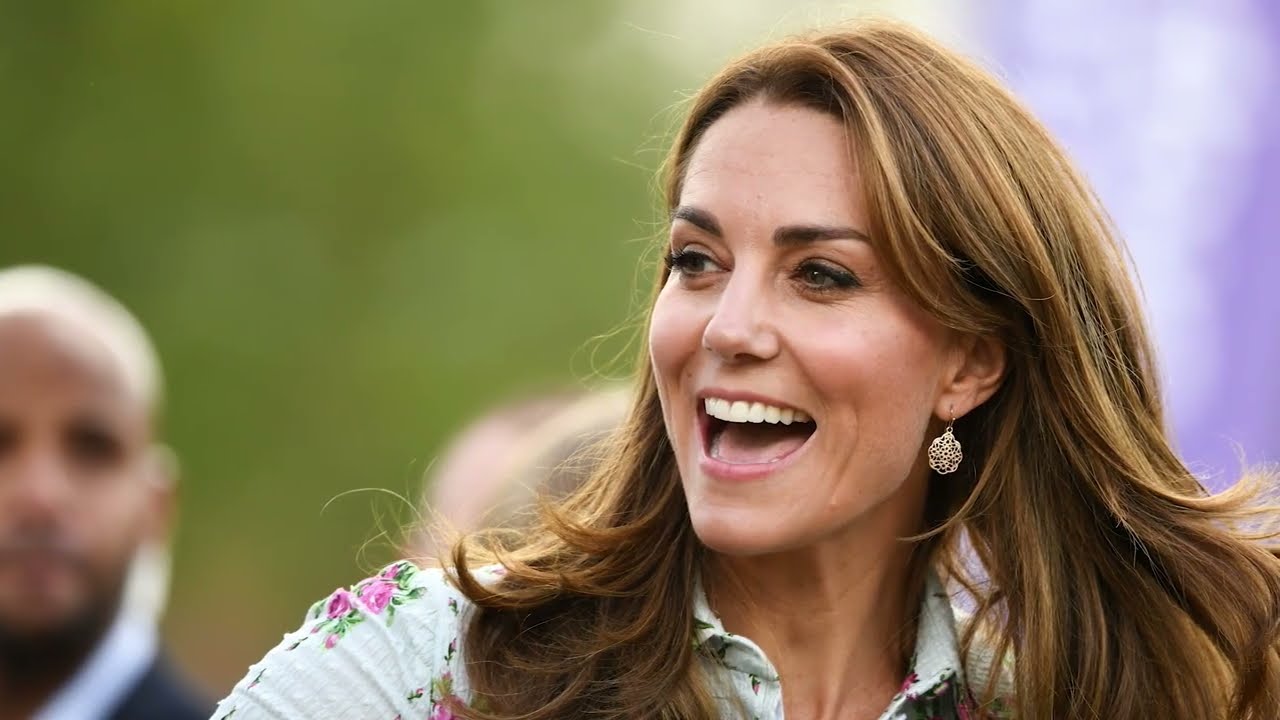
And what was standing behind the second woman — the thing that had not been there for the first — was the family a former air hostess had built out of nothing, against the disdain of people who thought her beneath them.
The woman the palace never wanted turned out to be the reason the palace did not lose a second princess. That is not sentiment. It is the plainest reading of what the years actually showed.
Step back from the single family for a moment, and the Middleton story takes on a larger shape, because the British monarchy has always depended for its survival on a thing it also finds almost impossible to do well: taking in new blood from outside.
An institution that married only within its own dwindling circle would have calcified and died generations ago. And so the crown has repeatedly reached beyond itself for fresh people. And the record of what happens to those people once they are inside is one of the darker running themes in the whole modern history of the family.
The outsider is needed. The outsider is brought in. And then, again and again, the machinery that needed her turns out to have no idea how to keep her whole.
Look at the pattern across a single century.
In the 1920s, the future George VI married Elizabeth Bowes-Lyon, a Scottish aristocrat who was, by the strict standards of royalty, a commoner. Her arrival was greeted at the time as a modernizing step — the firm bringing in someone from beyond the narrow pool of eligible princesses. She survived, and more than survived, but she had come from grand stock and knew the world she was entering.
A decade later, the pattern turned dark. Edward VIII fell for Wallis Simpson, an American divorcée the institution judged entirely unabsorbable. Rather than take her in, the establishment forced a choice that ended with a king giving up his throne. The outsider was rejected so completely that the man had to leave with her.
Then Diana — the aristocrat's daughter, brought in young and destroyed by isolation.
And in our own time, the pattern repeated once more with the marriage of Prince Harry to Meghan Markle, an American actress who married into the family in 2018 and who, with her husband, stepped back from royal duties and moved abroad within two years. Another incomer the institution proved unable to hold.
The details of that departure remain contested and are not the business of this story to adjudicate. What matters is the shape it shares with the others. The crown reaches outside itself because it must, and then struggles, over and over, to keep the people it reaches for.
Set against that century of difficulty, the Middleton case is the striking exception — the one where the outsider was brought in and stayed, and was neither rejected nor broken.
And it is worth asking honestly why this one worked when so many did not.
It was not that Kate had grander origins than the others, because she had by far the humblest. It was not that the man she married was warmer, or the court kinder, or the press gentler, because none of those things were obviously true.
The variable that was different — the thing present in her case and absent or weaker in the others — was the external family standing behind her, intact and capable, and led by a mother who had made its defense her life's work.
The institution had never been able to supply that from within, because the institution is not a family in that sense. It is a machine. And machines do not hold frightened people together at two in the morning.
What held Kate was something the crown neither provided nor controlled, nor even fully understood: a wall of ordinary human loyalty built by a woman it had spent a decade wishing away.
There is an irony in that worth sitting with, because it turns the whole snobbery inside out.
The aristocracy had looked at the Middletons and seen everything they lacked — the ancient name they did not have, the inherited land they did not hold, the centuries of breeding they could not claim.
What the aristocracy could not see, because it had never had to think in these terms, was that the Middletons possessed in abundance the one thing the institution most needed and could least manufacture: the capacity to function as a close and durable family under extreme pressure.
The old families had bloodlines. The Middletons had cohesion. And when the two were tested against each other by the hardest years, cohesion turned out to be worth more.
Because bloodlines do not sit with you through illness. And cohesion does.
The thing the snobs mocked as the Middletons' deficiency — their lack of grandeur, their almost suburban closeness — was the precise quality that let them succeed where grander families had failed. And the people who sneered never grasped that they were watching a demonstration of exactly what they themselves had lost somewhere along the centuries of being bred rather than built.
This is also a story about what has happened to English class over a single lifetime. And there was nothing gentle about the change.
When Dorothy Harrison was training her daughter at a kitchen table in Southall, the class a person was born into in this country was very nearly destiny. The idea that a granddaughter of coal miners might one day sit in Westminster Abbey watching her own child marry the heir to the throne would have seemed not ambitious but deranged.
Within Dorothy's own lifetime, or nearly, that impossible thing happened.
The Middleton ascent is one of the clearest illustrations available anywhere of the fact that the English class structure, for all its ferocious persistence, is no longer the sealed system it once was. That money and education and nerve and two or three generations of relentless effort can carry a family from the bottom of it very nearly to the top.
The barriers did not fall. The snobbery did not vanish, as ten years of coded contempt made plain. But the walls turned out to be climbable in a way they had not been before. And the Middletons climbed them in plain sight, and the whole watching country, whatever it said out loud, understood that it was seeing something that could not have happened a hundred years earlier, and cannot now be unhappened.
A door that opens once cannot be fully closed again.
There is a cruelty in the timing that the celebrations of 2011 papered over, and it belongs in any honest telling, because the woman who set this whole climb in motion did not live to see where it ended.
Dorothy, Carol's mother — the girl out of the Durham pit families who had decided at a kitchen table that class was a starting position and not a sentence — died in the years before the wedding. As did Ronald, Carol's father, the builder.
Neither of them sat in Westminster Abbey. The grandmother whose stubbornness and elocution lessons and refusal to accept the ceiling had launched the family upward across a hundred years was gone by the time the granddaughter she had trained the training for reached the summit.
Dorothy started the climb and did not see the top of it. She had done the first, hardest, least rewarded stretch — the part where a working-class woman drags a family up out of the bottom of the English class system by sheer will and gets no applause for it.
And then she died. And five years later her granddaughter married the future king in front of two billion people, and Dorothy was not there to watch the thing she had begun.
That is how these ascents actually work, and it is worth marking, because the popular version compresses everything into the fairy tale of the girl and the prince and loses the long relay behind it.
The Middleton climb was not one person's achievement. It was three women's, run in sequence across a century, each handing the effort forward to the next.
Dorothy did the launch — the impossible first push from the pit villages and the council flat — and pressed into her daughter the skills and the appetite that would carry things further than she could take them herself.
Carol did the long middle: the building of the fortune, the choosing of the schools, and the patient defense of the whole project through the years of coded contempt, taking the family from comfortable to genuinely arrived.
And Kate did the final stretch, the part that finished it — though she did it carrying everything the two women before her had put into her, the correct speech and the poise and the unhurried nerve that had all been shaped for exactly this.
When people looked at Kate and saw a natural, a young woman who seemed born to the role, they were seeing the accumulated work of three generations wearing the face of one. There was nothing accidental in the ease. The ease was the product.
Beside Carol through the long middle stretch stood Michael, and his part in the story is easy to underrate precisely because he played it without noise.
If Carol was the drive of the family, Michael was its ballast — the settled Yorkshire steadiness that kept the whole ambitious enterprise from ever tipping into the vulgarity the snobs were always hoping to catch.
He carried the older money and the older respectability, the Lupton inheritance that had helped pay the school fees. And he carried a temperament to match it: calm and unshowy, and entirely without the striving that would have given the game away.
A family led only by Carol's ambition might have burned too hot and shown it. A family with Michael's ballast underneath that ambition moved upward without ever seeming to strain. And the seeming was half the achievement, because in England the appearance of effortlessness is the thing the effort is all directed toward.
The marriage worked as a partnership of complementary strengths, the drive and the ballast. And the children were raised inside a household that had both, which is a large part of why they turned out as steady as they did.
Whatever else can be said about the Middletons — and the snobs said plenty — they were a functioning family. And the functioning was not luck. It was two people who fit together well, raising three children with attention and love, and a clear idea of where they were going.
When the girl who had been trained for it finally stepped fully into the national life, the country got to watch the three generations of work pay off in public, over and over.
Kate became, with William, first the Duchess of Cambridge, and then, after the old queen died in 2022 and Charles came to the throne, the Princess of Wales — the title Diana had worn, another inheritance from the first outsider passed to the second.
She stood at the center of the great national occasions: the jubilees, the funeral of the queen, the coronation of the new king. Composed and correct and entirely equal to the role.
And every time she did it, somewhere in the background was her mother — the former air hostess, present and watching. The woman who had built the whole thing, and who never once stepped forward to claim the smallest share of the credit for it.
That restraint was the last and hardest expression of the family style. Carol had spent her life learning to be present without being seen to push, to shape without appearing to grip. And at the summit of everything, she held to it, letting her daughter have the light, and taking for herself only the private knowledge of what she had made.
To feel the full weight of what Carol built, you have to look hard at the woman whose place her daughter took. Because Diana is not a vague cautionary figure in this story. She is the precise measure of the danger.
The easy assumption is that Diana, an earl's daughter, an aristocrat born inside the world the Middletons spent a century approaching, must have had every advantage Kate lacked. The truth runs the other way.
On the one thing that turned out to matter most, Diana had far less than Kate, not more.
Her childhood had been marked by a rupture that never healed. Her parents separated when she was small, in a divorce so bitter it left scars on all the children. There followed a custody battle of real ugliness, and a sense, carried into adulthood, of a family broken at the root.
Her mother left the family home. Her father held the children. The aristocratic apparatus around her was grand and cold, and at the moments that counted, not on her side at all.
When Diana was struggling inside her marriage, her own grandmother — a woman close to the royal household — was among those who took the institution's part rather than the granddaughter's.
That single fact tells you almost everything about the difference between the two outsiders.
Diana came from a family with a title and land and centuries of pedigree. And when the crisis came, that family did not close ranks around her to protect her from the machine. Parts of it closed ranks with the machine against her.
Then she was married at 20 to a man whose heart was elsewhere, into an institution that treated her as an ornament and a womb and a problem. And she was left to face all of it essentially alone.
The marriage carried from early on the presence of a third person, and Charles's long attachment to Camilla is not tabloid invention but documented history that he himself came to acknowledge.
Diana's response to the isolation — the eating disorder, the unhappiness, the growing sense that she was trapped inside a role that was consuming her — was the response of a young woman with no solid ground beneath her. No intact family to retreat into. No mother of the kind Kate had, who would build a wall and stand at it.
She fought the institution in the open because she had no private shelter from which to endure it. And the open fight, and the institution's cold response to it, ground on until she came apart, and left the family, and died.
The machine had needed her, taken her, and been utterly unable to keep her whole. And the reason it could not was that there was no family standing between her and its indifference. She faced the coldest institution in the country with almost nothing at her back.
Now set beside that the young woman who took her place, and wore in the end her very title.
Kate came from the bottom of the class system rather than the top of it. And by the metrics the aristocracy cared about, she was nothing — the great-granddaughter of miners, the daughter of a woman who had served drinks on airplanes.
And on the one metric that decided which outsider survived, she was rich beyond anything Diana had possessed. Because she had an intact family that functioned, and a mother who had spent a lifetime learning how to defend the people she loved, and who had studied Diana's destruction and built in advance the exact thing whose absence had killed her.
Where Diana's family had fractured, Kate's held. Where Diana's grandmother sided with the palace, Kate's mother sided, without exception and without hesitation, with her daughter. Where Diana faced the machine alone, Kate faced it surrounded.
The girl with no pedigree had the one form of wealth that the girl with all the pedigree in the world had lacked. And it was the form that mattered when everything else was stripped away.
This is the deep irony the whole story turns on, and it is worth stating plainly. The aristocracy had spent a decade certain that the Middletons were the deficient ones — the family that lacked what a royal bride's family ought to have.
They had it exactly backwards. On the measure that decided life and death for an outsider inside that institution, it was the grand families who were deficient and the self-made family who were rich.
Because grandeur is not the same thing as cohesion. And a name is not the same thing as a mother who will stand at a wall for 50 years.
And when the two were finally tested against each other, by illness and pressure and the coldness of the machine, it was cohesion that held and grandeur that had, a generation earlier, catastrophically failed.
Carol Middleton gave her daughter the one inheritance the aristocracy could not: the inheritance of a family that worked. And it turned out to be the only inheritance that could keep an outsider alive in that role.
Everything the snobs had, Diana had had too. And it had not saved her. The thing they lacked, and mocked the Middletons for having, was the thing that did.
There is a larger meaning folded into all of this, and it reaches well past one family, because the Middleton story is finally an argument about two different kinds of strength and which of them lasts.
The aristocracy's strength is inherited. It arrives at birth, unearned, in the form of a name and a house and a place in a system built to keep such things in the same hands across centuries.
And its great weakness is the weakness of everything that comes without effort: that the people who hold it never had to develop the muscles that acquiring it would have built.
The Middletons' strength was the opposite kind. Every part of it had been earned — the money made rather than inherited, the polish learned rather than absorbed at birth, the cohesion built by two people who chose each other and raised their children with attention rather than assumed by a bloodline.
And earned strength, it turns out, is the more durable of the two, because the effort that produces it also produces the character that holds it together under pressure.
The old families had the grandeur. The self-made family had the thing grandeur cannot manufacture, which is resilience. And resilience is what survives contact with catastrophe.
Watch how that difference played out over the long run, and the pattern is hard to miss.
The aristocratic families in this story, for all their pedigree, kept producing fractures, divorces, cold childhoods, alliances of self-interest that turned against their own members when it mattered.
The Middletons, with none of the pedigree, kept producing cohesion — a family that held through business failure and public mockery and serious illness, and did not come apart.
That is not an accident of temperament. It is what happens when a family is built by people who had to build it, rather than inherited by people who were simply born into its remains.
Carol had constructed something real, with real load-bearing strength, because she had constructed it herself out of necessity. And the necessity had forced into it exactly the qualities that inherited grandeur never has to acquire, and therefore never has.
The institution the Middletons married into needed that infusion more than it could bring itself to admit. And the honest verdict is that the monarchy did not merely survive the arrival of this self-made family. It was improved by it.
The crown had spent the modern era struggling with a coldness at its own center — a machinery that processed human beings and left them broken. And into that coldness came a family whose defining quality was warmth of a functional, load-bearing kind. The warmth that holds people together, rather than the sentimental sort that photographs well and does nothing.
The habits that came in with the Middletons — the closeness, the ordinary family life, the grandmother present in the children's days, the refusal to hand every human function over to staff and distance — were habits the institution had lacked and needed. And they have begun to change what the family is from the inside.
The snobs who feared the Middletons would drag the monarchy down had it backwards once again. The Middletons brought the monarchy up. They gave it a transfusion of exactly the human strength it had been missing, and the institution is warmer and more durable for having taken them in.
Whatever the old families thought they were protecting when they sneered.
And here is the thing about the sneering, seen from the far end. It has vanished.
The coded contempt that filled a decade. The jokes about doors and gum and toilets. The glossy cruelty about climbing plants. The whole apparatus of drawing-room disdain that was aimed at Carol Middleton for years has left almost no mark on the world, because it was never building anything. It was only defending a position that was already lost.
The people who deployed it are forgotten. Their names attached to nothing. Their wit remembered by no one.
What Carol built endures. The family stands. The daughter is a princess and the mother of a king to come. The grandchildren are in the line of succession. And the woman who was supposed to be too common for the room is now woven so far into the story of the monarchy that she cannot be removed from it.
The contempt was loud in its moment and is silent now. The building was patient and is permanent. That is usually how it goes between the people who sneer and the people who build.
And it is worth marking, because the sneering felt at the time like it might actually win. It never had a chance, because you cannot mock a thing out of existence once it has been properly made.
The clearest proof of the permanence is in the children, because the Middleton story is no longer only a story about the past. It runs forward now into the future of the crown itself.
Carol's eldest grandson, George, is a future king. The boy who will one day sit on the throne of the United Kingdom carries in his blood the line that ran down into the County Durham coal seams — the pit families, and the laborers, and the girl from the Southall council flat.
And he is being raised by his parents substantially in the way Carol raised hers. The family chose for him and his siblings a childhood closer to the ordinary than any heir to the throne has known in generations.
A normalish schooling. Weekends with a grandmother who bakes and organizes the games. A home life shaped far more by Berkshire warmth than by palace protocol.
The great-great-grandchild of a coal miner will wear the crown. And he will wear it having been formed in part by the values a former air hostess pressed into her own children at a kitchen table — the same values her own mother pressed into her a generation before that.
The relay that began in the pit villages does not end at Kate. It runs on into the monarchy's own future, into the upbringing of the next king, into the character of the institution itself.
Think about what that means across the full span of it. Dorothy Harrison, training her daughter at a kitchen table in Southall, decided that the class a person was born into was a starting position and not a sentence.
And she was right, in a way she could not have begun to imagine, because within a few generations her own descendant would be raised to be king of England, carrying her stubbornness and her values forward into the highest place the country has.
The elocution lessons and the corrections and the refusal to accept the ceiling — all of it aimed at hauling a working-class family up out of the bottom of the English class system — ended not merely with a granddaughter in Westminster Abbey, but with a great-great-grandson in the line to the throne, shaped by the family culture she had started.
The pit and the crown, joined in a single boy. There is no story in modern British life that collapses the whole distance of the class system quite so completely.
And the person who set it in motion was a working-class woman whose name almost no one knows, working at a kitchen table with nothing but nerve and an idea about what was possible.
The values that came down that line are worth naming, because they are the real inheritance, more than any money or title.
They are the belief that effort matters more than birth. That a family holds together by attention rather than by blood alone. That presentation is a skill you can learn and not a thing you are simply born knowing. That you climb without complaint and without explanation, and let the results speak. That loyalty to your own people is a floor you do not go beneath, no matter how grand the room you enter.
Those were Dorothy's values. They became Carol's. They became Kate's. And they are being pressed now into the children who will carry the monarchy forward.
Which means that the institution's own future is being shaped by the hard-won wisdom of a family the establishment once thought beneath it.
The aristocracy guarded its bloodlines for centuries and produced, at the end of it, a coldness that broke people. A self-made family from West London produced, in a single lifetime of effort, a set of values strong enough to carry a young woman through the role that had destroyed her predecessor — and worthy enough to be passed on to a future king.
Which of those is the real nobility is a question the old families would rather not have asked. And the Middleton story asks it anyway, simply by having happened.
For a woman at the center of one of the most remarkable social ascents in modern British history, Carol Middleton has remained astonishingly hard to see. And the invisibility is itself the final proof of her discipline.
She has given the outside world almost nothing. A handful of interviews over the years, most of them tied to the family business rather than to the family's grander story, in which she offered a few careful glimpses of an ordinary grandmother and firmly declined to say anything that might feed the narrative of the scheming matriarch.
She has been photographed at Wimbledon, at the Christmas services on the Sandringham estate among the royal family, at the milestone occasions where the mother of the Princess of Wales has a natural place. And past that, nothing.
No memoir. No settling of scores with the people who spent a decade sneering at her. No claiming, ever, of the credit for what she plainly built.
In an age when almost everyone connected to the royal family has at some point cashed in on the connection, Carol has held a silence so complete that it amounts to a kind of statement.
And the statement is that she was never in this for the recognition. She was in it for the result. And the result was her daughter, safe and elevated and whole. And the recognition was always beside the point.
That silence should not be mistaken for a lack of vindication, because on every substantial question, the woman they called pushy turned out to be right.
She was right that the school would put her daughter in the path of the right people. She was right to hold her nerve through the long wait rather than force the issue. She was right that the family should close ranks around Kate rather than let the institution absorb her whole. She was right, above everything, that an outsider would need a wall of family behind her to survive that role.
And the years proved it in the hardest way possible.
Point by point, decision by decision, across three decades, her judgment was sound. And the people who mocked her as a suburban Mrs. Bennet scrambling above her station were, point by point, wrong.
The snobs had the wit and the pedigree and the confidence of their inherited position. And she had the better read on almost every situation that actually mattered. And reading situations correctly is worth more in the end than any amount of breeding, because breeding does not tell you what to do. And judgment does.
The acceptance, when it came, came completely. Whatever pockets of private disdain still linger in the grander drawing rooms, the late queen, by the accounts that reached the public, came to value Kate greatly — to see in her steadiness and reliability exactly the qualities the institution needed in its future. And the wider royal family came to lean on the Wales household as one of its steadiest pillars.
The woman whose family had been judged not quite the thing became the mother of the woman the monarchy trusts most. And the transformation was so complete that it is easy now to forget how fierce the resistance once was.
That is what total victory looks like in a world that fights by code. There is no surrender, no admission, no moment when the old families concede that they were wrong. There is only the slow, undeniable fact of the outsiders becoming indispensable — until the question of whether they belong stops being asked, because the answer has become too obvious to state.
Carol did not win an argument. Arguments were never available to her, because the code does not argue. She won by outlasting — by being present and correct and impossible to fault for so long that the disapproval simply ran out of anywhere to stand. And by building something so solid that the people who had wished it away had to live, in the end, inside its shadow.
She is, when you set the whole thing out, one of the most formidable figures modern Britain has produced, though the establishment will never describe her that way. Because to describe her that way would be to admit what she achieved and how. And admitting it would cost the old order more than it can afford.
A working-class girl trained by her mother in the art of belonging. Who studied the manners of a class she was not born into from the aisle of an airplane. Who built a fortune out of nothing and spent it with perfect strategic sense. Who aimed her daughter at the throne and held her nerve through every setback, and defended her against a hostile establishment for decades. And who, when the hardest test came, had already built the one thing that could carry her daughter through it.
That is not the story the snobs told about her. It is the story of what she actually did. And it is a far more impressive story than the fairy tale, because the fairy tale is about luck and this is about will.
The last and most public proof of how completely the family had arrived came in the great national moments of the 2020s, when the crown gathered itself for the occasions that matter most and the Middletons were there — established, unremarkable in their presence, exactly where a decade earlier a certain kind of observer had been so sure they did not belong.
In the summer of 2022, the country marked the Queen's 70 years on the throne, the longest reign in its history. And the family that stood at the center of the celebration was the Wales family — William and Kate and their three children, the future of the monarchy on display, with the great-grandchildren of a Durham miner among the small figures on the palace balcony while the crowds filled the Mall below.
A few months later, the old queen died, and the country entered its longest period of mourning in living memory. And through all of it, Kate held her place with a composure that drew comment from everyone who watched her — the steadiness her mother had bred into her, carrying her through days of national grief conducted under the heaviest scrutiny in the world.
When Charles came to the throne, he made his son the Prince of Wales, and Kate became Princess of Wales — the title Diana had carried, passing to the second outsider, the very name the first had worn.
Then, in the spring of 2023, came the coronation of the new king in Westminster Abbey. In the same ancient room where, 12 years earlier, Kate had walked up the aisle in a secret dress while a section of the aristocracy watched her mother from the corners of their eyes.
Now the mother was back in that same church — no longer a subject of coded whispers about whether she belonged, but an established member of the family, at the very center of the state, present at the crowning of a king.
Carol and Michael Middleton were there for it: the former air hostess and the airline dispatcher, seated in Westminster Abbey for the coronation of the monarch.
And the distance between that seat and the Southall council flat where Carol's mother had trained her to speak correctly is the whole story of this family compressed into a single afternoon.
The room that had been so unsure of them once could no longer imagine itself without them. The people who had joked about doors and gum had faded into nothing. And the Middletons remained — fixtures now at the crown's most sacred occasions, in the very building where the sneering set had once been so certain they would never truly belong.
None of it had been inevitable, and that is the thing to hold on to, because the completeness of the victory can make it look, in hindsight, as though it could only ever have ended this way.
It could have ended a hundred other ways. The relationship could have failed in the split and never recovered. The snobbery could have done its slow work and worn William down until he chose someone the drawing rooms approved of. The long wait could have broken Kate's nerve. Or the press could have found the crack that turned Waity Katie from a cruel joke into a genuine wound.
At any of a dozen points, the climb could have stalled or reversed, and the family could have been left where so many strivers are left — close to the summit and permanently short of it, a cautionary tale about reaching too high.
That it did not end that way was not luck. It was the product of a family that made the right decision at each of those dozen points, held its nerve when nerve was the only thing that would serve, and was guided at every turn by a mother who read each situation correctly and acted on the reading.
Take Carol out of the story and it is easy to imagine it ending in failure at any number of those junctions. Leave her in, and it becomes, in retrospect, a masterclass in patience and judgment conducted over 30 years against people who held every advantage except the one that mattered.
To understand her method is to understand something that runs against almost everything the present moment values. Because Carol Middleton played a game measured in decades, in an age that measures everything in days.
She invested in position rather than display — in the rooms her children would stand in 20 years later, rather than in anything that would show a return that season.
She refused, at every provocation, to react, because reacting was the mistake that gave the game away. And she had the rarest form of discipline there is: the discipline to do nothing when doing nothing was correct. To absorb insult without answering it. To let her enemies overreach while she stayed composed, and let the long arithmetic work in her favor.
She understood that in England the appearance of ease is the thing the effort is directed toward, and so she hid the effort completely, presenting to the world only the finished surface while the machinery ran out of sight.
And she understood people — read them the way she had learned to read the passengers in an aircraft cabin, sorting the real from the performed, knowing exactly how much a thing was worth and exactly how long to wait for it.
These are not glamorous skills. They do not photograph well or make for a stirring headline. They are the skills of a strategist playing a very long game. And they carried a family from the bottom of the class system to the steps of the throne, while the people who mocked her congratulated themselves on their wit and lost.
What the Middleton warmth brought into the monarchy did not stop at the private door of the family. And this is where the story reaches its largest claim, because the influence has begun to show in the public work of the crown itself.
The generation the Middletons married into is remaking the monarchy into something warmer and more engaged than the remote institution it inherited. And the direction of that change runs unmistakably toward the values a Berkshire family brought with it.
Kate made her signature cause the early years of childhood — the first stretch of a person's life — launching a dedicated center for the study of it and campaigning to put the importance of those years in front of the country.
There is something fitting in the daughter of a woman who understood the shaping power of a good upbringing devoting her public life to exactly that subject.
William took up mental health, homelessness, the environment, and did it with a directness the older generation would have found faintly improper — standing in shelters, and talking openly about grief and pressure and the interior life, in a way the stiff old institution had spent centuries avoiding.
The family that came in from the outside brought an ease with ordinary human difficulty that the crown had lacked. And that ease is now part of how the monarchy presents itself to the country.
You can trace the openness back to the family that arrived with it. The Middletons were people who functioned as a family in the full sense, who did not lock the inner life away behind a wall of protocol. And one of them, James, the youngest, spoke publicly and with real courage about his own depression, becoming an advocate on a subject the establishment had always treated as something not to be mentioned.
That willingness to be human in public, to admit difficulty, to treat the interior life as real rather than as something to be managed out of sight, came into the family from the Berkshire side. And it has spread.
The monarchy that is emerging under the Wales generation is one that talks about mental health, that engages with the problems ordinary people actually face, that presents itself as a family with feelings rather than a set of remote symbols.
And while it would be too simple to lay all of that at the Middletons' door, it would be dishonest to pretend they had nothing to do with it. They brought warmth into a cold institution, and the warmth has begun to change what the institution is.
There is a deep historical logic in this that the snobs, fixated on blood, entirely missed. Every institution that survives across centuries does so by taking in new vigor from outside, because an institution that draws only on itself grows thin and brittle and eventually fails.
The great families understood this in theory, which is why the crown had always reached beyond its own circle for brides. And yet they resisted every time the actual people it reached for, sneering at the new blood even as the institution needed it.
The Middletons were new blood of an especially useful kind: a family that carried exactly the qualities the crown had lost — the cohesion and the warmth and the ordinary human competence. And by taking them in, the monarchy renewed itself in the way institutions must if they are to last.
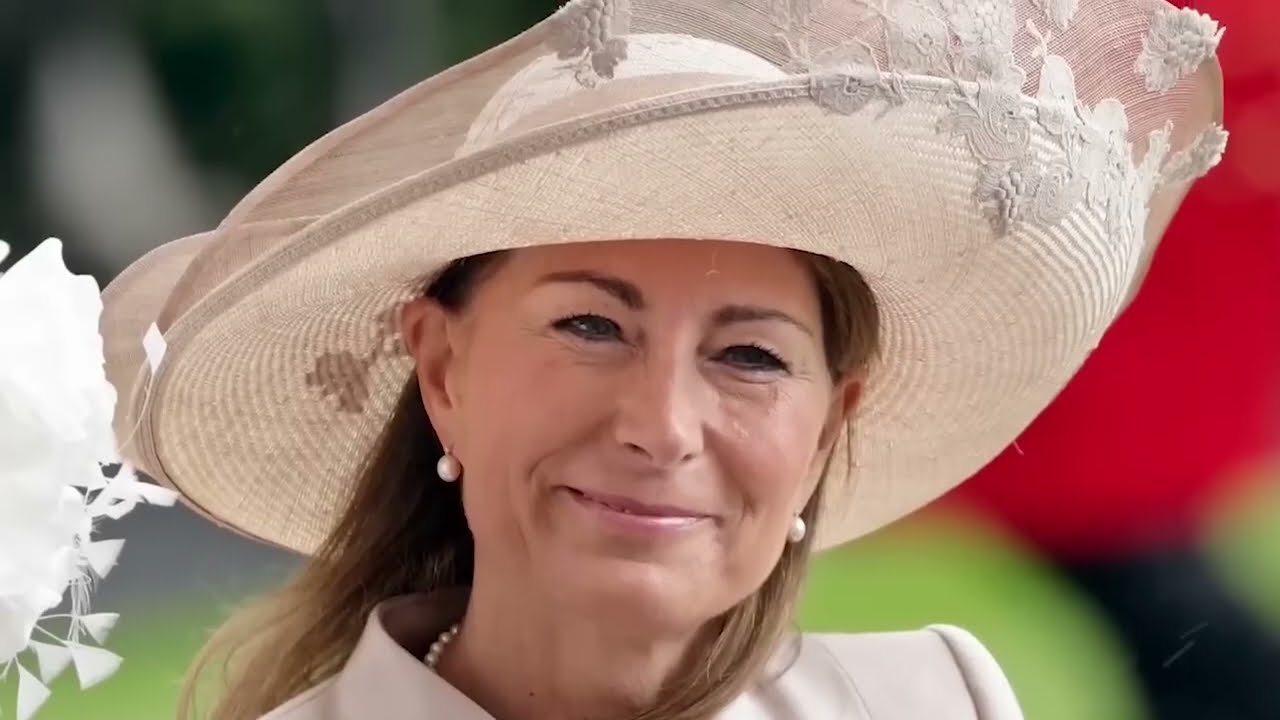
The aristocracy thought it was defending the purity of the thing when it sneered at Carol Middleton. It was in fact obstructing the very renewal that keeps the thing alive.
And the renewal happened anyway, over its objections, because the future king fell in love with a girl from Berkshire, and no amount of coded contempt could stop what the institution needed from entering it through the front door.
None of this is to pretend the ascent came without cost, because it did. And an honest account has to sit with the price as well as the triumph.
The scrutiny that fell on Kate from the moment her relationship became public never lifted. And it is a strange and heavy thing to have your entire adult life conducted in front of the world — to be photographed and analyzed and judged from your early 20s onward, to lose permanently the ordinary privacy that most people take for granted without noticing they have it.
The girl who joined a rowing crew and pushed a supermarket trolley on Anglesey was even then never fully free. And the freedom she had has only narrowed since.
The whole family gave up a great deal of ordinary life for the position they climbed to. The ability to be anonymous. To make a mistake in private. To exist without commentary.
Carol's own privacy was surrendered along with her daughters'. Her every appearance now noted. Her past picked over. Her brother's worst moments splashed across the papers for the world to consume.
The ascent was real and it was earned. And it also cost the family the quiet, ordinary life it had once had. There is no version of this story that pretends the summit came free. It did not. It came at the price of privacy, of ease, of the freedom to be an unremarkable family in an unremarkable village.
Whether the exchange was worth it is a question only the people who made it can answer. But the exchange was made with open eyes. And that is the final thing to understand about Carol Middleton.
Because she was never naive about what she was aiming her family toward. She had studied the position closely enough to know exactly what it demanded, and exactly what it had done to the last woman who held it.
And she went forward anyway, calculating that with the right preparation and the right support, her daughter could take the thing that had destroyed Diana and survive it.
She was betting her daughter's whole life on that calculation. And it was a cold and clear-eyed bet. And she won it.
But the winning does not erase the size of what was risked. She sent her daughter into the most dangerous role in the country, having built in advance the one thing that might carry her through it. And it did carry her through. And the price of the passage was steep, and Carol paid it knowingly, because she had decided somewhere along the way that the summit was worth the cost.
That is not the decision of a naive woman out of her depth. It is the decision of a strategist who had counted the price and judged it worth paying — and who was proven right in the end, on that question as on all the others.
While the drawing rooms sneered, the country did something the drawing rooms never expected, which was to fall in love with exactly the thing the aristocracy despised.
The British public, in the main, adored the Middleton story. And it adored it precisely for the reasons that made the snobs recoil.
Here was a girl from an ordinary background — not a princess from some minor European house, not the daughter of a duke, but a young woman whose mother had worked and whose family had built its own money — marrying the future king. And to most of the country that was not a scandal. It was a fairy tale of a modern and rather better kind.
The old story, the prince marrying the aristocrat's daughter, had ended in the horror of Diana. The new story, the prince marrying the self-made family's daughter, felt to the public like the monarchy finally catching up with the country it ruled — a country that no longer believed, if it ever truly had, that a person's worth was fixed at birth by the rank of their parents.
The people saw in Kate a princess who was recognizably one of them. And they loved her for it. And the love was genuine and deep, and has lasted.
The split in how the ascent was received tells you almost everything about where the real divide in England now runs.
The aristocracy, the small closed circle at the very top, resented the Middletons, because the Middletons were a living threat to the idea that position should be inherited rather than earned. And that idea is the only thing the aristocracy has.
But the country below that circle — the vast majority of the nation — admired exactly what the aristocracy resented, because the country below believed, increasingly and correctly, that a person should be able to rise by effort. And the Middleton ascent was that belief made flesh.
The snobs were defending a world in which birth is destiny. The public was celebrating a world in which it is not. And the fact that the public's view was the majority view — that the country as a whole cheered the granddaughter of miners into the royal family while only a thin layer at the top muttered — is itself a measure of how far the old order had already lost the argument, even among the people it had spent centuries ruling.
The aristocracy still held its position. But it had lost the country's belief in the rightness of that position. And the joy with which the public embraced the Middletons was, in its way, the sound of that belief finishing.
Carol understood the public as well as she understood everything else. And part of her genius was that she gave the country a story it wanted to believe without ever appearing to perform it.
She never courted the public affection. Never played the ordinary mom for the cameras. Never leaned into the fairy tale in any visible way. She simply let the family be what it was — a functioning, warm, self-made English family — and the country, hungry for exactly that after the coldness of the Diana years, embraced it on sight.
The restraint was the strategy again. A woman who had tried to sell the public a heartwarming story would have been seen through in a moment. A woman who simply lived the story and let the public discover it for themselves was irresistible.
And Carol, who had spent her life learning how to present a surface while hiding the work, presented the country the surface of an ordinary, loving family, and let it fall for what it saw.
The aristocracy watched the public adore the Middletons and could not understand it, because the aristocracy was measuring by a scale the public had stopped using. And while the snobs consulted their obsolete rankings, the country simply took the Middletons to its heart and would not be talked out of it.
There is an old comparison that gets made about Carol, and it is worth examining, because the way it both fits and fails is revealing.
She is sometimes likened to Mrs. Bennet, the mother from Jane Austen's novel who schemes with almost comic determination to marry her daughters into money and rank.
On the surface, the comparison lands: the ambitious mother, the marriageable daughters, the relentless focus on a good match.
But the comparison falls apart the moment you press it. And the way it falls apart shows what is actually remarkable about Carol.
Mrs. Bennet is a figure of fun because she is foolish — loud, transparent in her scheming, forever giving the game away by wanting it too obviously and pursuing it too clumsily.
Carol was the exact opposite of all of that. She was never foolish, never loud, never transparent, never once caught wanting it too plainly.
Where Mrs. Bennet schemes visibly and embarrasses her family, Carol worked invisibly and elevated hers. Where Mrs. Bennet is a cautionary tale about ambition without dignity, Carol was a demonstration of ambition executed with total control.
The comparison is reached for because the culture has a readymade slot for the ambitious mother, and the slot is a comic one. And slotting Carol into it lets people diminish her.
But she does not fit the slot, because the slot is for women whose ambition makes them ridiculous. And Carol's ambition made her, in the end, one of the most successful strategists the country has produced.
She was not Mrs. Bennet. She was the anti-Mrs. Bennet — the ambitious mother who never once made herself absurd. And that is precisely why she won where the comic version always loses.
For all the talk of strategy — and the strategy was real — there is a simpler thing at the bottom of this whole story. And it would be a poor account that lost sight of it.
Because underneath the calculation and the long game and the reading of rooms was a mother who loved her daughter.
Everything Carol did — the school, and the nerve, and the wall of family support, and the refusal to let her daughter face the machine alone — was, in the end, the behavior of a mother protecting a child. And the fact that she did it with unusual skill does not make it any less an act of love.
The two things are not in tension. A mother can love her daughter fiercely and also be a brilliant strategist about how to protect her. And Carol was both at once. And the strategy was in service of the love, rather than the other way around.
She did not use her daughter as a vehicle for her own ambition, whatever the snobs implied. She used her ambition and her skill as tools to protect her daughter. And the direction of that relationship — the love as the end, and the strategy as the means — is the thing the cynical reading of Carol always gets backwards.
The bond between the two women was, by every account that reached the public, exceptionally close. And it stayed close through everything.
Kate and her mother spoke constantly. And when the pressure of the role became difficult, it was to her mother that Kate turned — to the house in Berkshire and the woman in it. The closeness was not a strategic arrangement, but a genuine and lifelong attachment between a mother and a daughter who plainly liked as well as loved each other.
When Kate was expecting her first child and suffered badly in the early months, it was her family she withdrew to. Through the hardest passages of her public life, the constant presence in the background, steady and available, was Carol.
The wall of family support that this whole account has described was not, at bottom, a strategic construction. It was love organized well.
Carol loved her daughter, and she was clever enough to turn that love into an actual structure of protection rather than leaving it as mere feeling. And the structure held because the love beneath it was real.
A wall built out of strategy alone would have been hollow, and would have failed under pressure. This one held because it was built out of the strongest material there is: a mother's determination that her child would not be destroyed. And strategy was only the form that determination took.
This is the thing the aristocracy, for all its breeding, could not compete with, because you cannot inherit a mother's love. You can only have it or not have it.
And Diana, for all her pedigree, had not had it in the form Kate did. The tragedy of Diana was, in large part, the tragedy of a woman who lacked exactly this — a mother and a family who would build a wall around her and stand at it without fail.
Kate had it. And it made all the difference. And the reason she had it was that her mother was a particular kind of woman — fierce and loving and skilled — who had decided, long before it was needed, that her daughter would never face the world without her family at her back.
The snobs measured the Middletons by blood and found them wanting. They never thought to measure them by love, which is the measure that actually decided the outcome.
And by that measure, the family from Berkshire was rich beyond anything the grand houses could match. The one thing that could keep an outsider alive inside that institution was a mother who loved her enough to protect her properly. And that was the one thing no amount of aristocratic breeding could supply — and the one thing Carol Middleton had in abundance.
Understand too how rare the whole thing is, because it is easy to lose the improbability of it in the smoothness of the finished story.
A story like this almost never happens. The English class system, for all that it has loosened, remains one of the more rigid in the developed world. And the distance the Middletons traveled — from laborers and miners at the bottom to the steps of the throne at the top, in the space of a few generations — is not a distance that families typically cover.
Most families that begin where the Goldsmiths began stay within sight of where they began. The barriers are real. The disadvantages compound. And the doors the Middletons walked through are, for the overwhelming majority of families in their position, doors that never open.
What Carol and her mother and her daughter achieved is not a normal outcome that anyone with enough effort can reach. It is an extraordinary outcome, achieved by an unusual combination of talent and nerve and timing, and yes, some luck, against odds that defeat almost everyone who faces them.
The story should not be read as proof that the class system is now fair, because it is not. For every Middleton family that climbs the whole height, there are countless others with the same effort and the same nerve who never get near the top, held down by barriers that no amount of will can move.
The Middleton ascent is remarkable precisely because it is rare. And treating it as ordinary would be to miss the thing that makes it worth telling.
There is one more reason this marriage held where the earlier one shattered, and it sits alongside the family support rather than apart from it. Because the two young people at the center of it knew each other in a way the previous royal couple never had the chance to.
Charles and Diana had met only a handful of times before they married. Near strangers, pushed together by dynasty and circumstance. Two people who barely knew one another, standing up in front of the world to promise a lifetime. And the gulf between them was there from the start, and only widened.
William and Kate were the opposite case in every respect. They had been together for the better part of a decade before they married. They had been friends before they were a couple. They had lived in the same student flat. They had built a real and tested relationship over years. They had even weathered a breakup and chosen to come back to each other, which is its own kind of proof.
By the time they married, they knew each other completely, faults and all. And the marriage rested on genuine knowledge and genuine choice, rather than on the thin ceremony of two people meeting a few times and being told to wed.
That foundation was solid, because it had been built slowly. And the slowness that the press had mocked as Waity Katie was, seen properly, the very thing that made the marriage strong.
William's part in that deserves recognition, because he had learned the hardest possible lesson about what a royal marriage can become, and he applied it.
He had watched, as a boy, what happened when the heir to the throne married a young woman he barely knew into a role she was not ready for. And he had every reason to be careful. And he was.
He took his time. He made certain, over years, that the woman he was going to ask was strong enough for what he was asking, and that the two of them were solid enough to survive it. And he did not propose until he was sure.
The long wait, which looked from outside like indecision, was in truth a man determined not to repeat his parents' catastrophe, making very sure before he committed. And the surety he built in those years was part of what carried the marriage through the difficulties that came later.
He chose well, and he chose slowly. And both the quality and the pace of the choice were shaped by the tragedy he had grown up inside.
Between his caution and Carol's preparation, the second outsider entered the marriage with advantages the first had entirely lacked: a husband who genuinely knew and had genuinely chosen her, and a family standing ready behind her. And those advantages were the difference between the two outcomes.
And Kate herself — the young woman at the center of all this planning and protection — turned out to be exactly the person the whole enterprise required. Which was not an accident either, because she was the product of the family that made her.
The quality everyone came to associate with her — the steadiness, the reliability, the sense of a person who could be counted on absolutely and would not crack or complain or put a foot wrong — was the Middleton character expressed in its most polished form.
She had her grandmother's nerve and her mother's discipline and her father's calm. And she had been raised inside a functioning family that had taught her, without ever spelling it out, how to hold herself together and carry a burden without dropping it.
The monarchy came to rely on her precisely because she was reliable. And she was reliable because of where she came from, because a family had built into her the strength that the role would demand.
The aristocracy had looked at that family and seen a deficiency of blood. What that family had actually produced was a young woman steady enough to become, in time, the most trusted figure in the institution that had once been so unsure whether her mother belonged in the room.
The product spoke for the process. Kate was what the Middleton climb had been for. And she was equal to it. And her being equal to it was the vindication of everything her mother and grandmother had done to prepare her for a role none of them, at the start, could have known she would ever be asked to fill.
It is worth taking the claim at the heart of this whole story and examining it honestly one last time, because the phrase that the palace never wanted her is a headline, and headlines collapse things that need to be kept separate.
There was never a single unified body called the palace that held one clear view of Carol Middleton. There were several very different constituencies, each with its own attitude. And lumping them together produces a claim that is true of one of them and a distortion of the rest.
There was, first, the aristocratic set around William — the small circle of grand young people who had known each other since childhood, and who policed the boundaries of their world with the coded cruelty this story has described.
Of that group, the claim is simply true. They did not want her. They regarded the Middletons as trade, as arrivistes, as people who did not belong in their world and never would. And they conducted a low campaign of disdain against the family for years.
If the phrase means this group, then it is accurate. And no amount of the family's later success ever fully changed their private view, because their private view was never really about Carol at all. It was about defending the idea that their world should stay closed. And Carol was a threat to that idea by her very existence.
There was, second, the institutional machinery of the palace — the courtiers and officials who managed the monarchy's affairs. And here the claim becomes more complicated.
The machinery was wary of the Middletons, but its weariness was of a different kind: less personal disdain than institutional caution. A concern about the closeness of the family and the influence of the mother, and the ways in which a hands-on Berkshire clan did not fit the traditional pattern of how a bride's family was supposed to behave.
That is not the same thing as not wanting her at the wedding. The machinery accommodated the Middletons, worked with them, managed the occasion around them. And its unease was the unease of an institution confronting something outside its usual template, rather than the active rejection the headline implies.
To say the machinery never wanted her flattens a careful institutional ambivalence into a simple hostility it did not quite hold.
There was, third, the queen herself. And here the claim mostly falls apart.
By the accounts that have reached the public, the old queen was pragmatic about Kate and came over time to value her considerably — to see in her exactly the steadiness the institution would need.
Whatever reservations the monarch may have had early on, the notion that she did not want the mother of the future queen at her grandson's wedding does not survive contact with what is known. Because the queen was, above all, a realist about the monarchy's survival, and she could see what Kate offered. The blanket claim does not describe the sovereign.
And there was, fourth and most obviously, William — who chose Carol's daughter, who wanted her enough to marry her against the muttering of his own set, and for whom the idea that he did not want his own wife's mother at his own wedding is simply absurd.
The person whose wedding it was wanted the bride. And wanting the bride meant welcoming her family. And the whole coded campaign of the aristocratic set was aimed, in the end, at a decision that was not theirs to make, and that the groom made in the Middletons' favor.
So the honest picture is this. A specific and powerful faction genuinely did not want Carol Middleton, and conducted a decade of deniable contempt to make the point. The institution was wary of her in a more measured, less personal way. The queen came to value what her family offered. The groom wanted her. And the public adored her.
The headline that the palace never wanted her is true of the faction and false or misleading of everyone else. And the reason it persists is that the faction's disdain was the loudest and most quotable part of the story — the part that made for the best copy.
But the fuller truth is more interesting than the headline. Because the fuller truth is that Carol Middleton faced real and powerful opposition from one quarter and won anyway — not by defeating that opposition, but by rendering it irrelevant.
Because the people who mattered — the groom and the queen and the public — were never against her. And the faction that was could do nothing but mutter as the wedding it disapproved of went ahead without its permission.
She was the woman a section of the aristocracy never wanted. And she became the woman the institution, the sovereign, the groom, and the country could not do without. And the gap between those two facts is the whole measure of what she achieved.
Go back for a moment to the airplane. Because the years Carol spent in that cabin were the crucible of everything she became, and they are too easily passed over as a mere job, when they were, in fact, the finest education in class she could have received.
British air travel in the middle of the 1970s was still a relatively exclusive world. Flying was expensive, and the people who filled the cabins of long-haul aircraft were, in the main, the people with money and standing — the businessmen and the wealthy and the members of the establishment, moving across the world in a way most of the country could not afford to do.
And moving among them, hour after hour, flight after flight, was a working-class girl from Southall in a tailored uniform — close enough to study them at leisure, invisible enough that they behaved in front of her as though she were not fully there.
Consider what an observation post that was. An air hostess in that era was selected for exactly the qualities Carol's mother had spent years cultivating in her: poise, presentation, the ability to appear at ease in any company. And then she was placed, for years, in sustained close contact with the very class she was learning to imitate.
She watched how they spoke to one another and how they spoke to her. She learned which of them were secure enough in their position to be gracious, and which betrayed their insecurity by being rude to the staff — a tell she would read for the rest of her life.
She saw, at close range and repeatedly, the small distinctions of manner and speech and bearing that separated the genuinely grand from the merely rich. And she filed every one of them away.
The cabin was a laboratory of the English class system. And Carol spent her formative working years inside it as both participant and student, performing the role of the composed, correct young woman while studying with complete attention the people she was serving.
The passengers would never have imagined that the young woman bringing their meals was conducting a systematic education in how their world worked. Because that is the nature of the observation post: the people being observed do not know they are the subject.
To them she was part of the furniture of the flight, a pleasant presence to be thanked or ignored. And they went on being themselves in front of her, revealing in a thousand unguarded moments the codes and manners and small cruelties of their class, while she watched and learned and gave no sign that she was doing anything but her job.
It was the same skill she would deploy for the next 40 years — the presentation of a surface while the real work went on underneath. And she was refining it in the cabin before she had any idea what she would eventually use it for.
When people later mocked the trolley dolly who had married her daughter up, they could not have been more wrong about what those years had been. They had not been a humble job that Carol rose above. They had been the training ground where she learned, at the closest possible range and over years, exactly how the class she was aiming her family toward actually behaved.
And that knowledge, acquired in the aisle of an airplane, was worth more to the eventual project than any amount of formal education could have been.
There is a neatness to it that the story rarely notices. The single detail the snobs seized on hardest — that Kate's mother had been an air hostess, that she had served drinks for a living — was the exact detail that explained why Carol was so good at the game.
They thought her incapable of playing. They mocked the job as proof of her lowness. The job was, in fact, the source of her mastery.
She had spent years being paid to study the upper classes at close range, learning their codes from the inside of their own cabins. And she brought that hard-won knowledge to bear on the project of elevating her family. And it worked, in part, because she understood the people she was dealing with better than they understood her.
The observation post had given her the intelligence. She used the intelligence. And the class that had unknowingly educated her in its own manners lost, in the end, to the woman it had regarded as beneath its notice.
The trolley dolly had been taking notes the entire time. And the notes were the foundation of everything that followed.
The wedding did not happen in a vacuum, and part of why it landed the way it did has everything to do with the state of the country that watched it.
In the spring of 2011, Britain was a subdued and anxious place. The financial crisis of a few years earlier had hardened into a long austerity, public spending cut to the bone, the national mood flat and worried, and short of things to feel good about.
Into that gray stretch came a royal wedding, a bank holiday, a burst of color and ceremony, and street parties up and down the country. And a nation that had not had much to celebrate seized on it with a kind of hunger.
Millions watched. Towns closed their roads and set out trestle tables. For a single day the anxious mood lifted, and the country gave itself over to a spectacle of continuity and hope. And the timing of that — the wedding arriving exactly when the nation most needed a lift — was part of what fixed it so firmly in the public heart.
And the particular shape of the story mattered to how it was received, because this was not a stiff dynastic match between two aristocratic houses, the kind of wedding that impresses the establishment and leaves the public cold.
This was the ordinary girl and the prince. The self-made family's daughter, marrying the heir to the throne. And to a country in the middle of a hard decade, that was a far more powerful story than any grand aristocratic pairing could have been.
People saw in Kate a young woman who had come from a background they recognized, whose mother had worked, whose family had built its own way up. And the sight of someone like that walking into the royal family felt to a great many ordinary people like a door opening — like proof that the old walls were not as fixed as they had once seemed.
The Middleton story gave the country not just a spectacle, but a fairy tale it could actually believe in, one in which the girl who rose was not born to it but earned her way there. And in a nation weary of being told that everything was fixed and nothing could change, that story was a tonic worth more than the organizers could have planned.
Carol's whole hundred-year climb was folded into the appeal, whether the crowds knew the details or not, because the thing they were responding to — the sense of an ordinary family making good against the odds — was exactly the thing she had spent her life building.
There is a habit in the way history gets told, and it is worth naming here, because the Middleton story is a case study in it.
History remembers the principals. It remembers the famous names, the kings and the princesses, the figures at the front of the photograph. And it tends to forget the people at the edges who actually shaped the outcome — the ones who did the unglamorous work that made the famous moments possible. The mothers, the builders, the strategists in the background who never stepped into the light.
Carol Middleton is one of those figures. And the way her story is usually told proves the point, because it is almost always told as her daughter's story — the tale of the girl who met a prince at university and married him, a fairy tale with Kate at the center and Carol, at best, a supporting character in the margins.
But the girl did not build the path she walked. The girl walked a path that had been built for her over decades by a woman who is barely in the frame. And the woman in the margin is the one who actually made the famous story happen.
Shift your eye from the center of the photograph to its edge, and the real author of the whole thing comes into view. And she is not the one wearing the dress.
This is the deeper reason a story like this is worth telling properly, because the history that lives at the edges — in the lives of the people the official version leaves out — is very often the truest history there is.
The famous moments are the visible tip of long invisible labor. And the labor is almost always done by people whose names do not make the headlines. The mothers, and the outsiders, and the ones who worked in the background while others took the credit.
Carol Middleton spent her life in that background by choice, building and protecting and never once stepping forward to claim what she had made. And the result is that the most consequential figure in one of the great social ascents of modern Britain is also one of the least understood — a woman hidden in plain sight at the edge of a story everyone thinks they know.
To tell it properly is to move her from the margin to the center, where she belongs. And to see, once she is there, that the fairy tale of the girl and the prince was never really the girl's story at all. It was her mother's, and her grandmother's before that. And the girl in the dress was the last runner in a relay the world only noticed at the finish line.
There is one thing about Carol Middleton that no research can recover. And it is worth admitting at the end, because it is the natural limit of any account of her.
We can reconstruct what she did. We cannot reconstruct what it cost her, because she never let it show. And the concealment was so total and so lifelong that her interior life remains finally closed to us.
We know the decisions she made and the strategy she followed and the results she achieved. We do not know what she felt while she made them, because feeling was the one thing she never displayed. And a person who spends her whole life presenting a flawless surface leaves, in the end, no reliable record of what moved behind it.
Consider what must have moved behind it, even if we cannot see it directly. A decade of coded contempt from people who thought her beneath them, absorbed without a flicker of reaction, because reacting would have handed them the win.
That absorption was not the absence of feeling. It was the mastery of it. The discipline to swallow insult after insult and give no sign. And the cost of that kind of self-command is something we can guess at but never measure, because she never once let the guess become a certainty.
She carried it all in private: the disdain, and the pressure, and the fear for her daughter, and — at the summit of everything — the absence of her own mother, who had started the climb and had not lived to see it end.
What it was to stand in Westminster Abbey, having reached the place your whole family had aimed at for a century, while the woman who set it in motion was not there to see it, is a weight we can name but not feel — because the person carrying it declined, as she declined everything, to reveal what it did to her.
And that opacity is itself the last expression of her control. The composure that served as her armor against a hostile world is also the reason she remains, at the close of her own story, an enigma. A woman we can admire and reconstruct and explain, and cannot fully know.
She built a wall around her daughter. And she built a wall around herself too. And the second wall has held so completely that even now, with the whole ascent visible and the strategy laid bare, the woman at the center of it keeps her own counsel, gives nothing away, and remains behind the flawless surface she spent a lifetime perfecting.
Perhaps that is exactly as she would want it. She was never in this to be understood. She was in it to protect her family and to place her daughter safely at the summit. And she did both. And she did them without ever letting the world see what they cost her.
And the not letting the world see was, from the girl at the kitchen table to the woman in the powder blue coat, the whole discipline of her life.
It says something too that people cannot agree on what to make of her, because the disagreement is really a disagreement about ourselves.
Look at Carol Middleton and call her a schemer, a social climber who worked the system to place her daughter on a throne, and you have revealed that you believe position ought to be inherited and that reaching for it is a kind of trespass.
Look at the same woman and call her a heroine — a mother who built her family up by talent and nerve and protected her daughter against an establishment that despised them — and you have revealed that you believe worth is earned and that the reaching is admirable.
The facts are the same in both readings. The judgment flips entirely on what the person judging believes about class and merit, and whether the walls between people should hold.
Carol is a mirror. And the country has been looking into her for years, and seeing in the reflection its own divided mind about whether birth or effort should decide a life.
The aristocracy looked and saw a trespasser. The public looked and saw one of their own made good. And which of those you see when you look at the woman in the powder blue coat tells you, in the end, less about her than about you.
So return one last time to Westminster Abbey on April 29, 2011, and to the woman in the powder blue coat walking the length of the nave while two billion people watch and a section of the room wonders how she came to be there.
You know now what you did not know at the start.
You know that inside that composed and upright figure was a hundred years of climbing, and three generations of women, and a will that had never once faltered across the whole distance from the pit villages of County Durham to the steps of the throne.
You know that the ease she wore was not ease at all, but the hardest-won discipline in the building.
You know that the disapproval running under the organ music was real — and that it was also already defeated, because the wedding was happening, and there was nothing the disapproval could do.
And you know that the ring on her daughter's finger, the dead princess's sapphire, carried a question that only the woman in the blue coat had thought seriously about. And that her answer to it, built over decades before anyone knew it would be needed, was the reason the story that began that morning would not end the way the last one had.
The distance she traveled is worth holding in the mind whole, because it is almost too large to take in piece by piece.
Her mother's people went down into the Durham coal seams in the dark and came up gray, and did it again the next day for the whole of their lives, generation after generation. A family that produced one outcome and expected no other.
Her mother, Dorothy, decided at a kitchen table in a Southall council flat that the ceiling was not fixed, and pressed that belief into her daughter along with the elocution lessons and the corrections and the appetite for more.
Her daughter Carol built a fortune out of birthday plates, spent it with perfect judgment on the schools that would put her own children in the right rooms, held her nerve through a decade of coded contempt, and aimed the whole enterprise at the throne.
And her granddaughter Kate, carrying everything the two women before her had put into her, walked up the aisle of the oldest ceremonial room the monarchy owns, and married the man who would be king.
The pit and the crown, joined by a single unbroken line of women. None of them ever in a hurry. Each one shoving the next a rung higher across a century — until the great-great-grandchild of a coal miner stood in the line of succession to the throne of the United Kingdom.
There is no larger climb in modern British life. And it was made by three ordinary women with nothing but nerve and love, and a refusal to accept the place they had been assigned.
And the woman who started it did not live to see it. Dorothy, who had done the first and hardest stretch — the impossible push from the bottom — was gone before the wedding, and did not sit in the abbey to watch the thing she had begun reach its summit.
That is the quiet grief folded inside the triumph, and it belongs in the telling, because it is the truth of how these ascents actually work. The person who does the launching rarely sees the landing.
Dorothy trained the training that trained Kate. And then she died. And her granddaughter married a future king five years later. And Dorothy was not there.