Few scenes in the Godfather Trilogy carry as much hidden weight as Michael Corleone's 1954 meeting with Moe Greene in Las Vegas. On the surface it is a tense business negotiation. Beneath it lies a turning point that shapes everything that follows.
By 1954, Michael had returned from Sicily and spent several years being mentored by his father and Tom Hagen in the family business. He had begun asserting his authority, laying out new orders to his inner circle and positioning his pieces before making his final move.
Michael was ruthlessly ambitious. He wanted to rebuild the Corleone family from the ground up and rebrand it as one of the country's wealthiest families. The olive oil business would no longer be enough.
Vegas was still in its infancy, and its opportunities were immense. The Corleone family had been eyeing it for years. Don Vito was interested in its possibilities and wanted to be among the first to enjoy its fruits.
During the war, Fredo was sent to the West Coast under the protection of Don Anthony Molinari, a friend and ally of Don Vito. He was not sent only for his safety. The family was making large investments in the casino business, and Fredo was sent to learn the ropes before the family's major move into the market.
That was how Fredo was introduced to Moe Greene. Greene had been the pioneer in Vegas, and the families relied on him to run the show there. He received substantial financing and investment from the Corleone family, including money for the hotel he ran, as a favor and to ensure he would keep Fredo safe.
Greene was based on Bugsy Siegel, and the similarities run deeper than many realize. In both the film and real life, the families believed Siegel, and Greene, were skimming off the top.
At first it is not clear what Michael aimed to achieve by making that accusation. What is certain is that Greene's next move revealed everything Michael needed to know.
The meeting begins with smiles and handshakes, but the energy in the room shifts quickly. Michael gets straight into business, and his approach is deliberately belittling. He came straight for Greene's ego.
Michael wanted to show Greene who really ran the show. He made clear he was not afraid or concerned about recent events. He offered to buy Greene out.
Greene was insulted. He refused, insisting that he bought Michael out, not the other way around. He accused Michael of thinking he was skimming off the top.
Greene then mocked the family's position. He said the Corleone family did not have that kind of muscle anymore, that the Godfather was sick, and that they were being chased out of New York by Barzini and the other families.
The conversation turned to Fredo. Michael confronted Greene about slapping his brother around in public. Greene dismissed it as nothing, saying he had a business to run and sometimes had to straighten people out.
The meeting ended with a chilling moment. Michael told Greene he was leaving for New York the next day and to think about a price. Greene shot back, asking if Michael knew who he was. Michael did not acknowledge him, telling him to say anything he had to say to Michael directly.
There is much to unpack. One key element is the disturbing dynamic between Fredo and Greene. Those few interactions tell a large part of the story and point to the larger problem of Fredo siding against the family.
Greene's power moves were premeditated. The first was his timing. He deliberately kept Michael waiting, a classic strategy that still works on powerful people. By making Michael wait, he flipped the script and asserted dominance without a word.
When Greene finally walked in, he did so with the flash and swagger of his casinos, greeting everyone and making clear he owned the room. The message was simple: this was his turf and he set the pace. It was risky, but Greene was not playing for respect. He was reminding Michael that in Vegas, the house always wins.
The dynamic between Greene and Fredo is more unsettling. Fredo was meant to be a highly valued guest, mentored by Greene under Don Molinari's protection. Instead, Greene treated him like a punching bag, a boy who pulled chairs and took beatings while pretending it was business as usual.
Imagine having the older brother of the man you are negotiating with pull your chair for you after being slapped around hours earlier. The psychological warfare was embedded in Greene's actions. He knew the Corleones were aware of how he treated Fredo, and he did it anyway.
That awareness created an undercurrent of tension, a silent weapon in Greene's favor. If Greene was willing to straighten out Fredo, the son of a powerful Don, it sent a message about his audacity and lack of fear.
It tilted the balance of power during negotiations and planted doubt and frustration within the Corleone family. If Greene could treat Fredo that way, what did it say about his respect for the Corleone dynasty?
Greene also casually mentioned that the Godfather was sick and that the family was being chased out of New York. That line was a jab. It added to his confidence and solidified his lack of respect.
Greene had already hedged his bets. He saw the cracks in the Corleone empire long before anyone else dared to admit it. The signs were there. One brick at a time, their empire was crumbling.
His strategy was clear. Milk the Corleone hotels and casinos for everything they were worth while they still had something to give. He was a shark circling the waters, biding his time and extracting every ounce of profit.
That was only the setup. Greene knew the tides were turning. When Barzini inevitably went for the killer blow, Greene would be ready to leverage a better deal. He positioned himself as a valuable ally, an asset too profitable to ignore.
For Greene it was not just about survival. It was about thriving in the chaos, playing both sides until the dust settled and the chips were firmly in his corner.
Fredo, for reasons that still baffle, remained divided in his loyalty. Despite all the disrespect and manipulation, he continued to align with Greene.
Fredo was the official link between the Corleone family and Greene, and that link was not just weak. It was compromised. His missteps were part of a pattern that consistently undermined Michael's authority, and many of them fly under the radar.
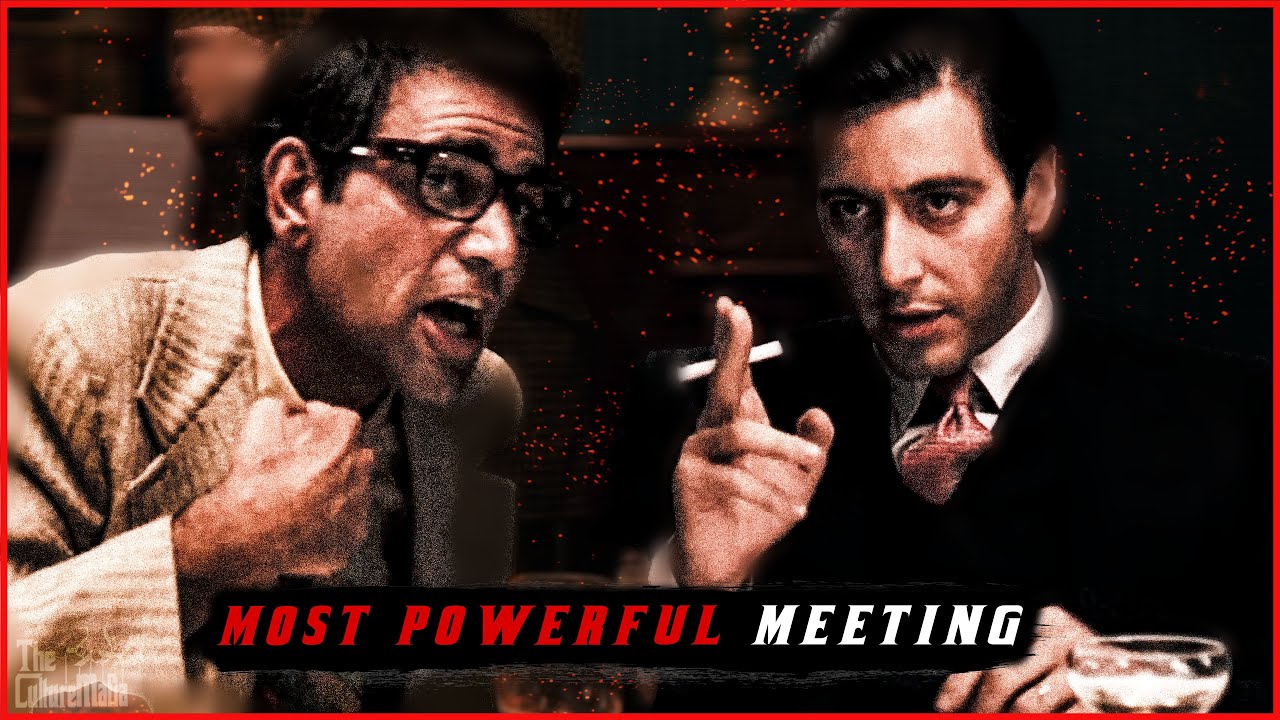
It started earlier, during Michael's conversation with Johnny Fontaine. Michael was working to convince Fontaine to sign a contract with the family's businesses in Vegas, a move designed to strengthen their foothold.
Fredo chimed in with what seemed like an innocent question, asking Michael if he was sure and noting that Greene loved the business and had never said anything to him about it. That harmless remark planted a seed of doubt in Fontaine's mind.
It introduced uncertainty where Michael was trying to project unshakable confidence. A small moment, yes, but in the game of power small cracks can become gaping holes.
When Greene walked into the room, Fredo's missteps escalated from subtle to outright damaging. He acted like Greene's lackey, downplaying his actions and even defending him in front of Michael.
Fredo said Greene did not mean anything by it, that he flew off the handle once in a while, but that they were good friends. He said he had a business to run and had to straighten Fredo out.
Damage control might have been Fredo's only play to save face in an awkward situation. He was caught between Michael, whose authority demanded absolute loyalty, and Greene, the most powerful man in Vegas and by extension his own status in the city.
The real mistake was not what Fredo did in that moment. It was allowing the situation to spiral out of control in the first place. By failing to command respect in Vegas and letting Greene treat him like a subordinate rather than the Corleone family's representative, Fredo set himself up for failure long before the meeting began.
The optics were terrible. Siding with Greene, even subtly, against Michael's authority put Fredo in direct opposition to his brother. It may not have been malicious, but in the world of the Corleone family, perception is reality.
Fredo's actions painted him as weak, divided, and disloyal. An Arabian proverb says that if what you have to say is not more beautiful than silence, do not say it. Another warns not to let your tongue cut your throat.
All Fredo had to do was keep quiet, especially when things started to heat up. At the very least he could have stopped talking after seeing Greene insult the Corleone family.
Tensions were already high. Greene had just exploded, refusing Michael's offer and hurling insults and accusations as if daring Michael to retaliate. Michael remained calm, composed, and calculating.
Then Fredo spoke. He suggested that Tom Hagen, the consigliere, could talk to the Don and explain. That little action pushed things too far. Everything else could have been brushed aside, but this was a dagger in Michael's back.
There were three main reasons why it was a big deal. First, it was a public undermining of authority. In the world of the Mafia, the Don's word is absolute. By appealing to Tom Hagen, Fredo publicly questioned Michael's decisions and suggested he lacked confidence in his leadership.
Second, it was a betrayal of family unity. Projecting unity is not just tradition. It is survival. Every move the family makes, especially in front of outsiders, must reinforce the idea that they operate as one unbreakable unit. Fredo sent the opposite message.
Third, it had consequences beyond the room. Word of internal discord spreads fast in their world. Fredo's actions could embolden rivals like Barzini and gave Greene leverage to push back harder, knowing Michael's authority was not ironclad.
It made Michael look weak and insecure. For someone whose entire strategy revolved around projecting power and control, this moment was a disaster. To have his brother contradict him publicly made Michael look as though he could not command loyalty even within his own family.
Greene was not just watching the negotiation. He was analyzing every subtle power shift. Seeing Fredo turn to Hagen likely signaled that Michael was not fully in control of his own family, giving Greene the confidence to dig in his heels.
In the Cosa Nostra, perception is everything. A Don who cannot command complete loyalty is a Don who is vulnerable. Fredo's actions painted Michael as a leader whose own family might undermine him. It was a green light for enemies to start testing those cracks.
Fredo was divided, unsure, and willing to challenge Michael in a setting where unity was critical. It was a public display of disloyalty, and worse, it emboldened Greene. If Michael's own brother would not back him, why should anyone else?
Fredo was not trying to betray Michael outright. In his desperation to manage the situation, he inadvertently exposed a crack in the Corleone family armor, along with some of the hidden resentment he felt toward Michael for being stepped over.
That crack was enough to set the wheels of chaos in motion. Fredo did not just weaken Michael's authority. He put the family's reputation on the line.
His decisions in that meeting were not about loyalty or strategy. They were driven by his own insecurities and desperate need to prove himself. Instead of focusing on what was best for the family, he let personal grievances and misplaced loyalty to Greene cloud his judgment.
Michael was playing chess, thinking ten steps ahead for the family's survival. Fredo was oblivious to the bigger picture.
So what was the real play behind Michael's offer? Why would he make Greene an offer in such an insulting way, subtle but potent enough to trigger him? There were two main elements.
The first was that the hotels were actually losing money, and it does seem Greene was skimming off the top. The Corleone family were among the biggest investors in the hotel, so he was practically stealing from them right under their noses. It also made the family look even weaker.
Michael wanted to go all in on Vegas. It was to become the family's new stronghold and primary business. He was also buying up three other casinos on the Strip.
The second element was more emotional, and perhaps ego-driven. Greene had no qualms about disrespecting Fredo in front of everyone. He openly straightened out his boss's son, Michael's older brother, knowing Fredo was the son of a ruthless mob Don who was also technically his boss.
Michael wanted to reassert the family's reputation and position of power. That made things very personal. Greene knew he was in the wrong but was unfazed by the fact that Fredo was meant to be under his wing, not some kid he could slap around when he did something wrong.

Even though Fredo was in the wrong, you do not slap around the Godfather's son. It signifies that the family is no longer feared, and fear is the tool that keeps enemies at bay. Losing that aura shows the Corleone family is decaying.
It also directly affected Michael, since he was now the one in charge. People would think he was a pushover. What could this kid do about it?
Michael could have been cold because he was angry at how Greene disrespected Fredo. But Greene had sealed his fate. One of the most powerful laws of power in a business setting is to always say less than necessary.
Powerful people impress others by saying less. The more you say, the more likely you are to say something foolish. Silence makes people uncomfortable as they try to work out what you are thinking.
When Michael managed to get Greene furious and emotional, Greene proudly slipped in that he had been in talks with Barzini, the family's archenemy. It was a deadly mistake.
It revealed two vital things. First, it confirmed Michael's suspicion that Greene had been stealing from the hotel. More surprisingly, it revealed Greene had been caught out. When Barzini, likely another investor, got hold of this, it seems they struck a deal.
It also hinted that Barzini was plotting to take the family out of Vegas. Did Michael want Greene to refuse so he could justify taking him out, similar to what Sollozzo did with Vito? Keep in mind that Greene was a very effective operator and innovator in Vegas, a true pioneer. The families were quite happy with him as a solid operator.
It would make sense that Michael would need something convincing to justify taking him out. Michael likely just needed Greene's confession that he was stealing from the casinos. That would be enough, very similar to the real-life Bugsy situation.
But it goes deeper. Michael was seen as extremely weak and doomed to fail. He knew how outsiders perceived him, and this was extremely dangerous, not because it hurt his ego, but because in that world fear is what keeps people in check.
As Machiavelli states, it is much safer to be feared than loved, because love is preserved by the link of obligation which, owing to the baseness of men, is broken at every opportunity for their advantage. But fear preserves you by a dread of punishment which never fails.
These are criminals, after all. Why would anyone care about what the Godfather wanted if they did not care about the consequences? Only the strong survive. When a more powerful presence like Barzini introduces itself and starts dominating the arena, people flock to them.
In the end it was not just about Greene disciplining Fredo. Slapping Fredo around was also Greene's way of showing he no longer feared the Godfather. He did not care about the consequences, because the Corleone family was not what it once was.
This symbolized the severity of the family's position. If it went unpunished, the whole family was in danger. Fear was the only thing stopping their enemies from closing in.
Fear of the Godfather was what forced the families to make peace, even if temporary. They saw Vito had come back, and if they could not tame his anger, they would all suffer an excruciating punishment.
There was a sliver of a chance that if Greene took the deal he would have survived, even if he had been stealing. Michael could probably forgive that. But openly disrespecting the Corleone family, refusing to back down, and already making deals with Barzini was not something a new Godfather was going to forgive. He needed to make an example of him.
This was the first time we see Michael truly owning his new role outside the family. It was the first time he was truly tested. We start noticing that menacing look, those eyes full of pain and anger now imprinted on his face, while he still tried to keep it all together.
He now had a new life purpose, one goal he believed could quench all the trauma and suffering he went through: revenge. Any remnant of the old Michael died back in Sicily. At this point Michael knew Greene had signed his own death warrant, and it was only a matter of time.
The consequences of defiance are simple. Never insult the wrong person, for their power and influence may far exceed your own. Choose your battles wisely and approach others with respect, for you never know who holds the keys to your success.
In the novel, Moe Greene's death is classic Michael Corleone: cold, calculated, and executed with precision so sharp you almost miss it. There is no shootout, no dramatic final words, none of the noise you would expect.
Two days after Nino Valenti's funeral, Greene is taken out in the Hollywood home of his movie star mistress. Quiet, clean, efficient, exactly how Michael likes it. A single gunshot cuts through the luxury, shattering the illusion of Greene's invincibility.
Greene's body hits the floor, and with it the last shred of resistance to Michael's Vegas takeover. The man behind it, Michael's trusted Albert Neri, does not stick around. He vanishes on vacation in the Caribbean for nearly a month, off the grid, leaving the trail cold.
By the time he strolls back into New York, tanned and unbothered, the heat is long gone. Michael welcomes him back with a smile and a reward: a prime Eastside bookmaking operation, a lucrative slice of the family's income.
Greene's death tightened Michael's grip on Vegas but also sent ripples through the underworld. It was a signal. Barzini saw it and caught a glimpse of Michael's devious intentions, yet he did not see himself in the crosshairs.
That is the genius of Michael Corleone. He does not just eliminate enemies. He makes them feel invincible right up until the moment he pulls the trigger.
Barzini might have respected it, maybe even admired it. It showed him the Corleone family still had some fight in them. But he did not realize the same playbook was being written for him.
He saw Greene as a problem solved, not a preview of his own fate. That is where he got it wrong. Michael let Barzini feel safe, let him believe his alliances, reputation, and position made him untouchable. In Michael's world, that false sense of security is the most dangerous thing of all.
Greene was the opening move, the subtle warning shot Barzini ignored. By the time he figured it out, it was checkmate. Greene's death was not just a power move. It was the calm before the storm, and Barzini never saw it coming.
Maybe it was Barzini's arrogance, or maybe he thought Greene had it coming after word spread about how he treated Fredo. Everyone knew Greene was a dead man walking. Michael did not even need to spell it out. Greene had crossed too many lines, and his time was up.

Could that have been the moment for Barzini to step back and think that maybe he should not underestimate Michael? He had to know this was not the same Michael who sat on the sidelines during Vito's reign. Perhaps he thought Michael would not have the guts to come for a man like him, a Don.
Greene was not just a casualty. He was a case study in what happens when you get too comfortable disrespecting and underestimating Michael Corleone. Michael was not settling personal scores. He was consolidating power. By the time Barzini realized it was not just business but strategy, he was already next.
In the film, it was impossible for Barzini to know, as Michael had decided to take out all his enemies in one unprecedented move. The showdown with Moe Greene is not just a meeting. It is a battlefield, and Michael Corleone plays it like a general following Sun Tzu's The Art of War.
Beneath the surface of their exchange lies a master class in power, strategy, and calculated dominance. Michael does not react to Greene's provocations or match his theatrics. Instead he plays the long game, methodically dismantling his opponent without ever drawing his sword.
The meeting with Moe Greene was more than a negotiation. It was a strategic master class, a practical application of The Art of War in the world of the Mafia. Michael's ability to stay patient, maintain control, and execute with precision ensured not just revival but dominance.
In the end, Michael does not just win the meeting. He wins the war. Greene did not even realize he was fighting.
Sun Tzu's The Art of War is a timeless guide to strategy, offering principles that resonate across centuries. His emphasis on deception and understanding the enemy proved essential. When you start to see the world through a Sun Tzu lens, everything changes. Obstacles become opportunities, and conflicts become games of strategy you can control.
It is not about brute strength or luck. It is about understanding the battlefield, knowing your opponents, and mastering yourself. These lessons are not just history. They are power waiting to be wielded, a tool to see the unseen and think ten steps ahead.
The fallout from the Moe Greene conflict did not just settle the Corleone business in Vegas. It lit the fuse for a war with Hyman Roth. Greene was not just some flashy casino operator. He was Roth's guy, handpicked, groomed, and backed as a cornerstone of Roth's empire.
Killing Greene was not just business. It was personal. The move created a rift that could not be patched up. Roth saw Greene's murder as more than a power grab. It was an insult, a betrayal, a challenge to his legacy. In this world, you do not hit a guy like Roth without expecting him to hit back.
That is when the chessboard came out. Roth did not just go after Michael with guns. He went after him with strategy, manipulation, and assassination attempts. It was not just about revenge. It was about sending a message of his own: you do not cross me and walk away clean.
This war was not just about money. It was about pride, power, and legacy. It was about two titans of the underworld fighting for control, each willing to burn the other to the ground to come out on top. Greene's death was not the end of the story. It was the spark that set everything ablaze. In the Mafia, when things start burning, everyone gets scorched.
Fredo's role in the war with Hyman Roth was disastrous. He was the perfect pawn. Roth saw it clear as day. Fredo's need for validation, his desperation to be taken seriously, and a family that saw him as weak made him the crack in the Corleone armor.
Roth knew how to take a crack and turn it into a shatter. It started small. Fredo wanted to matter, to show he could handle business. Roth gave him just enough rope, flattering him, feeding his ego, and making him feel like he was finally in the big leagues.
Fredo did not realize he was being played. He did not see that Roth was using him to get closer to Michael's inner circle. When Michael took out Moe Greene, Fredo's hesitation and his defense of Greene made him a walking red flag. Roth saw that divide and leaned in hard.
By the time things boiled over, Fredo was no longer just the harmless brother who could not hold his own. He became part of Roth's game. He did not see the strings Roth was pulling, but that did not matter. What mattered was that he had let himself become a liability, a weapon Roth could use against his own blood.
Fredo's betrayal was not about malice. It was about weakness, and in the Mafia weakness is as dangerous as a loaded gun. Roth did not just exploit Fredo. He turned him into proof that the biggest threats to power are not always the enemies outside. Sometimes they are sitting at the family table, holding a glass of wine and calling you kid brother.
In the end, the new Godfather checkmated all his enemies at once. But this would only be the first of many times Michael would use brutal force to wipe out his enemies, anyone who stood in his way, no matter who it was. This scene is really where we truly see what this new Michael is going to be like.
The biggest lesson from this scene, and from the Godfather Trilogy as a whole, is the importance of emotional control. Being able to control yourself to the point where you cannot be manipulated and triggered into losing your focus is essential.
You never see Don Vito or Michael losing their cool, especially in front of outsiders. They are not afraid of raising their voice or matching the other person's energy, yet they do it in a controlled manner.
The ancient philosopher Epictetus said that any person capable of angering you becomes your master. He can anger you only when you permit yourself to be disturbed by him. Michael clearly wanted to trigger an emotional response from Greene, making him lose his cool and expose his real intentions.
In negotiations, emotions can be your worst enemy. If you let emotions cloud your judgment, you jeopardize your chances of success and risk losing what you already have. When we lose our temper, we make irrational decisions, damage relationships, and create an adversarial atmosphere.
If you lose your focus and become emotional, you are blind and susceptible to manipulation. Never allow yourself to be led solely by your emotions. Stay composed, keep a level head, and make rational decisions based on facts and interests.
Another lesson is to know who you are dealing with and not to offend the wrong person. This law emphasizes understanding power dynamics and the potential consequences of disrespecting or underestimating others. It warns against provoking individuals who may have more power, influence, or resources, as it could result in severe backlash.
Never humiliate or disrespect someone publicly. Even if you think it is just a joke or not a big deal, the person you do it to will not forget it. Keep your criticism private, one-on-one, and productive. The same criticism delivered publicly stings in a way that is difficult to forget.
There is also much to learn from Moe Greene, at least in terms of what to avoid. He was brash and unwavering, letting his ego blind him from seeing that he was falling for Michael's trap.
Start looking at things from a strategic point of view. Ask yourself why someone said that, what they meant by it, and whether they are trying to force you to say something. Look deeper than what the other side is saying and try to see things from their point of view. Sometimes playing along is the right move.
Go in with some knowledge of what the other side is thinking. Greene should have asked himself where Michael was getting all this confidence. On one hand, Michael could have been bluffing. To be fair, Greene did go in somewhat prepared, mentioning that the family was being chased out of New York and that the Godfather was sick.
But Michael did a good job hiding his moves. As Hagen mentions earlier, Michael was building a secret regime with some absolute killers that almost no one was supposed to know about. In the Cosa Nostra there is supposed to be a cap on the number of made men in each family, so Michael had created a thick smoke screen no one could have seen through.
If Greene had done a bit more digging and had not been reckless, things might have ended better for him. He still handled it like an amateur. Hindsight is 20/20, but if Greene had been strategic, he could have flipped the game on Michael, played along, and seen what he was scheming.
That ties back to the main lesson of mastering your mind and emotions, not allowing manipulation to break into your mind and take control. Hence the importance of stoicism.