Before sunrise on April 9, 1984, hundreds of federal agents moved across New York, New Jersey, and Illinois without sirens or warnings. They struck homes, bakeries, and pizza parlors simultaneously.
In Queens, agents stormed Catalano Brothers Bakery on Knickerbocker Avenue while the ovens were still cold. In New Jersey, they kicked in doors at small family-owned pizza restaurants along the Jersey shore.
At the same moment, two men walked onto the streets of Madrid, Spain. One was 60 years old, heavy-set, and dressed plainly. He had been living as a ghost for years.
The moment he stepped onto the sidewalk, Spanish police materialized from every direction. The older man was Gaetano Badalamenti. When the handcuffs clicked shut around his wrists, one of the largest and most complex narcotics investigations in American history reached its defining moment.
Badalamenti was born on September 14, 1923, in the dusty hilltop village of Cinisi, near Palermo, Sicily. By the 1970s, he had climbed to the very top of the Sicilian Mafia's ruling commission, the Cupola.
Federal authorities described him as the boss of all bosses of the Sicilian Cosa Nostra. It was not an American mob title handed around loosely. It was the real thing.
He oversaw an organization that had moved narcotics across continents for decades. Now he was in handcuffs on a Madrid sidewalk because he had been on the phone too much.
This is the story of the Pizza Connection, a criminal operation that used the most innocent, most American of businesses as cover for $1.65 billion worth of heroin. It happened over roughly nine years, from 1975 to 1984.
The dope being mixed in those restaurants was not always flour. The conversations happening in those back rooms were not about sauce recipes. The Sicilian Mafia built a global narcotics pipeline hidden in plain sight.
Most people do not know that the operation did not start with pizza parlors. It started with a power vacuum, a string of murders, and a man who smoked cigars until the day they killed him.
Carmine Galante, known as the Cigar or sometimes Lilo, was born in East Harlem in 1910. He was a short, barrel-chested man who looked like someone's irritable uncle and killed people without apparent hesitation.
Galante rose through the Bonanno crime family in New York by being exactly what the mob needed in the 1940s and 1950s: loyal, brutal, and relentlessly connected. He spent 12 years in prison on a narcotics conviction.
He came out in 1974 harder and more ambitious than when he went in, and he had a plan. Galante understood something the American mob bosses of the commission had been trying to suppress for years. Heroin was the future.
The money was staggering. The risk was manageable if the operation was structured correctly. Critically, he knew where to find the right partners: Sicily.
Through the 1970s, Galante began importing young Sicilian men, bringing them from the old country and planting them into legitimate businesses across New York and New Jersey. Bakeries, cafes, pizzerias.
American mob members had a contemptuous nickname for these Sicilian transplants. They called them zips, an insult about their fast, incomprehensible Sicilian dialect.
But the zips had something the American mob desperately wanted: direct pipelines to the Sicilian Cosa Nostra and, through them, to the heroin supply chain that began in Turkey.
The mechanics of the operation followed a precise sequence. Suppliers in Turkey sold raw morphine base to Sicilian mafia brokers. Morphine base is the precursor to heroin, and Turkey in the 1970s was one of the world's largest suppliers.
The morphine base was smuggled across the Mediterranean to Sicily, where hidden laboratories converted it into heroin of staggering purity. The product coming out of those Sicilian labs was sometimes 90 percent pure.
Street heroin in American cities at the time was typically cut down to between 5 and 10 percent. The profit margins were enormous.
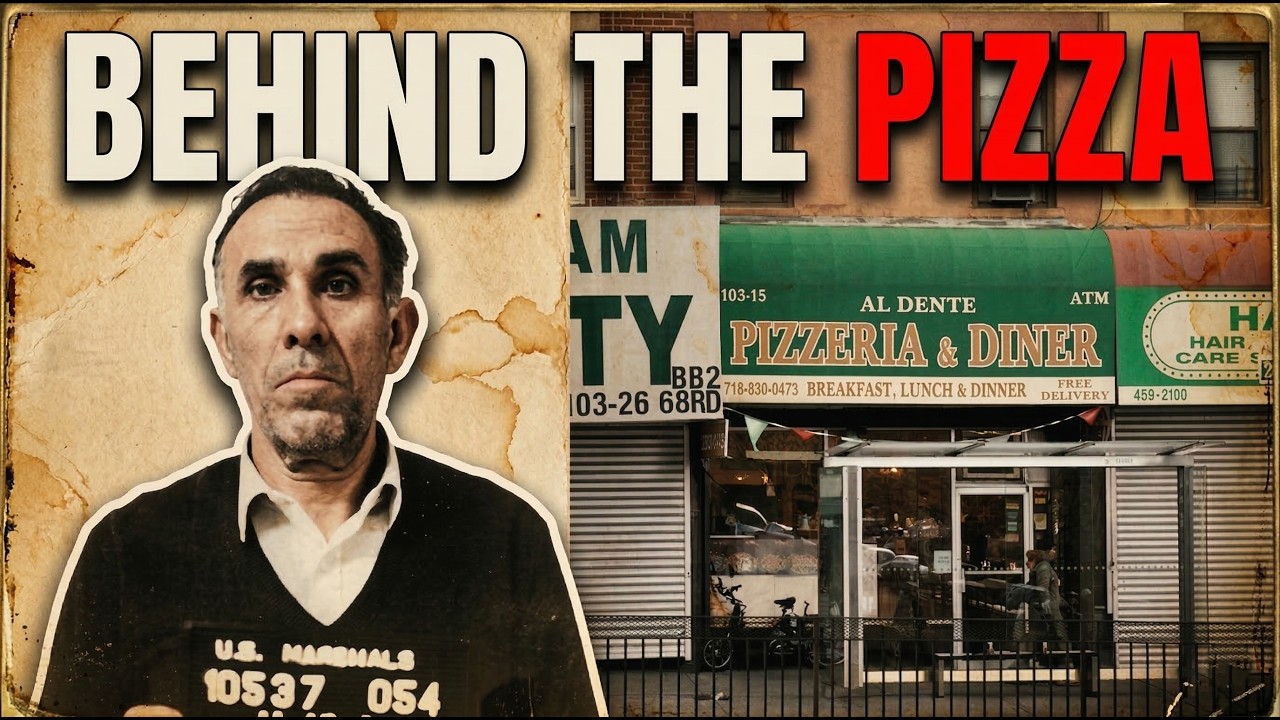
The heroin was then smuggled into the United States, hidden in luggage, food shipments, and clothing, passing through airports and shipping ports. The product was distributed through the network of pizza parlors and small restaurants the zips had been quietly establishing for years.
These places were not primarily about selling food. They were distribution hubs and cash collection points.
The cash was moved out of the country through a web of banks and brokerages in Switzerland and across the United States. The Swiss banking system of that era had secrecy laws so ironclad that prosecutors later described Swiss banks as having actively aided in laundering the proceeds.
Millions of dollars in cash were carried from New Jersey restaurants to be wired through secret Swiss accounts.
Galante sat at the top of this machine and thought it made him untouchable. He was wrong.
By 1978, Galante had become something the other New York families could no longer tolerate. He was not just running heroin. He was declaring himself above the commission.
He refused to share revenue. He surrounded himself almost exclusively with his zip bodyguards and spoke openly about dominating all of New York's drug trade personally. He was arrogant in a way that even hardened mob bosses found threatening.
The other four families put him on a list.
On July 12, 1979, at 11:00 a.m., Galante was having lunch at Joe and Mary's Italian-American Restaurant on Knickerbocker Avenue in Brooklyn. He was 69 years old, seated on the back patio under a grape arbor with a tomato salad, wine, and three other men at the table.
It was a hot summer day, 87 degrees. Three gunmen wearing ski masks entered the restaurant. Galante was shot in the eye and the chest.
His two zip bodyguards, Baldo Amato and Caesar Bonventre, survived without a scratch. That told investigators everything they needed to know. The bodyguards had either looked away, stepped aside, or been warned.
Galante was dead with a cigar still clenched in his mouth when police arrived. That cigar became one of the most iconic photographs in organized crime history. The murder set off the chain of events that transformed the Pizza Connection from Galante's personal empire into something far larger and far more dangerous.
Gaetano Badalamenti had been ousted from his position at the top of the Sicilian Mafia's Cupola around 1978 by the rising Corleone clan led by Salvatore Riina. The Corleones were waging a bloody internal war to seize total control of the Sicilian Cosa Nostra.
Badalamenti was stripped of his title and effectively exiled. He was a former boss of bosses with no territory, no soldiers in Sicily, and an enormous price potentially on his head.
What he still had was contacts, money, and one crucial asset: relatives and associates spread across the United States who were already embedded in the pizza parlor network.
With Galante gone and the Bonanno family in organizational chaos, Badalamenti began working the phones, literally. From Madrid, from Brazil, from various European hiding spots, he coordinated drug deals across borders using a network of payphones and family connections.
The operation was still pumping heroin through pizza parlors in New York, New Jersey, and beyond. But now it had a more complicated command structure.
On the American side, a Bonanno family captain named Salvatore Catalano stepped into the vacuum Galante had left. Catalano was in his forties, heavy-set, and the owner of Catalano Brothers Bakery on Knickerbocker Avenue in Queens.
He was soft-spoken, methodical, a man who understood the value of appearing to be nothing more than a hard-working immigrant baker. After Galante's murder, Catalano briefly served as the acting boss of the entire Bonanno family.
But it was his role in the narcotics operation that would define his legacy. He was the bridge, the figure who connected the Sicilian supply chain to the American distribution network.

FBI surveillance photos from this period show him at bakeries and cafes, meeting with men who would later be identified as key figures in the smuggling pipeline. To the neighbors on Knickerbocker Avenue, he was a baker. To federal investigators, he was a drug lord.
In 1976, the FBI deployed a young agent named Joe Pistone on what was supposed to be a short-term undercover assignment. His alias was Donnie Brasco, jewel thief and small-time hustler.
Over six years, from 1976 to 1981, Pistone penetrated so deeply into the Bonanno family that he was on the verge of being formally inducted as a made member. The intelligence he gathered was extraordinary.
He identified Sicilian zip members by name. He documented the relationships between the American Bonanno hierarchy and the Sicilian networks. He heard conversations about the heroin pipeline.
He could not prove it yet, but he was filling in pieces of a map the FBI would spend the next three years completing.
What finally blew the operation open was the phone calls. Badalamenti, living in exile and unable to visit the United States, was conducting business over the telephone. Not just any telephone, but payphones in train stations and hotel lobbies across three continents.
He believed the calls were untraceable. He was partly right.
But the FBI and the DEA, working with Italian magistrates and Swiss authorities, had by 1982 built a surveillance architecture unlike anything previously attempted in an international narcotics case. They traced calls across borders and coordinated with investigators in Italy, Switzerland, and Spain.
They listened to thousands of hours of conversations. Those conversations were not in plain language. The men on both ends of those calls used codes.
In one wiretapped conversation played for the jury, Badalamenti referenced shirts as the product. He described the acrylic content. When he said something was 10 percent acrylic, prosecutors established that meant 90 percent pure heroin.
The price per unit was discussed in terms of pizza toppings and clothing. To a casual listener, it sounded like two men arguing about the dry cleaning business. To the FBI team, it was a narcotics negotiation in real time.
What made this operation so hard to dismantle was that nothing required everyone in the network to know everyone else. A pizza parlor owner in Rahway, New Jersey might know only two or three people above and below him in the chain.
If he got arrested, he could only give up two or three names. The architects, Badalamenti and Catalano, remained insulated behind layers of middlemen, family relationships, and Sicilian codes of silence enforced for generations.
The network was not organized like a corporate pyramid. It was organized like a spider web. Cut one strand and the rest folds.
What finally allowed investigators to cut enough strands was a partnership that had never been attempted before. In Palermo, a young magistrate named Giovanni Falcone was doing something that had destroyed the careers and lives of every anti-mafia prosecutor who came before him.
He was building RICO-style cases against the Sicilian Cosa Nostra using evidence from wiretaps, financial records, and informants. Falcone and the FBI began sharing intelligence and coordinating their raids.
When Falcone's team hit Palermo, the FBI hit New York, New Jersey, Illinois, and Madrid simultaneously.
On April 9, 1984, the day of those raids, federal agents arrested 31 people in the United States. In Italy, dozens more were taken into custody.
One day earlier, on April 8, Badalamenti had stepped outside in Madrid. Maybe he was restless. Maybe he had grown careless after years of freedom. The moment he appeared on the street with his nephew Pietro Alfano, Spanish authorities took them both. His son Vito was arrested shortly after.
When the handcuffs closed on Badalamenti, the FBI had its centerpiece. But there was still a long road ahead.
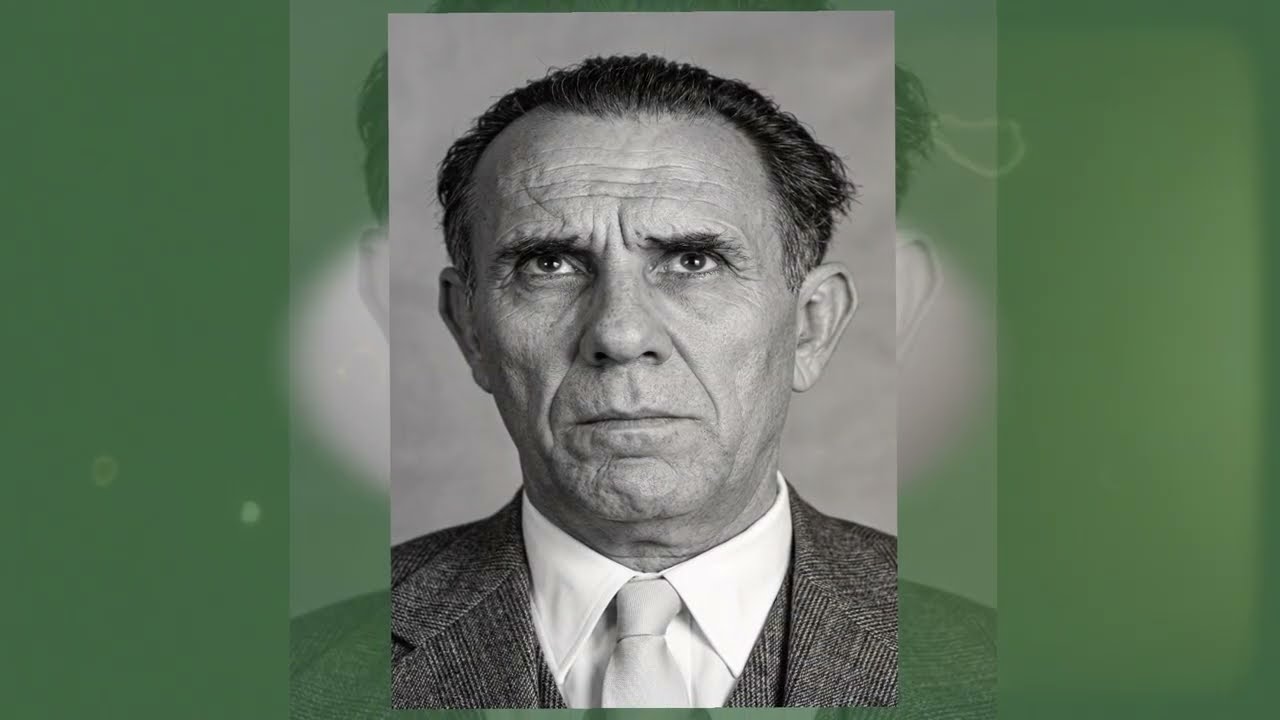
The trial of United States versus Badalamenti and others began on September 30, 1985, in Manhattan. It was supposed to last six or seven months. Judge Pierre N. Leval, who presided, watched it expand into a legal marathon unlike anything American courts had seen.
The prosecution team was led by Louis Free, a young assistant U.S. Attorney who would one day become director of the FBI, and overseen by U.S. Attorney Rudy Giuliani. They presented evidence built from thousands of wiretapped conversations, surveillance photographs, financial records from Swiss banks, and a cast of characters spanning four continents.
There were originally 35 defendants. By the time of verdicts, the final group stood at 19.
The star witness for the prosecution arrived in November 1985. Tommaso Buscetta was a Sicilian mafioso of the old school who had flipped after the Corleone clan systematically murdered most of his family.
Buscetta was the first major insider to ever describe the internal structure of the Sicilian Cosa Nostra to a courtroom. He sat on the stand for weeks. He explained the Cupola, the initiation rituals, and the rules.
His testimony was not central to the specific Pizza Connection charges, but it was devastating to the defense's strategy of denial. He stripped away the mythology and made the jury understand that this was not a collection of independent operators but an international criminal organization.
Then, on December 1, 1986, while the trial was still in progress, a defendant named Gaetano Tommy Mazara went missing. Mazara, 55 years old, was a Sicilian-born pizza parlor owner who ran a shop in Sayreville, New Jersey.
His bludgeoned body was found in Brooklyn. Someone inside the network had decided he had become a liability during the trial. His murder during the proceedings sent a message to every remaining defendant about what cooperation would cost.
The jury deliberated. On March 2, 1987, they delivered their verdicts: 18 convictions and one acquittal, Gaetano Badalamenti's son, Vito.
On June 22, 1987, Judge Leval handed down the sentences. Gaetano Badalamenti received 45 years. Salvatore Catalano also received 45 years.
The Pizza Connection trial had lasted 17 months. It was, at that point, the longest trial in the history of the United States federal court system.
But the consequences did not end in that courtroom. Giovanni Falcone, the magistrate whose partnership with the FBI had made the case possible, continued his war against the Sicilian Mafia from Palermo. The Mafia never forgot his role.
On May 23, 1992, Falcone was driving on the highway from Palermo's airport with his wife, Francesca Morvillo, and a three-car escort of bodyguards. The Corleone clan had planted half a ton of explosives in a drainage culvert under the highway.
When Falcone's motorcade passed over it, they detonated it remotely. The explosion was so massive it registered on seismic instruments. Falcone, his wife, and three of his bodyguards were killed. He was 53 years old.
He had spent his career knowing that this was the likely price of what he was doing. He kept going anyway.
Louis Free, who had stood in that Manhattan courtroom arguing the Pizza Connection case as a young prosecutor, was appointed director of the FBI by President Bill Clinton in 1993. The case that made his career became the most complex and celebrated prosecution in FBI history.
The Swiss banking reforms that followed the Pizza Connection helped close loopholes that had allowed money launderers to move billions through nameless accounts. The case established the template for international narcotics prosecution that the DEA and FBI still use today.
Four countries coordinated simultaneous raids and shared intelligence across sovereign borders. Financial forensics traced cash from a New Jersey pizza restaurant to a numbered account in Zurich.
Salvatore Catalano was later re-arrested on separate charges in Italy after his U.S. sentence. As recently as 2024, he remained active in organized crime circles, illustrating the stubborn durability of these networks even after catastrophic legal defeats.
$1.65 billion worth of heroin was smuggled through pizza ovens and pastry displays, moved through back rooms that smelled of marinara and cigarette smoke, and discussed in code words about shirts and acrylic on payphone calls across three continents.
Nine years, 18 convictions, two men sentenced to 45 years in federal prison, and a judge in Palermo blown apart on a highway because he refused to stop.
That is the real Pizza Connection. Not the colorful nickname, not the clever headline. The actual story is about what happens when an ancient criminal organization, utterly invisible to the world around it, decides that the most dangerous place to hide is in a storefront you walk past every day without thinking twice.
They were right. For almost a decade, they were completely right. And then they made too many phone calls.