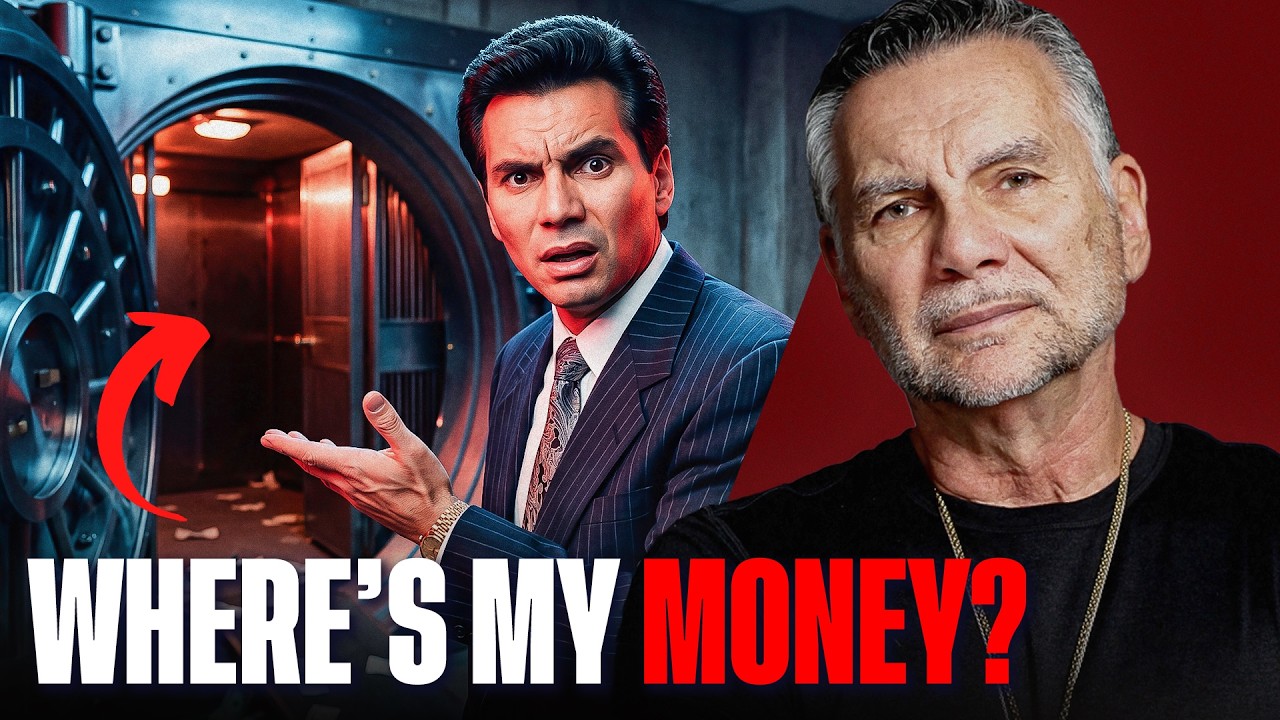
Former mob boss Michael Franzese says he has traveled the world, visiting Southeast Asia, Europe, Australia, and across America, and that everywhere he goes he gets the same three questions. The first is where Jimmy Hoffa is buried. The second, which he calls unfortunate, is whether he ever killed anyone. The third is where all his money went.
Franzese recently decided to answer part of that third question, though he admitted he would only answer it "in a way." He said he would tell the story of where at least some of his money went, and that story begins with the gasoline tax scheme that became his biggest operation.
That scheme, run with his late partner Larry Iorizzo, was designed to cheat the government out of taxes on every gallon of gasoline. Franzese said they brought in Russians as partners and ran the operation for seven or eight years, making an enormous amount of money. He acknowledged that the money landed him in prison and was part of a racketeering indictment.
The government said the scheme defrauded it of more than $2 billion. Franzese said he believes that figure is exaggerated, though he conceded it was a large amount. He said he is not proud of that chapter and described it simply as part of his life and his work.
Franzese described Iorizzo as his partner, a man who stood six feet five inches tall and weighed around 500 pounds. He said Iorizzo was not sloppy or obese but a massive, brilliant man, and that it was Iorizzo who first sparked the idea of defrauding the government on taxes.
At some point, Franzese said, Iorizzo became entangled in a separate tax case unrelated to their gasoline operation. During that trial, Iorizzo came to him and said he would not go to prison. Franzese told him the worst he faced in that case was three years, and that fleeing would make him a fugitive for life, adding five more years if he was caught.
Iorizzo did not want to listen. Franzese said his partner was a big man who could not picture himself in prison. At the time, the two had a private jet, extensive resources, and a compound in Panama, and they were already dealing with Manuel Noriega and paying some of his men for safe haven there.
There was no extradition treaty between the United States and Panama at the time, so Iorizzo believed he could run his operations from Panama without being handed over. Franzese called that his partner's first big mistake. Iorizzo fled during his trial, moved some family members, and began running his business from Panama.
Franzese said Iorizzo then grew careless. As an example, he described how Iorizzo hosted his daughter's wedding in Europe and, from Panama, sent invitations to people in the United States. The government was hunting him, monitoring phones and doing whatever it took to find him.
Eventually, Franzese said, the government wanted Iorizzo badly because it wanted to get to him. Unable to extradite Iorizzo, authorities struck some kind of deal with Noriega, slipped into Panama at midnight, broke down the door of his home, pulled him out, put him on a jet, and brought him to Florida, where he was jailed.
Franzese said an FBI agent later told him what happened next. Once Iorizzo was in a cell and saw the small bed, about two feet wide, he realized he could not even sleep on it. He turned and said he would tell them everything they wanted to know about Michael. That, Franzese said, was all it took.
Iorizzo began informing against him. Franzese said the Eastern District of New York federal prosecutors were preparing a racketeering indictment, and now they had their key witness against him in the gasoline case, because the two had devised the scheme together.
Before the charges, Franzese said, Iorizzo's son came to him and said his father did not really want to go through with testifying. The son said his father had a plan: he would come to court in Brooklyn, and only two or three marshals would be around him. Iorizzo wanted Franzese to grab him, or kill the marshals if necessary, put him in a car, and get him out so he would not testify.
Franzese said he told the son politely that his father had lost his mind, that he was either on something or losing his mind, and that it would not happen. He said he would fight the case in court and let Iorizzo do what he had to do. Franzese admitted he was upset because the two had been very close and had never disagreed over seven or eight years.
He said they made millions together. At one point, he said, the operation's revenue was between $7 million and $8 million a week. They were selling half a billion gallons of fuel a month and making 30 to 40 cents per gallon, depending on what the market would bear at the time.
That represented the tax on every gallon of gasoline between interstate, federal, and local taxes, which came to roughly 40 cents a gallon. Franzese said his children called Iorizzo "uncle," and their families were close. He also knew Iorizzo was not the type who could do prison time, having never faced such hardship and being used to living in comfort.
Franzese said he had a feeling he would one day face such a situation with Iorizzo. He said people sometimes wonder why God chose them to come out of a bad situation and be blessed as he was. He said that when Iorizzo began to weaken and people saw it, some thought about getting rid of him, which he described as the Mafia way.
Franzese said he was a Mafia man and a field commander at the time. He could not do it. He said Iorizzo's children called him uncle and their families were close, so he would fight him the way he had to and see if he held up. He said he paid the price later, but in the long run he believes it was the best decision he ever made.
Franzese then described how Rudy Giuliani, while the Eastern District was preparing the gasoline case, charged him in another case in the Southern District of New York. When Giuliani learned Iorizzo would testify against Franzese and knew the two had been very close, he wanted Iorizzo to testify in his case as well.
The problem, Franzese said, was that Iorizzo knew nothing about that case, but they brought him in anyway. Iorizzo took the witness stand against him and said whatever he was forced to say. Franzese said they destroyed him on the stand, and he was acquitted in that case.
Now Iorizzo's value as a witness was much lower because he had already testified against Franzese and the jury had not believed him. Franzese was acquitted, and the jury did not believe Iorizzo. Franzese said Iorizzo was now very upset, and authorities wanted to throw him out of the witness protection program because he was useless, having failed to secure a conviction in the Southern District.
Franzese then explained the black box he and Iorizzo had: a bank account in Austria where they deposited his money. The federal tax on a gallon of gasoline at the time was 9 cents, and they took that 9 cents per gallon and put it into the secret Austrian account.

The accounts worked as numbered accounts at the time. When they were given the number, Iorizzo took half and Franzese took the other half, so neither could go alone to get the money. They had to go together. The Austrian banking system was strict, and you had to bring the full number or you would not get the money.
Over time, Franzese said, they deposited money there and accumulated about $33 million. Their idea was to leave it there with interest and everything, and perhaps one day have more than $100 million, separate from everything else they were doing.
When Iorizzo's son told Franzese that Iorizzo would testify, and Iorizzo wanted to be broken out on the way to the courthouse, Franzese said he told the son to forget all that. He said that whatever Iorizzo did, he should tell him not to reveal the account, because that was their money, and if he revealed it the government would seize it and they would not be able to use it anyway.
Iorizzo initially agreed, Franzese said, but after losing the Giuliani case and facing removal from the program, he became desperate. He told authorities about the $33 million in the account. Franzese's lawyers were now negotiating a plea deal for him, because he knew he had some leverage after defeating Iorizzo in the Giuliani case, and the government was worried about securing a conviction against him in the gasoline case based on testimony that had already been destroyed.
Franzese said the government was now ready to make a deal. His lawyers negotiated for about three months. At first, authorities wanted 25 years in prison and a $100 million fine, walking him through the whole process. He said no, that was unacceptable. They reduced it to 10 years in prison and $15 million in restitution, forfeiture, and everything else. That was the deal.
However, authorities now knew about the $33 million because Iorizzo had told them. They told Franzese's lawyer that Franzese had to hand over the number. Franzese said he would not hand it over, calling it impossible, and asked why he should give it to them. It was $33 million, and they made it part of the negotiations.
Franzese said the feds also went to Austria to try to withdraw the money using the half of the number Iorizzo had. Austria told them to bring the full account number or they would not get the money. The government told Austria it was gangster money, Mafia money, illegal money. Austria said it would freeze it, but whoever came with the full account number would get the money.
Franzese said he no longer had a real choice. He had to give them the other half of the number or he would not get the deal he wanted. He noted that at the time, a 10-year sentence was not bad when others were getting hundreds of years, 50 years, or life. He was under the old law, meaning he would still be eligible for parole at some point.
He thought that in 10 years he might serve only five, that he would still have a life and could manage things with his family. So he eventually gave up his half of the numbers so the government could go and get the $33 million from the account. That was the amount that was there, $33 million and some change.
Franzese said he lost that $33 million, or his share of it, about $16.5 million. He said he never got any credit for it. The money disappeared, and he does not know where it went. He said he is not accusing anyone and does not know, and he hopes taxpayers benefited from it somehow, but he never heard anything about it. It was not part of his plea agreement, and he knows nothing about it.
His lawyer, Tommy Michael, who has since died, told him he had to do it or he would not get the deal. That was all. Franzese said that was the answer to where some of his money was buried and has now disappeared.

He added that the IRS, or authorities, returned $2.5 million of the $33 million to Iorizzo. Franzese said he knows that part well. It was part of Iorizzo's deal to testify against him. They gave him $2.5 million of the stolen gasoline tax money and returned it to his account. Franzese called that a fact, saying it came out during discovery and during the plea negotiations.
Iorizzo was already out by the time Franzese went to prison. Iorizzo moved to Texas because he knew he could not stay in New York after becoming an informant and after it became widely known. He left New York, went to Texas, and brought his whole family there.
What did he do? Franzese said Iorizzo went back into the gas business and began defrauding the government on taxes again, and this time he was caught. When he was arrested, he and his whole family were arrested. When he was caught, he went to the feds and said there were other things he had not told them about Michael.
Franzese said they did not want to hear it. They said, in effect, forget it, Michael is serving his sentence, forget that. Iorizzo went to prison, and Franzese said he is quite certain that both Iorizzo's son and daughter testified against him in court. Franzese said he does not want to use the word karma and does not really believe in it, but sometimes things come full circle.
Iorizzo was tried and convicted, and Franzese believes he got 20 years. He served 17 of the 20, came out, and died a few years later. Franzese said Iorizzo was gone.
Franzese said he would be honest with people: he loved Iorizzo. Even after Iorizzo became an informant and testified, Franzese realized it was part of that life. When you get involved in that life, he said, you have to realize you are exposing yourself to certain things and certain consequences. He knew Iorizzo was weak and knew he would not hold up, but he still loved him. They made a lot of money together and had a lot of fun and good times together.
Franzese said he felt bad when Iorizzo died, that he really did. But he said it proves something: he cannot tell a truly good story about anyone, meaning a good ending for anyone he was involved with in that life. It all ended now. Everything ends badly.
That is something he said he always tries to tell people, especially young people out there. If you try to follow a criminal lifestyle, your life will end in failure. It is only a matter of time. Either someone close to you hands you over, or law enforcement does. They are very smart and have many tactics and weapons. You will fall at some point. You will destroy your life.
Franzese said that no matter what you think, you will not get away with it. You have to get your life in order and do what he did. Surround yourself with the right people and be accountable to the right people, those who care about you and want to keep you on the right path. Without that in his life, he said, he would not be here now.
His wife, his children, and the people around him who care about him mattered. He said he goes to church, talks with pastors, and speaks with people who look at him as a role model. He does not want to let them down. It is very important to be accountable first to God and then to the right people around you. Surround yourself with the right people. That, he said, is the key to life, without a doubt.
Franzese acknowledged that some might say he dodged the other questions. He said he lost millions upon millions of dollars. Eight years in prison, he said, and he did not earn a single cent during that time. Fortunately, he had enough money to support his family, not in luxury, just to provide for them. As part of the plea negotiations, he made sure he could do that, because that was what mattered to him.
So he lost all that time, eight years in prison, and the ability to earn. There was $15 million in restitution. He had to give up properties under the forfeiture provision. Many things were lost. What did he gain from it all? All the money he made, millions and millions of dollars, what did he gain from it? He said he did not gain much.
If he had put his energy into legitimate ventures, as he has been doing over the past few years, he would be much better off. His family would not have had to suffer eight years without him, and they would not have had to go through all the struggles and challenges they faced trying to rebuild his life. So, he said, believe him: earn your living the right way.