In September 1938, Adolf Hitler, the Chancellor of Germany, threatened to unleash a European war unless the Sudetenland — a border region of Czechoslovakia inhabited by an ethnic German population — was ceded to Germany.
Leaders of Great Britain, France, Italy, and Germany met in Munich between September 29 and 30, 1938, and agreed to the German annexation of the Sudetenland in exchange for a promise of peace from Hitler. The Czechoslovaks were not even invited to the conference.
Less than six months later, on March 15, 1939, in violation of the Munich Agreement, Nazi Germany invaded and occupied the smaller provinces of Bohemia and Moravia. Hitler himself arrived in Prague, and on March 16, 1939, through a proclamation from Prague Castle, he established the Protectorate of Bohemia and Moravia.
Three years later, in May 1942, Czechoslovak resistance fighters assassinated Reinhard Heydrich, the Deputy Reich Protector and one of the main architects of the Holocaust. His replacement in the protectorate was Kurt Daluege.
Kurt Max Franz Daluege was born on September 15, 1897, in Kreuzburg, then part of the German Empire. Daluege was still a high school student when World War I began on July 28, 1914.
After completing his school examinations in 1916, Daluege volunteered for the German army. He fought mainly on the Western Front, where he was seriously wounded. He was subsequently hospitalized and declared 25 percent disabled. In 1918 he was discharged as a sergeant and received the Iron Cross, Second Class, for his bravery.
After World War I ended on November 11, 1918, Daluege became a leader of the Upper Silesian Self-Defense, a veterans' organization that fought the Poles in that region. He later worked temporarily in Berlin as a factory worker and, from 1921 to 1924, studied civil engineering at the Technical University of Berlin.
During this time, Daluege was involved in several nationalist and antisemitic associations, and in 1922 he became a member of the Nazi Party. He supported Adolf Hitler during the failed coup attempt of November 8–9, 1923.
That event, known as the Beer Hall Putsch, saw Hitler lead a coalition group in an attempt to overthrow the German government. The conspirators hoped to march on Berlin to launch a national revolution, but the insurrection ultimately failed.
Units of the Munich police confronted the Nazi stormtroopers as they advanced toward the city center. The two groups exchanged fire, resulting in the deaths of 16 Nazi Party members and four police officers.
The ringleaders, including Adolf Hitler, were arrested. Hitler was found guilty of high treason and sentenced to five years in prison, but ultimately served only eight months of his sentence. During this period, Daluege served as an officer in Berlin, service that Hitler valued highly throughout his life.
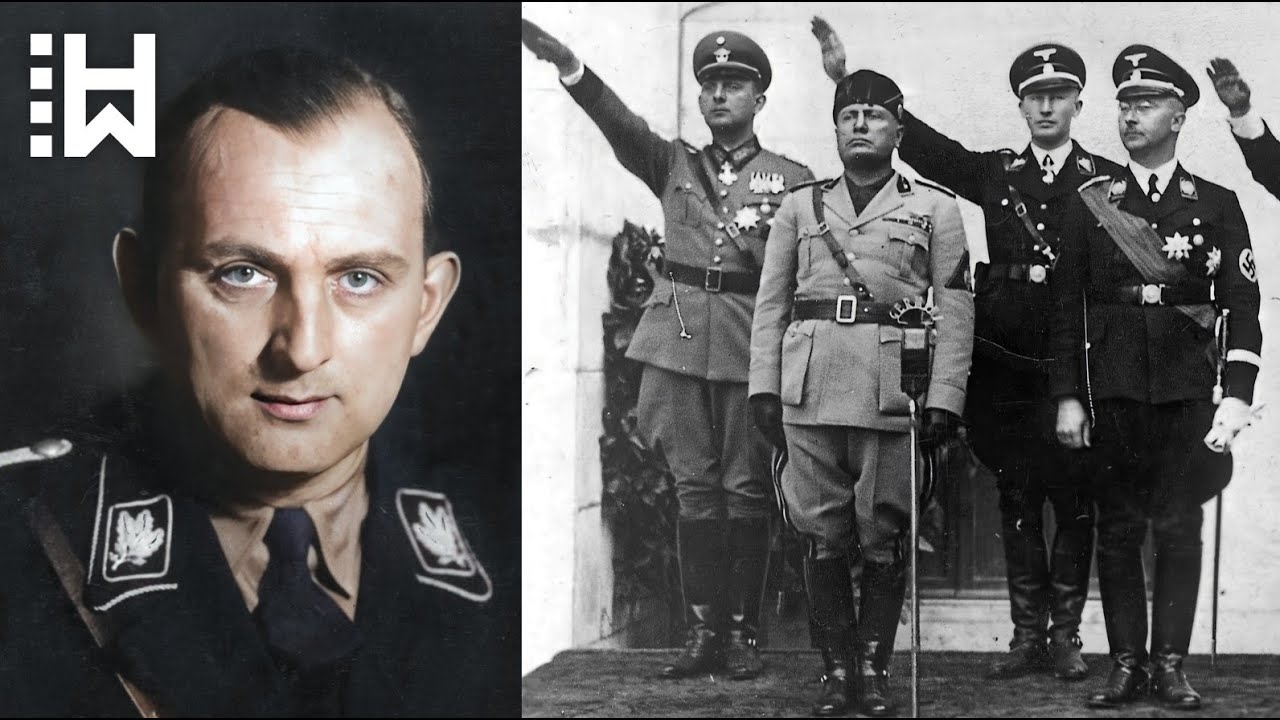
In 1926, Daluege became deputy leader of Joseph Goebbels for the party in Berlin. Goebbels would become Minister of Propaganda in Nazi Germany several years later. That same year, Daluege joined the SA and eventually became the district leader of the organization in Berlin.
The SA, also known as the Sturmabteilung, was the Nazi paramilitary force commonly known as the Stormtroopers or Brownshirts, due to the color of their uniforms.
In October 1926, Daluege married, and together with his wife he adopted a son. They would later have three more children.
In July 1930, at Hitler's personal request, Daluege left the SA and joined the SS with the rank of senior SS leader. The SS headquarters in Berlin was strategically located across from the SA headquarters. At that time the SS was a subunit of the SA, and Daluege's role was to spy on both the SA and opponents of the Nazi Party.
The SA leader in Berlin during this period, Walter Stennes, expressed significant discontent within the SA and demanded greater funding and political influence within the National Socialist movement. When Hitler dismissed his concerns, Stennes believed it was necessary to act to assert his authority.
On August 30, 1930, Joseph Goebbels attempted to give a speech at a rally in Berlin, but the Berlin SA denied him protection. After Goebbels secured the help of the SS to secure the event and assigned them to protect the Berlin party headquarters, tensions rose.
The situation reached a boiling point when the SA stormed the Nazi Party building, injuring SS members and causing significant damage. During the attack, Daluege's SS men defended the building and stopped the assault.
After the incident, Hitler immediately met with SA leaders to address the crisis and promised significant improvements in the organization's financial situation. In September 1930, Hitler assumed supreme command of the SA, and in January 1931 he appointed his close friend Ernst Röhm as SA chief of staff.
Although this measure temporarily defused the crisis, the underlying structural conflicts between the SA's ambitions and the Nazi Party leadership remained latent for several years.
In a sincere open letter to Daluege, Adolf Hitler praised the unwavering loyalty of the SS and proclaimed: "SS man, your honor is loyalty." This powerful statement resonated deeply and inspired the SS to adopt "My honor is loyalty" as its official motto.
Hitler then promoted both Daluege and Heinrich Himmler to the rank of senior group leader. Daluege was assigned leadership of the SS in northern Germany, while Himmler took charge of the southern units from Munich. In addition, Himmler served as chief of all the SS.
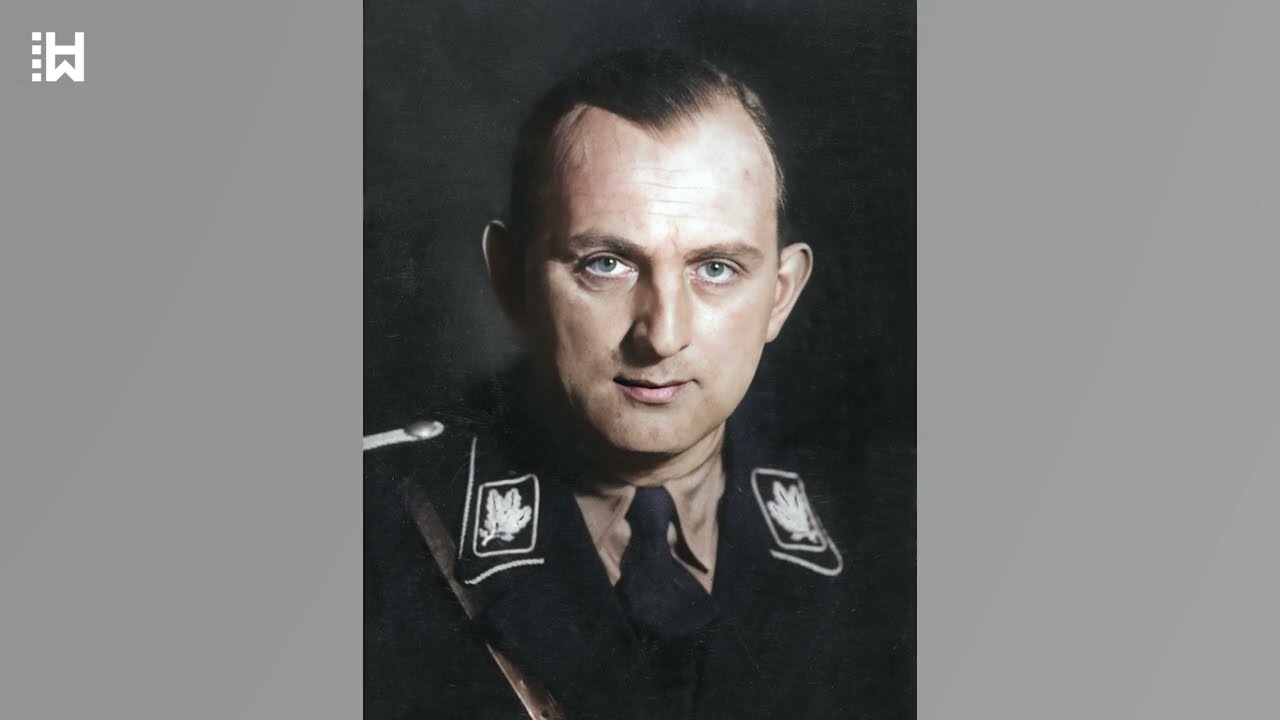
On January 30, 1933, Adolf Hitler was appointed Chancellor of Germany by President Paul von Hindenburg. In September of the same year, Daluege was transferred to the Prussian Ministry of the Interior, where he took charge of the political police with the rank of major general of the SS.
He continued to accumulate power within Germany, and in November 1933 he secured a seat in the German parliament. The inherent tensions between the SA and the Nazi Party continued to grow under the leadership of Ernst Röhm, whose ambitions were greater than Stennes's had been.
As early as April 1934, Heinrich Himmler and his deputy Reinhard Heydrich began conspiring with Hermann Göring, the president of the German parliament, to persuade Hitler to eliminate Röhm. Röhm, along with the SA leadership, wanted to replace the military elites with fanatical Nazis.
However, the Nazi Party leaders and the SS leaders — formerly part of the SA — understood that the regime needed to collaborate with the traditional elites to consolidate power and prepare the nation for a war of expansion.
During the purge known as the Night of the Long Knives, which lasted from June 30 to July 2, 85 members of the SA leadership and political opponents were killed. Röhm lost his life at Stadelheim prison after refusing to commit suicide.
During this time, Daluege took a hard stance against former SA comrades, considering them threats to society. In November 1934, Daluege's authority over the uniformed police had expanded throughout Germany. His command now included a diverse range of forces, from municipal and rural police to fire brigades and air services.
In 1936, Himmler appointed Daluege chief of the Order Police, or Orpo, the uniformed police force of Nazi Germany. At the same time, Reinhard Heydrich took control of the SiPo, the security police.
Heydrich, who saw Daluege as an old rival from his early power struggles, disrespectfully referred to him as "Dummi Dummi," or "the idiot." In the years that followed, until 1939, Daluege was rebuffed and largely marginalized by the SS leadership duo of Himmler and Heydrich, but he remained in his post due to his good contacts with Hitler.
By August 1939, Daluege had accumulated a force of more than 120,000 active-duty personnel under his command in the Orpo. In this context, World War II began on September 1, 1939, when Nazi Germany invaded Poland.
In a report dated September 5, 1939, outlining the methods to be used during pacification operations in Poland, Daluege's office gave the following instructions: the leader of this battalion is ordered to take the most drastic actions and measures, such as those of the Upper Silesian industrial zone — the hanging of guerrillas on light poles as a visible symbol for the entire population.
Later, after the German invasion of the Soviet Union on June 22, 1941, Daluege participated in the mass shooting of nearly 4,500 Jews in Belarus. In addition, in October 1941, Daluege signed deportation orders for Jews from Germany, Austria, and the Protectorate of Bohemia and Moravia, sending them to Riga and Minsk.
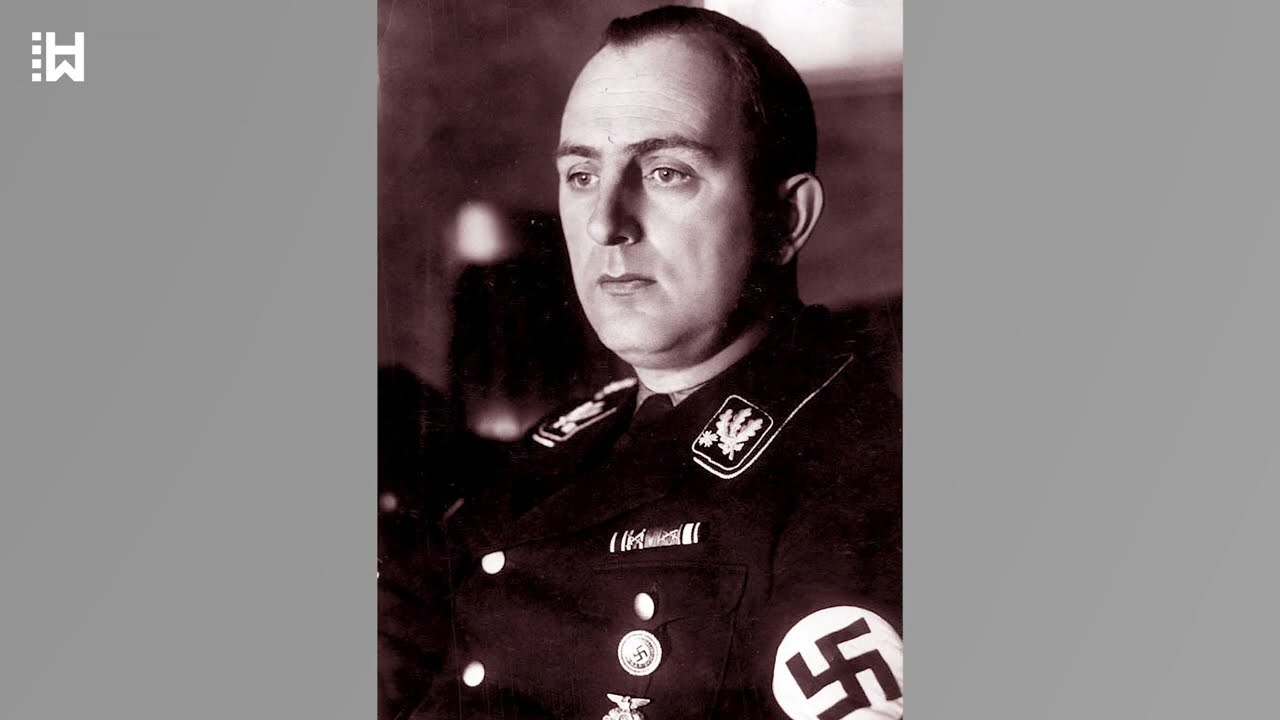
In July 1942, he attended a conference led by Himmler discussing the expansion of Operation Reinhard, the Nazi plan aimed at exterminating approximately 2 million Jews in German-occupied Poland.
On May 27, 1942, Daluege was in Prague receiving medical treatment when Reinhard Heydrich was mortally wounded by Czechoslovak paratroopers Josef Gabčík and Jan Kubiš. Heydrich contracted an infection and died eight days later.
Although he was not Hitler's first choice, Daluege was appointed the next Deputy Protector of Bohemia and Moravia. Together with Karl Hermann Frank, State Secretary and Police Chief of the Protectorate, they played a key role in the massacre of civilians and the destruction of the Czech villages of Lidice and Ležáky, which took place on June 9, 1942, to avenge Heydrich's death.
They ordered all the men of Lidice to be shot, sent all the women to concentration camps, and placed the children considered worthy of Germanization in the care of SS families. Small children not considered suitable for Germanization were also killed.
In total, 340 inhabitants of Lidice were massacred: 192 men, 60 women, and 88 children. All the men and young boys were shot and buried in a mass grave, while the children were killed in gas trucks at the Chełmno extermination camp. In addition, four pregnant women were forced to undergo abortions in the same hospital where Heydrich died.
After a year, Daluege had difficulty managing his duties as chief of the Orpo in Berlin and de facto Reich Protector in Prague. Therefore, in June 1943, Hitler relieved him of his duties as Deputy Protector after he suffered a second heart attack that same month.
Daluege requested medical leave from his post as chief of the Orpo, and in August he resigned from all his positions. As a reward for his services, in 1944 Hitler granted Daluege a property located in northeastern Germany by the Baltic Sea, valued at 610,000 Reichsmarks, the equivalent of more than 4.6 million dollars today. There he retired until the end of the war.
However, this did not allow him to escape justice. In May 1945, Daluege was arrested by British forces, first held in Luxembourg and then transferred to Nuremberg, where he faced charges as a major war criminal.
Extradited to Czechoslovakia in September 1946, he was tried for numerous crimes against humanity committed in the Protectorate of Bohemia and Moravia. Throughout the trial, Daluege was arrogant, openly defied the Czechoslovak authorities, and insisted that only the German Reich had the authority to judge him.
He also declared himself a role model beloved by several million German police officers and a loyal servant of Adolf Hitler. He insisted that he had committed no crime but had simply fulfilled his duty as a German citizen of the Reich.
However, his arrogance and lies did not help him, and he was found guilty on all charges and sentenced to death. Kurt Daluege was 49 years old when he was hanged on October 24, 1946, in Pankrác Prison in Prague.
Due to his delicate health, he barely realized that day that he was heading to his own execution. No tears were shed for Kurt Daluege.