Tens of thousands of women across liberated Europe were subjected to brutal public punishments after World War II for alleged relationships with German soldiers, according to historical records that continue to surface decades later. The wave of retribution, carried out in the chaotic aftermath of Nazi occupation, saw women dragged from their homes, publicly shaved, paraded through streets, and in some cases imprisoned or institutionalized for years.
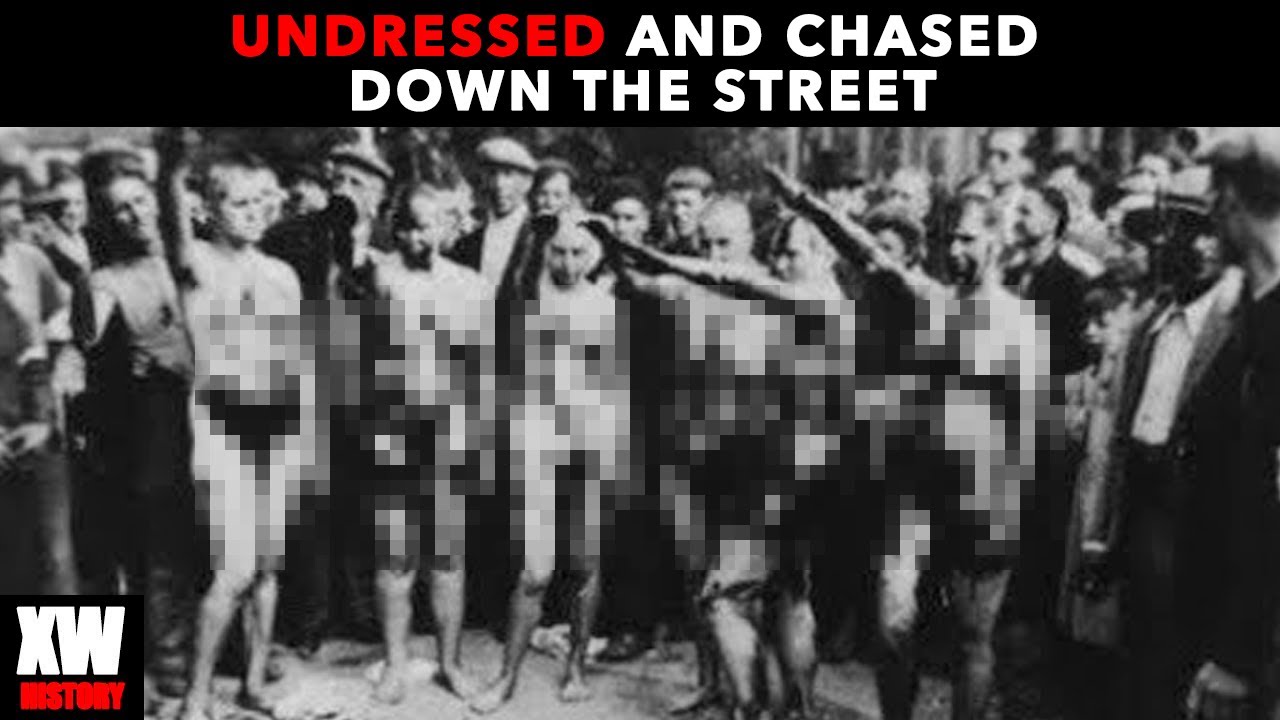
The scale of the punishment was staggering. Historians estimate that more than 20,000 women in France alone were subjected to public humiliation, their heads shaved in town squares before crowds of cheering neighbors. Armed men frequently stormed homes without warrants, seizing women by force and dragging them to public spaces where barbers had been summoned to perform what authorities called a patriotic duty.
The ritual followed a grim pattern across multiple countries. Women were pinned by their arms to prevent resistance while their hair was cut with scissors or clippers. The humiliation was deliberately public, staged in front of relatives, neighbors, and acquaintances who laughed and applauded as the punishment unfolded.
Afterward, the women were marched through streets so everyone could witness their shame. Some had their clothing torn. Boys jeered and spat as they passed.
France recorded the highest number of women accused of collaboration through intimate relationships with German occupiers. Following the country’s defeat, massive military garrisons were stationed across French territory. More than 30 brothels operated in the suburbs of Paris alone.
While Nazi leadership officially attempted to limit soldiers’ activities in such establishments, a growing number of French women found themselves in relationships with German men, some driven by genuine affection and others by desperate need.
Many of these women were not motivated by romance or desire. With food supplies cut off and families starving, some chose to enter relationships with occupiers as a means of survival. They secured food and provisions for their children and elderly parents through these arrangements.
The women themselves considered their actions shameful, but they did what they believed was necessary to keep their loved ones alive during a period of extreme deprivation.
The French Resistance actively encouraged the punishment of these women. Resistance members distributed leaflets to the population with explicit instructions. The pamphlets declared that French women who had surrendered to the Germans would have their heads completely shaved.
The text instructed that words would be written on their backs identifying them as having been sold to the Germans. The leaflets argued that when young French women sold their bodies to the Gestapo or militia forces, they were selling the blood and souls of their countrymen. Future wives and mothers, the resistance argued, were obligated to preserve their honor out of love for their nation.
 When liberation came, no moral or material hardship that had driven a woman into a German’s bed was considered a mitigating circumstance. These women were classified as criminals and traitors to their country. Punishments were severe and often carried out without any legal proceeding whatsoever.
Local authorities, eager to demonstrate their enthusiasm for the new government, sometimes executed innocent women based on nothing more than unfounded accusations or suspicion.
The children born from these relationships faced their own tragic fate. It is believed that French women gave birth to approximately 200,000 children fathered by German men. According to German archives, 80,000 of these children were officially registered as having German parentage.
The French public proved somewhat more sympathetic to these children than to their mothers, though measures were still taken against them. They were prohibited from learning the German language and from carrying German names. Many could not escape 𝓪𝓫𝓾𝓼𝓮 from peers and adults alike.
A significant number were abandoned by their mothers and raised in orphanages.
It was not until 2009 that Germany passed a law allowing children born in France to Wehrmacht fathers to obtain German citizenship, a belated recognition of a generation that had been ostracized by the country of their birth.
In Norway, the treatment of women accused of relationships with Nazis was even more severe than in France. After liberation from German occupation, Norwegian authorities pursued former Nazi mistresses with remarkable zeal. Women were sentenced to prison terms of up to five years and forced to perform hard labor during their incarceration.
The Scandinavian kingdom saw more than 7,000 children born to German fathers, and their fate was particularly bleak.
When mothers were sentenced and placed in reform institutions, their children were sent to special orphanages. In many cases, the institutions changed the children’s names specifically to prevent mothers from finding them after their release from prison. Some Norwegian women demonstrated remarkable determination, overcoming numerous obstacles to locate their children and demand their return.
But the harsh machinery of justice, which was not always on the side of the victims, intervened swiftly.
Judges explicitly stated they would never permit mothers to reclaim their children, suggesting that the best solution was for the child to be given up entirely. Some women retreated, unable to continue fighting. Others persisted in their struggle, but their efforts ultimately failed.
Worse still, new legal actions were filed against these women. They were subjected to medical examinations where doctors reached convenient diagnoses, declaring them insane. Many were committed to mental hospitals for extended periods, sometimes for the rest of their lives.

Norway proved harsher on these women than any other nation. At times, they appeared to be regarded as more dangerous traitors than those who had openly sided with fascism and fought against their own people. Beyond the moral destruction wrought by their sentences, there was an implicit governmental inclination to erase them from memory entirely.
The objective was to remove these unfortunate women from the kingdom’s history, as it was deemed necessary to restore the image of a country that had participated with full force in the struggle against fascist invaders and whose ranks contained no traitors. Women who had slept with Nazi Germans, let alone borne their children, clearly did not fit this narrative.
In the Netherlands, punishments mirrored those in France, amounting to public disgrace. Women were forced to kneel in manure, their heads were shaved, and their scalps were painted orange. The general public was not expected to accept these women easily.
Villagers cursed them and attempted to humiliate and suppress them in every possible way. Children faced constant punishment, told at every opportunity that their mothers were traitors. The only escape was often to relocate entirely, with women leaving their homes taking only their children and a few belongings.
Selling any property proved difficult due to the intensified negative public perception. Bank officials also attempted to avoid lending them any money.
Polish women drew particular attention from Nazi occupiers for a different reason. Among German Nazi leaders, some subscribed to a theory, championed by Heinrich Himmler himself, that the Polish people as a nation were the closest to the German nation. This led to careful selection of Polish women during the war, categorized into those belonging to the Slavic race and those belonging to the Aryan race.
According to Himmler, the Aryan category could be used to increase the population of the superior race. A large number of women were raped through this system and subsequently bore children.
The legacy of these punishments has reverberated through generations. Children born of these unions grew up stigmatized, their mothers marked as traitors, and entire families were shattered by a retribution that many historians now view as disproportionately targeting women while male collaborators often escaped similar public shaming. The women punished were frequently those with the least power, the least education, and the fewest options during occupation, while those who had actively collaborated politically or economically often faced lighter consequences.
Historical analysis has increasingly questioned the gendered nature of post-war justice. While armed resistance fighters and political collaborators faced tribunals and legal proceedings, women accused of horizontal collaboration were subjected to extrajudicial public punishment that served as spectacle and social catharsis. The shaving of heads became a symbolic castration, a way for communities to reclaim honor that had been compromised by occupation, with women’s bodies serving as the battlefield for national redemption.
 The children of these unions continued to suffer long after their mothers’ punishments ended. In Norway, they were institutionalized, their identities erased, their connections to their mothers severed by a system that viewed them as tainted by association. In France, they bore the stigma of German parentage, often abandoned and raised in orphanages where their origins marked them for life.
The psychological toll on both mothers and children has been documented in numerous studies, revealing decades of trauma that official histories were slow to acknowledge.
It was not until recent decades that some of these women and their children began to speak publicly about their experiences. Memoirs and documentaries have shed light on the arbitrary nature of the accusations, the lack of due process, and the lasting damage inflicted on innocent families. Some women were accused based on nothing more than rumors or personal vendettas.
Others were targeted because they had been raped, their victimization compounded by public punishment that treated them as willing participants rather than survivors of sexual violence.
The legal frameworks that enabled these punishments varied by country but shared common features. They were often enacted hastily in the chaotic period following liberation, when established legal systems were still being rebuilt. Local authorities, sometimes comprising former resistance members with scores to settle, wielded extraordinary power with minimal oversight.
The absence of proper investigations meant that accusations alone could destroy a woman’s life, her reputation, and her family’s standing in the community.
International human rights organizations have since cited these post-war punishments as examples of how societies emerging from conflict can perpetrate new injustices in the name of justice. The targeting of women for sexual collaboration while male collaborators faced more measured consequences reflects deeply entrenched gender biases that transcended national boundaries. The punishments were not merely about punishing collaboration but about controlling women’s sexuality and reinforcing patriarchal norms that had been disrupted by war and occupation.
Today, historians continue to debate the appropriate response to collaboration during occupation. While some argue that any form of cooperation with an enemy that had committed atrocities was unforgivable, others point out that survival often required impossible choices. The women who bore the brunt of post-war retribution were frequently those with the least agency, the fewest resources, and the most to lose from resistance.
Their punishment served as a warning to all women about the consequences of stepping outside prescribed roles, even under the most extreme circumstances.
The stories of these women, long suppressed and forgotten, are now being recovered by scholars and descendants seeking to understand a painful chapter in European history. Their experiences serve as a cautionary tale about the dangers of collective punishment, the importance of due process even in times of national trauma, and the ways in which societies often visit their deepest anxieties and shames upon the bodies of women.