Lieutenant Colonel George Armstrong Custer rode toward his death on June 25, 1876, leading roughly 210 troopers of the 7th Cavalry into a Lakota and Cheyenne village along the Little Bighorn River that numbered in the thousands. The attack, meant to be a decisive strike, became one of the most devastating defeats in U. S. military history.
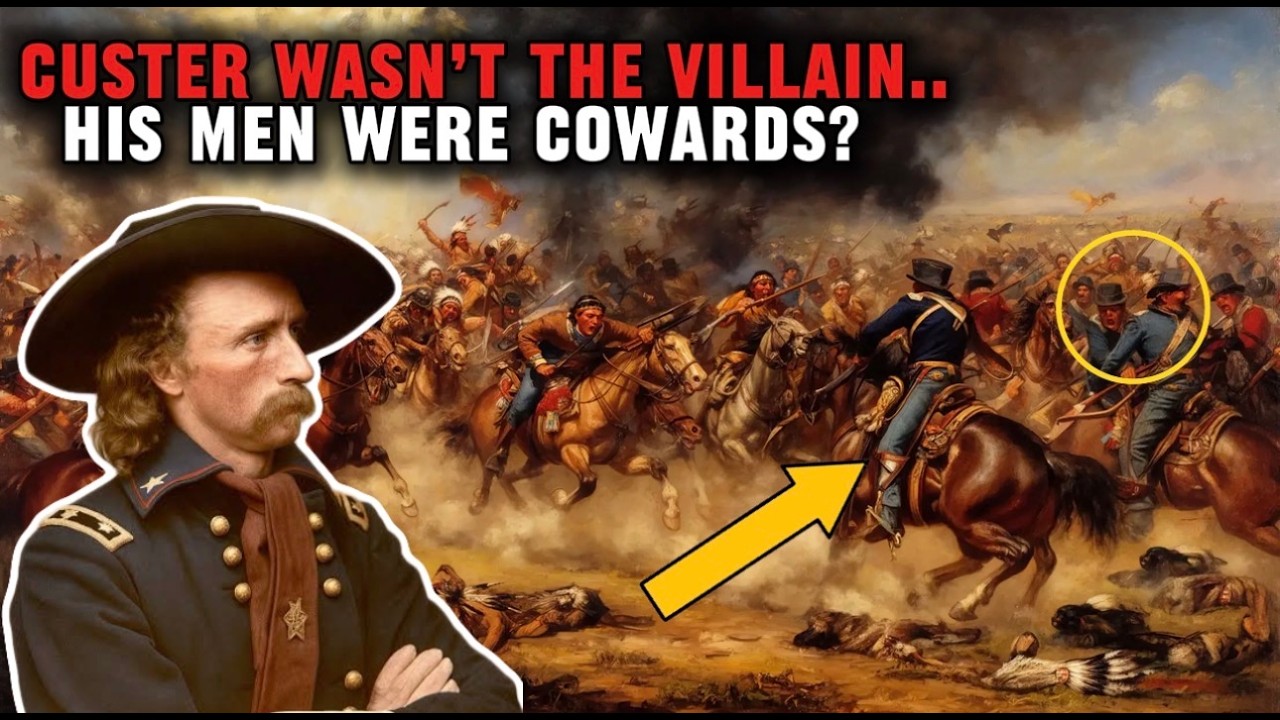
Custer and every man under his immediate command were killed, and the battle has been debated ever since: why did experienced soldiers follow a commander into an engagement they were desperately outnumbered to lose? The roots of the clash lie in America’s westward expansion. By the 1870s, miners were flooding into the Black Hills after gold was discovered there, land that had been guaranteed to the Lakota by treaty. The U.
S. government, determined to move the tribes onto reservations, launched the Great Sioux War of 1876 with a three-pronged military invasion designed to crush the roaming bands. Custer, 36, was the army’s most celebrated cavalry officer. He had earned fame for daring charges during the Civil War and had rebuilt his reputation on the plains afterward, including a controversial attack on a Cheyenne village at the Battle of Washita in 1868.
The regiment Custer led was not the elite force of legend. Many of its men were recent immigrants and farm boys recruited from saloons, earning $13 a month and eating rancid hardtack and salt pork. Desertion rates ran as high as 30 percent in some years, and discipline was harsh, with brutal punishments for those who disobeyed. Still, morale around Custer was strong.
Veterans of the Civil War had seen his luck hold time and again. One survivor, Private Charles Windolph, later recalled that the men believed Custer could defeat anyone because he always had before. Custer had been ordered to advance cautiously by Brigadier General Alfred Terry, but he interpreted those instructions loosely, worried the village would scatter before he could strike. He reportedly told his officers they were about to have the biggest Indian fight ever.
When his Crow and Arikara scouts warned him the village was far larger than expected, he dismissed their advice. Before making his move, Custer divided his roughly 600-man regiment into three battalions. Major Marcus Reno was sent to attack the village’s southern end, Captain Frederick Benteen was ordered to the rear with the pack train, and Custer took five companies north, perhaps intending to capture women and children as leverage, as he had at Washita. The plan collapsed immediately.
Reno’s charge was repulsed and his men retreated to a bluff. Benteen lingered with the ammunition-laden mules. When Custer’s men crested the ridge, they saw thousands of warriors swarming toward them, many armed with repeating rifles that outranged the cavalry’s single-shot carbines. The troopers dismounted and formed skirmish lines, but their ammunition ran low, and the pack train never arrived.
Outnumbered five to one, with no secure line of retreat, they were surrounded. Lakota warrior Rain in the Face later described the fight, saying they circled the soldiers like hawks on a wounded deer. Custer, wounded in the chest and temple, died on the hill that now bears his name. Military doctrine helps explain why the men did not flee.
In the frontier army, obedience was drilled into soldiers, and a court-martial for cowardice could mean execution by firing squad. Abandoning comrades in the field was unthinkable in tightly knit units. Tactically, a mounted retreat once engaged would have exposed the soldiers’ backs to pursuit at full gallop. The river crossings were bottlenecks, and the horses, ridden hard all day, were exhausted.
Some troopers did shoot themselves rather than face capture and torture. The battlefield was later found littered with mutilated bodies, a practice rooted in ritual and revenge for warriors who had lost family to the army. Custer’s brothers Tom and Boston were among the dead, along with his nephew Autie Reed. The total death toll for the regiment was 268 men.
Historians have sharply divided over Custer’s responsibility. Critics call him reckless and glory-seeking, a man whose ego doomed his command. Supporters argue he acted on faulty intelligence and followed the spirit of his orders. Historian Evan Connell, writing in Son of the Morning Star, concluded that Custer was not suicidal but supremely confident, fatally so.
He had refused the offer of Gatling guns before the campaign, calling them too cumbersome for rapid movement. The victory was Pyrrhic for the Lakota and Cheyenne. Within a year, reinforcements crushed the resistance. Sitting Bull fled to Canada, and Crazy Horse surrendered and was later bayoneted in custody.
Widowed at 34, Libbie Custer spent decades shaping her husband’s legacy in books like Boots and Saddles, portraying him as a martyr. The battle shocked the nation and forced the army to revise its tactics, but the question at its center remains: men followed Custer not merely because they feared discipline, but because they believed in his luck, his glory, and the cause they were told to serve. Loyalty in war, the battle showed, can forge unbreakable bonds, but it can also blind men to the ruin ahead.