Jacqueline Lee Bouvier was born on July 28, 1929, in Southampton, New York, into a family at the height of American elite society. Her world was one of aristocratic lineage, old money, and a surname that opened doors in the most exclusive circles of Manhattan and Long Island. From her first day, her life was defined by luxury, opulence, and an image of perfection her parents worked to project.
Behind that impeccable facade, however, were deep cracks that would become wounds. Her father, John Vernou "Blackjack" Bouvier III, was a handsome, charismatic Wall Street stockbroker with a considerable fortune and a reputation as a womanizer. His lifestyle was extravagant, surrounded by fine suits, fine horses, and beautiful women. Jackie was the apple of his eye, and to her he was a charming prince who made her feel special.
Her mother, Janet Lee Bouvier, was the other side of the coin: sophisticated, ambitious, and fiercely disciplined. Her goal in life was to maintain her social status at all costs. Unlike Blackjack, who lived in the present, Janet understood that fortune in high society could vanish with a few bad decisions.
The Wall Street crash of 1929 did not ruin the Bouviers completely, but it exposed Blackjack's financial fragility. Gambling, alcohol, and constant infidelities eroded the marriage until divorce came in 1936. It was a scandal in New York society and a devastating blow to Jackie, who was only seven years old.
The divorce meant more than the separation of her parents. It shattered the illusion of perfection. Her mother, with the determination of a strategist, made sure the family did not fall from grace. She soon married Hugh D. Auchincloss Jr., an oil and finance magnate, securing both economic stability and access to the most exclusive circles of the American elite.
The price of that stability was high. For Jackie, it confirmed a hard lesson: in her world, money and the family name mattered more than love. Her mother raised her under a strict philosophy. She had to be impeccable. She had to be the best. She had to learn to move in a world where appearances were everything.
Jackie's childhood unfolded between two realities. On one side was the structured, cold life imposed by her mother at the luxurious Merrywood estate in McLean, Virginia. On the other were moments of freedom and affection with her father, who took her horseback riding and spoiled her during visits to New York. The shadow of divorce and the emotional distance between her parents left a mark.
She learned to take refuge in books, in riding, and in her own intelligence. She was a brilliant, curious child with a competitive spirit. Her education was shaped by elite institutions: Chapin School in Manhattan, Holton-Arms School in Washington, D.C., and later Miss Porter's School in Connecticut, where she excelled as an outstanding student with a special talent for languages.
She learned French to perfection, along with Spanish and Italian, skills that would later make her stand out on the international stage. As she grew, she became an elegant, refined young woman with an independence and wit that set her apart from the typical debutantes of her circle. She did not want to be merely the wife of someone important, as her mother expected. She wanted to be someone in her own right.
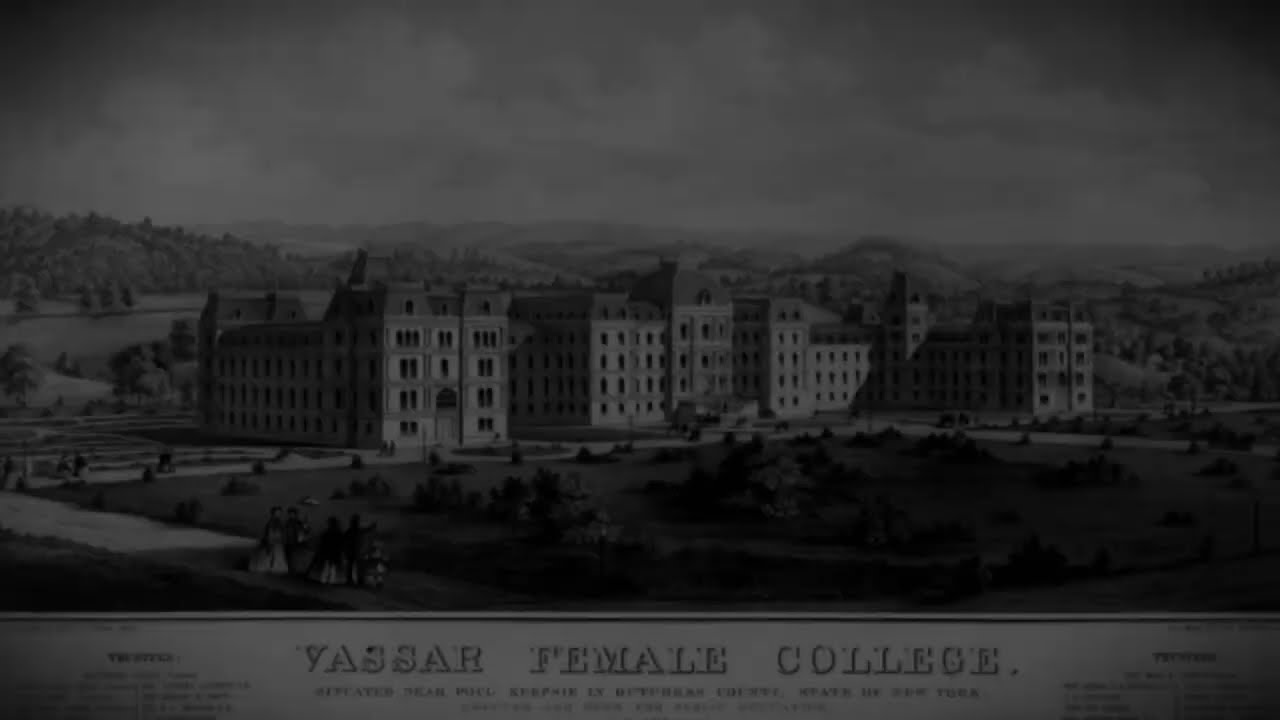
That ambition led her to enroll at Vassar College in 1947, where she immersed herself in French literature and art. But distance from New York suffocated her. She did not want to be isolated on a campus. She wanted to be where things happened, where culture and power intersected.
In 1950, she moved to George Washington University in the nation's capital, a place that offered the chance to be closer to politics and influential people. In 1951, her talent earned her a prestigious internship at Vogue, the dream of any society woman aspiring to a career in fashion or journalism. Her time there was brief. After barely a day, the editor-in-chief gave her advice that would change her course: do not waste your best asset; her destiny was in Washington, beside a powerful man.
Accustomed to listening to what others expected of her, Jackie left the position and returned to D.C., where she found work at the Washington Times-Herald as an "inquiring camera girl." The job required her to walk the streets asking strangers about current events and photographing their answers. It was not glamorous, but it gave her access to the world that fascinated her: politics.
Her interviews took her to events where she mingled with the capital's most influential figures. She soon understood that true power was not in the cameras or newspapers but in the corridors of Congress and the White House. It was at one of those elite Washington dinners in 1952 that her destiny turned.
Among the crowd of dark suits and elegant dresses, a young Massachusetts senator caught her attention: John Fitzgerald Kennedy. With his irresistible smile and natural charisma, he had the ambition of someone who wanted not just to be in politics but to dominate it. He was attractive, from a powerful family, and possessed the confidence of those born into the American aristocracy.
For Jackie, who had grown up between the adoration and disappointment of the men in her family, JFK was an intriguing figure. He was not a prince charming, but he was a man with a surname that guaranteed a place in history. Their relationship advanced quickly, though not without doubts. Jackie, with her intelligence and sharp perception, soon realized Kennedy was not a faithful man.
His romances were well known in political circles. Though that did not stop her from admiring him, it made her question whether she wanted to be part of that life. Yet with each new dinner at the Kennedy home in Hyannis Port, it became clearer that marriage to John was not just a romantic union but a strategic alliance.
Jackie was the perfect complement to JFK, not only for her beauty and refinement but because she understood the power of image. She knew when to speak, when to stay silent, and how to present herself as the ideal wife. Joseph Kennedy, the family patriarch and a ruthless political strategist, noticed immediately. In her, he saw not only the woman who would make his son shine but the future first lady America would adore.
On June 25, 1953, Jackie and John announced their engagement. The news was greeted with enthusiasm in the press, and preparations began for what would become one of the most publicized weddings of the century. On September 12, 1953, at St. Mary's Church in Newport, Rhode Island, the couple married before more than 1,200 guests. It was the event of the year.
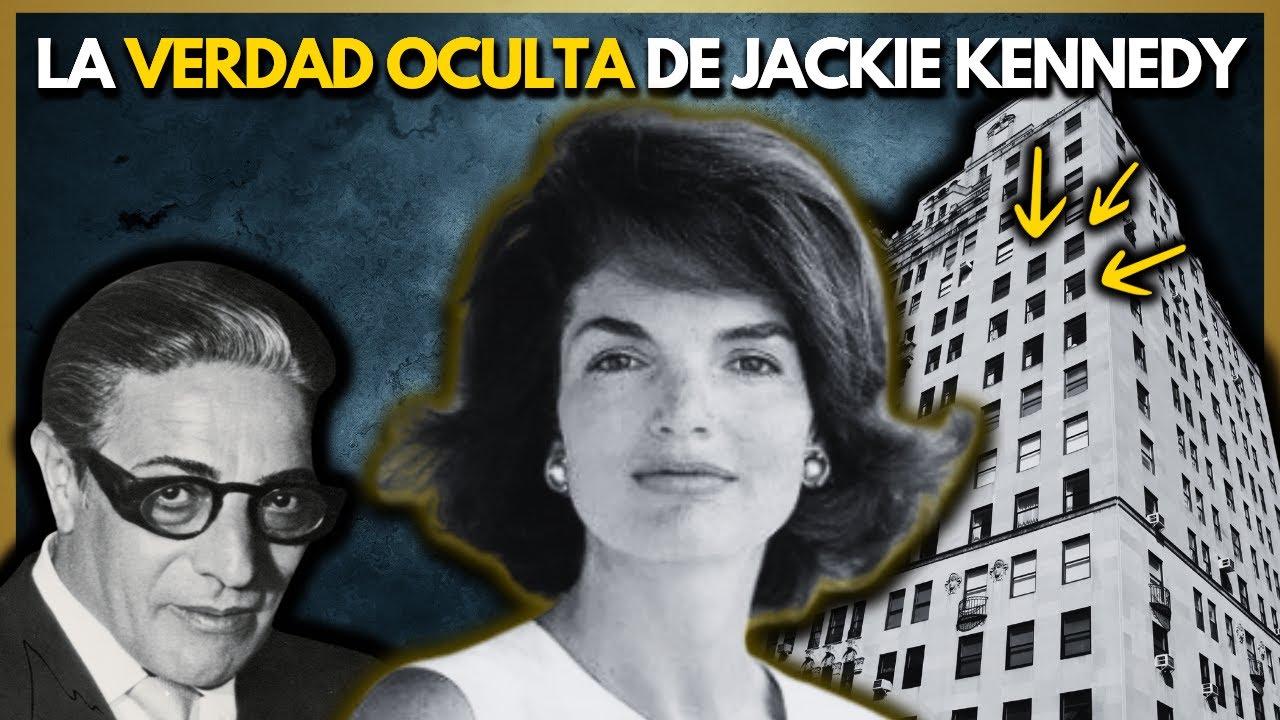
What seemed to many like the start of a fairy tale was, for Jackie, the beginning of a new life under strict rules. The Kennedy family was not just a political dynasty; it was an institution with its own norms and an absolute boss, Joseph Kennedy. Jackie quickly understood that while her marriage opened the doors of power, it did not give her control over the Kennedy wealth.
The money was not John's but his father's, and the patriarch managed the family finances with an iron hand. Despite being the wife of a senator with an illustrious surname, Jackie had no access to the family fortune without his approval. Her world was full of luxuries: homes in Palm Beach, New York, and Cape Cod, dinners with political leaders, international travel. But real power, money, and decisions were not in her hands.
With her marriage, Jackie ceased to be merely Jacqueline Bouvier and became Jackie Kennedy, the wife of America's future. Her life was now shaped by the expectations of her new surname, one that could make her immortal but also chain her to a destiny full of sacrifices. What she did not know then was that the price of being part of the Kennedy family would be far higher than she ever imagined.
On the morning of November 9, 1960, the world woke to a new reality: John F. Kennedy had been elected president of the United States. At 31, Jackie Kennedy became the youngest first lady in modern history. What many saw as the dawn of a dreamlike era was in fact the beginning of a life marked by sacrifices, betrayals, and tragedies.
The presidential campaign had been exhausting. Jackie, pregnant with her second child, John F. Kennedy Jr., could not travel constantly with her husband, but that did not mean she stayed on the sidelines. She wrote a weekly column titled "Campaign Wife," showing the world JFK's more human side. Her participation was crucial in softening the image of an ambitious and often distant politician.
Jackie represented the ideal of the American wife: refined, cultured, and devoted to her family. On January 20, 1961, in the midst of winter cold, she became first lady of the United States. Dressed in an elegant pastel blue coat, she marked the start of an unprecedented reign of elegance and sophistication.
From the first day, she understood her role went beyond simply being the president's wife. Her mission was to transform the image of the White House and, by extension, that of the entire nation. Her first major project was the restoration of the White House. Jackie was horrified to find the presidential residence lacked history and was decorated with furniture of no relevance.
For her, the White House had to reflect American art and culture. With the help of art and antiques experts, she recovered historical pieces, restored rooms, and created the White House Historical Association. It culminated in 1962 with a televised tour of the White House showing the results of her work. More than 56 million people watched the broadcast, and Jackie received an Emmy Award for her efforts, the only first lady in history to receive such an honor.
Her impact was not limited to decoration. In a world dominated by men, Jackie understood her influence could extend to diplomacy. Her command of several languages and her knowledge of history and culture made her a luxury ambassador. In 1962, her tour of France, India, and Pakistan elevated her to global icon status.
In Paris, French President Charles de Gaulle described her as one of the most charming women in the world. Her elegance and fluency in French captivated the public so much that at a press conference, John F. Kennedy joked that he was the man who accompanied Jackie Kennedy to Paris. In Pakistan, she was received like a queen, riding horses with President Ayub Khan and receiving a horse named Sardar as a gift.
In India, her visit to the Taj Mahal, in a pink sari with an air of melancholy in her gaze, was immortalized in one of the most iconic photographs of her life. Jackie was not just the president's wife; she was an international figure, a representative of a new America: young, modern, and sophisticated.
Meanwhile, while the world admired her, her personal life was a battlefield. John F. Kennedy never stopped being unfaithful, and Jackie knew it. Extramarital affairs were an open secret in Washington, but one humiliated her publicly more than any other: Marilyn Monroe. The romance between JFK and the Hollywood actress was more than a fling.
On the night of May 19, 1962, at a gala at Madison Square Garden, Marilyn Monroe sang "Happy Birthday, Mr. President" with a sensuality that paralyzed the audience. Jackie was not present, but the message was clear: the romance between her husband and the film star was no longer a rumor but a national scandal. Jackie endured the humiliation in silence, aware that divorce was not an option. She knew that in the game of power, image was everything, and she was trapped in the myth of Camelot.
But the most devastating blow was yet to come. In August 1963, Jackie gave birth to her third child, Patrick Bouvier Kennedy, five and a half weeks early. The baby was born with neonatal respiratory distress syndrome and, despite medical efforts, died two days later. Jackie was shattered. The pain of losing a child plunged her into deep depression, and John, for the first time in a long time, seemed genuinely worried about his wife.
In an attempt to cheer her up, John suggested she spend time away from Washington. Jackie accepted and embarked on a trip to Greece, where she was received by shipping magnate Aristotle Onassis, an old acquaintance of high society. Onassis welcomed her aboard his yacht, the Christina O, and offered her a respite from the whirlwind her life had become. She did not know then that this man would play a crucial role in her future.
Jackie returned to Washington in October 1963, just in time to accompany her husband on a political tour of Texas. On November 22, 1963, in Dallas, her life changed forever. Aboard an open-top limousine, dressed in her now-legendary pink Chanel suit, Jackie smiled at the crowd while holding her husband's hand. Everything seemed normal until the shots broke the air.
In a matter of seconds, John F. Kennedy's skull was shattered by a bullet, and Jackie, in an act of desperation, tried to collect the fragments of his head. In the agony of the moment, she climbed onto the trunk of the limousine until Secret Service agent Clint Hill pushed her back into her seat. In that instant, everything she had built and everything she had endured collapsed.
Hours later, aboard Air Force One, Lyndon B. Johnson was sworn in as the new president of the United States with Jackie at his side, still wearing her bloodstained suit. When suggested she change, she responded coldly that she wanted people to see what they had done to Jack. The woman who had been the queen of America, who had captivated the world with her grace and elegance, was now a 34-year-old widow with two small children and an uncertain future.
The country was in mourning, but no one felt the loss like Jackie. What she did not know at that moment was that although her husband was dead, her bond with the Kennedy family was not over. Joseph Kennedy offered her a million dollars to ensure she never revealed the family's secrets. Her life was still tied to the Kennedys' wishes, and the money she would receive annually was not a gift but a golden chain. The myth of Camelot was broken, and in the midst of darkness, Jackie would have to reinvent herself.
Jackie Kennedy left the White House a ghost. The woman who had been the symbol of a nation now walked with an empty gaze, covered by a black veil, unable to process what had happened in Dallas that November 22. She had lost her husband in the most brutal way possible, and the entire world had witnessed her tragedy.
John F. Kennedy's funeral became a televised spectacle, a final act of grandeur for a president assassinated at the height of his power. Jackie, with unshakeable dignity, organized the ceremony following the model of Abraham Lincoln's funeral. Dressed in black from head to toe, she led the procession with her small son, John John, at her side, who in a heart-breaking gesture gave a military salute to his father's coffin.
But behind the controlled image of America's widow, Jackie was broken. The woman who had dedicated her life to building the myth of Camelot now found herself without a clear purpose. She had no home of her own, no independence, and, more importantly, no security for her children. Barely two months after the assassination, Jackie made a drastic decision: to leave Washington forever.
Accepting the help of new President Lyndon B. Johnson would have meant being trapped in the Kennedy political sphere, something she was not willing to do. She rejected offers of ambassadorships and high diplomatic posts. She did not want to be a political trophy, much less a chess piece within her husband's legacy.
In 1964, she bought a penthouse on Fifth Avenue in New York, a city that offered the anonymity she so desired. It was a refuge but also a cage. Her fame was inescapable, and every time she went out, paparazzi hounded her as if she were a movie star. She became the most photographed woman in the world, a title she despised, since each image only reminded her of what she had lost.
Money was not an immediate problem. Joseph Kennedy, the family patriarch, made sure Jackie was financially protected. She was assigned a pension of $200,000 a year, enough to maintain her lifestyle without needing to work. But this money did not come without conditions. She was not to speak about the Kennedy family's secrets, not to write memoirs, and above all, to maintain the image of the exemplary widow.
What worried her most was not money but security. Jackie firmly believed the Kennedy family was a target of hidden forces. She had lost her husband in broad daylight, and the fear that her children would be next tormented her. For Jackie, Robert Kennedy became an emotional pillar after John's death. He was the only one who understood her pain, the only one who shared the burden of having seen a Kennedy die up close.
But Robert had political ambitions. In 1968, he announced his candidacy for the presidency of the United States. Jackie, though she supported him, knew he was condemning himself. On June 5, 1968, at the Ambassador Hotel in Los Angeles, Robert Kennedy was shot in the head under circumstances that recalled John's assassination too closely. History was repeating itself.
Jackie no longer had doubts: her children were next. In the midst of her paranoia, she made a desperate decision. She had to get away from the United States. For years, Jackie had maintained a friendship with Aristotle Onassis. The Greek shipping magnate was not only a billionaire with unlimited resources but also a man who could offer her something the Kennedys no longer could: security.
Years earlier, in 1963, Onassis had welcomed her aboard his yacht, the Christina O, after the death of her son Patrick, when her marriage to JFK was in crisis. Now, in 1968, Jackie saw in him her last chance to escape the shadow of the Kennedys. It was not love; it was survival.
On October 20, 1968, Jackie shocked the world by marrying Aristotle Onassis in an Orthodox ceremony on the Greek island of Skorpios. The news was a scandal in the United States. The widow of Kennedy, the embodiment of grace and eternal mourning, was now the wife of a Greek magnate with a reputation as a womanizer. Americans felt betrayed.
The tabloids called her a gold digger, while the Catholic Church debated whether she should be excommunicated for marrying a divorced man. For the Kennedy family, the marriage was a humiliation. Ted Kennedy, now the political leader of the clan, made clear that with this decision Jackie was forever stepping away from the family's circle of power. But Jackie did not care. She had achieved what she so desired: to leave the United States and protect her children.
With her new marriage, her financial dependence on the Kennedys ended. Onassis granted her a monthly allowance of $30,000, plus access to his fortune and opulent lifestyle. They lived between Paris, Greece, and New York, with frequent trips to Switzerland and the Caribbean. Jackie was no longer a simple political figure; she was now an international socialite.
But money and security did not bring happiness. The marriage to Onassis soon showed cracks. He was a man accustomed to control, and Jackie, though discreet, was not willing to be a submissive wife. Onassis also had a great love before Jackie: Maria Callas, the legendary opera singer. Their relationship ended completely, and Jackie knew it.
Despite everything, Jackie remained in the marriage, not because she loved him but because she knew she still needed him. Onassis, however wealthy, understood the value of having Jackie Kennedy at his side. Jackie had changed her surname, but she had not yet changed her destiny. She believed she had escaped the Kennedy tragedy, but what she did not yet know was that the story was far from over.
The relationship quickly crumbled, becoming a farce both maintained out of convenience and the weight of public image. Jackie, still wrapped in the halo of the Kennedy family, never fully belonged to Onassis's world. The Greek magnate never understood the woman he had brought to his private island of Skorpios, believing he would turn her into his greatest trophy.
While Jackie continued her life between Paris and New York, maintaining a calendar of social events and trips that kept her away from her husband, Onassis dealt with his own personal hell. The death of his son Alexander Onassis in a tragic plane crash in 1973 plunged him into a depression from which he never recovered. Jackie was not at his side in his darkest moments. Instead, the distance between them grew even greater.
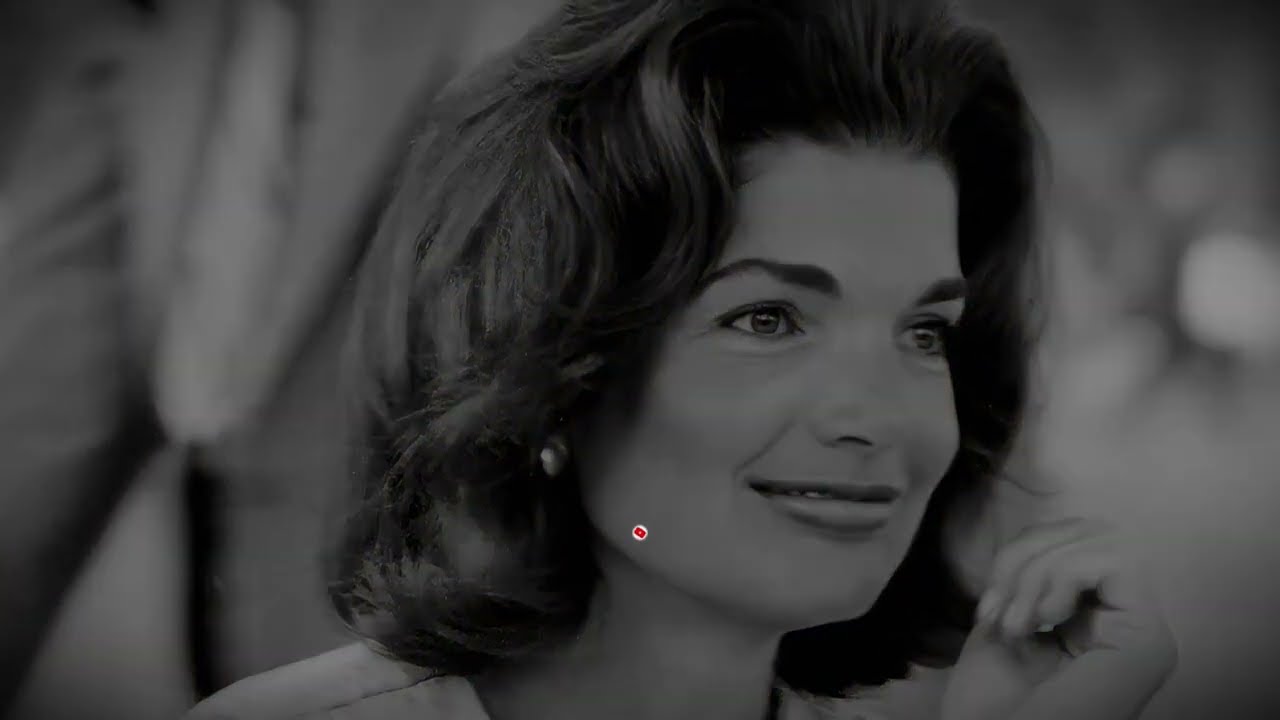
Onassis's decline was accelerated. The autoimmune disease he suffered left him physically unrecognizable in his final months. Jackie, though still married to him, no longer had any role in his life. She barely visited him in the Paris hospital where he received treatment, and when she did, her presence was more a gesture of formality than affection.
Onassis, aware of his imminent end, felt betrayed by the woman he once believed he could tame with his wealth. In his final conversations with those close to him, he confessed that marrying Jackie had been a mistake. He knew she had never loved him and that their union was just another transaction in the story of his life.
On March 15, 1975, Aristotle Onassis died at 69 at the American Hospital of Paris. His funeral, far from the glamour that always surrounded him, was a private ceremony in Greece. Jackie did not cry. She showed no signs of public mourning or grief. She knew her relationship with Onassis had provided what she needed at the time: an escape from the danger and tragedy that pursued her.
After his death, her future was once again at stake. The Onassis family, led by Christina Onassis, the magnate's only surviving daughter, never fully accepted her and was now ready to fight. Jackie expected to receive the $20 million Onassis had promised her in his will. But Christina, determined to minimize the inheritance of the woman she saw as an opportunist, used every legal resource to prevent Jackie from keeping that sum.
What followed was a fierce battle in which Jackie's public image, always impeccable and distant, clashed with the crudeness of a court dispute over money. Christina's lawyers argued that Jackie had not really been a wife to Onassis in his final years and therefore did not deserve the full compensation. Jackie, for her part, knew that fighting in public would damage her image but also understood she could not give in completely.
The final agreement was sealed after intense negotiations. Jackie received 19 million euros, less than she expected but enough to consolidate her total economic independence. Now, for the first time in her adult life, Jackie did not have to answer to any man. She depended on neither the Kennedys nor the Onassises. The most famous widow in the world was now one of the richest and most influential women of her time.
But with that independence came an inevitable question: what would she do with her freedom? At 47, Jackie had something she had never truly had: absolute control over her destiny. She returned to New York in 1976 and decided to reinvent herself. Though she could have devoted herself to the life of a socialite among the elites, she preferred to seek something that gave her purpose.
She entered the publishing world as an editor at Viking Press, surprising those who saw her only as the former first lady or the widow of a Greek magnate. Her love of books had been present since her youth, and now, instead of being the object of history's attention, she wanted to be the one who helped tell it. Still, her time at Viking Press was brief.
When the publisher released a book describing an alleged plot to assassinate Ted Kennedy, Jackie knew she could not allow her name to be associated with another family tragedy. She resigned silently and sought another path. In 1978, she joined Doubleday, one of the country's most prestigious publishers. There she finally found a space where she was seen not as a decorative figure but as an editor of substance.
She worked on books of history, art, and literature, contributing her vision and judgment. She became an influence in the publishing world, far from the spotlights that had pursued her all her life. But although her career flourished, her personal life still needed stability.
In 1980, she began a relationship with Maurice Tempelsman, a diamond magnate of Belgian origin. Tempelsman was not a Kennedy or an Onassis. He was not a man of political power or someone who sought to use her as a trophy. He was simply a companion. With him, Jackie experienced a relationship different from all the previous ones. There were no scandals, no implicit contracts, only a tranquility she had never known.
Tempelsman was also crucial in another way: he taught her to grow her fortune. Though Jackie was already a millionaire thanks to the Onassis inheritance, her new companion made sure her money was well invested. Thanks to his financial advice, Jackie's fortune grew to $43.7 million. She was now not only an influential cultural figure but also one of the richest and most independent women in New York.
Her life in the 1980s and early 1990s unfolded between editorial work, life in New York high society, and summers in Martha's Vineyard. She was no longer the dazzling young woman who had captivated the world in the White House, but her presence remained magnetic. Every public appearance, however simple, became an event.
But destiny had not finished with her. In 1993, after a fall from a horse in Virginia, Jackie began to feel unusually weak. At first she believed it was just a minor bump, but when the symptoms persisted, she decided to undergo medical tests. The diagnosis was devastating: non-Hodgkin lymphoma.
Jackie was not a woman to be dominated by despair. She had survived the assassination of her husband, betrayals, self-imposed exile, and the pressure of being a global icon. But this time there was no strategy to escape. Upon learning of her illness, she made a firm decision: not to undergo aggressive treatments. She did not want to spend her final months in hospitals connected to machines. She wanted to live her farewell in peace, at home, surrounded by her family and the few friends who truly mattered.
The Fifth Avenue apartment became her final refuge. From her window, she watched Central Park with the same calm with which she had faced every stage of her life. She read, wrote, listened to classical music. She knew the end was near, but she did not fear it.
On May 18, 1994, doctors informed her family that she had only hours left. Her closest circle gathered at her side: Caroline and John F. Kennedy Jr., her greatest prides; Maurice Tempelsman, her last partner; and a few lifelong friends. That night, in the tranquility of her home, she closed her eyes for the last time.
She died on May 19, 1994, at 10:15 p.m., with the serenity of someone who has lived and suffered but never surrendered. The world reacted with the solemnity her passing deserved. The last icon of the Kennedy era was gone. Her funeral, far from the spectacle that had defined much of her life, was intimate, reserved only for her family and closest friends. She was buried at Arlington alongside John F. Kennedy and her deceased children, Arabella and Patrick. In death, she once again became part of the Kennedy story.
In financial terms, Jackie had meticulously secured her children's future. Her fortune of $43 million was distributed as follows: Caroline Kennedy received the majority of the inheritance, ensuring the family's stability, while John F. Kennedy Jr. inherited properties and a million-dollar sum, in addition to the weight of a surname that remained both a legacy and a curse.
Jacqueline Kennedy did not just survive history. She shaped it in her own way.