He was 20 years old. He had a fifth-grade education. He had never fired a shot in anger before Salerno. And on the morning of February 1, 1944, in a frozen wheat field about 6,000 meters from the Pennsylvania woods where his father taught him to hunt deer, Private First Class Alton Warren Knappenberger was about to do something the U.S. Army field manual specifically warned him not to do.
He was about to climb the highest point on the battlefield. He was about to stay there for two hours. And when he came down, 30 of his comrades were still alive who were supposed to be dead. The frozen ground in front of him would be covered with enemy bodies. He did not want to talk about it. Not that day, not 60 years later, not ever.
This is his story.
Cisterna di Littoria, central Italy. February 1, 1944. The field was flat, the straw was frozen, and the sky over the Mediterranean plain was the color of dirty linen. At exactly 11:45 a.m., Alton Knappenberger lay on his stomach in a shallow depression in the ground, 6,000 miles from home, holding a weapon called the Browning Automatic Rifle, Model 1918 A2, loaded. It weighed 11 kilograms, nearly 24 pounds of steel and walnut pressing against his ribs as he tried to hide in ground that gave him no cover.
Above him, the air itself was being torn apart. The sound of the German MG42 machine gun is unlike any other sound a mechanical object can make on earth. It fires 1,000 to 1,200 rounds per minute. To the human ear, the individual shots blend into a single scream of tearing, like heavy cloth ripped by a huge invisible hand. Three German machine guns were tearing the sky above him. Bullets, when they pass close, make a small sharp crack beside the ear. Supersonic snaps, some missing him by a few inches. His Medal of Honor citation, written months later in the dry, polite language of the War Department, used that exact phrase. Six inches, roughly the width of a man's face. Three bullets had already passed through his uniform without penetrating his body.
Below him, in the shallow folds of the field, the rest of his company was pinned to the ground. They could not advance. They could not retreat. Every attempt to raise a head to crawl toward a wounded man brought another hail of bullets. They were his platoon. They were his brothers in arms. And in front of him rose a small hill, a mound of dirt. Two meters, maybe three. The only elevated piece of ground in the entire visible landscape.
Every American who had ever opened the Army field manual knew what to do in this situation. Find cover. Stay low. Do not expose yourself. Alton Knappenberger, Private First Class, 20 years and one month old, did the exact opposite. He crawled toward the highest point on the battlefield, and he did not come down for the next two hours.
To understand why a farm worker from Pennsylvania climbed the most dangerous piece of ground within 10 square kilometers of frozen Italian farmland, you have to go back. Back before the Browning Automatic Rifle, before Fort Meade, before Anzio, back to the forest. Because the man on that hill was not thinking like a soldier. He was thinking like a deer hunter.
Coopersburg, Pennsylvania. Lehigh County, December 31, 1923. A boy is born in a country that had already forgotten one world war, not yet aware he is walking toward another. The Knappenberger family was not rich. They were not exceptionally poor at the moment of Alton's birth by the standards of small farming communities in eastern Pennsylvania. But those standards were about to change. Six years later, the New York stock market collapsed, and the Great Depression wrapped itself around rural America like a slow gray fog that did not lift for a decade. Alton grew up inside that fog.
His formal education ended in the fifth grade. That was not unusual for boys of his time and place. The land needed working hands, and the hands did not need long division. He learned to read well enough to read. He learned to write well enough to sign his name. Then the forest took over the rest of his education.
His father hunted. His father's father hunted too. The rifle in the corner of the house was not decoration. It was a tool. Like the ax was a tool, and the plow was a tool, it put meat on the table. In the harshest winters of the 1930s, when factories in the towns were laying off workers and the money in the box under the bed amounted to a few dollars, the difference between a family that ate and one that did not, on any given night, was one deer.
Alton killed his first deer at about age 12. He did not talk about it much later. Men of his kind do not narrate their lives, but this was the truth. Somewhere in the hardwood forests of eastern Pennsylvania, on a cold morning in the mid-1930s, a boy shot a deer with a lever-action .30-30 Winchester. He brought it home and his family ate from it. That was his school.
By the time he was a teenager, he had learned things that are not taught in any school. He learned that deer move at dawn and dusk, and that the midday hours are for waiting. He learned that a hunter who moves is a hunter who gets discovered. He learned that a hunter who stays still becomes part of the tree, part of the leaves, part of the shadow. He learned that the wind carries scent, and that a man who does not think about wind direction will not eat. And he learned one thing above all others. He learned the importance of elevation.
In the folk tradition of deer hunting in Pennsylvania forests, there is a piece of equipment called a tree stand. It is exactly what the name suggests, an elevated platform. Sometimes it is just a wooden board nailed between two branches. Sometimes it is a ready-made seat strapped to a tree trunk with rope. The hunter climbs it. The hunter sits on it. The hunter waits.
The tree stand is not comfortable. In late autumn, the cold creeps through the soles of the hunter's boots and settles in the bones of his feet within an hour. The wind cuts through wool. The hands cramp. Time slows to a kind of icy crawl, where every minute is measured by the ache of shoulders that are not allowed to move. But the tree stand is effective. It is effective for one reason, and that reason is geometry.
A deer walking through the forest scans the world around it at eye level. It watches for movement in the bushes, at shoulder height, at body height. A deer rarely looks up more than ten feet into the air in its natural course of life. The hunter sees everything. The trails, the grazing areas, the water sources. He sees the deer coming from 300 yards away, and the deer does not see him at all. Elevation equals visibility. Visibility means control. Control means the shot.
Alton Knappenberger learned this before he had a beard. He also learned patience. A .30-30 Winchester cartridge cost money. In the middle of the Great Depression, in a family where every coin was counted a thousand times, a wasted shot was not just an abstract idea. It meant a hungry night. So you did not shoot at what you were not sure of. You did not shoot at mere movement. You did not shoot because your hand was cold and you wanted the day to end. You waited. You waited six hours. As if six hours were what it took. And when the buck stepped out into the small clearing you had been watching since before dawn, and when it stopped, and when it lowered its head toward the grass, you fired one round. One round, one deer. That was the rule. The rule was not written anywhere. It was simply the way things were done.
And in the forests of Lehigh County in the cold second half of the 1930s, a boy absorbed a philosophy of combat without ever knowing that was what he was doing. Get to high ground. Watch everything. Stay still. Wait for the clear target. Do not waste ammunition. Understand the terrain before you fire your first shot. Ten years later on a hill in Italy, that philosophy would kill a large number of men. But that was still ten years away.
March 1943. America had been at war for 15 months. Fifteen months since Pearl Harbor. Eleven months since the Doolittle Raid. The battle of Guadalcanal had ended in February. In North Africa, the U.S. Army had been bloodied at Kasserine Pass and had begun the slow, painful education of learning how to fight the German Army.
In Coopersburg, none of that touched Alton Knappenberger directly. He was 19 years old. He was working as a farmhand. He did not volunteer. He did not walk into a recruiting office. He did not feel, as far as any records show, any strong urge to go and see the war. He was drafted. The Selective Service Act of 1940 had reinstated peacetime conscription in the United States for the first time in the country's history. When Congress declared war on Japan and then on Germany, that machine began running at full capacity. Every young man of a certain age received, or would eventually receive, a small slip of paper in the mail. The paper was polite. The paper was official. The paper began with the word greetings. The paper did not ask.
Alton Knappenberger's paper came in March 1943. He did not refuse. For most men of his background, refusal was not something that could be seriously imagined. But he also did not claim at any point in the surviving records that he wanted this. There was no letter home about the great crusade. There was no speech about liberating Europe. There was a young man from a Pennsylvania farm, and there was a slip of paper, and a few weeks later there was a train.
The train went to Fort Meade, Maryland. At Fort Meade, they took him apart and put him back together as a soldier. He learned to march in formation. He learned to salute. He learned to make his bed so that a coin would bounce off the blanket. And he learned to shoot a rifle he had never seen before.
They gave him an M1 Garand first. Every American soldier learned on the Garand first. It was the standard rifle of the U.S. Army, semi-automatic. Eight rounds in a clip, weighing about 4.5 kilograms empty, using .30-06 Springfield ammunition. For a boy raised on a lever-action .30, the Garand was heavier and had a different rhythm, but it was still essentially a rifle. He absorbed it quickly.
Then they looked at him. They looked at his shoulders. They looked at his readiness to carry heavy loads. And they made a decision that determined everything that followed. They took away the Garand and handed him a Browning. The Browning Automatic Rifle, Model 1918 A2, weighing 11 kilograms loaded, with 20 rounds in a box magazine, using the same .30-06 Springfield ammunition as the Garand, with two rates of fire, 300 to 450 rounds per minute on the slow setting, and 500 to 650 on the fast.
The BAR was not a light machine gun. It was not a light machine gun in the German sense. It was something specific to American infantry doctrine in World War II. It was the automatic weapon of the infantry squad. In official language it was the squad automatic weapon, and every American infantry squad had a man designated to carry it. The man who carried the BAR was the base of fire. When the squad advanced, he stayed in place. When the squad was pinned down, he advanced and laid down suppressing fire so the others could get up and move. He was, in a real sense, the loudest and heaviest voice in the squad.
That job went to Alton Knappenberger. He did not choose it. He was chosen for it. The Army did not specifically ask a 19-year-old farm worker with an elementary education for his opinion on carrying an extra six kilograms of steel every mile of the Italian campaign. The Army decided, and Alton carried.
The doctrine said economize on ammunition, control your bursts, and keep the barrel from overheating. He learned all of this in a place where no one was shooting at him. Then in September 1943, they put him on a boat. Salerno. That word does not mean much to most people today. In September 1943, it meant everything. It was the first major amphibious assault by the Western Allies on the European mainland. The German Army controlled the mainland. The German Army was very good at holding positions.
Operation Avalanche put the U.S. Fifth Army, under Lieutenant General Mark Clark, 47 years old, on the beaches south of Naples. The 3rd Infantry Division, nicknamed the Rock of the Marne for its stand in World War I, was among the units that came ashore in the later wave. Alton Knappenberger came with them. Company C, 1st Battalion, 30th Infantry Regiment, rifleman, 19 years old.
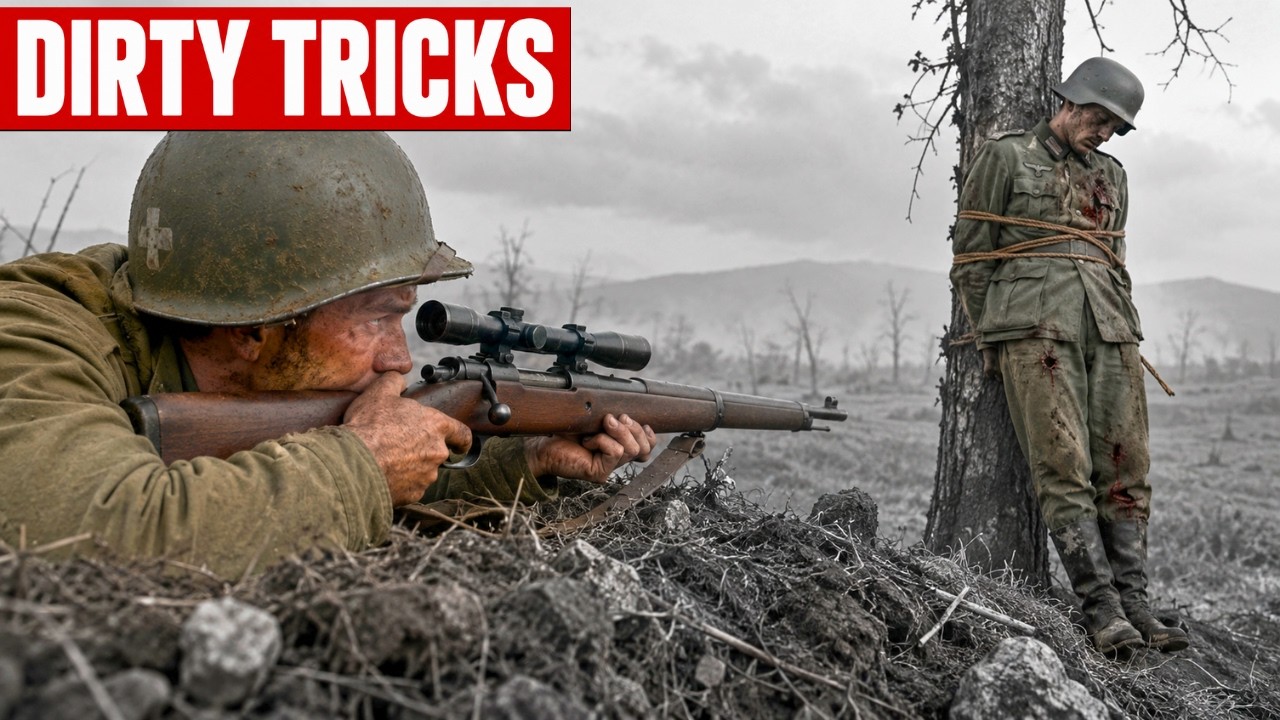
Salerno was hard. The Germans, under Field Marshal Albert Kesselring, 58 years old, a professional officer with a cold, clever smile that earned him the nickname Smiling Albert, had made the beachhead a killing ground with pre-registered artillery and fortified defensive positions. Men died minutes after stepping off landing craft. The beach was not secure for days, and when it was secure, the war was not over.
The war moved north. The 3rd Infantry Division fought north through the autumn, across the Volturno River. Toward the approaches to Monte Cassino. The terrain of central Italy was rough in the months when rain fell without stopping, and roads turned into rivers of mud that swallowed jeeps entirely.
Alton Knappenberger did his job. He carried his weapon. He fired when told to fire. He kept his head down when told to keep it down. He slept in ditches. He ate what was in front of him. He watched men in his platoon die from enemy fire and from cold and from the strange accidents of war that no one had prepared him for.
His friends in the division had a name for him. They called him Knappie. It was a friendly name. It was an ordinary name. It was the kind of name men give their buddies when their first name sounds too formal for the mud. But that is the essential point. Throughout four months in some of the fiercest fighting in the entire Italian theater, Alton Knappenberger did nothing that anyone saw fit to record. No medals, no commendations, no mention in the division's daily operations reports, no official notification of exceptional bravery, not even a single letter of mention. He was, in the surviving records, a completely ordinary soldier. He was just one rifleman among thousands. He was one young man of 20 among an entire generation of 20-year-olds. He was part of the vast statistical machine of the U.S. Army in the winter of 1943. Just a name and a service number and a designated position in a designated division.
If he had been killed on the Volturno in October, no one outside his hometown would have heard of him. He was not killed on the Volturno. He survived October. He survived November. He survived December. On December 31, somewhere in the mud of Italy, he turned 20. There is no record of any celebration. There was no cake. Most likely, almost no one noticed. Birthdays are a civilian matter, and Alton Knappenberger was by that point an exhausted soldier who had been under fire and mortar and rain for more than three months without a break. As far as history knew, he had not distinguished himself in any way.
Twenty-two days later, they put him on another boat. On January 22, 1944, the boat was part of Operation Shingle, the amphibious landing at Anzio. The plan was brilliant on paper. The main Allied line was stuck at the German winter defenses south of Rome, the fortifications known as the Gustav Line. The Germans had built those positions in the mountains with extreme care, worthy of an army that intended to stay there a long time. A direct attack on the Gustav Line was a slaughter. So Allied planners looked at the map and saw a piece of the Italian coast about 50 kilometers south of Rome at a place called Anzio. If they could land a large force there behind the Gustav Line, they could threaten Rome directly. They could force the Germans to abandon the mountain positions and rush back to defend their capital. That was the plan.
Alton Knappenberger did not know the plan. He was a private first class in an infantry company, and infantry companies were not consulted about the strategic decisions of army group commanders. He only knew what they told him. There would be a landing. There would be another beach. The Germans would be there or they would not. Either way, he would have his weapon and his magazines and his brothers in arms beside him, and things would go as they were meant to go.
He climbed into a landing craft in the darkness before dawn. The Mediterranean in January is cold. The wind coming off the water cut through wool the way the wind in Pennsylvania forests had cut through wool ten years earlier. Some things are the same in every part of the world. Cold is one of them.
The landing craft moved toward the shore. And in that darkness, and in that cold, on a body of water 30 kilometers from Rome, Private First Class Alton Warren Knappenberger, 20 years and 22 days old, rested his weapon on his knees, not knowing that in exactly ten days he would climb a small hill in a frozen field to become, for two hours, the loneliest and most targeted man in the entire United States Army. He did not know that because it had not happened yet. But the forests had already taught him how to do it. The trees had already taught him. The .30-30 had taught him. The Winchester had taught him. The white-tailed deer of Lehigh County had taught him. Every silent morning in every cold November in Pennsylvania had taught him. He simply did not know it yet. He would know it on February 1.
The landing at Anzio on January 22, 1944, was one of the strangest events of World War II because it succeeded. At first, it succeeded completely. Thirty-six thousand American and British soldiers landed on an Italian shore that the Germans had assumed no one would be foolish enough to attack. The coastal town of Anzio and its neighbor Nettuno sat on a flat, open coastal plain. There were no cliffs. There were no natural defensive positions above the beaches. The Germans had assigned the area a garrison of clerks and engineers and older reservists because they had convinced themselves nothing serious would happen there.
The Allies landed a full corps, and the German coastal defense collapsed within hours. Prisoners were captured while eating breakfast. The stoves in the kitchens were still burning when American soldiers entered the buildings. The road to Rome, 50 kilometers to the north, was open. There was almost nothing standing in the way. A bold commander could have reached Rome within a week.
The commander of the VI Corps that day was Major General John P. Lucas. He was 54 years old. He was a professional soldier with long service and extreme caution. He had been appointed to command the landing force by General Mark Clark. And he had received, as commanders often do, contradictory instructions. Advance inland vigorously. Do not overextend. Seize Rome quickly. Do not risk destruction.
Lucas read the instructions and read the terrain and read the strength of his forces and made a decision. He would reinforce the beachhead first. He would stack supplies. He would dig in where he was. He would wait until his men were fully ashore and his artillery was in position and his flanks were secure. Then, and only then, would he move north.
The decision was defensible by the professional standards of 1944. It was also catastrophic, because while General Lucas was reinforcing his positions, Field Marshal Albert Kesselring was moving. Kesselring was 58 years old. He was the German commander in Italy. He was nicknamed Smiling Albert, not because he was kind, but because his composure in front of people never wavered. He received news of the Anzio landing on the morning of January 22, and within hours he was making decisions of the kind that separate ordinary commanders from historic ones. He issued orders to units across Italy, across southern France, across the Balkans. He pulled forces from every direction he could spare, and even from directions he could not. He assigned command of the emerging counterattack to Colonel General Eberhard von Mackensen, 54 years old, commander of the German Fourteenth Army, a professional cavalry officer with a sharp temperament and cold eyes.
Within 48 hours, the balance of power began to shift. By January 25, elite German formations were arriving at Anzio. By the 28th, the beachhead was being encircled. By the 30th, it was completely surrounded. Fifteen kilometers deep, 25 kilometers wide. Everything inside that box was under observation by German artillery from the surrounding heights. Every ship entering to unload supplies was shelled. Every road was pre-registered. Every field was precisely ranged.
The men in the beachhead had a name for what had happened to them. They called it the largest self-imposed prisoner of war camp in history. They said it bitterly. They said it with the black humor of soldiers who understand that a joke is also a wound.
Alton Knappenberger, Private First Class, Company C, 1st Battalion, 30th Infantry Regiment, was somewhere inside that box. He carried his weapon. He kept his head down. He watched the mud freeze at night and turn back to slush at dawn. He listened to German artillery shells falling. He did not know it, but the countdown to his end had begun.
While the beachhead was closing, something worse was happening 10 kilometers inland. The town of Cisterna di Littoria sits at the most important road junction in that part of central Italy. Whoever controls Cisterna controls movement. If the Allies could take Cisterna, they could break the German encirclement. If the Germans could hold Cisterna, they could keep the Allies trapped against the sea.
The mission of taking Cisterna was assigned to U.S. Army Rangers. The Rangers were the elite infantry of the American force. The commander of the Ranger force was Colonel William O. Darby, a West Point graduate whose men followed him on any mission, and on the night of January 29, they did exactly that.
The plan called for sending the 1st and 3rd Ranger Battalions in a silent night infiltration. They were to move through the darkness along an irrigation canal, cross open ground without being detected, and reach the inland at dawn, cutting the German lines from the depth. This was the kind of operation the Rangers trained for. But things went wrong from the start. The Germans, unknown to Allied intelligence, had reinforced Cisterna heavily in the previous 48 hours. Elements of the Hermann Göring Panzer Division and the 4th Parachute Division had taken positions throughout the town. The canal the Rangers used to approach without detection ran directly between German assembly areas.
At dawn on January 30, the Rangers were inside German positions. Not around them, but in their heart. The battle that followed does not carry a name most people remember. It should. It was one of the worst single-unit disasters suffered by American forces in the entire European theater of World War II. Of the 767 Rangers who entered Cisterna that morning, only six returned. Six. The rest were killed, wounded, or captured. The 1st and 3rd Ranger Battalions ceased to exist as combat units. Colonel Darby was left, in the phrase his biographers later used, weeping at the command post.
The 3rd Infantry Division had been ordered to advance to link up with the Rangers. It could not break through. The German positions were too strong. The men of the 30th Infantry Regiment, Alton Knappenberger's regiment, tried to fight their way toward the sounds of the Ranger battle for two days. They could not get there. By the evening of January 31, the Rangers were finished. The German lines held.
And the men of Company C, 1st Battalion, 30th Regiment, received orders to be sent out in the first light of day. It would be a reconnaissance patrol. They would move forward across the same ground that had just swallowed an entire elite formation. They would have to identify German positions before the expected counterattack.
That evening, Alton Knappenberger loaded six magazines for his Browning Automatic Rifle. One hundred twenty rounds of .30-06 Springfield. He did not know that in less than 24 hours he would need every one of them.
On February 1, 1944, at 11:30 a.m., a patrol from Company C, roughly platoon strength, 30 to 40 soldiers, advanced in a dispersed skirmish line, walking slowly across open farmland. The field they crossed was a wheat field in the autumn. Someone had harvested it before the war came. Now it was frozen stubble, 10 to 15 centimeters high, the color of dead straw. The soil beneath the stubble was half-frozen. Central Italy in February, the temperature around 5 degrees Celsius. Cold enough to numb the hands, but not cold enough to freeze the ground solid.
There were no trees. There were no walls. There were no trenches deep enough to hide a standing man. There was only the shallow folding of the ground. Natural depressions about 30 centimeters deep where the plow had passed over uneven land years ago. That was the cover. That was all the cover there was.
Alton walked on the right side of the line. He carried his BAR in his hands. His eyes moved across the field the same way he had looked across Pennsylvania forests when he was 12 years old. Slowly and carefully, reading the ground. Something was wrong. The field was too open. The Germans were somewhere, and when the Germans are somewhere and you cannot see them, it means they have already seen you.
11:45. The first machine gun opened up. There is a sound the German MG42 makes that no American soldier who heard it ever forgot for the rest of his life. It is not just a rattle. It is not just a crackle. It is a scream. It is the tearing of heavy cloth amplified to the size of an industrial saw. Twelve hundred rounds per minute. Twenty rounds every second.

The first burst came from straight ahead, about 85 yards away. Three Americans fell before anyone had time to shout. They did not fall the way men fall in movies. They fell the way sacks of grain fall from a wagon. One moment standing, the next moment on the ground. No last words, no slow motion, just the sudden absence of what had been human.
The second machine gun opened from the left, about 100 yards away. And the third opened from the right. Company C was in a tight killing zone. Three MG42s in a triangular arrangement, each covering the other, each firing alternating bursts so that the American soldiers could never raise their heads long enough to identify all three positions together. The Germans had been waiting for them.
Everyone went flat. There was no ground to sink into. There were the shallow depressions and the frozen straw and that was all. Men pressed themselves as flat as they could, faces in the dirt. They held their rifles alongside their bodies. The bullets came in low, passing over their backs. Five more men were hit in the first 15 minutes. One man tried to crawl toward a wounded comrade. He made it two meters. An MG42 put a burst into the ground in front of him. He stopped moving. He crawled back. He stayed alive.
The lieutenant was somewhere in the middle of the line shouting orders. No one could hear him clearly. And even if they had heard him, no one could obey. Movement meant death. The equation was that simple. Twenty minutes passed, then 30. The company was completely paralyzed.
Alton Knappenberger lay in a shallow depression on the right flank, scanning the field. This is the part of the story where facts and interpretations begin to diverge, and honesty requires acknowledging both. What Alton Knappenberger thought in those minutes was not recorded. He left no diary. He gave no interviews about his inner state. When journalists asked him about that day decades later, he answered with the usual reserved manner of men of his generation and background. He did not elaborate on his reasons. But we know what he saw and we know what he did. And from those two facts, his reasons become clear.
He saw the muzzle flash of the first MG42, 85 yards ahead of him. He saw the barrel movement of the second machine gun, 100 yards to the left. He heard the third, 120 yards to the right, though he could not see it directly. From his prone position in the ground depression, he could barely see any of them. The Germans had chosen positions in low ground or behind sandbags, so that only the tops of the machine guns showed above the level of the field. To see them well, and to shoot at them well, he would have to be above the level of the field.
Sixty yards ahead of him was a small hill, a mound of dirt, two or three meters higher than the ground around it, perhaps the remains of some forgotten old agricultural work. It was the only elevated point visible in a 360-degree radius. If he could reach that hill, he would be able to see everything. He would be able to see the machine gun crews. He would be able to see the ground between the machine guns. He would be able to see any German infantry moving to reinforce them. And, of course, he could also be seen.
The hill was completely exposed. There were no trees. There were no bushes. Any man standing or kneeling or lying on that hill would be visible to every German machine gun within 300 yards. Every German machine gun would fire at him. And that, according to the internal logic of a deer hunter from Lehigh County, was exactly the point. Since every German gun firing at him was by definition not firing at his comrades, the field manual said find cover. Alton Knappenberger began crawling toward the highest point on the battlefield.
He did not ask permission. The lieutenant somewhere behind him along the pinned line could not see what he was doing, and no record suggests anyone told him to do it. This was not an ordered action. It was an improvised action. A 20-year-old private first class in his first real battle decided on his own initiative that the only way to free his platoon was to become a target.
He pulled the rifle alongside him, 11 kilograms of it. His right hand held it by the front pistol grip. His elbows dragged his body forward through the frozen straw. Ten yards, crawling past the body of an American soldier who had died in the first minutes of the ambush. The man was face down in the dirt. His hands were still open. Alton did not stop. He did not look at the face. He kept crawling.
An MG42 swept the area to his left. Frozen soil sprayed from bullets two meters from his hip. He froze in place. He began counting seconds. The machine gun stopped. Barrel change. Reloading. Ten seconds of silence. He crawled again. Thirty yards, 40 yards. The Germans had not seen him yet. They were focused on the main body of the company. Thirty men clustered along the initial ambush line. One man moving slowly along the right flank close to the ground was not what they were looking for.
Fifty yards. The ground began to slope upward under his elbows. He reached the base of the hill. Now came the moment. If he simply stayed at the base, he would remain at field level, invisible, no threat to the Germans and no help to his men. To do anything, he had to climb. He had to raise his body above the level of the field and into the line of sight of three machine gun crews and everything supporting them. Two meters up, maybe three, that was all.
He crawled up the slope. He reached the top of the hill. And now, for the first time in the battle, he could see. He could see everything. Machine gun nest number one, 85 yards ahead of him. Three men, an MG42 mounted on a tripod, and low sandbags. The gunner was hunched forward over his weapon. The assistant gunner was feeding the ammunition belt. The third man was watching the field with binoculars. Machine gun nest number two, 100 yards to the left. Two men visible, one firing and one feeding. Machine gun nest number three, 120 yards to the right. Heavily camouflaged, only the barrel of the gun showing above what appeared to be a natural depression in the ground. Behind him, along 150 meters of front, 30 men of Company C, pinned, waiting to die.
Alton settled behind his weapon. He moved the selector switch to the slow rate of fire, 300 to 450 rounds per minute. Better control, less wasted ammunition. He aimed at the gunner in machine gun nest number one. He breathed in. He breathed out. He held his breath. The way you hold your breath when a white-tailed buck steps into a clearing 40 yards away, and stops, and lowers its head toward the winter grass. He squeezed the trigger.
His weapon fired four rounds in one second. The gunner of machine gun nest number one fell backward away from the gun. The second crew member, the ammunition feeder, turned to see what had happened to his comrade. Alton fired again, three rounds. The second man fell. The third man, the binocular holder, threw them down and ran. Silence fell over machine gun nest number one.
The other two crews, 120 yards away, saw the muzzle flash coming from the top of the hill. It took them perhaps five seconds to swing their weapons. Then a storm of bullets poured toward Alton Knappenberger. German 7.92-millimeter rounds traveling at roughly 800 meters per second cut the air around him. They struck the ground beside him. They ricocheted off small stones and whined away into the distance. One bullet tore the fabric of his loose sleeve without touching his arm. Another struck the wooden stock of his weapon, leaving a deep gouge in the walnut inches from his face.
Two German infantrymen appeared from the left. They were moving in short, bent runs, five yards at a time. Each carried what the Americans called a stick grenade. Explosive charges with a wooden handle, activated by a pull cord. Their intention was to get within throwing range and finish the man on the hill. Forty yards, then 30, then 20. Alton watched their progress through his weapon's sights. He did not fire. Forest rule: do not shoot early. Let the target come closer. Wait for the moment of the sure hit.
At 20 yards, one of the Germans raised his arm to throw. The grenade was in his hand. His arm was moving forward. Alton fired one burst from his weapon. Both Germans fell together. The Medal of Honor citation, written months later in the language of the War Department, stated it this way. Two German soldiers crawled to a point 20 yards from the hill and threw hand grenades, but Private Knappenberger killed them both with one burst from his automatic rifle. One burst, two men. The grenade exploded in the dying German's hand 15 meters short of the hill.
Alton did not retreat an inch. He switched the selector on his rifle to the faster setting. Five hundred to 650 rounds per minute. He turned his attention to machine gun nest number two. Bursts of 10, bursts of 8, bursts of 6, and tracer rounds, chemically treated to burn bright red as they flew, marking every fifth round. A thin red line shot across the frozen field toward the German position. The German MG42 stopped firing. The crew went flat behind the sandbags. Alton kept engaging them. Machine gun nest number two went silent.
Two guns down. Then from behind low ground 120 yards to the right came a sound that was not the sound of a machine gun. It was heavier, deeper, slower. A German 20-millimeter anti-aircraft gun had lowered its barrel and was firing directly at the hill. A 20-millimeter shell was not designed to kill one man on a mound of dirt. It was designed to tear aircraft out of the sky. If it hit him, it would not merely wound him. It would shred him.
Alton Warren Knappenberger, 20 years and one month old, lying on a piece of frozen Italian farmland with a shattered rifle stock inches from his face, turned the weapon toward the sound of the 20-millimeter gun and prepared to return fire. The 20-millimeter gun was called the Flak 38 in the German Army. Flak is short for Flugabwehrkanone, anti-aircraft cannon. It fired a shell roughly the size of a man's thumb at a cyclic rate of about 450 rounds per minute, though the practical rate was closer to 200 because the gun was fed by 20-round magazines. It was designed to shoot down fighter aircraft at low altitude.
On February 1, 1944, at about 12:20 p.m., one of those weapons was pointed at a single American private first class lying on a three-meter mound of dirt. The first shells began arriving. They did not sound like machine gun bullets. Machine gun bullets make a sharp crack and a whine. Twenty-millimeter shells tear the air. Each round left a visible trail of smoke. Each round, if it hit a man, did not wound him. It ended his existence.
Alton Knappenberger did not flee. He rolled two meters to his right, changing his position on the small hill, and brought the Browning Automatic Rifle back to his shoulder. He could see the anti-aircraft gun crew. They were partially hidden behind an earth bank, but the gun itself was exposed to fire, and wherever the gun was exposed, the men behind it were exposed too. He fired short bursts, four or five rounds, aiming slightly high because the bullet would drop by the time it reached that range. He saw one of the German crew fall.
The Medal of Honor citation, written later, would describe this moment in the direct vocabulary of the War Department. An enemy 20-millimeter anti-aircraft gun directed its fire at him. And again, Private First Class Knappenberger returned fire to hit one of the enemy crew. One line in a document, one member of an enemy crew. But think about what that line contains. Imagine a 20-year-old boy from Coopersburg, Pennsylvania, lying on frozen ground in a foreign country with three new bullet holes in his uniform and a shattered gouge in the wooden stock of the only weapon he owns. He points that weapon at an anti-aircraft gun designed to tear fighter planes out of the sky. And think about what that boy did next. He hit the man behind the gun. The gun's rate of fire dropped. It did not stop. It dropped. The crew reorganized, but the immediate lethal geometry of that specific moment had changed, and Alton stayed alive.
The shells kept falling. The MG42 on the right kept firing. Somewhere behind the German infantry positions, artillery observers began calling fire down on the hill itself. Shells, larger shells, artillery shells began exploding in the field around him. The citation would mention this too. Under tank and artillery fire, with shells exploding 15 yards from him, he held his precarious position. Fifteen yards. That is roughly the distance from a pitcher's mound to home plate. That is roughly the distance across the front yard of a suburban house. Shells were exploding that close to him, and he did not move.
He fired at everything he could see. He fired at the machine gun crews. He fired at the infantrymen crawling forward. He fired at any German who raised his head above the level of the field. Because any German who raised his head above the field was, by the calculations of the situation, a German trying to kill him or one of his brothers in arms below.
Time in a moment like that does not move the way it normally moves. There were no hours on that hill. There was only ammunition. Ammunition and the distance between one target and the next. He fired for a long time. Then at some point in that battle, an American observer at the edge of the field looked at his watch and recorded the time. And later, that time was recorded in the reports written after the fact. It was approximately one hour. One hour for a lone BAR gunner on an exposed hill, engaging three separate weapon positions and their supporting infantry.
Alton reached for a fresh magazine and found what he had feared. He was nearly out of ammunition. He had come to the hill with six magazines, 120 rounds of .30-06 Springfield. He had fired most of them by his rough estimate. He looked at the magazine currently in his weapon. He pulled the bolt. He counted in his head the approximate number of rounds remaining. It was not many.

He looked across the field. The German attack was not over. On the contrary, the Germans were reorganizing. New men were moving forward across the fields behind the remaining machine gun and the anti-aircraft position. He could see them coming. If he stopped firing, they would advance. And if they advanced, the pinned platoon behind him would be wiped out. He could not stop firing.
And here he made his second decision of the battle. The first decision had been to climb the hill. The second decision was to come down from it. Fifteen yards down the hill, back toward the American line, lay the body of an American soldier. He had died in the first minutes of the ambush. He had a rifle. He had an ammunition belt. And on that belt were ammunition clips. The rifle was an M1 Garand. It used an eight-round clip, the kind that makes a ringing sound when it ejects. Alton's BAR used 20-round box magazines. Both used the same caliber, .30-06 Springfield, but they used completely different feeding systems.
To get the ammunition from the dead soldier's belt into the BAR, Alton would have to pull each round manually from the Garand clip and load them one by one into an empty BAR magazine, under fire, with hands that had been holding an 11-kilogram automatic weapon for more than an hour and had begun to shake from adrenaline and exhaustion. And to reach the dead man, he would have to leave the hill. He would have to crawl 15 yards forward, back down to field level, and expose himself in an entirely new way to weapons that were now specifically looking for him.
He did not hesitate. The Medal of Honor citation states it. When his ammunition was expended, he crawled 15 yards forward under continuous machine gun fire, removed the rifle clip from the belt of one of the wounded, returned to his position, and resumed firing to repel an attacking German platoon armed with automatic weapons. Crawled 15 yards forward. Read that sentence again. He crawled toward the Germans, not away from them, toward them.
The MG42 on the right saw him moving. It opened up on him. Bullets tore the ground around him. A hand grenade thrown by a German infantryman from somewhere in front exploded five meters to his right. Dirt struck his face. His ears rang. He kept crawling, yard by yard. Twelve yards, 15 yards. He reached the body. He turned the dead man onto his side. He pulled the ammunition belt off him. He found the clips, six of them, maybe more. He pushed them inside his pockets. He stuffed them into the front of his uniform. He kept the belt, then crawled 15 yards back the way he had come, up the slope of the hill, back to the top, and back into the line of sight of every German weapon still active in the field. Incredibly, he had not been hit. Not once.
And now came the practical problem. He was back on the hill with an ammunition belt full of Garand clips and an empty BAR magazine. He took the belt. He took the first clip. He pushed the top round out with his thumb. He picked it up. He seated it at the top of the BAR magazine. He pressed it down against the spring. One round loaded. He repeated it. Two rounds. His hands were shaking, not from fear. His hands were shaking from the physical exhaustion of an hour of firing an 11-kilogram weapon in the cold, and from the adrenaline that would not stop, and from the fine muscular tremor that affects a man's fingers when he has been too close to that many bullets for too long.
Three rounds, four rounds, the boom of an MG42 passed somewhere over his head. He did not look up. Five rounds, six rounds, seven rounds, eight rounds. A full Garand clip transferred round by round into a BAR magazine designed for 20. He started on the next clip. We do not know from the surviving records exactly how many rounds he managed to load before he had to start firing again. A reasonable estimate is somewhere between 12 and 16 rounds, not the full 20, but enough to work with. He seated the magazine in place. He pulled the bolt. He turned back toward the field.
A German platoon was advancing toward the hill. The citation describes an attacking German platoon armed with automatic weapons. Twenty to 30 soldiers moving in bounding overwatch tactics. Some running while others provided covering fire, then switching roles. It was a textbook application of assault doctrine. The German Army at its most professional. At 100 yards, Alton opened fire. Short bursts. Four rounds. Change target. Four rounds. Germans fell. The advance stumbled. Then slowed. Then stopped. Then reversed.
The attacking platoon began to withdraw. Somewhere in the German command, a lieutenant or a captain decided the casualties were unacceptable. The order was given to pull back. The Germans retreated. Alton lowered his weapon. For a moment, the field was quieter than it had been in more than 90 minutes. He was still alive. He was still on the hill. His platoon, 150 meters behind him, was still pinned, but it was no longer being systematically destroyed. The pressure had eased. The initiative had shifted.
He reloaded again. He reloaded again. After that, between roughly one and two in the afternoon, the pattern repeated. Every 15 or 20 minutes, some German force tried to renew the attack. Each time, Alton fired from the hill. Each time, the attack broke. At some point during that second hour, the machine gun 120 yards away finally went silent, the third weapon, the hardest to see. The record does not say why. Perhaps Alton hit its crew. Perhaps its crew withdrew under fire. Perhaps they simply ran out of ammunition. What the record says only is that the weapon stopped.
By approximately two in the afternoon, the German counterattack in that sector had failed. Behind Alton, the American platoon, pinned for more than two hours, began to be able to move again. Men who had not been able to raise their heads without coming under fire now raised their heads and looked around. An officer, probably the lieutenant, shouted toward the hill. The exact words were not recorded, but the meaning was clear. Come down here.
Alton Knappenberger fired what remained of his ammunition. He placed his empty weapon across his arm. He rolled down the back side of the hill. He walked toward the American line. There were three bullet holes in his uniform. There was a deep gouge in the wooden stock of his rifle where a 7.92-millimeter round had struck it. The barrel of the weapon was so hot that steam was rising from the metal in the cold Italian air.
The men of Company C watched him come. No one spoke for some time. One of them finally said something quietly. The most repeated version in later accounts is a variation of the phrase, you stopped them. For two hours alone, Alton did not answer. He was, according to every witness account, unusually calm. He was not shocked, or trembling, or weeping, just extremely tired. The tiredness of a hunter who had been in the forest from before dawn until after dusk, and now needed to come out of it and go home.
A medic examined him. The medic could not find a wound. Nothing, not even a scratch on him, is how the story is usually told. Three bullet holes in his uniform. A shattered rifle stock. Two hours in the most noisy and targeted place in that sector of the war. And yet no mark on the man's body itself. Some of the men who were there described it as luck. Some described it as a miracle. Some said later, quietly, that it was the small continuous movements. Every time the Germans focused on where he was, he was already a meter and a half somewhere else, because a deer hunter learned in his youth that a stationary target is a dead target. The truth is probably a combination of all three.
In the days that followed, American intelligence officers went back to the field near the hill. They walked among the enemy dead. They did the counting. The exact number depends on which source you trust. The Medal of Honor citation, written in the precise language of the War Department, is careful to list only what can be verified exactly. Four Germans killed, three wounded, two machine guns silenced, an anti-aircraft gun engaged and its crew neutralized, and an infantry platoon attack broken and repulsed. Life magazine correspondents, writing in April 1944 for an American public that needed heroes, put the number at roughly 40 enemy soldiers killed by Alton alone. Later accounts, including obituaries written many years later, have raised the number to 60. The Washington Post, in his 2008 obituary, described what he did that day as repelling two German infantry companies.
The commanding general of the 3rd Infantry Division, Major General Lucian K. Truscott Jr., 49 years old, a professional cavalry officer and a tough man who did not throw around exaggerations easily, described Alton Knappenberger as a one-man army. Whether the number is 40 or 50 or 60, it is in one sense beside the point. What matters is what did not happen. The German counterattack in that sector did not break through. The pinned platoon of Company C was not overrun. Thirty men who could not move returned to their mothers and wives and children, because a 20-year-old soldier decided to climb a hill and stay on top of it. That is what he bought for them with two hours of his life.
He returned to his unit. He kept fighting. The 3rd Infantry Division remained in the Anzio beachhead through the winter and into the spring. The beachhead did not fall. By late May, the VI Corps under Major General Lucian K. Truscott, who had replaced Lucas in February, launched Operation Buffalo as part of the broader Allied Operation Diadem, and finally broke out of the beachhead. On June 4, 1944, elements of the U.S. Fifth Army entered the city of Rome. Two days later, on June 6, the world's attention turned to Normandy, and the war in Italy became a footnote for most Americans at home.
But by then, Alton Knappenberger had already become famous under General Orders Number 41 in 1944. The Medal of Honor was awarded to Private First Class Alton W. Knappenberger, of the United States Army, for conspicuous gallantry and intrepidity at the risk of his life above and beyond the call of duty. He was still 20 years old at the time. He was later promoted to sergeant first class. He was sent home to the United States, and here, on American soil, began the strangest chapter of his life.
The Army needed heroes to go on tour. Heroes help sell war bonds. Alton Knappenberger, with his youthful face and his Medal of Honor around his neck, was put on a train that moved from city to city, and was asked to stand in front of civilian crowds and describe what had happened on February 1. He hated it. Many years later, an interviewer asked him what the worst part of the war had been. Alton Knappenberger, by then past 60, a quiet man in a quiet Pennsylvania town, thought for a moment. He said the war bond tour was the worst ordeal of the whole thing. Two hours on the hill at Cisterna, with three machine guns and an anti-aircraft gun trying to kill him, was not the worst part of his war. The worst part of his war was standing in front of American strangers and being looked at. That is a specific kind of man. He is a man who does not want to be a story that is told.
He went home to Pennsylvania when the war ended. He did not return to the pig farm. He worked as a truck driver. He worked for many years as a supervisor on an asphalt paving crew. He married. He had children. He had grandchildren. Local veterans. Men who had also served knew what the Medal of Honor meant. They respected it silently. They did not press him to tell his stories. Men of that generation understood without needing to say it that some things are not for public consumption.
On autumn weekends, he took his children and later his grandchildren into the forest, and taught them to hunt deer. He taught them terrain. He taught them wind direction. He taught them patience. He taught them the value of one round and the discipline of the well-aimed shot. He was passing on to them, without explanation, the same skills that had kept him alive on the hill. He kept those lessons in a civilian frame. In his mind, the Pennsylvania woods and the hill at Cisterna did not seem to be the same place, even if the technique that worked in one had worked in the other.
He suffered five heart attacks in the last 30 years of his life. Old wounds, or old stress, or perhaps just the ordinary wear of a body that lived a hard life. It is impossible to say with certainty. His generation did not talk about post-traumatic stress disorder. They lived with it or they left, and either way they were buried.
Alton Warren Knappenberger died on June 9, 2008, at the Pottsville Memorial Medical Center in Pottsville, Pennsylvania. He was 84 years old. He was buried with full military honors at Arlington National Cemetery. His headstone is the standard government marker used for every military grave at Arlington. It is white marble. It is upright. It is simple. It lists his name. It lists his rank. It lists, in the space provided for it, the words Medal of Honor. It does not mention Cisterna. It does not mention the hill. It does not mention the three machine guns or the 20-millimeter anti-aircraft gun, or the crawl for a dead man's ammunition, or the platoon that lived because he chose to make himself a target. There is no room on a headstone for all of that.
Somewhere south of Rome, in the area that was called Cisterna di Littoria and is now known as Cisterna di Latina, there are still flat fields. They are still farmed. In winter, the ground freezes the same way. In the middle of the field, there is somewhere a small earthen rise, two meters, maybe three, that you could walk past without noticing. On February 1, 1944, for about two hours in the middle of an ordinary Italian winter day, that earthen rise was the loneliest place in the United States Army. A 20-year-old deer hunter from Coopersburg, Pennsylvania, climbed onto it. He was carrying an 11-kilogram automatic rifle. He did what the field manual told him not to do. And he did it because his life spent watching white-tailed deer had taught him that the man who gets higher sees farther, and the man who sees farther controls the field. He held his position for more than two hours. And he came back down without a scratch. Thirty men who could not move came home because of him.
He did not want to be a hero. He did not enjoy being a person who is mentioned. All he wanted in the end was to drive his truck and pave his roads and take his grandchildren into the Pennsylvania woods on autumn mornings to teach them how to sit still in the cold waiting for something to move.
The story of Alton Knappenberger became part of the informal tradition of the American infantry, mentioned in unit histories and veterans' memoirs, and for decades in tactical discussions about initiative and terrain and the limits of military doctrine. The lesson is not that Alton Knappenberger was a hero. The lesson is more specific than that and more useful. The lesson is that military doctrine is a guide and not a law. That terrain and situation together may sometimes exceed what is written in the manual. That initiative rests with the man on the ground when commanders are pinned or paralyzed. And that the best training for a soldier may not be military training at all, but the quiet, patient discipline gained from a childhood spent learning how a particular piece of land really behaves when you sit on it still for long enough.
Alton Warren Knappenberger did not become a soldier because he wanted to. He became a soldier because his country sent him a piece of paper in the mail in March 1943. And he did what men of his generation did with those papers, which was to answer them. He became a legend on February 1, 1944, because when he saw 30 of his brothers in arms pinned and dying under the fire of three German machine guns, he did not wait for orders and he did not follow the manual. He looked at the field the way a deer hunter looks at a spot in the forest. He chose the highest point. He climbed it. He stayed there. And ever since, generation after generation of American infantrymen have told his story, not because it is dramatic, though it is, and not because he was decorated, though he was, but because of a small, hard, useful fact his story carries. Sometimes the man who saves the platoon is the one who quietly, and without being asked, agrees to become the target. Sometimes that is all that stands between an ambush and a massacre. And sometimes, when the dust clears and the shells stop and the survivors come out of the frozen ground, that man walks back to his lines with three holes in his uniform and no wound on his body, and never talks about it at all.
That is the story of Alton Warren Knappenberger. Coopersburg, Pennsylvania, 1923. Italy, 1944. Arlington National Cemetery, 2008. Rest in peace, Knappie.