On May 27, 1980, a Lucchese earner sat down across a table from a federal prosecutor in Brooklyn. He had spent 25 years working for Paul Vario's crew, and by the rules he grew up on, the man across that table was the enemy. A month earlier, narcotics agents had arrested him on Long Island. Now he understood that his own people wanted him dead, and that a prison cell was the safer bet. So he started to talk.
What he said filled a case file that the famous version of his story never reaches. The file that man built would convict Paul Vario twice, put Jimmy Burke away twice more, and reach roughly 50 men around them. All of it came out of one head nobody had ever bothered to guard.
It was 1955, and that head belonged to a teenager running errands out of a cab stand in Brownsville. Henry Hill grew up in East New York across the street from a Lucchese caporegime named Paul Vario, and he wanted in before he was old enough to drive. Vario's crew gave him the only apprenticeship he would ever finish.
There was one thing he could never become. His father was Irish, and a traditional Italian crime family only makes its own. So Hill stayed an associate, a permanent number two who earned but never carried the family's formal blessing. His mentor, a Lucchese associate named Jimmy Burke, lived under the same rule for the same reason, and both of them built long careers underneath it anyway.
What made Hill dangerous was never his rank. It was that a man with almost no rank had the run of every room while nobody thought him worth watching. Vario and Burke trusted him to be around in the back rooms, at the card tables, on the phones, but never with the jobs at the very top. They told him almost nothing and let him see almost everything. Not one of them ever stopped to ask what the Irish kid was remembering.
For most of the 1960s and 1970s, Hill worked the ordinary machinery of the Vario crew. He hijacked freight coming off Kennedy Airport, ran loan-sharking money, took bookmaking action, and moved stolen goods and untaxed cigarettes. Whatever paid. He was good at it and he was liked, which in that life is its own kind of insurance.
He also picked up the habit that would eventually finish him. The same contacts that moved stolen cargo could move narcotics, and narcotics paid more than any of it. The crew's real headquarters was a bar called Robert's Lounge out in Queens, where Burke held court, and where, by Hill's own later account, more than one body ended up in the floor. It ran on cash, on favors, and on the understanding that problems got solved permanently, and nobody said a word afterward. Hill fit into it without effort. He had been raised inside it and had never known another set of rules to measure it against.
The drug business grew out of a prison stretch. Hill served federal time in the early 1970s and came out with a new set of contacts and a new product line. Paul Mazzei, a Pittsburgh man he had met inside, could supply cocaine and heroin, and Hill had the New York connections to move the weight.
There was only one problem. Paul Vario had ordered his people to stay clear of narcotics, because drug charges carried the kind of sentences that turned earners into witnesses. Hill went into the business anyway, quietly, and told himself he was too careful to ever get caught. He was wrong about that, and when it caught up to him, it would take the whole crew down with it.
By the winter of 1978, two things were building around him at the same time, and both would land in a courtroom years later. The first was a college basketball scandal. Hill and Mazzei had reached a Boston College forward named Rick Kuhn and arranged for players to shave points, keeping games inside a margin that let gamblers beat the spread. Hill carried the fix up the chain to Burke and Vario, and both signed on.
A mob earner and a college kid were quietly rigging real games for real money. And nobody in law enforcement was chasing a point-shaving ring. That case did not exist yet. It was sitting inside Henry Hill's memory, waiting for the day he would have a reason to hand it over. Nobody outside that small circle knew a thing about it until Hill described it himself years later.
The second thing building around him was much bigger. On December 11, 1978, Burke put together a robbery at the Lufthansa cargo terminal at Kennedy Airport. The crew walked out with close to $6 million in cash and jewels, the largest cash robbery in American history to that point. It should have been the score of a lifetime. Instead, it turned into a body count.
Burke did not trust anyone to stay quiet with that much money loose in the world. Within about six months of the heist, he had ordered or carried out the killings of a string of people connected to it. Parnell Edwards, who was supposed to get rid of the getaway van and never did, was shot in his apartment roughly a week after the robbery. By the summer of 1979, the count of the dead tied to Lufthansa had climbed into the double digits. Some had helped plan it, some had only laundered a little of the cash. A few were simply close enough to be a risk worth removing.
Burke's logic was simple. A dead man can't testify and can't spend flashy money that pulls the FBI in behind him. Nobody in the crew missed the lesson, least of all Hill, who had been around the edges of the whole thing.
Up to this point, Hill had spent his whole adult life on the earning side of the crew, protected because he was useful. That was about to flip. By 1980, Hill was running the narcotics operation. Vario had expressly forbidden moving cocaine between Brooklyn and Pittsburgh through Mazzei, and Hill was using far more of it than a man in his position could afford.
Those last months read like a man coming apart. He was up for days at a stretch, convinced he was being tailed, juggling a drug ring, a wife, two kids, and a set of bosses running out of patience with him. He had stopped being an asset to the crew and started being a risk to it. And in that world, a risk doesn't get a warning. He gets a friendly phone call inviting him somewhere quiet, and he doesn't come back.
On April 27, 1980, federal narcotics agents took him in Nassau County out on Long Island on cocaine and heroin charges. As the arrest came down, his wife Karen flushed around $60,000 of cocaine down the toilet so the agents wouldn't find it, leaving the family with nothing.
Hill sat in a cell and ran the numbers that would define the rest of his life. He didn't flip because he had seen the light. He flipped because staying alive was the better math. Vario wanted him dead for dealing against orders. Burke wanted him gone so no living witness could ever tie him to Lufthansa. For the first time in his life, prison was the safe option, and Hill knew it.
The man waiting on the other side of that decision was Edward McDonald, the attorney in charge of the organized crime strike force in Brooklyn. McDonald had grown up in the same borough, joined the strike force in 1977, and was already deep into the Lufthansa investigation when Hill dropped into it. He did something shrewd with the danger. He had Hill arrested as a material witness in the Lufthansa case, which locked in the cooperation and, not by accident, put Hill in about the safest cell available to a man his own people wanted to bury.
The government thought it understood the Vario crew. It did not, not really. What Hill carried in his head was a quarter century of standing in the room while nobody watched what he took in. Investigators believed they had the full picture. They were about to find out how much of it they had never seen.

So, on May 27, 1980, one month almost to the day after the arrest, Henry Hill signed a cooperation agreement with the Department of Justice Organized Crime Strike Force. He entered the Federal Witness Protection Program with Karen and their two children. And then he started to turn his memory into paper.
The deal itself was straightforward. In exchange for his testimony, Hill and his family got new names, new towns, and a wall between them and the men he was about to put away. He sidestepped the long narcotics sentence that had started the whole slide. The government got a witness who had been standing inside the crew's business since he was a boy, and it held up its end of the protection deal for years afterward. Hill would turn out to be the one who couldn't keep his.
What that memory produced was not a single dramatic afternoon on a witness stand. It was a case-building instrument that ran for years. Prosecutors credit Hill's testimony with roughly 50 convictions across the web of Lucchese associates who had raised him, mentored him, and kept him close. One cooperator took down almost the entire crew around him.
Hill didn't testify once and disappear. He surfaced again and again over the better part of a decade in one courtroom after another, describing the same crew from a dozen angles as the government worked through the charges. Every appearance reminded the people he had left behind that he was still breathing and still talking.
Vario and Burke had let him stand in the room for years while treating him as harmless. By the time they understood what that cost them, they were both serving sentences they would never finish.
The most personal conviction was Vario's own. On February 9, 1984, Paul Vario was convicted of defrauding the federal government. Hill had testified that Vario arranged a fake no-show job at a restaurant so Hill could be paroled out of an earlier federal sentence, a favor that now read as a felony in open court. Vario drew four years and a $10,000 fine.
Then Hill's testimony reached him a second time in 1985. Already behind bars, Vario was convicted of extorting more than $350,000 from air cargo companies at Kennedy Airport by threatening them with labor trouble. That conviction added six years and a $25,000 fine to what he was already serving.
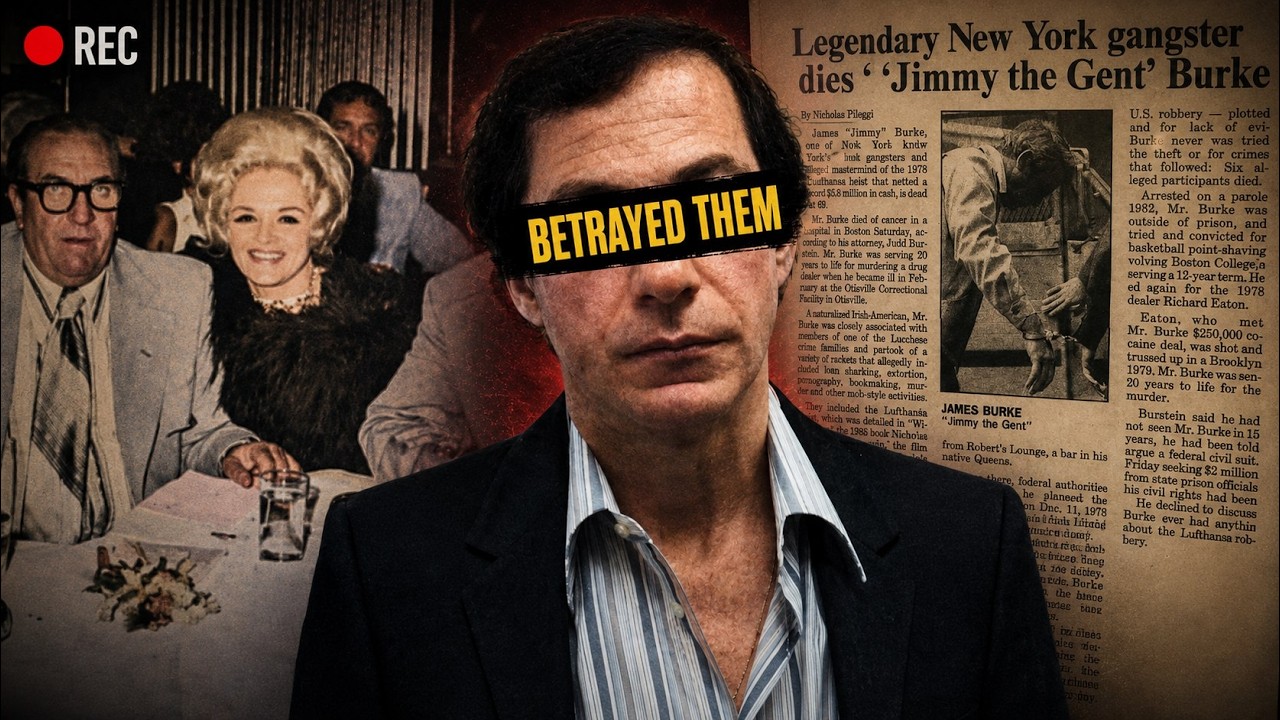
Against Jimmy Burke, Hill's memory opened two separate prosecutions. In 1982, Burke was convicted of conspiracy in the Boston College point-shaving scandal and sentenced to 12 years. The college basketball case only existed because Hill described it out loud. The prosecutor who took that case, Edward McDonald, happened to be a Boston College graduate who had once tried out for the freshman team himself. He thought Hill was joking when he first mentioned fixing college games, and then he realized he was holding a brand new indictment.
Three years later, in 1985, Burke was convicted of the 1979 murder of a drug dealer named Richard Eaton, again on Hill's testimony, and given 20 years to life.
The mechanics of that college fix were almost mundane, which is part of why it worked for as long as it did. The players didn't have to lose their games. They only had to keep the winning margin under the number the bookmakers had set. Missing a shot here, forcing a bad pass there, in games most of them still won. Rick Kuhn, the forward at the center of it, was convicted in 1981 and originally handed 10 years, an unusually heavy term for a college athlete. The whole scheme had run for a season and a half before anyone outside the room knew it was happening, and it only ever surfaced because a mobster in a cell decided to describe it.

The real question was always what Hill could open up behind closed doors, and Lucchese was the biggest door of all. His information helped connect Burke and the others to the organized crime structure behind that $6 million, the one the crew had killed at least a dozen people to keep buried. The heist that was supposed to be untouchable ended up documented because one of the few men left alive had decided to describe how it worked.
The record wasn't only Hill's word. The Strike Force had wiretaps to back it up, including recordings of conversations inside Hill's own household. Along with the paper trail of the no-show job and the airport rackets, a cooperating witness is only worth what the government can corroborate around him, and here the government could corroborate a great deal. That is why Hill's memory turned into indictments instead of just stories.
And here is where the popular version of Henry Hill quietly cheats. People will tell you he broke the Lucchese family. He didn't. One earner's memory ended the crew that raised him, and that is not the same thing as ending the family.
Look at what his testimony actually reached. It convicted Paul Vario twice and Jimmy Burke twice, and it landed on roughly 50 associates in the orbit around them. That is the Vario crew gutted, an enormous amount of damage for a single witness to do. But the Lucchese family itself kept operating, and the boss at the very top through all of it, Anthony Corallo, never once sat in a courtroom because of Henry Hill.
Corallo went down in a completely different case. In 1986, the Commission trial convicted him alongside the other New York bosses, and in 1987 he was sentenced to 100 years. Before he went away, Corallo named his successors, Vittorio Amuso and a man called Anthony Casso, known as Gaspipe. What came next under Amuso and Casso was one of the bloodiest internal purges the American Mafia has ever run, and that is what genuinely crippled the Lucchese family. Henry Hill had nothing to do with any of it.
He sat near the bottom of one branch of a much bigger tree. He could describe his branch in extraordinary detail, and he did, but he was never allowed anywhere near the men at the top. Breaking the Vario crew was real, and it was costly to the family. Calling it the fall of the whole organization is just the legend running ahead of the record.
Protection didn't fix Henry Hill either, and this is where his story stops being about the mob at all. The program moved his family from city to city, but Hill kept blowing his own cover, usually drunk or high, telling people who he really was. In 1987, he picked up a cocaine trafficking conviction in Seattle, and the government finally expelled him from witness protection. He had traded his whole world for that deal, and still couldn't guard it. The same habit that got him arrested in the first place got him thrown out of the arrangement that saved his life.
Along the way, Hill sat for hundreds of hours of interviews with Nicholas Pileggi, a crime journalist who had covered organized crime for decades, and who checked the stories against court records and law enforcement files before publishing them in 1985. It turned Hill into the most famous cooperating witness in the country, the insider who could explain how the whole machine actually worked. It is a strange kind of afterlife for a man who testified to stay alive, turning the memory that got him marked for death into a paycheck he could live on. Hill leaned into it for the rest of his years, telling the same stories in interviews and on tape to anyone who would listen.
The men he broke did not outlive their sentences. Paul Vario died of respiratory failure at a federal prison in Fort Worth in 1988. Jimmy Burke died in custody at a cancer center near Buffalo in 1996. Both of them ended their lives inside the system Hill's words helped close around them. Hill himself lived it on the outside for another 16 years, told his story to anyone who would pay for it, and died in Los Angeles in 2012, one day after his 69th birthday, of ordinary heart disease. Nobody ever got to him.
So measure it honestly. The popular story of Henry Hill ends when he vanishes into witness protection, and that is where the retelling usually stops. The government didn't stop there. The two Vario convictions, the two Burke convictions, the Lufthansa linkage, a college basketball scandal dragged into daylight, roughly 50 defendants in all. Every bit of it came after he had already disappeared from public view.
That is the part of the record the story almost always leaves out, and it is the reason a mid-level associate the family never took seriously is remembered as the most expensive witness the Vario crew ever kept close. He wasn't the last earner to sit down across a table and start talking, and he wasn't the highest-reaching one the Strike Force ever ran. There is a bigger name on the same list, a cooperator whose testimony climbed further up the chain than Hill's ever did.