On February 4, 1990, a cold, light rain fell over Hollywood, California. A 53-year-old man drove his car down the ramp into the underground parking garage of his apartment building near Sunset Boulevard, as he had done hundreds of times before. He cut the engine and opened his door. From the darkness, a masked gunman rushed at him.
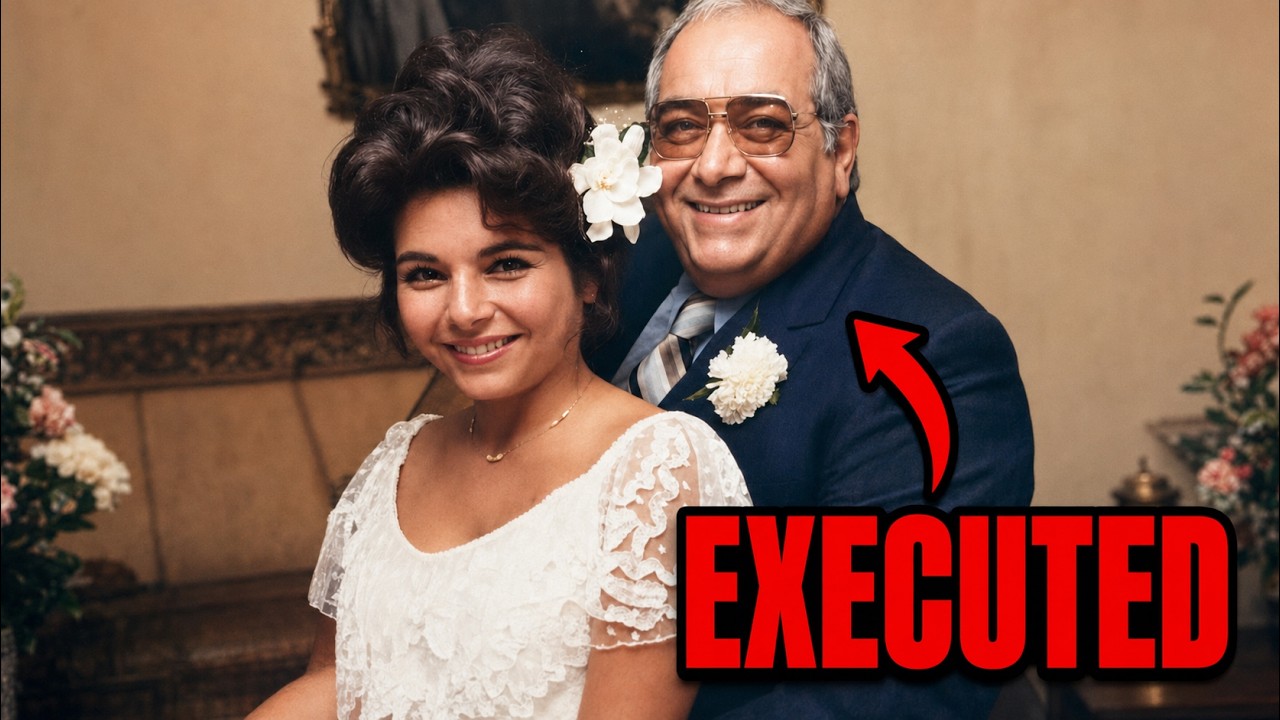
No words were exchanged. The shooter fired until his ammunition ran out—five bullets into the man’s face and four more into his body. Nine shots for a man who was unarmed, not a fugitive by choice, and had not set foot in New York in years. He died on that concrete floor, 3,000 miles from the streets that made him, in a city he had chosen specifically because no one from his old life would think to look for him there.
When the county released his death certificate, they listed his occupation in one line: used car salesman. That used car salesman was, in fact, Anthony DiLapi, a soldier in the Lucchese crime family, a son of the Bronx, and a labor racketeer. He had once controlled local unions in New York City, managed millions of dollars flowing through the American garment industry, and operated within one of the most powerful crime families in the world. And the way that machine reached across an entire continent to plant nine bullets in his body is the part of this story that should truly unsettle you.
Anthony DiLapi grew up in the Bronx during the years when the American Mafia operated less like a gang and more like an unofficial branch of the economy. He was not a hitman, nor a street kid known for violence. He was a labor man, a union official, and a negotiator in New York’s garment industry, working within the family’s leadership orbit. According to accounts from those who knew that world, he was respected and capable of generating real money.
The name that mattered most to him was “family,” in both senses of the word. His uncle was Salvatore Santoro, known on the street as Tom Mix. Santoro was the underboss of the Lucchese crime family—the second-highest position in the organization. That lineage was supposed to be armor.
Remember that. Here is how that business actually worked. The garment industry in New York at its peak was one of the largest manufacturing economies on the planet, packed into a few buildings in Manhattan. Thousands of small shops cut and sewed clothing under brutal deadlines, because fashion is a business where being two days late means the season is over and your stock is worthless.
The strategic positions were not the factories themselves, but the choke points: trucking, because a dress sewn in a workshop on 35th Street is worthless until it actually reaches a buyer; and the unions, because the men who carried and drove and unloaded those trucks belonged to a local union. Whoever controlled that union controlled whether the city’s clothing moved at all. The execution was clean and required little gunplay. Control the trucking association, and every manufacturer must use your trucks at your price.
Control the local union chapter, and you decide who gets hired, which shops get organized, and which loading dock faces a mysterious labor problem this week. The math was simple. A trucking monopoly does not need to impose vast wealth; it only needs to collect more than a competitive market would charge on every garment, forever. A few extra dollars per rack across an industry moving millions of pieces annually adds up to an invisible private tax on everything New Yorkers wore.
On the other side of the ledger, in sweetheart contracts, the mob-controlled local quietly agreed to softer terms, and real workers—living human beings sweating in those lofts—paid the price in wages they never received. No shootouts, no headlines. Just paperwork, trucks, and a phone call. That was the money.
That was the world Anthony DiLapi belonged to. Here is the problem with belonging to a world: worlds end. In the mid-1980s, the federal government did something it had never succeeded at before. In the Commission Case, prosecutors put the leadership of the American Mafia on trial as an institution—and won.
Among the men convicted and sentenced to life in prison was Lucchese boss Anthony Corallo. Beside him was underboss Salvatore Santoro, Anthony DiLapi’s uncle. The protective shield was gone. The men who knew DiLapi his whole life, who understood his value, who spoke his language of unions and contracts and trucking routes, went to prison at once and never returned.
Into that vacuum stepped two men from a completely different world: Vittorio Amuso and Anthony Casso, the man the world would come to know as “Gaspipe. ” This change was the hinge of the entire story. The Corallo generation were racketeers who used violence. Amuso and Casso were killers who happened to run rackets.
They came from Brooklyn. They trusted almost no one. And according to testimony from men who worked under them, they were stunningly, clinically paranoid. Casso, in particular, did not manage problems.
He eliminated them. Under that leadership, being old-guard Bronx, with a dead uncle who had been underboss and a power base the new bosses did not understand, was not an asset. It was a classification. In the early 1990s, men in that classification began to disappear.
Then came the phone call. Anthony DiLapi received a summons to meet with the new leadership. In that life, a summons is not an invitation. Every mobster on earth knows how to read it.
You go and accept what awaits you, because refusal is an admission of guilt, and refusal is itself a death sentence. Almost everyone goes. The cemeteries of that world are filled with men who knew what awaited them and got in the car anyway because the code demanded it. But Anthony DiLapi did something else.
Watching what Amuso and Casso were doing to men like him, he refused the summons. Then he did the thing that sets him apart from almost every other name in Mafia history. He left. He did not go to the FBI.
He did not switch loyalties and accept a deal and a new identity from the government. He simply self-exiled. He went to California, to Los Angeles, to an apartment near Sunset Boulevard in Hollywood, and started over as a used car salesman in his fifties. Think about the arithmetic of that decision.
He gave up the only status he had ever known, the only city he was familiar with, the only profession he had mastered, and traded it all for anonymity and a job at a car dealership. He was betting that 3,000 miles would be enough. He was betting that a crime family in Brooklyn would not reach a car garage in Hollywood. But that is not the crazy part.
The crazy part is the single detail that made everything he did worthless—the fatal flaw at the core of this story. And it was not even a mistake he made. Anthony DiLapi was a man who had served a prison sentence, and a man who serves a sentence comes out with his history documented on paper. Parole, probation, periodic reporting requirements.
An officer, a file, a case number, and above it all, an address registered with the state of California and the United States government. Do you see it? He could disappear from the Mafia completely, and he did it brilliantly, for a time. But he could not disappear from the system.
The law required Anthony DiLapi to remain findable. He was, by legal obligation, a man with a documented address. And the moment his enemies gained access to that system, distance became irrelevant. The 3,000 miles were an illusion.
They always had been. This is where the story turns. Anthony Casso did not send men to comb Los Angeles. He did not need to, because Casso had something no Mafia boss in American history had ever enjoyed: a direct line into law enforcement intelligence.
Through an intermediary named Burton Kaplan, Casso had two detectives working for the New York City Police Department, on a monthly payroll like a service bill—Louis Eppolito and Stephen Caracappa. They were not patrol cops. They were detectives with authority, credentials, and the ability to make official inquiries that no one would dare question. When Casso wanted access to Anthony DiLapi, the request traveled through Kaplan to the detectives.
According to the government’s case, Caracappa used law enforcement channels to reach DiLapi’s parole officer and returned with the location of a man who thought he had vanished completely. That is how the used car salesman in Hollywood was found. Not by an informant, not by a family member. A phone call from a detective with a real shield to a real government file, on behalf of a man who wanted him dead.
The popular story that relatives betrayed him has echoed around this case for decades. You can understand why people prefer it. A treacherous cousin is a story we know how to process emotionally. But the documented records point to something far worse than a resentful relative.
They point to the mechanism itself. The state of California knew exactly where Anthony DiLapi was. So did Anthony Casso. And for $4,000 a month, that information belonged to both of them.
So return to that garage and watch it again with that knowledge. This was not coincidence. This was not a local dispute. A hit team traveled across the country, stayed with a Los Angeles contact linked to the family orbit, carrying an address pulled from a government supervision file by two men sworn to uphold the law.
They waited in the darkness of the concrete apartment building on a rainy afternoon for a 53-year-old man returning home from his job selling cars. When he opened his door, the masked gunman approached and emptied his weapon into him. Five bullets to the face, four to the body. Understand what that pattern says clearly.
Nine shots at close range at an unresisting man is not efficient disposal. Five bullets to the face is a message about identity. We know exactly who you are. And we found you anyway.
There is no place on this continent where our reach stops. Then the gunman vanished. The gun vanished. The LAPD was left at a rain-soaked garage with no witnesses and a corpse whose identification said used car salesman.
For years, the crime sat in an open file 3,000 miles from those who ordered it—a Hollywood murder with a Brooklyn motive that no one in California could decode. Then the whole machine finally began to fall apart, and it fell apart the way it always does—from the inside. Alphonse D’Arco, the acting boss of the Lucchese family, watched the killing wave Amuso and Casso were riding consume one man after another, concluded he was next on the list, and in 1991 did the unthinkable. He became the first acting boss of a New York crime family to flip and cooperate with the federal government.
His testimony helped dismantle the very leadership that had ordered these crimes. Vittorio Amuso was sentenced to life in prison and never left. Anthony Casso, the man who wanted DiLapi dead, was arrested and then tried the same escape route himself, attempting to trade information for leniency. His cooperation agreement was revoked by prosecutors who concluded he could not stop lying and breaking rules even as a witness.
Gaspipe Casso, the most feared man in that story, spent the rest of his life in federal custody and died in prison in December 2020 while still serving multiple life sentences. Burton Kaplan, the intermediary who relayed messages, eventually cooperated as well, and his testimony finally exposed the two detectives. On April 6, 2006, Louis Eppolito and Stephen Caracappa were convicted for their roles in eight Mafia murders, including the killing of Anthony DiLapi. Decorated New York City police detectives, they had helped a crime boss hunt human beings, and they were sentenced to die behind bars in what remains one of the worst corruption scandals in American police history.
Here is what the death of Anthony DiLapi actually tells us. It is not about the power of the Mafia. It is about the limits of our own. He was not killed because the Mafia was omniscient.
It was not. That myth is comfortable because it makes those men seem legendary instead of ordinary. Anthony DiLapi was killed because the law required him to be findable, and because the institution that required it had a price. He did everything right.
He read the summons correctly. He refused to get in the car. He gave up his name, his city, his status, his entire identity, and bought himself real distance—the kind that should have worked. None of it mattered, because a man with a badge could type his name into a system and sell what came back.
People on the street prefer to believe relatives betrayed him, because betrayal by blood at least looks like a comprehensible human motive. But the records point to something larger and far worse. It was official paperwork that caught up with him. What ultimately traveled 3,000 miles to find him in a Hollywood parking garage on a rainy afternoon was not loyalty, not family, not the long arm of the underworld.
It was the long arm of the law, rented out on a monthly basis. That is why, in the end, the only honest words on Anthony DiLapi’s death certificate were the ones no one paid attention to. Used car salesman. He really had done it.
He really had become someone else. He just could not afford to stay unfindable.