Newly surfaced historical research and declassified personal correspondence are exposing a deeply unsettling dimension of the Third Reich that its propaganda machine worked relentlessly to conceal: the intimate lives of the regime’s most powerful figures were marked by sexual repression, obsessive devotion, and ideological contradictions so severe they bordered on the pathological.
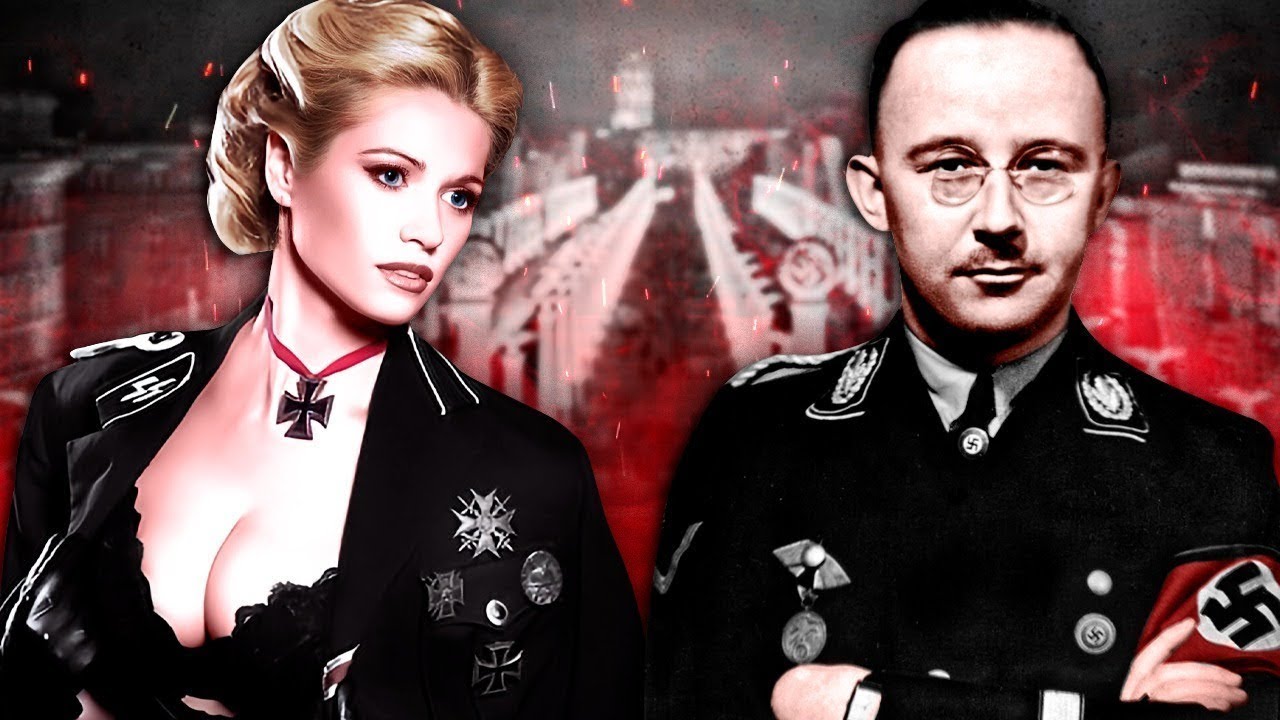
The findings, drawn from letters, medical reports, and archival documents preserved in institutions including the National Archives of the United Kingdom, paint a portrait of men who built a totalitarian state on promises of racial purity and iron discipline while privately struggling with impotence, sexual confusion, and relationships that blurred the lines between political loyalty and personal obsession.
At the center of this web stood Adolf Hitler, a leader who cultivated the image of a man married to Germany alone. Medical reports cited by historians suggest the dictator may have suffered from monorchidism, a condition in which only one testicle is present, potentially influencing his sexual development. Beyond physical anomalies, his behavior indicated a profound aversion to physical contact.
Researchers describe what appears to be a form of haptophobia, a phobia of being touched, combined with a complete detachment from sexual desire. Hitler never publicly formalized any romantic relationship, choosing instead to project an image of ascetic devotion to his political mission. His private residences in Munich, Berlin, and Obersalzberg reportedly featured a portrait of his mother hanging above his bed, a constant maternal presence that followed him throughout his life.
The most disturbing chapter of Hitler’s intimate history involves his half-niece, Geli Raubal, who lived with him in Munich beginning in 1925 when she was just seventeen. Witnesses described an obsessive, controlling dynamic in which Hitler monitored her correspondence, forbade her from attending social events, and assigned party members to watch her movements.
Their relationship ended in tragedy in September 1931 when Geli, barely fifteen minutes after Hitler departed on a political trip, took his personal pistol and shot herself. The police investigation concluded it was a voluntary death, but the precise circumstances remain disputed. Some accounts suggest she wanted to travel to Vienna with a new suitor, a plan Hitler had categorically forbidden.
 Others point to emotional exhaustion from suffocating control.
Historians note that of the eight women with whom Hitler had some form of intimate bond, eight attempted suicide and six succeeded, a statistic that underscores the psychological devastation surrounding his personal relationships.
Equally revealing are the findings regarding Rudolf Hess, Hitler’s devoted deputy, whose emotional attachment to the Führer bordered on the mystical. Documents preserved in British archives include a note in which Hess expressed feelings he himself defined as love toward Hitler, accompanied by a vehement desire to be by his side.
Hess, who met his future wife Ilsa when he was twenty-six and she was still a teenager, maintained a relationship devoid of physical intimacy for years. According to historical records, Hess was a virgin well into adulthood and experienced profound internal conflict regarding his own body and sexual impulses. His courtship with Ilsa was marked by an almost complete absence of physical contact, sustained instead by their shared adoration of Hitler.
The wedding itself was reportedly ordered by Hitler during a private dinner in 1927, when he took Ilsa’s hand, placed it over Hess’s, and announced they should marry. No one at the table dared to contradict him. Ilsa later confided to a friend that she felt like a nun trapped in a passionless life.

Heinrich Himmler, the architect of the SS and one of the regime’s most zealous enforcers of racial purity, presents perhaps the starkest contradiction. Physically frail, with vision problems requiring constant use of glasses, and an unimpressive appearance marked by a receding jawline, Himmler defended sexual abstinence as a moral ideal during his youth.
It was not until the age of twenty-eight that he finally had his first sexual experience, a late development that stood in sharp contrast to the authority with which he would later dictate rules on sexuality and reproduction for the entire German nation.
Himmler’s personal crisis regarding homosexuality was intensified by his relationship with Ernst Röhm, the openly homosexual leader of the SA who had served as his mentor. When socialist newspapers publicly 𝓮𝔁𝓹𝓸𝓼𝓮𝓭 Röhm’s homosexuality in 1931 and 1932, Himmler faced a dilemma that would define his approach to sexual politics for the remainder of his career.
He ultimately resolved this internal conflict by constructing an elaborate ideological framework that distinguished between what he considered effeminate homosexuality and a hyper-masculine variant, both of which he rejected in favor of strict heteronormative discipline. His 1937 speech at Bad Tölz laid out this vision, advocating early heterosexual relationships for German youth and linking any deviation to national degeneration.
Perhaps the most bizarre figure in this constellation is Gerda Bormann, wife of Martin Bormann, Hitler’s powerful private secretary. Far from being a silent victim of her husband’s infidelities, Gerda actively promoted polygamy as a tool for accelerating Aryan reproduction and embraced her husband’s extramarital relationships with enthusiasm.
 In correspondence with Martin during his 𝒶𝒻𝒻𝒶𝒾𝓇 with actress Manja Behrens, Gerda offered unconditional support, writing that he should ensure his mistress had a child one year and she another the next, so that he would always have an active woman by his side. She considered such arrangements a natural manifestation of a true National Socialist’s duty.
Gerda Bormann bore ten children between 1930 and 1943, for which she was awarded the Nazi Party’s gold medal. Hitler personally sponsored their firstborn, who was named Martin Adolf. In her writings, she expressed admiration for Islamic polygamous models and criticized Christian churches for rejecting practices she believed could strengthen the Reich.
The broader picture that emerges from these revelations is one of a regime built on profound psychological contradictions. The same movement that persecuted homosexuals in concentration camps tolerated, and in some cases celebrated, homoerotic bonds within its paramilitary organizations. The same ideology that exalted German motherhood reduced women to biological instruments while its own female adherents pursued lives of luxury and independence.
Historians caution that many aspects of these intimate histories remain speculative, with direct evidence elusive and witnesses long dead. Yet the surviving documents and testimonies reveal the extent to which personal pathology and political ideology intertwined at the highest levels of the Nazi state, creating a leadership caste whose private lives were as dark and distorted as the regime they built.
The implications extend beyond prurient curiosity. Understanding the psychological dimensions of Nazi leadership offers insight into how absolute power, sexual repression, and ideological fanaticism can converge to produce catastrophic historical consequences. The men who promised to purify Germany and forge a thousand-year Reich were, by many accounts, profoundly broken individuals whose personal demons shaped the fate of millions.