On March 15, 1939, six months after the annexation of the Sudetenland, Nazi Germany invaded and occupied the Czech provinces of Bohemia and Moravia in violation of the Munich Agreement. Adolf Hitler arrived in Prague, and on March 16 he established the Protectorate of Bohemia and Moravia by proclamation from Prague Castle.
Konstantin von Neurath, the former foreign minister of Nazi Germany, became Reich Protector. Hitler came to feel that his rule was too lenient and that his soft approach had encouraged anti-German sentiment and resistance through strikes and sabotage.
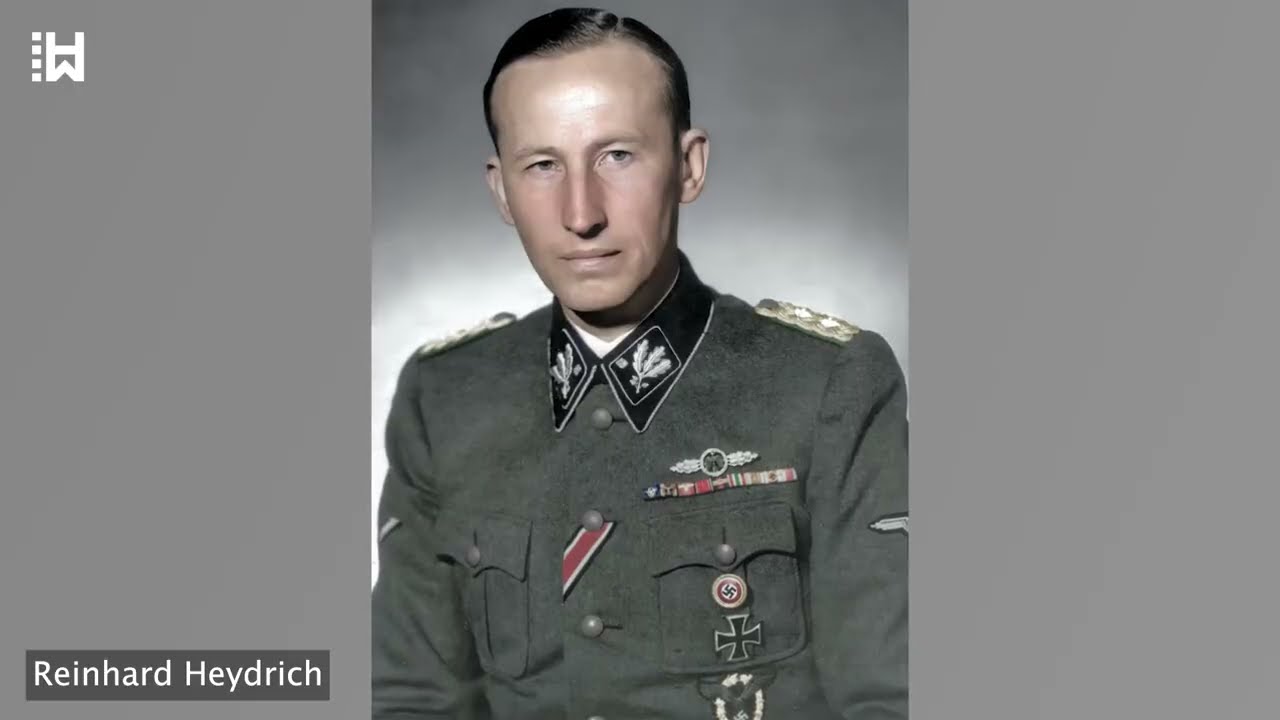
In September 1941, Hitler dismissed von Neurath and appointed Reinhard Heydrich as Deputy Reich Protector. Heydrich would be nicknamed the Butcher of Prague for his brutality.
After the German invasion of the Soviet Union in June 1941 spurred a previously dormant communist resistance movement in the protectorate into acts of sabotage, Hitler replaced von Neurath, who was sent on leave, with Heydrich as acting Reich Protector. When Heydrich arrived in Prague in September 1941, he told his staff, "We will Germanize the Czech vermin."
Heydrich first ordered a narrow wave of terror targeting real and perceived leaders of opposition in the Czech lands. In October and November 1941, protectorate special courts sentenced 342 people to death and turned 1,289 over to the Gestapo, the Nazi secret police.
Heydrich also established the Theresienstadt ghetto, which existed for three and a half years, between November 24, 1941, and May 9, 1945. Theresienstadt served as a transit camp for Jews on route to extermination camps and was also presented as a model Jewish settlement for propaganda purposes.
Of the approximately 140,000 Jews transferred to Theresienstadt, nearly 90,000 were deported farther east and to almost certain death. Roughly 33,000 died in Theresienstadt itself. Out of 15,000 children who passed through the ghetto, approximately 90 percent perished in killing centers.
As acting Reich Protector, Heydrich courted Czech industrial workers and farmers whose productive capacity was necessary to the German war effort, offering wages and benefits equivalent to those of their German counterparts. The result of his policies was a 73 percent reduction in acts of sabotage within six months.
By the spring of 1942, the German authorities could boast of a pacification of the protectorate. Heydrich was so confident that his program had succeeded that he flagrantly disregarded measures for his own security and traveled around Prague in an open vehicle.
On May 27, 1942, Heydrich was riding in his convertible Mercedes when the Czechoslovak paratroopers Jozef Gabčík and Jan Kubiš succeeded in rolling a hand grenade under his vehicle, wounding the Nazi architect of the Holocaust. Heydrich was taken to a hospital emergency room, where he developed a fever and wound drainage.
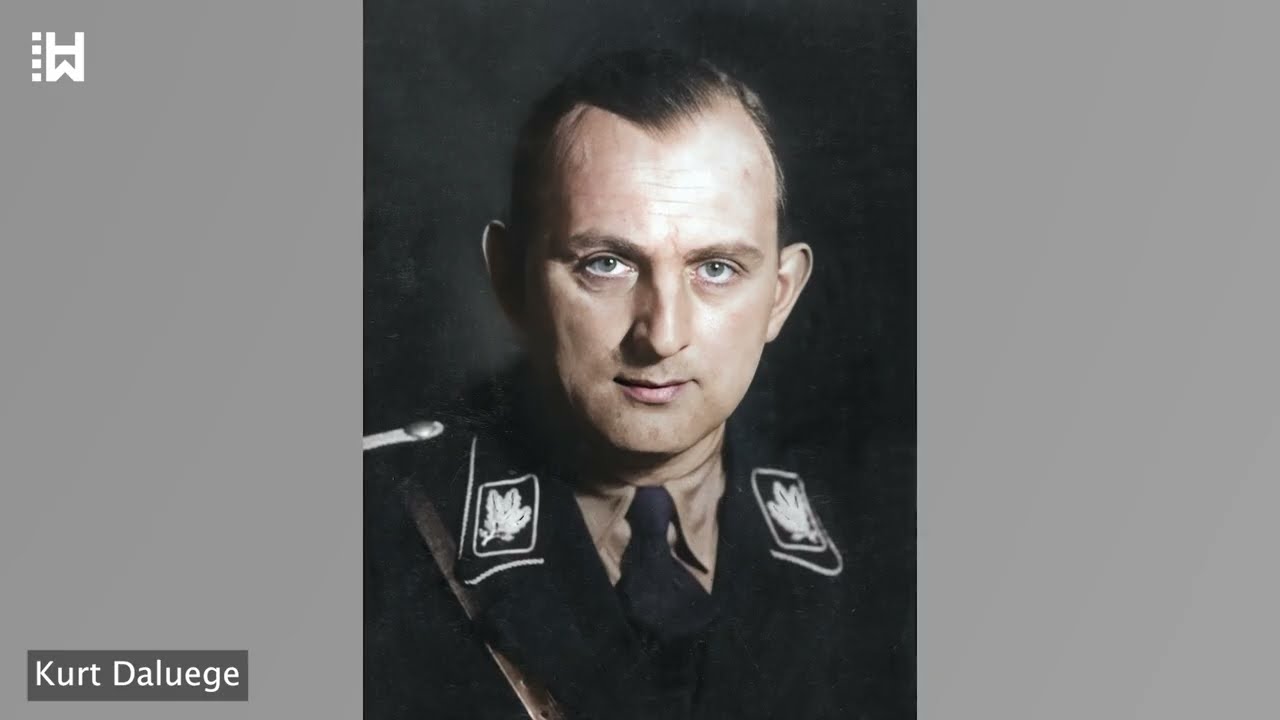
Though not mortally wounded by the blast itself, grenade splinters in his leg and lower back led to an infection that killed the 38-year-old Heydrich on June 4, 1942. The following day, Kurt Daluege was appointed the next deputy protector of Bohemia and Moravia, even though he was not Hitler's first choice.
An outraged Hitler demanded the murder of 10,000 Czechs in revenge for the attack. Karl Hermann Frank, the higher SS and police leader of the protectorate, flew from Prague to Berlin to dissuade Hitler from such drastic measures, arguing that this type of reprisal might interfere with long-term economic and political plans for the region.
On June 9, the day of Heydrich's state funeral in Berlin, Hitler ordered the annihilation of Lidice, a village named in a love letter found during the first days of the SS and police investigation into the attack. Though there was no real evidence connecting the people of the village with the assassins, the Nazis used even the smallest pretext to take revenge for Heydrich's death and singled out Lidice as the site of retaliation.
The destruction of the village and the execution of its citizens occurred on June 10, 1942, on Hitler's direct order. On that day, all 173 men in the village were rounded up and shot. The youngest was only 14 years old, and one of the victims was the village priest.
An additional 19 men and seven women were shot on June 16, 1942, in Prague, and the rest of the women were sent to concentration camps, where 53 perished. Children were taken from their families, and a handful were selected for Germanization.
Eighty-eight children from Lidice were murdered, and of these, 82 were murdered in the Chelmno extermination camp. In total, 340 people from Lidice were murdered.
On June 24, 1942, two weeks after the Lidice massacre, the small Czech village of Ležáky was destroyed when Gestapo agents found a radio transmitter there that had belonged to an underground team who had parachuted in with Kubiš and Gabčík, the men who had killed Heydrich. All 33 adults, both men and women, were shot, and their bodies were transported to the local crematorium where they were burned.
Out of 13 children, 11 who were not deemed fit for Germanization were transported to the nearby Chelmno extermination camp and murdered in gas vans. Two children deemed suitable were sent to be Germanized.
The death toll resulting from the effort to avenge Heydrich's death is estimated at over 1,300 people. This count includes relatives of the partisans, their supporters, Czech elites suspected of disloyalty, and random victims such as those from Lidice.
Karl Hermann Frank and Kurt Daluege played key roles in these civilian massacres, but they did not escape justice. In April 1945, when Frank saw that his reign of terror was over, he decided to flee from Prague and surrendered to the Americans, afraid of being captured by the Russians. On May 9, 1945, Frank was arrested by US Army troops.
His plan did not work out, as he was extradited back to Prague, where from March to May 1946 he was tried by the people's court. He denied personal responsibility for the executions, although he admitted before the tribunal that they could be regarded, according to human feelings and human laws, as murder.
His lies did not help him escape justice. On Tuesday, May 21, 1946, the people's court in Prague sentenced Frank to death by hanging for treason and the massacre of civilians of the Czech villages of Lidice and Ležáky.
Even though Frank had never shown mercy to any of the Czech people, he appealed to Czechoslovak President Edvard Beneš for leniency. Frank wrote to Beneš, "I believe that as a victor, you will show mercy and grant me life." There was no reply to his telegraphed appeal.
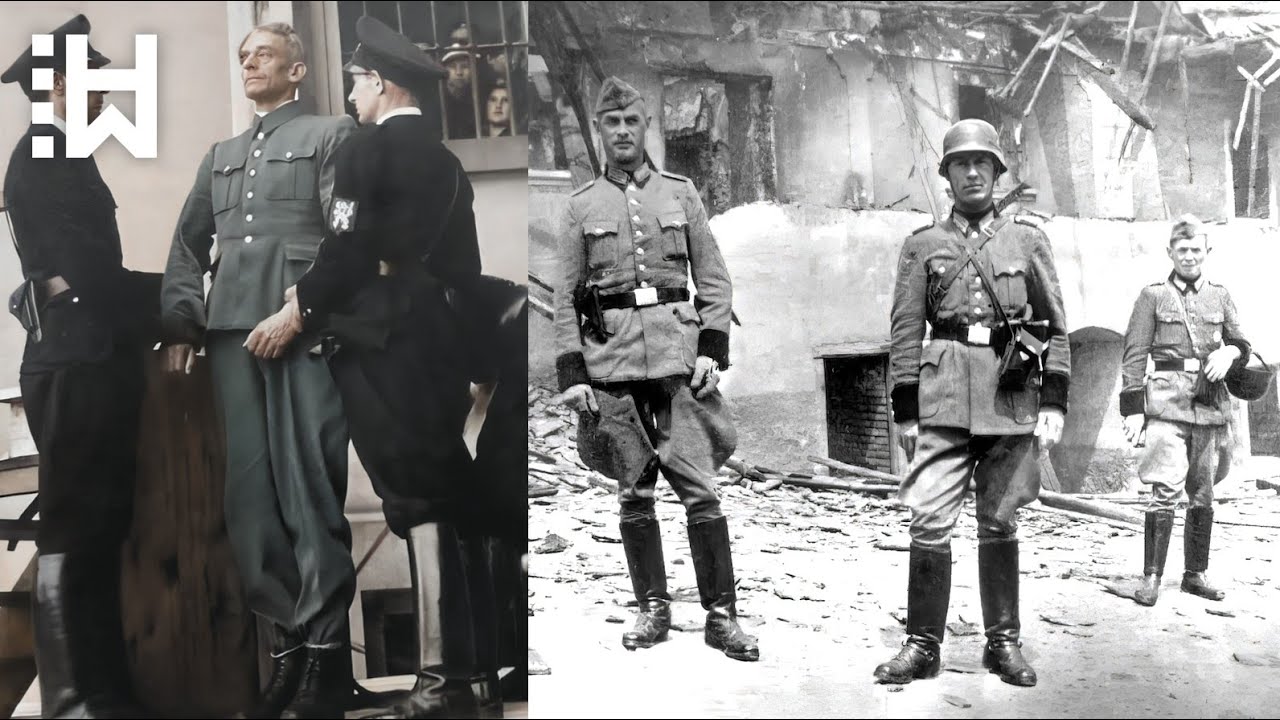
Frank's execution was held publicly and became a theater of horror. More than 5,000 people, including seven surviving women from Lidice who sat in the front row, gathered at Pankrác prison in Prague to witness the execution of the most hated man in the protectorate of Bohemia and Moravia.
When Karl Hermann Frank was hanged on Wednesday, May 22, 1946, he was 48 years old. At 1:37 p.m., he was lifted to the top of the pole by a sling and then dropped about a meter, the hangman covering Frank's face with his hand.
An avowed Nazi until the bitter end, his last words were, "Germany must live, even if we die. Long live the German nation. Long live the German spirit." Normally a condemned man executed in this way hung on the gallows for half an hour, but Frank remained hanging on the rope for 15 minutes longer.
Frank was then buried in an anonymous pit at Ďáblice cemetery, where the decapitated bodies of Jan Kubiš and Jozef Gabčík, the assassins of Reinhard Heydrich, had secretly been buried in a mass grave in 1942.
Kurt Daluege did not fare any better. In May 1945, he was apprehended by British forces, first held in Luxembourg and then transferred to Nuremberg, where he faced charges as a major war criminal.
Extradited to Czechoslovakia in September 1946, he stood trial for numerous crimes against humanity committed in the protectorate of Bohemia and Moravia. Throughout the trial, Daluege was arrogant, openly defying Czechoslovak authorities and insisting that only the German Reich had the authority to judge him.
He further declared himself a beloved role model for several million German policemen and a loyal servant of Adolf Hitler who committed no crimes but merely fulfilled his duty as a German citizen of the Reich. His arrogance and lies did not help him, and he was convicted on all charges and sentenced to death.
Daluege was 49 years old when he was hanged on October 24, 1946, at Pankrác prison in Prague. Because of his failing health, he hardly noticed that he was going to his execution. He was executed at the same place as his comrade Karl Hermann Frank, whose fate he followed with only a five-month delay.
After World War II, more SS members responsible for the Lidice massacre faced justice. Two of them, Walter Jacobi and Harald Wiesmann, were executed in Prague in 1947.
Today, visitors can pay a silent tribute to the innocent victims of Lidice and visit the museum that keeps a lasting memory of the annihilation of the village.