Walter Owen Bentley, founder of Bentley Motors, learned his company had been sold not through a formal notice, but through a casual remark his wife overheard at a London cocktail party in the winter of 1931. When she asked her husband who Arthur Sidgreaves was, he told her the truth: Sidgreaves was the managing director of Rolls-Royce. No court, receiver, or buyer had informed the founder himself. It was the end of a long decline that began with a simple passion for machinery.
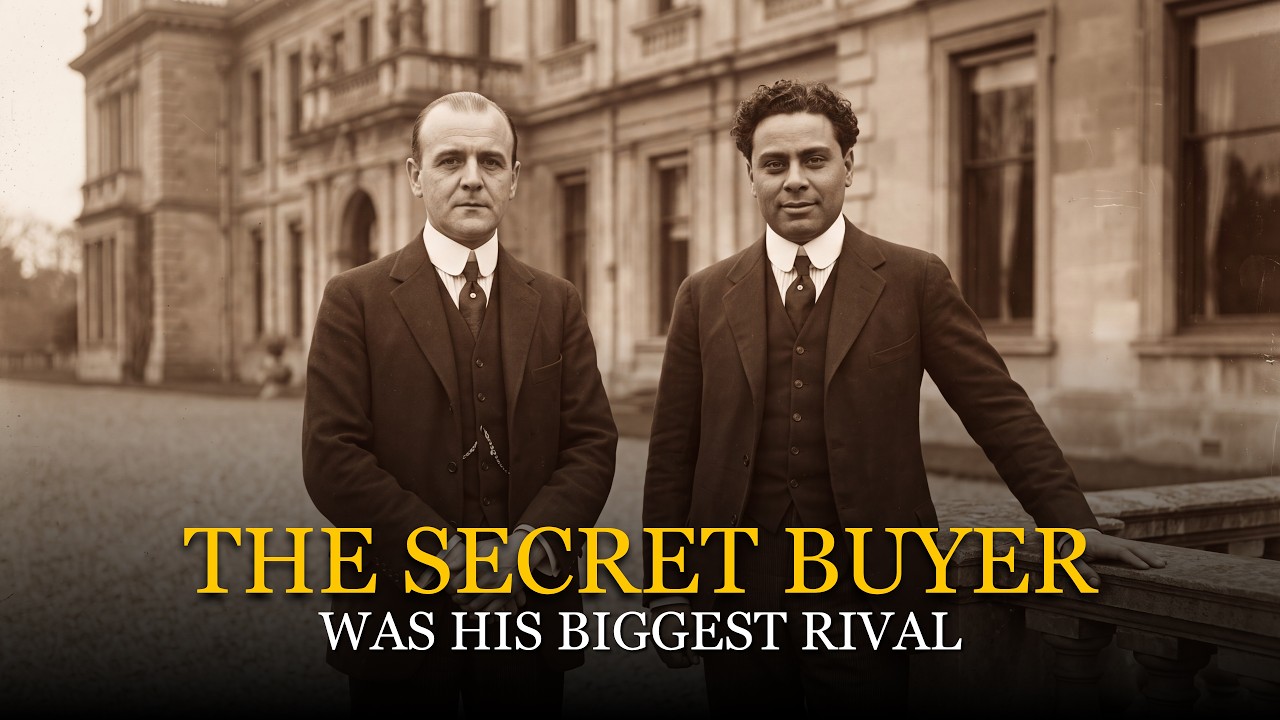
Born in 1888, Bentley, known to all as WO, spent his early years shoveling coal on locomotives. His family paid £75 for a five-year premium apprenticeship with the Great Northern Railway, a privilege that meant hard, dirty work he genuinely loved. He later recalled a 400-mile day of hand-shoveling seven tons of coal as “not a bad day’s exercise. ”
His engineering insight came in 1912 when he noticed an aluminum paperweight.
Realizing the metal was light, strong, and conducted heat well, he designed aluminum pistons for engines. They allowed for cooler running, higher compression, and more power. The innovation proved vital during World War I, when he worked with the Royal Naval Air Service, even sharing the idea with Rolls-Royce for their first aero engine. In 1920, a government commission awarded him £8,000 for his wartime design work—the capital that founded Bentley Motors in 1919.
The company built fast, durable cars. A lone Bentley finished 13th at Indianapolis in 1922. The mark’s identity was cemented at the 24 Hours of Le Mans, which Bentley won five times between 1924 and 1930. But the racing victories and reputation were funded by a single man: Woolf Barnato.
Barnato, heir to a South African diamond fortune, began financing Bentley in 1925 with an initial commitment of over £100,000. He took over the chairmanship, making WO his employee. While Barnato was a committed enthusiast who won Le Mans three times himself and set 28 speed records, the company’s arithmetic never worked. Production was small—around 3,061 chassis across its entire life—and the cost of racing was enormous.
Barnato injected tens of thousands more pounds in 1927, 1928, and 1929, all while the company accumulated losses. The power shift became clear in 1929 when the board approved a supercharged version of the 4½ Litre against Bentley’s explicit engineering judgment. He believed the supercharger would destroy reliability. He was right—the “Blower” never won a major race—but the car was developed in a separate factory, deliberately out of his sight.
By 1930, the market was collapsing. The 8 Litre, arguably Bentley’s finest design, was launched in October of that year, priced above Rolls-Royce’s Phantom II to signal superiority. While it found 100 buyers, the company was losing ground. In July 1931, when two mortgage payments fell due, Barnato—who had personally guaranteed the debts—informed the lenders he could not pay.
A receiver was appointed on 10 July 1931. The company went into voluntary liquidation. The auction for the assets drew interest from Napier, a respected engineering firm, which reached a tentative agreement in October 1931. But at the last moment, a mysterious entity called the British Central Equitable Trust topped Napier’s bid.
The winning price was £125,000. The trust was a front for Rolls-Royce, which had been alarmed by the 8 Litre. They concealed their identity to keep Napier from fighting and to keep the price down. WO Bentley learned the truth only after his wife overheard Sidgreaves’s name mentioned at a party.
As part of the sale, his personal services contract was bought too. Napier disputed it in court and lost—the court confirmed that Rolls-Royce had purchased Walter Owen Bentley himself. He spent the next three years as an employee of the rival that had taken his name. He was kept away from the design office, used largely as a test driver and customer liaison.
At his first meeting with Henry Royce, Royce dismissed him as not being an engineer. During this period, his wife divorced him, and he was asked to return his personal 8 Litre, leaving the company’s founder briefly without a car of his own. In 1935, he left Rolls-Royce and joined Lagonda as technical director. There he designed a V12 engine, producing one of the finest cars of his career, the Lagonda Rapide.
But the name issue did not end. In 1944, Lagonda advertised its cars with the words “Lagonda” above and “Bentley” below. Rolls-Royce sued for trademark infringement and passing off. Bentley counterclaimed for the right to use his own name, citing an earlier agreement, but lost the case.
Walter Owen Bentley died on 13 August 1971 at the age of 82. A contributor to The Times wrote that in the eyes of Bentley owners, he was admired and respected, and that “to know his cars was to know him. ” The old company had never registered the Bentley trademark; the buyer did so immediately after the sale.
The name Bentley, price paid in full, belonged to someone else.