On the night before Hermann Göring was to be hanged in Nuremberg, the highest-ranking Nazi official escaped the noose by swallowing a cyanide capsule. His wife, Emmy, did not witness that moment. She had already spent months after the war moving between internment camps with their young daughter, Edda, while the world dismantled the life they had built around power, stolen wealth, and ostentatious luxury.
Emmy Göring had long been presented as the radiant hostess of the Third Reich. She was an actress before her marriage to Hermann in 1935, and after the wedding she became a public symbol of his status. Nazi Germany had no official first lady, but Emmy occupied much of that social role. She received diplomats, hosted generals, and presided over the household at Carinhall, the Görings' vast estate north of Berlin.
Carinhall was not merely an expensive home. It was a political statement. It contained artworks, hunting trophies, and rooms designed to display Göring's power. Most of the regime's wealth came from confiscations, occupation, and the forced transfer of property. Emmy lived at the center of those privileges. She later described herself as removed from politics, but detachment was difficult when political power funded the house, the staff, and the lifestyle.
The Görings had one child, Edda, born in 1938. Hitler became her godfather. Newspapers treated the child as a kind of Nazi princess. She was given paintings and gifts, including works later shown to be part of the regime's looted cultural wealth. Edda was a child, not a political actor, but the family image placed her at the heart of the dictatorship's theater.
When Germany collapsed in 1945, Emmy and Edda were placed under the protection of Allied forces. The shift was brutal and immediate. The woman who had stood in the front rows beside the Reich Marshal was now a prisoner. Her property was examined, her movements restricted, and her relationship to Göring's wealth questioned.
At Nuremberg, she was not charged alongside her husband, but she remained tied to the case through letters, testimony, and the public fascination surrounding the family. Hermann Göring was convicted of war crimes and crimes against humanity. He was sentenced to death. Emmy did not accept the verdict as a fair description of the man she knew.
Her loyalty was personal, but it also became political. She saw a husband who could be generous, theatrical, and loving. The court saw the head of the Luftwaffe, a central figure in the Nazi state, and one of the men responsible for launching a war of aggression, persecution, and the exploitation of occupied Europe.
On October 15, 1946, Göring swallowed cyanide in his cell. The exact route by which the capsule reached him was never definitively established. His death was not a legal victory. It was an escape from the punishment the court had imposed. Emmy later treated his suicide as a tragic end rather than an evasion of justice.
Her memoirs, published in German in 1967 and later in English as "My Life with Göring," defended that emotional version of the marriage. She wrote from the perspective of a widow who had lost her home, her status, and her husband. But memoirs are not a court transcript. Emmy's account put family kindness in the foreground and the political consequences of Göring's career in the background. It offered no reliable explanation of the regime's crimes.
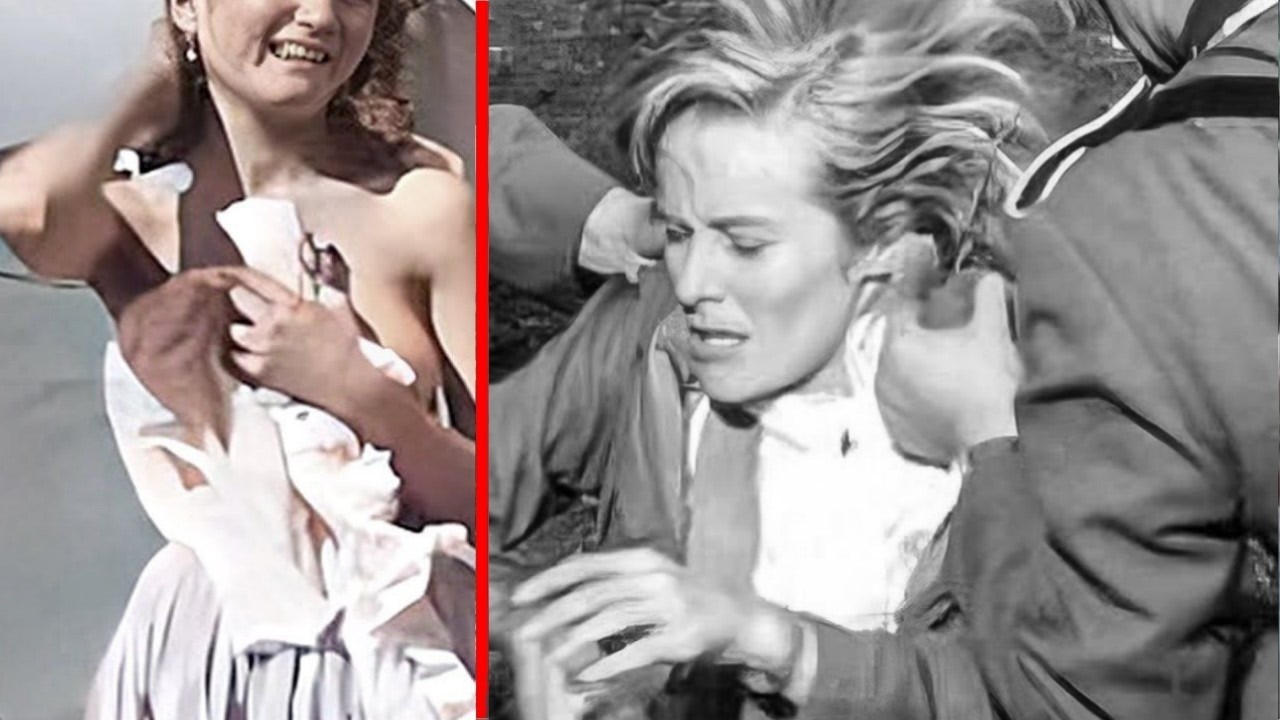
Denazification proceedings treated her differently from Hermann. She was not accused of directing military operations or organizing extermination. Yet authorities did not consider her innocent merely by association. In 1948, a German denazification court classified her as a major Nazi supporter, imposed a period of imprisonment or labor detention, confiscated part of her property, and banned her from acting for several years. Much of the sentence was offset by the time she had already spent in custody.
The classification was controversial. Emmy argued she was an actress, a wife, and a mother, not a party official. Her critics replied that she had used her position, enjoyed the regime's privileges, and helped create its public image. Both views matter. Marriage alone did not make her legally responsible for Hermann's crimes, but the claim of complete political detachment ignores the way she lived as the wife of one of the dictatorship's most powerful men.
After her release, Emmy and Edda lived in far more modest circumstances. Carinhall was gone. The art collection was dispersed or confiscated. The household staff had vanished. Reports describe a small cottage and later a modest apartment in Munich. The material decline in status was dramatic, but it did not equal the suffering imposed on the regime's victims. Losing luxury is not the same as losing family to deportation or murder.
Edda grew up carrying the Göring name. She studied and trained for practical work, and she maintained a private relationship with her father's memory. Neither mother nor daughter became a prominent public activist, but neither fully abandoned the family myth. Their private loyalty coexisted alongside the historical record that condemned Hermann Göring.
Emmy died in Munich in 1973. Her postwar life raises a question that appears repeatedly in the stories of Nazi leaders' wives. How should historians describe someone who did not plan the regime's crimes but benefited from them, defended a criminal husband, and offered private affection as evidence of public innocence?
The honest answer is not that Emmy Göring was identical to Hermann, nor that she was a merely helpless wife. She lived near power, accepted its rewards, and continued to see her husband through the language of loyalty. Her story is therefore not a second Nuremberg trial. It is the story of what remains after the trial: a widow, a daughter, confiscated property, and a family memory that could never overcome the state documents of the world they inhabited.
The Nuremberg imprisonment also revealed how Emmy understood the difference between law and loyalty. The psychologist Gustave Gilbert spoke with her during the trial and recorded an impression of a woman who could admit Germany had lost while still refusing to accept that Hermann deserved the verdict. In her imagination, he was a great man betrayed by history. The court evidence, by contrast, described a political leader who helped build a machine of aggression and persecution.
Carinhall had been destroyed on Göring's own orders before advancing Allied forces could seize it intact. The destruction was symbolic. The headquarters built to embody permanence became ruins. Objects linked to the family scattered into the postwar art market and government warehouses. Some were returned to their owners or heirs. Others remained the subject of legal disputes that continued for decades. Emmy's loss of property cannot be separated from the larger problem of Nazi looting.
Her memoirs avoided the voices of the people whose homes, businesses, and collections were taken. She focused on dinner parties, clothes, arguments, and the last letters exchanged with Hermann. Those details are not worthless. They show how one family experienced the end of a dictatorship, but they cannot answer the political question. Private memory can tell us how a perpetrator treated his wife. It cannot decide whether the state he led was criminal.

Edda later defended elements of her father's memory and sought to recover objects associated with the family. Again, this does not make her responsible for decisions taken before she could understand them. It shows how family memory can continue a dispute that the courtroom appeared to have settled. The children of dictators inherit not only property and images but also arguments about whether the person in the picture is truly the criminal described in the archive.
Emmy Göring's story after Nuremberg is therefore not simply a fall from palace to poverty. It is a transition from public privilege to private loyalty. She was punished more than many wives of senior Nazis, but far less than the people whose lives her husband's regime destroyed. Her quiet later life should not be confused with a complete moral break. The memoirs contain no clear public disavowal of Hermann's policies.
Before 1945, Emmy's public identity had been carefully constructed. She was visible enough to be useful and respectable enough to seem proper. At official dinners, she represented the gentler face of power. She was a former actress, a mother, a hostess, and the wife of the man who had once been Hitler's closest political ally. This arrangement allowed Nazi Germany to display wealth and normality while its institutions waged an aggressive war.
Göring's standing shifted repeatedly during the war. He had once been Hitler's designated successor for a substantial period, but rivalries with Martin Bormann and Joseph Goebbels weakened him. Emmy witnessed the collapse from inside the privileged circle. At Carinhall, the family received news of defeats, shortages, and bombing while still possessing food, staff, and security unavailable to ordinary Germans. That contrast matters when later accounts describe only the family's suffering.
The final months were chaotic. Göring moved south with Emmy and Edda, carrying his possessions and trying to protect his position. After contact with Hitler broke down, Hitler accused him of treason and ordered his arrest. Göring's political collapse occurred before the Allies detained him. Emmy and Edda were separated from him and held in different places during the Allied investigation. Letters became their main means of communication.
The Allies had to decide what to do with the relatives of senior Nazi leaders. A wife is not automatically guilty of her husband's crimes, but families may hold documents, money, and property tied to the regime. Emmy's detention was therefore partly investigative and partly political. She was a symbol of the elite and a potential witness to the dictatorship's final days.
The Nuremberg trial turned her husband into a public figure of international criminal law. Göring appeared in the courtroom. He argued, evaded, and tried to control the image of the defendants. Emmy admired his calm. To her, his confidence looked like dignity. To the prosecution, the performance was another attempt by a major criminal to control the room.
Her correspondence from that period reveals the language of family loyalty. She worried about Hermann's health and Edda's future. She did not write as a historian asking what her husband had ordered. She wrote as a wife wondering whether the man she loved would survive. That emotional position is understandable, but it also narrowed the range of what she was willing to see.
The death sentence shocked her. She believed a man of Göring's rank and historical importance would be imprisoned or exiled rather than hanged. The Napoleonic precedent had shaped some expectations around the case. The court rejected that idea. The proceedings were not an aristocratic dispute between European leaders. They were an attempt to establish criminal responsibility for a war and a system of persecution.
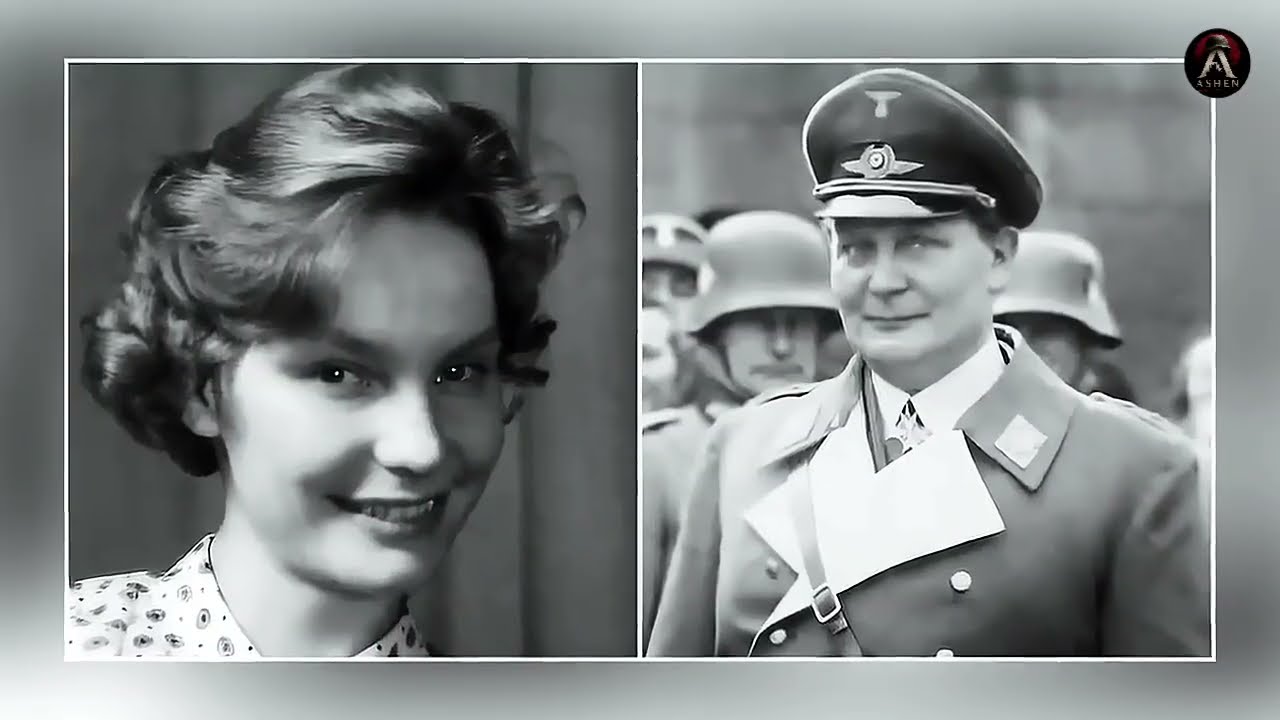
Göring's suicide created a second shock for the Allied authorities. It embarrassed the prison system and allowed the convicted man to avoid the public execution that would have followed. Emmy interpreted his death as proof of courage and perhaps as a final act of control. Victims and prosecutors saw a defiant, unrepentant criminal challenging a court's judgment.
After his death, the question of wealth became unavoidable. Göring had accumulated art, jewelry, furniture, land, and ceremonial gifts. Some items had been bought under coercive circumstances, and others had been taken from people the regime persecuted. Emmy's claim that the possessions belonged to the family could not be treated as a simple private property dispute. The origin of the property mattered.
The denazification process tried to sort this problem into categories. Category one was reserved for major offenders. Category two covered activists, militants, and profiteers. Category three included lesser offenders, while category four described followers. Emmy's classification as a major supporter reflected her public role and the advantages she received, but it did not claim she had commanded the Luftwaffe or administered occupied territories.
The punishment was also affected by the political climate of the late 1940s. Allied governments wanted Germans to participate in reconstruction. The legal system was overloaded with cases. Many officials and professionals argued denazification was too harsh, while survivors argued it was far too lenient. Emmy occupied an uncomfortable middle ground. She was not a major war criminal, nor an uninvolved civilian, nor a figure who had publicly rejected the regime.
Her return to acting was restricted. For years, she could not perform professionally. The career that had preceded Hermann became difficult to restore. She and Edda lived under social hostility and financial uncertainty. People recognized the family name. Some treated them as celebrities. Others treated them as representatives of a criminal past. Their privacy was never complete.
The family also had to deal with Edda's childhood. She had been photographed as Hitler's baptized goddaughter and raised in a palace-like environment. After the war, children at school could not easily separate her from her father. Yet Edda had not chosen her birth or her parents' politics. The distinction between inherited stigma and personal responsibility was one of the unresolved problems of postwar Germany.
Emmy's memoirs were written long after the immediate danger had passed. That distance gave her a chance to arrange her memories. The book presented selected conversations and defended Hermann's character. It did not rise to the level of a confession. It did not address the persecution of Jews, the use of forced labor, or the economic exploitation of occupied Europe with the same attention it gave to family life. That is why historians read the memoirs against other sources.
Private memory is evidence of how a person wanted to be remembered. It is not necessarily evidence of what actually happened. Emmy's book shows her loyalty, her grief, and her need to preserve her dignity. It does not erase the trial records or the history of the institutions her husband controlled.
In the end, Emmy Göring's story is about the aftermath of privilege. The war ended the property, the servants, and the public ceremonies, but it did not end the emotional bond to the man who had provided them. She lived a modest life, but her memory of Hermann remained grand. The family lost power without accepting the historical judgment attached to it. That distinction is the real story.
Emmy was not Hermann Göring, and the law treated her differently. But she was also not a bystander standing outside his career. She lived beside power, benefited from it, and defended the man who embodied it. After Nuremberg, she lived as a widow. History remembers her as a more complicated figure: a woman whose personal loyalty helped preserve a public myth.