Karl Jäger lived for 14 years after World War II as an ordinary farm laborer in rural West Germany. He worked quietly, attended local gatherings, and drew no suspicion from neighbors or authorities. Then, in March 1959, a single surviving wartime document resurfaced from a Lithuanian archive. It bore his own name and his own meticulously typed signature, attached to a running tally of murders so precise that it became one of the most damning pieces of documentary evidence connected to the Holocaust.
Karl Jäger was born on September 20, 1888, in Schaffhausen, Switzerland. He spent his early adult life as an orchestrion maker, a craftsman who built large mechanical music-playing machines, before taking a managerial position at a factory in the German town of Waldkirch. He served in the German army during World War I and earned the Iron Cross First Class among other decorations.
Jäger joined the Nazi Party in 1923 as an early member and founded the local party chapter in Waldkirch. Fellow early members nicknamed him "Waldkirch's Hitler" for his zealous commitment during the movement's most marginal years. He joined the SS in 1932.
After the outbreak of war, Jäger was appointed commander of Einsatzkommando 3, a subunit of the larger Einsatzgruppe A. These mobile killing units followed directly behind the advancing German army into Soviet territory beginning with the June 1941 invasion. His unit was specifically assigned to operate across Lithuania in coordination with local Lithuanian auxiliary police and paramilitary units willing to take part in the killings.
Between July and December 1941, under Jäger's direct command, Einsatzkommando 3 and its Lithuanian collaborationist units conducted a systematic campaign of mass shootings across Lithuania. They targeted Jewish men, women, and children in what amounted to the near-total physical destruction of Lithuania's Jewish population outside a small residual labor force temporarily kept alive by German military and civilian demand.
The killings followed a grimly consistent pattern across dozens of towns and villages. Victims were rounded up, marched or transported to isolated forest or rural locations, forced to dig or stand at the edge of mass graves, and shot in small groups. Jäger's unit refined and repeated this approach with disturbing efficiency throughout the second half of 1941.
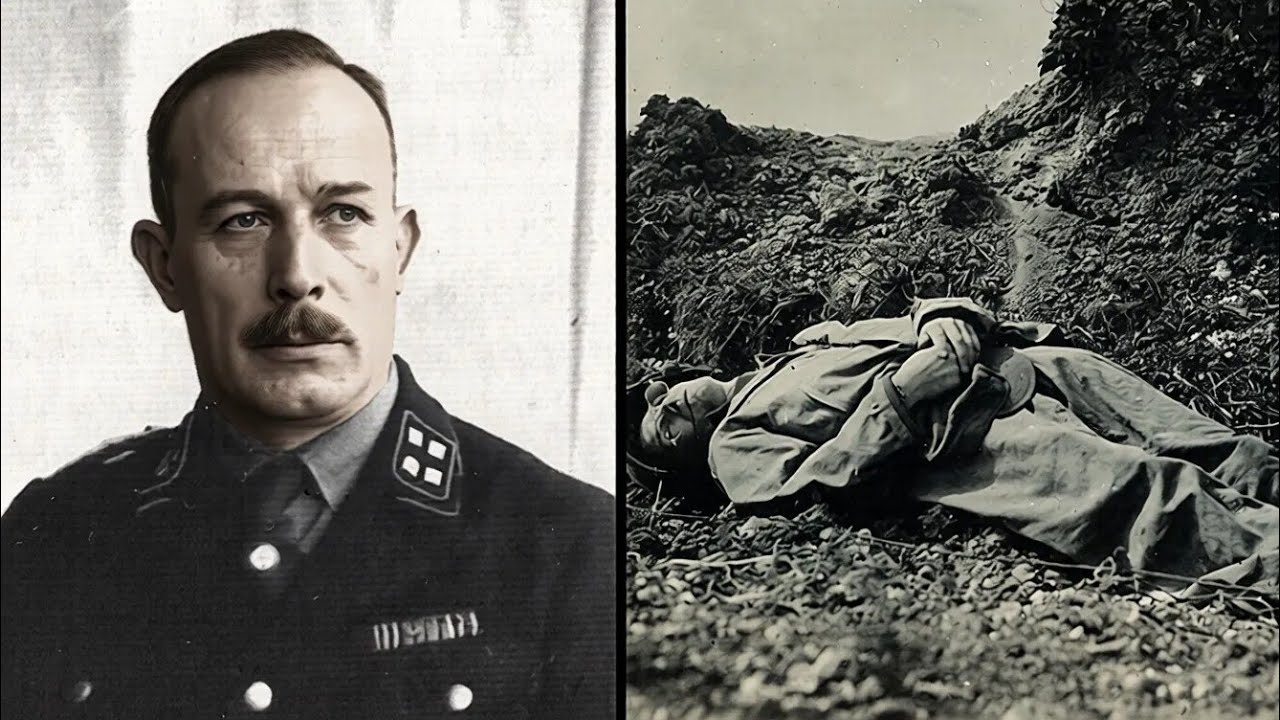
What makes Jäger's case uniquely well documented is a single report he personally compiled and submitted to his superiors on December 1, 1941. Historians now know it simply as the Jäger Report. Unlike the more generalized periodic situation reports other Einsatzgruppen commanders typically filed, his document provided an almost obsessively detailed, location-by-location, date-by-date tally of every killing operation his unit conducted.
The report recorded precise victim counts broken down by age and gender, the specific towns and villages where each operation occurred, and a running cumulative total. By the final entry, that total stood at 137,346 people murdered under his direct command in barely six months of operation.
The report's unusual level of bureaucratic detail has made it one of the most frequently cited primary source documents in Holocaust research. Its author's compulsive administrative precision inadvertently created an almost complete day-by-day record of the destruction of an entire national Jewish population. That record is considerably more granular than what survives for most other regional Einsatzgruppen operations across the occupied Soviet territories.
Within the report, Jäger noted that he had achieved what he described as making Lithuania free of Jews. The notable exception was approximately 34,500 people categorized as "work Jews," whose immediate execution had been temporarily delayed at the request of German military and civilian administrative officials who still required their forced labor for the war effort.
Jäger was reassigned back to Germany in late 1943. He took up a position commanding the Sicherheitsdienst office in Reichenberg within the Sudetenland region. It was a considerably less operationally significant posting than his earlier command in Lithuania, and it placed him in Germany's western territories rather than the collapsing eastern front as the war entered its final phase.
As Germany's defeat became inevitable in the spring of 1945, Jäger evaded capture by the advancing Allied forces. Rather than fleeing abroad through the escape networks that carried other senior SS officials to South America, he made a simpler and ultimately far more effective choice. He returned to ordinary civilian life within West Germany itself, concealing his wartime SS service and working as a farm laborer across several rural communities.

Despite appearing on American wanted lists connected to war crimes investigations dating back to 1948, Jäger remained undetected for the following decade and a half. His case illustrates how incomplete and unevenly resourced West Germany's early post-war denazification and war crimes prosecution efforts were. Individuals who, unlike more senior and publicly recognizable figures, could simply blend back into the rural population under their own genuine identity were especially difficult to find.
This changed in the late 1950s. West German prosecutors, prompted by survivor testimony, newly accessible captured German wartime records, and growing domestic political pressure, began a renewed and more systematic investigation into surviving commanders of the mobile killing units. The widely publicized Ulm Einsatzgruppen trial of 1958 had specifically shaken German public and judicial complacency about unprosecuted Einsatzgruppen personnel living freely within the country.
The breakthrough that finally connected these renewed efforts directly to Jäger came in March 1959. Investigators located and gained access to the surviving original copy of the Jäger Report. Its existence had been known to some historians and investigators for years, but its full contents and its clear connection to Jäger's personal command responsibility now gave prosecutors an almost uniquely comprehensive body of self-incriminating evidence.
Unlike testimony that could be disputed or reinterpreted, the evidence consisted of Jäger's own detailed, methodically compiled written record of his unit's killing operations. West German investigators quickly traced his post-war movements and identified his current location. He was formally arrested on April 10, 1959, in the town of Schlangenbad near Wiesbaden, where he had been living and working entirely openly under his own genuine name throughout the preceding 14 years.
Jäger was transferred to Hohenasperg Fortress, a facility that had served numerous functions across its long history, including as a prison for individuals connected to earlier phases of German political history. There he underwent extensive interrogation by West German prosecutors. According to surviving transcripts, the sessions filled 29 separate pages of recorded testimony conducted between June 16 and June 19, 1959.
Throughout these interrogations, Jäger displayed what investigators and later historians have described as a notable ambivalence regarding his own culpability. At various points he acknowledged his direct command role in the killing operations his own report had documented. At the same time, he offered shifting and inconsistent accounts regarding the specific origin and legitimacy of the orders that had authorized those operations.
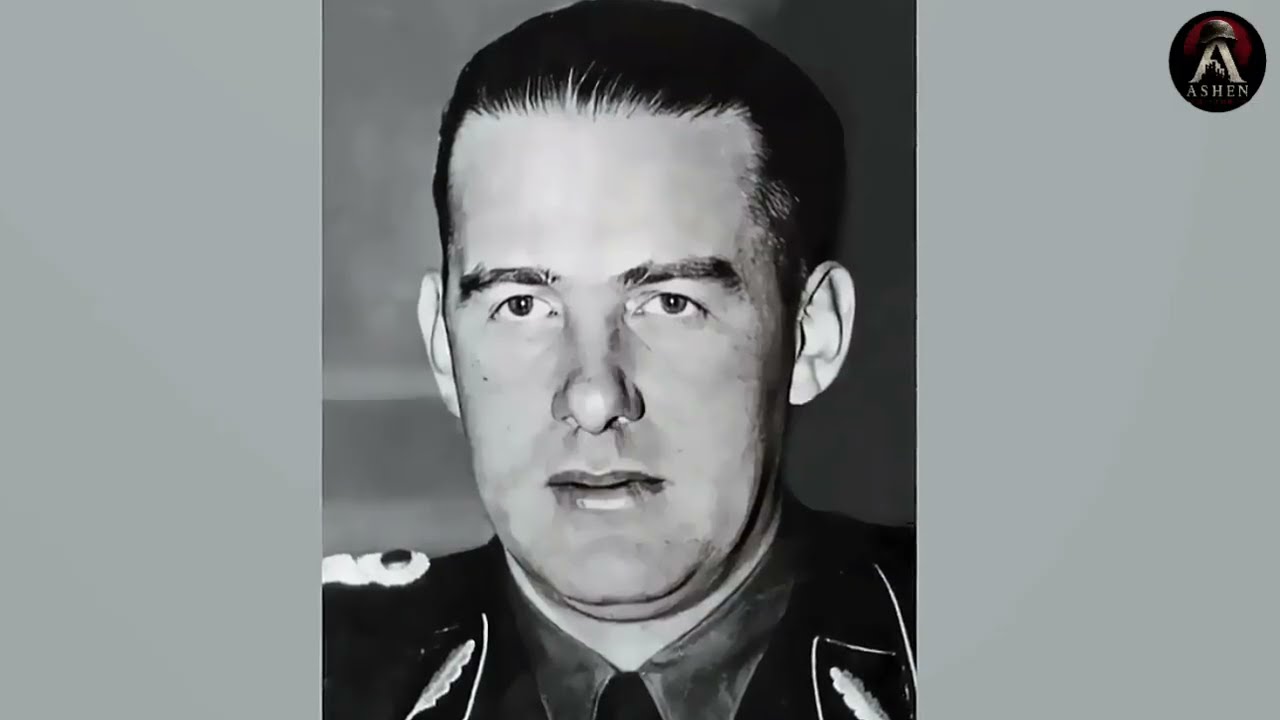
On the night of June 21 into June 22, 1959, while still held at Hohenasperg awaiting formal trial, Jäger took his own life. He hanged himself in his cell using wire stripped from the radio headphone cable that had been provided to prisoners for entertainment. He was 70 years old.
His suicide, occurring just weeks after his extensive formal interrogation had concluded, meant that Jäger would never face the kind of formal courtroom trial and public verdict that in other cases provided at least some measure of documented judicial accountability for the Holocaust's individual architects.
What makes Jäger's case so significant within the broader history of Holocaust perpetrator accountability is not simply the staggering scale of the death toll his own report documented. It is the deeply unsettling nature of the specific document that ultimately exposed him.
Unlike cases built substantially on survivor testimony or circumstantial documentary evidence requiring extensive historical reconstruction, the Jäger Report offered investigators and historians an almost unprecedented direct window into the mind of a perpetrator. He had, apparently without any external compulsion, chosen to meticulously record his own unit's killing operations with the same methodical bureaucratic precision a person might apply to any ordinary administrative task. It is a disturbing illustration of how thoroughly the machinery of systematic mass murder had become normalized within the operational culture of the Einsatzgruppen.
The 14 years Jäger spent living undetected within West Germany, working ordinary rural jobs under his own genuine name while the very document that would eventually expose him sat undiscovered in an archive, offers an important and uncomfortable illustration of the gaps that persisted within West Germany's early post-war reckoning with its Nazi past. Those gaps allowed numerous individuals directly responsible for mass killing operations to return to ordinary civilian life for years, or in Jäger's case well over a decade, before renewed investigative efforts finally caught up with them.
In the end, the evidence that exposed Karl Jäger was the evidence he himself had created. The same compulsive precision he applied to documenting mass murder became the record that ended his quiet post-war life and ensured his name would be permanently attached to one of the most extensively documented individual killing campaigns of the Holocaust.