Just before dawn on April 9, 1984, FBI agents took up positions outside pizzerias in New York, New Jersey, Michigan, Wisconsin, and Illinois. Every team moved at the same minute, because a single phone call between the parlors would have ended everything.
To the neighbors, these were slice counters and family restaurants in towns where nothing happens. The bureau had been watching them for four years.
Agents had recorded 55,000 phone calls full of talk about shirts and parcels and shipments of tomatoes. In all that time, no agent had seen a single gram of anything change hands.
The strangest part of that morning was not who got arrested. It was what the men on those tapes were really ordering.
There was no seized shipment on a table. There was no informant who walked into a field office and laid out the whole operation.
There were boxes of tape reels, thousands of hours of men talking about deliveries of shirts and containers of tomatoes, and a theory that those ordinary words were a private commercial language for heroin.
On paper, that was the whole prosecution. A jury would be asked to believe that a chain of neighborhood pizza parlors was the retail counter of a heroin pipeline that moved 1.65 billion dollars of product between 1975 and 1984.
The premise was almost absurd, and the everyday cover is exactly what made it work. It is also exactly what made it nearly impossible to prove.
The case did not begin as a drug case. It began as a murder.
On July 12, 1979, Bonanno boss Carmine Galante was eating on the back patio of Joe and Mary's, a small Italian restaurant on Knickerbocker Avenue in Bushwick, Brooklyn. It was a little before 3:00 in the afternoon.
Three men in ski masks came in fast and opened up with shotguns and pistols. Galante died at the table with his cigar still clenched in his teeth. The restaurant's owner and another man died with him.
His two bodyguards, Cesare Bonventre and Baldassare Amato, were standing right there, and both walked away without a scratch. That detail told investigators something before they knew anything else.
This was a hit sanctioned from inside, a reorganization. Whoever ordered it was now running something worth killing a boss to control.
Two threads started moving at the same time, and for a while neither one knew how big the other would get. One thread was the operation itself, quietly turning over product and cash through those parlors. The other was a small group of federal investigators trying to figure out who inherited Galante's world.
The case was handed to an unlikely pair of agents, the intense Sicilian-born Carmine Russo and the low-key Charlie Rooney. What they pulled on did not lead where a normal mob case leads.
It led out of Brooklyn and into rural Illinois, into Long Island, into New Jersey, and then across an ocean to bank vaults and hideouts in Miami, the Bahamas, Zurich, Palermo, Madrid, Turkey, and Bulgaria. They were not chasing a shooter anymore. They were chasing a supply chain.
There was nothing dramatic about how the case got built, and that is the first thing to understand about it. The engine of the case was thousands of hours of men sitting in cars and back rooms with headphones on, logging calls that seemed to be about nothing, night after night, across four countries at once.
Russo and Rooney and the growing team behind them traced payphones on liquor store corners and shop counters, matching a number dialed in Illinois to a number that rang in Palermo. They built a case out of telephone records and patience rather than raids and gunfights.
It was the slowest, quietest kind of police work there is, and it turned out to be the only kind that could ever have proven something this large. The men who ran the parlors were protected by how boring the surveillance would be. They just did not count on anyone being willing to listen for four years.
The investigators were not working entirely blind, because one of their own had already been inside. From 1976 to 1981, an FBI agent named Joseph Pistone lived undercover inside the Bonanno family as a jewel thief called Donnie Brasco, close enough that the family was moving to make him a made man before the bureau finally pulled him out.
What Pistone carried back out with him was a working map of who answered to whom, and that map helped the wiretap teams aim at the right phones and the right men instead of guessing. Years later, he took the stand in the same trial under his own name and layered first-hand testimony about how the Bonannos actually operated on top of the tapes and the money trail.
No one witness knew the whole story, but each one knew a piece of it, and when those pieces were laid side by side, the picture held.
Here is the shape of that chain, because the whole prosecution depended on it. Morphine base came out of Turkey. It was refined into heroin in laboratories in Sicily. It was smuggled into the United States and then pushed out to the street through pizzerias run by Sicilian immigrants, family businesses scattered from New York to Wisconsin.
The cash came back the other way and disappeared into Swiss banks and Wall Street brokerage houses. Some of the same routes carried South American cocaine.
To prove any of it, investigators had to tie a phone call placed at a payphone in the Midwest to a laboratory and a courier an ocean away. And they had to do it without ever watching a single hand-to-hand deal.
The men on the tapes did not help by talking plainly. They used public payphones so often and so carefully that the bureau ended up wiretapping the payphones themselves.
When the agents listened, nobody said the word heroin. They talked about shirts. They talked about parcels and containers. They talked about accepting delivery of 22 parcels and a shipment of tomatoes that was late, and how many shirts came in the last order.
It was a real language used consistently by men who assumed the words protected them. The recordings captured a shadow world of coded calls, midnight drop-offs of heroin packed in paper bags and shirt boxes, and fortunes moving through some of the biggest names on Wall Street.
The problem for the government was not recording it. The problem was that a tape of a man arranging a delivery of shirts is not, on its face, a crime.
The prosecutors did not have to prove that a drug deal happened. They had to prove that a language existed, and that everyone speaking it knew exactly what the words meant. That is a much harder thing to put in front of 12 people.
They could not hold up a kilo. They had to teach the jury to hear those calls the way the men making them heard them, and then convince them the translation was beyond a reasonable doubt.
While the wiretaps built, a second evidentiary spine grew next to them, and it was made of money. The cash coming off the street had to go somewhere, and the government followed it all the way to an address nobody in that courtroom was going to want to believe.
A courier named Salvatore Amendolito became one of the first human witnesses to the machinery. He testified that starting in 1980, he was hired to move roughly $9 million in small bills out of New York.
Cash was handed to him by pizza owners, including large amounts from Frank Castronovo in New Jersey, and carried off to accounts in Switzerland, with the owners' names kept off the paperwork and the whole thing kept away from the tax authorities.
Amendolito was the opening the prosecution used to show a jury how the money physically left the country, and he was only one courier. Over about eight years, the ring moved some $60 million in small denomination bills toward Switzerland, Italy, and Turkey. Some of it was literally flown out in suitcases.
The proceeds ran through accounts in the brokerage houses, tens of millions of dollars in heroin cash pushed into the American financial system itself. The Wall Street end of it should be the hardest part to believe.
The cash coming out of neighborhood pizza registers was moving through the same brokerage houses that handled ordinary families' savings, in amounts large enough to draw federal scrutiny onto some of the most respectable addresses in American finance.
The government's task was not just to call the money dirty. It was to reconstruct where every dollar went, account by account and transfer by transfer, and prove that money made selling heroin on American streets had been deliberately scrubbed clean and passed off as legitimate.
That reconstruction was slow, forensic, unglamorous work, and it is a large part of why the case took years to assemble. Following the drugs was never going to work, but the money left a trail, and that trail ran straight into Wall Street.
Two names sat at the top of the indictment, and one of them was a claim that was either provable or the kind of overreach that sinks a prosecution.

One was Gaetano Badalamenti, a former boss of the Sicilian Mafia's own governing commission, expelled from Italy in 1978, a man who ran the town of Cinisi outside Palermo. The other was Salvatore Catalano, called Toto, a Bonanno captain running the American end out of New York.
Putting Catalano in a Manhattan courtroom was ordinary organized crime prosecution. Putting a former member of the Sicilian Commission in the same indictment was something else.
It was the government saying on the record that this parlor network reached all the way back to the men who sit at the top of the Sicilian Mafia, and that an American drug case could hold one of them accountable in an American court.
That was the case they built. But carrying it to a verdict was another story, because the men connected to it kept turning up dead.
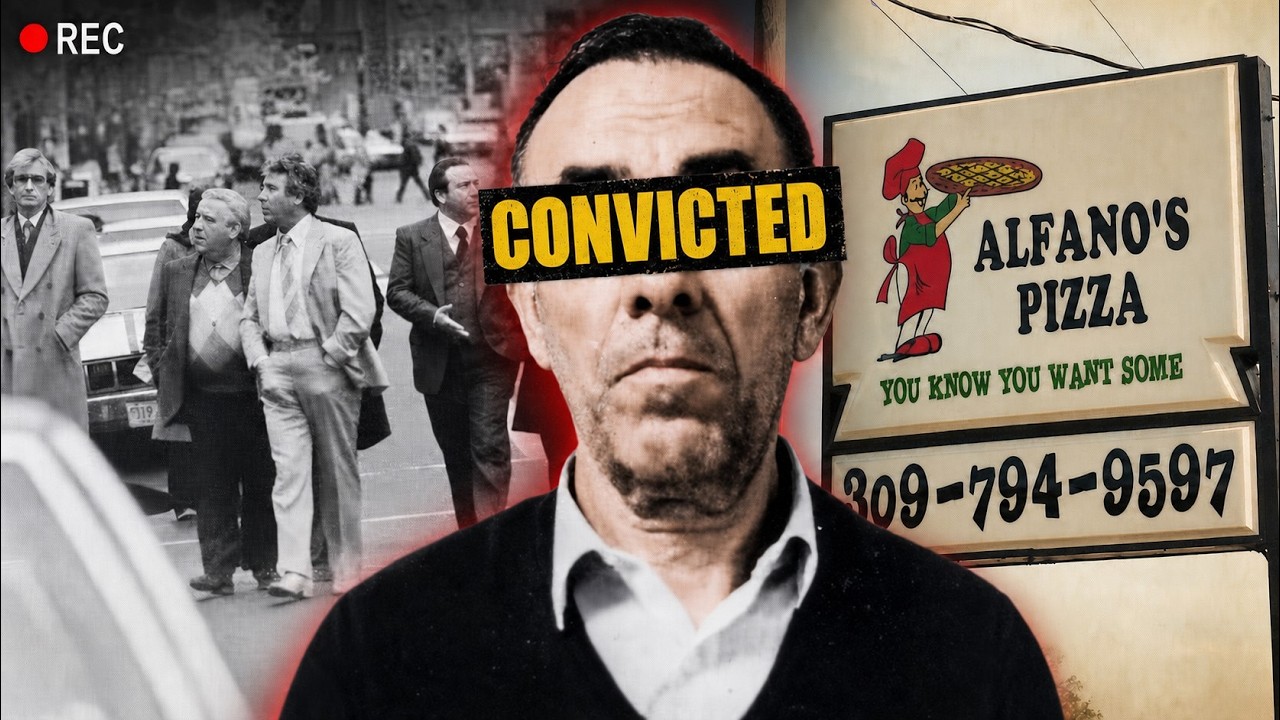
The wiretaps were what finally put the leadership on the record, and the way they did it was almost mundane. In the summer of 1983, calls went out from a payphone at a place called the Pineway Liquor Mart and from the phone at a shop called Alfano's Pizza in Illinois to numbers in Brazil and in Sicily and to a man named Evola.
The same number was turning up on both phones in the same window. Pietro Alfano, who ran that pizzeria in Oregon, Illinois, was Badalamenti's nephew, and the intercepts showed Badalamenti treating him as his main point of contact in the American Midwest.
This is what a wiretap case is actually made of, not a confession. A datable, repeatable link between a voice, a phone, a shop, and a name at the top, stacked up until the pattern could not be explained as coincidence.
By the spring of 1984, the government decided it had enough, and the two threads finally collided. On April 8, Badalamenti walked out onto a street in Madrid with his son Vito, meeting Pietro Alfano, who had flown in from Chicago.
Spanish police, acting on information from the FBI, had been watching and waiting. All three were arrested on the spot.
The next morning was the coordinated strike back in the states. The dawn move on the parlors in five states was timed to the minute so no one could call ahead. Arrests hit the United States, Italy, Switzerland, and Spain at once.
After four years of listening, the bureau finally moved in the open, and the case that started with one murdered boss became the largest investigation in FBI history.
The violence did not stop just because the arrests happened. It followed the case right up to the courthouse door.
Cesare Bonventre, the same bodyguard who walked away clean from the Galante hit, was named in the April 9 indictment. What the grand jury did not know was that he was already dead, killed by his own side in the first days of April, before a single agent moved.
A week after the indictment, his dismembered body turned up stuffed into two 55-gallon drums in Garfield, New Jersey. The government had indicted a man who was already in the drums.
Someone above Bonventre looked at the risk that he might talk and decided it was cheaper to cut him apart than to let him take his chances in a courtroom. That is the world the prosecutors were walking into, and the trial had not even started.
There was one more witness the government brought across the ocean, and he was the most famous name in the whole case and also the most honest problem in it.
Tommaso Buscetta was a Sicilian Mafia insider who broke the code of silence, first to the Italian anti-mafia magistrate Giovanni Falcone, whose debriefs put investigators onto the shape of the whole structure. Buscetta was extradited to the United States in December 1984.
When he took the stand, the prosecutors were careful about what they claimed he could do. He did not connect a single defendant directly to the heroin. He was not part of the Pizza Connection.
What he did was explain the machine. He walked the jury through the Sicilian Mafia's rules, its hierarchy, its governing commission, and he established that the Sicilians ran the American end, not the other way around.
He gave the jury the frame to read everything else, the code words and the money and the payphones, as one organization rather than a scatter of unrelated crimes. That restraint is exactly why the case holds. A weaker prosecution would have stretched Buscetta into the smoking gun he was not. This one used him for the one thing he could actually prove and built the drugs out of the tapes.

The trial opened on September 30, 1985, in front of Judge Pierre Leval in the Southern District of New York, and the size of it was its own kind of evidence. There were 22 defendants, all Sicilian-born, around 300 government witnesses, and thousands of documents.
The men mostly spoke Sicilian, and they used coded phrases even in that. Turning their conversations into plain English took a team of expert translators, while other interpreters rendered the proceedings back into Italian for the defendants.
Testimony got underway in the middle of November and then just kept going. It ran 17 months into March of 1987, the longest criminal jury trial in American history to that point.
Keeping one jury in this mountain of evidence and this many defendants intact and coherent for that long was a feat with no precedent. There was no single dramatic moment. What held it together was that the prosecutors kept a case this size from collapsing for 17 straight months before the killing started again.
Over its life, the case indicted around 38 men, and deaths and severances and guilty pleas whittled it down to the 22 who stood trial, in a proceeding that cost the government tens of millions of dollars to bring to a verdict.
A single jury, 12 people with six alternates seated beside them, had to sit through all of it month after month and hold 17 months of coded calls and money transfers and translated testimony clearly enough in mind to weigh it all at the end.
There is no shortened version of a case like this. The government had to put everything in front of one jury and keep it standing for a year and a half. There was no other way to do it.
The defense understood that, and a good part of the trial was a slow contest over whether the government could keep the whole thing from buckling before the jury ever got to decide.
Then the war the defense kept warning about walked straight into the courtroom. Gaetano Mazzara, a New Jersey pizzeria operator and one of the defendants, was found murdered while he was out on bail late in 1986.
On February 11, 1987, with the trial in its final stretch, Pietro Alfano, Badalamenti's nephew, was shot three times in the back on a street in Greenwich Village and critically wounded.
Badalamenti's own lawyer, Michael Kennedy, stood up and put it into the record plainly: the war they had been talking about had entered this courtroom and filled it with death, blood, and gunshots.
The prosecutors had to carry the case to a verdict against a backdrop of defendants being murdered and shot, and they had to do it without letting the jury be spooked into a mistrial. That they finished it all is the part of this case that gets forgotten first.
On March 2, 1987, the jury came back. Eighteen of the surviving defendants were convicted. Among the living, only Badalamenti's son Vito walked.
A case with no seized shipment, a witness who could not tie anyone to the drugs, and a language that had to be decoded call by call produced near total conviction.
The sentencing on June 22 matched the scale of what was proven. Badalamenti drew 45 years and a fine of $125,000, capped at 30 years of actual service under the terms of his Spanish extradition. Catalano drew 45 years, a fine of over a million dollars, and another million in restitution.
Across the top defendants, the fines ran to millions, and the court ordered two million dollars in restitution paid to drug victims, which had almost no precedent at the time.
The case did not end there. Louis Freeh, the principal courtroom prosecutor who carried the marathon, became director of the FBI in 1993, and the reputation he earned here is a large part of why.
Rudolph Giuliani, the US attorney who ran this alongside the Commission trial, called the combined effect on the mafia devastating and rode organized crime into the mayor's office.
The debriefs Buscetta first gave Falcone helped seed Italy's own maxi trial of hundreds of mafiosi. Gaetano Badalamenti, the former Commission boss the government dared to name in a Manhattan courtroom, died in federal custody in Massachusetts in 2004 at 80 years old, still inside.
The method that convicted him, the patient wiretap, the followed money, the insider who explains the rules while the tapes prove the crime, is the same playbook Giuliani's office was running in the Commission trial down the hall, and the one federal prosecutors reached for from then on.
They hid behind the pizzerias, but the phone calls are what gave them up, and a small federal team spent seven years proving the method could work at this scale.
The men who ran the parlors thought the ordinary words kept them safe. What they never understood is that the government was not listening for the word heroin. It was listening for the pattern, and the pattern was always there.