On a September morning in 1988, a 40-acre field in rural Minnesota appeared to be nothing more than an ordinary cornfield. But hidden behind the outer rows, in tightly packed, disciplined lines, stood shoulder-high marijuana plants heavy with resin—enough to fill a semi-truck and enough to send the four men working there to federal prison for decades. Those men were from Kentucky. Over four growing seasons, roughly 70 men from three small Kentucky counties produced 182 tons of marijuana across 29 farms in 10 states.
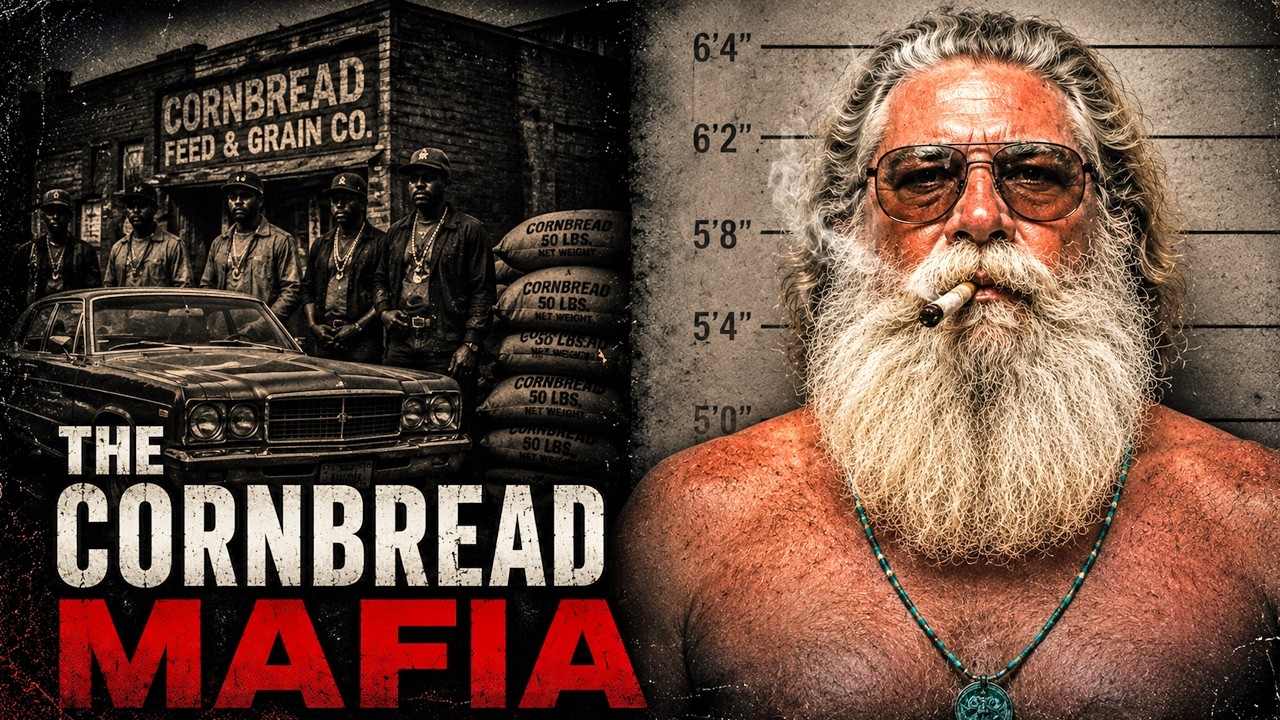
It was the largest domestic marijuana-producing organization in American history—and it operated without a single killing. The federal prosecutors who eventually dismantled the network were left furious by one detail: when the raids came, not one of the 70 men talked. Facing decades behind bars, they stayed silent, and the government never fully understood why. The story begins in Marion County, Kentucky, in the late 1960s.
It was farm country, tobacco country, dotted with Catholic churches. A farm boy named Johnny Boone watched his family’s tobacco allotment shrink year after year. By the early 1970s, Boone and a few neighbors had begun growing marijuana in the hollows. Former participants later explained the decision plainly: there was no other way to make money at home.
Tobacco was dying, the land could not support families, and marijuana grew almost by itself in the Kentucky hollows. These were not gang members. They were altar servers, choir members, men who took their kids to catechism. The close-knit Catholic culture that taught them to protect family and keep their mouths shut became the backbone of a criminal network the Drug Enforcement Administration would spend a decade trying to dismantle.
By 1977, Boone and his circle realized the Kentucky hollows were getting crowded. Local sheriffs were paying attention. Between 1977 and 1980, they expanded outward to Illinois, Missouri, Nebraska, and Minnesota. They leased farms under false names or through straw owners.
They chose land at the ends of gravel roads, land hidden by forest, invisible from main highways. Crews of four to eight men lived on site from April to October, working 10 to 14 hours a day. By 1984, the network had stabilized at roughly 20 to 30 farms scattered across 10 states. Fields ranged from 10 to 40 acres, with marijuana interplanted among corn and soybeans.
The operation was sophisticated, and nobody knew it existed. There were no shootings, no bodies, no informants. Just quiet men in old trucks driving quiet roads tending quiet fields. The most dangerous weapon of the Cornbread Mafia was silence.
Johnny Boone set the code in an inner circle meeting in the early 1980s. Nobody talks. Nobody informs, not for a plea deal, not for a reduced sentence. If they catch you, you do your time.
His framing echoed for the next 30 years: we are farmers, not gangsters. Farmers do not rat. The federal government began to notice between 1985 and 1987, when a series of arrests cropped up in state after state. Four men here, six men there, always working large marijuana grows, always polite when the cuffs went on, always with driver’s licenses from the same three Kentucky counties.
An analyst eventually connected the dots. Every farm traced back to Marion County. One agent later recalled the stunned respect he felt: the Kentucky men were better at growing marijuana than most legal farmers were at growing corn. By 1987, federal agencies treated the scattered cases as one investigation.
They coordinated raids for the harvest window, when crews were on site and barns were full of drying plants. In September 1988, a crew of four Kentucky men walked out of a farmhouse trailer in rural Minnesota at dawn, coffee in hand, knives on belts. They never made it past the porch. Federal agents stepped out from the tree line and ditches with weapons raised.
The Kentucky men dropped the coffee, got on the ground, and said nothing. Over the next 18 months, similar raids unfolded in Illinois, Indiana, Tennessee, Michigan, Nebraska, Missouri, and Kansas. In every case, interrogations produced nothing. Federal interrogators used the standard playbook that had cracked mafia families and biker gangs: show the sentences, wait for names.
It did not work on these men. Man after man was shown 20- and 30-year sentences and said nothing. The prosecutors were up against something older than a criminal code: a religious one. These men were raised in a Catholic community where informing on a cousin was a moral impossibility.
Two systems of loyalty collided in federal interrogation rooms, and the church won every time. The government did not need confessions. They had the plants, the farms, the lease documents, and surveillance photos. In June 1989, the Justice Department announced the case to the world.
By the end of 1989, the count was staggering: 70 men indicted, 29 farms raided, 10 states involved, 182 tons of marijuana seized or destroyed. And a code of silence so absolute that federal prosecutors had never encountered anything like it. At a federal press conference, prosecutors gave the network a name: the Cornbread Mafia. They wanted the phrase in headlines, and within 24 hours it had gone national.
The men hated the name. It fed a caricature of gangsters and violent criminals that was never who they were. They were farmers who had never fired a shot. Through mid-1989 and into 1991, trials rolled forward in federal courtrooms across half a dozen states.
By the end of 1991, more than 100 men had been processed through the federal system. Sentences ran 10, 15, 20, 25 years and longer. Because none of them cooperated, none earned the reductions that cooperation would have allowed. Bobby Joe Shoemaker served 26 calendar years.
Other core members served 15, 20, 25 years. Four or five of the inner circle collectively served nearly a century. The families bore what the men could not. Wives raised children alone.
Mothers drove hundreds of miles to prison visits. The Catholic parishes that had shaped the code of silence became the emotional infrastructure for families in crisis. When the sentences ended, the men came home to a changed world. Tommy Lee was released around 2006 and became a truck driver.
Jimmy Beckett went back to legitimate farming. His younger brother took a job as a law clerk at a local Kentucky attorney’s office. Bobby Joe Shoemaker was released in 2016 after 26 years. He came home to Marion County, quiet and deeply changed.
By then, the plant they had lost their lives for was becoming legal across America. One former member said in a documentary interview: four or five of us spent close to a century in prison together over marijuana, something that’s legal today. Across a decade of operation, across 10 states, across 70 men and 200 tons of marijuana, there is no record of the Cornbread Mafia ever killing anyone. Their weapon was silence, and their sentence was measured in decades anyway.
James Higdon, who wrote the definitive book on the Cornbread Mafia, framed the story as a collision between the authority of the church and the largest homegrown marijuana syndicate in American history. He understood it was never really a drug story. It was a story about rural America, about Catholic communities, about the collapse of the small farm economy, and about what men do when the land that fed their grandfathers stops feeding their children. The name Cornbread Mafia has outlived the men who wore it.
Legal hemp companies use it in marketing. Podcasts and documentaries have retold their story. Most of the surviving men, in the tradition their fathers taught them, simply keep quiet and let the world talk.