During a recent visit to the United States, I was in New York City and took the opportunity to tour the preserved aircraft carrier USS Intrepid. It is an excellent museum and well worth visiting, but one question occurred to me as I walked around the ship. My question was this: if the British Royal Navy was once stronger than the United States Navy, why is there not a single British aircraft carrier preserved as a museum ship? It seemed a reasonable question to me.
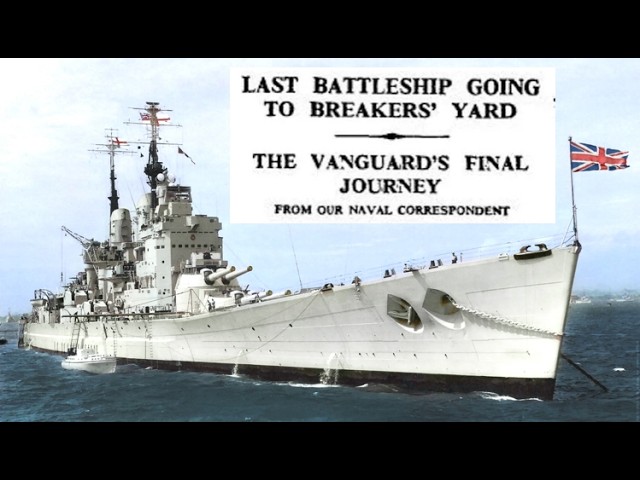
The United States is a nation that takes pride in its naval history, and today, not one but five aircraft carriers, symbols of modern naval power, are preserved as museums. Britain, which invented the aircraft carrier, and whose Royal Navy was no less powerful than the American navy during most of World War II and for a long time after, a respected force to be reckoned with on the international stage, has not preserved a single aircraft carrier to educate people about my country’s technical and maritime achievements. I will visit the United States again later this year, and one of the things I will definitely make a point of visiting is a battleship, a class of warship I have always wanted to see in person, but that is not possible in Britain. The United States has eight preserved battleships, while Britain has none, despite having this distinguished class of warship in service until 1960.
Britain made a good start in 1922, when the most famous museum ship we have today, HMS Victory, was preserved for the nation. This first-rate ship of the line, carrying 104 guns, was completed in 1778, and was of course Admiral Lord Nelson’s flagship at the Battle of Trafalgar in 1805. Indeed, Nelson was killed on her deck. That battle was one of the most important naval engagements in world history.
Her later years were very sad, as she served as a prison ship and then as a floating headquarters until 1830. But her association with the Battle of Trafalgar ensured she was not broken up, despite strong efforts by the Admiralty. She served as a stationary flagship and then as a training ship. But she ended up in very poor condition and was damaged in a collision in 1903.
The Admiralty again wanted to scrap her, but King Edward VII intervened personally to prevent it. In 1905, she took part in the centenary celebrations of the Battle of Trafalgar, but she continued to deteriorate throughout World War II and beyond. Only in 1921, the shipping magnate Sir James Caird made a generous donation to the Save the Victory fund, and work began to dock and restore her in 1922. Since then, she has remained in dry dock number two in Portsmouth, where she has been gradually restored, and has of course been open as a museum for a hundred years.
HMS Victory is still a commissioned warship in the Royal Navy and serves as the flagship of the Second Sea Lord. Imagine if not a single Royal Navy warship from that glorious era of our history had survived. But that was about to happen. As far as modern warships from World War I and World War II are concerned, none of them survived the scrappers.
As I mentioned, the Americans kept eight battleships, from the last remaining dreadnought, USS Texas, to the USS Missouri, the ship on which the Japanese signed their surrender in 1945, ending World War II. In fact, the US Navy kept its last class of battleships, the Iowa class, throughout the Cold War and beyond. These ships were used prominently in 1991 to bombard coastal targets in Iraq during the First Gulf War, using their huge 16-inch guns with devastating effect. That was just one man.
Oh my god! Awesome! Oh my god, that’s two at once. That hurts, yes, but oh my god, that is beautiful.
Do it. Fire the broadside. The last two ships, USS Missouri and Wisconsin, were taken out of service due to budget pressures in the 1990s, but neither was scrapped. CONTENT: During a recent visit to the United States, I was in New York City and took the opportunity to tour the preserved aircraft carrier USS Intrepid.
It is an excellent museum and well worth visiting, but one question occurred to me as I walked around the ship. My question was this: if the British Royal Navy was once stronger than the United States Navy, why is there not a single British aircraft carrier preserved as a museum ship? It seemed a reasonable question to me. The United States is a nation that takes pride in its naval history, and today, not one but five aircraft carriers, symbols of modern naval power, are preserved as museums.
Britain, which invented the aircraft carrier, and whose Royal Navy was no less powerful than the American navy during most of World War II and for a long time after, a respected force to be reckoned with on the international stage, has not preserved a single aircraft carrier to educate people about my country’s technical and maritime achievements. I will visit the United States again later this year, and one of the things I will definitely make a point of visiting is a battleship, a class of warship I have always wanted to see in person, but that is not possible in Britain. The United States has eight preserved battleships, while Britain has none, despite having this distinguished class of warship in service until 1960. Britain made a good start in 1922, when the most famous museum ship we have today, HMS Victory, was preserved for the nation.
This first-rate ship of the line, carrying 104 guns, was completed in 1778, and was of course Admiral Lord Nelson’s flagship at the Battle of Trafalgar in 1805. Indeed, Nelson was killed on her deck. That battle was one of the most important naval engagements in world history. Her later years were very sad, as she served as a prison ship and then as a floating headquarters until 1830.
But her association with the Battle of Trafalgar ensured she was not broken up, despite strong efforts by the Admiralty. She served as a stationary flagship and then as a training ship. But she ended up in very poor condition and was damaged in a collision in 1903. The Admiralty again wanted to scrap her, but King Edward VII intervened personally to prevent it.
In 1905, she took part in the centenary celebrations of the Battle of Trafalgar, but she continued to deteriorate throughout World War II and beyond. Only in 1921, the shipping magnate Sir James Caird made a generous donation to the Save the Victory fund, and work began to dock and restore her in 1922. Since then, she has remained in dry dock number two in Portsmouth, where she has been gradually restored, and has of course been open as a museum for a hundred years. HMS Victory is still a commissioned warship in the Royal Navy and serves as the flagship of the Second Sea Lord.
Imagine if not a single Royal Navy warship from that glorious era of our history had survived. But that was about to happen. As far as modern warships from World War I and World War II are concerned, none of them survived the scrappers. As I mentioned, the Americans kept eight battleships, from the last remaining dreadnought, USS Texas, to the USS Missouri, the ship on which the Japanese signed their surrender in 1945, ending World War II.
In fact, the US Navy kept its last class of battleships, the Iowa class, throughout the Cold War and beyond. These ships were used prominently in 1991 to bombard coastal targets in Iraq during the First Gulf War, using their huge 16-inch guns with devastating effect. That was just one man. Oh my god!
Awesome! Oh my god, that’s two at once. That hurts, yes, but oh my god, that is beautiful. Do it.
Fire the broadside. The last two ships, USS Missouri and Wisconsin, were taken out of service due to budget pressures in the 1990s, but neither was scrapped.