On September 18, 1980, at 12:15 in the afternoon, a black Chrysler Imperial was traveling south on Interstate 55, just past the Reavis Barracks exit in St. Louis. Ten sticks of dynamite detonated beneath the floorboard.
The blast lifted the car four feet off the pavement. It tore through the chassis and through the driver. Witnesses said the explosion was so loud it shook windows half a mile away.
By the time first responders reached the wreckage, the driver was already gone. He was 75 years old. His body was cut nearly in two, the steering wheel embedded in what was left of his chest. Traffic on I-55 sat frozen for hours.
This was not just any old man in a Chrysler. This was James Anthony Michaels Sr., known as Horseshoe Jimmy Michaels, the undisputed boss of the Syrian-Lebanese faction in St. Louis.
For 50 years, Michaels had brokered peace between the Italians and the outsiders. He ran gambling. He ran unions. He had the ear of Anthony Giordano, boss of the St. Louis La Cosa Nostra, and the loyalty of every Lebanese street guy from the Hill to South St. Louis.
He was so respected, so untouchable, that nobody in the city believed anyone would ever dare to move against him.
What followed was not a slow decline over decades or years. Over 72 hours in the fall of 1980, every alliance the St. Louis underworld had spent half a century building turned into a war zone of car bombs, severed legs, and federal indictments. By the time the smoke cleared, an entire crime family was gutted from the inside.
The bomb that killed Jimmy Michaels was not planted by a stranger. It was planted by a man whose own grandfather had stood at Michaels' wedding. That is how deep the betrayal went.
To understand what happened next, you have to understand St. Louis. The city sat on the most strategic piece of real estate in the American underworld.
The Mississippi River ran north to south. Interstate 70 ran east to west. Every truckload of stolen cigarettes from North Carolina, every shipment of heroin coming up from New Orleans, every load of bootleg cargo bound for Chicago or Kansas City funneled through St. Louis.
Whoever controlled the docks, the warehouses, and the laborers unions controlled the flow. For 50 years, that meant the Italians.
Anthony Giordano ran the family. They called him Tony G. He was born in 1915, the son of Sicilian immigrants from the Hill neighborhood. By the early 1960s, after the boss before him stepped aside, Giordano was running everything.
Gambling, loan sharking, the drug trade. He had soldiers placed inside Local 110 of the Laborers' International Union, and he had a quiet partnership with the Syrian-Lebanese boss, Jimmy Michaels.
That partnership was the secret to 50 years of peace. The Italians ran the heavy rackets. The Syrians, mostly Lebanese-American families who had settled in St. Louis in the early 1900s, controlled their own gambling rings, their own loan books, their own street crews.
Giordano and Michaels met regularly. They split disputes. They kept the peace. As long as both bosses stayed alive, nobody started a war because nobody could win one.
But Giordano was sick with cancer. By the late 1970s, he was dying. He held on as long as he could, running the family from his hospital bed, but on August 29, 1980, Anthony Giordano died. He was 65 years old.
The funeral at St. Ambrose Church on the Hill brought every wise guy in the Midwest. Kansas City sent a delegation. Chicago sent flowers. And in the back of the church, sitting quietly, was a man named Paul John Leisure.
Paul Leisure was not Italian. He was not Syrian. He was Lebanese-American, raised in South St. Louis, and for years he had worked as a soldier inside Jimmy Michaels' organization.
He was 36 years old, with a compact build and a sharp sense of dress. He lived at 4908 Nottingham Avenue with his wife and his kids. He ran his crew out of a social club on South Broadway.
He had two brothers, Anthony and Richard, who would do anything he asked. He also had a nephew, David Leisure, 25 years old, who worshipped him. David was the muscle. David was the bomb maker.
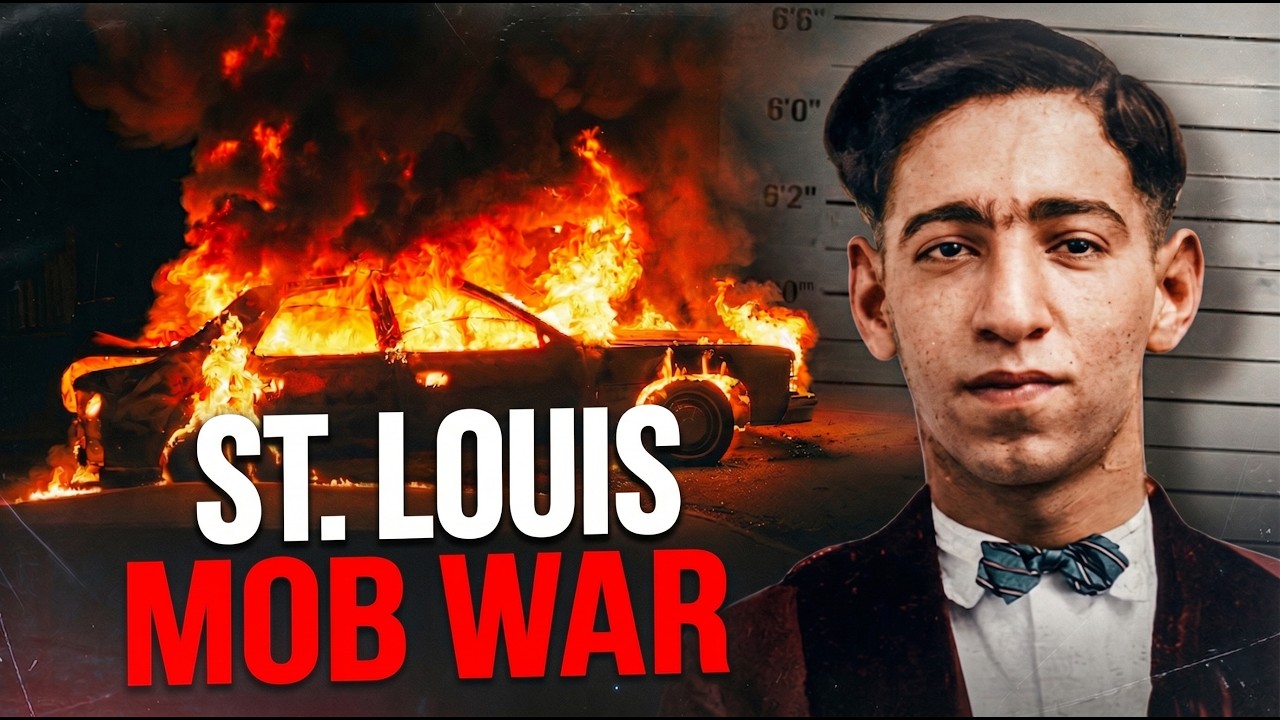
Paul Leisure had ambition. He had watched Jimmy Michaels for years, taking orders, kicking up tribute, waiting his turn. But Michaels was old, and Michaels was loyal to the old ways. He shared too much with the Italians. He gave too much away.
Leisure believed he could run the Lebanese rackets better, bigger, with nobody above him.
With Giordano dead, the man who had kept the peace, the only man both factions feared and respected, was gone. The Italian throne sat empty.
The new acting boss, Matthew Trupiano, Giordano's nephew from Detroit, had just relocated to St. Louis. He was 38. He was inexperienced. He did not know the city. He did not know the players. And he had no relationship with Jimmy Michaels at all.
Nineteen days. That is how long the peace lasted after Giordano's funeral.
On September 18, 1980, Jimmy Michaels left a restaurant on South Kingshighway after lunch. He climbed into his Chrysler Imperial. He pulled onto Interstate 55 heading south toward home.
He had no idea that David Leisure had spent the previous night under that car, wiring 10 sticks of dynamite to the floorboard with a remote detonator. Paul Leisure was following two cars behind in a separate vehicle.
As Michaels' Chrysler crossed the Reavis Barracks overpass, Paul gave the signal. David pressed the button. The explosion was so violent the front half of the car separated from the back. Michaels died instantly.
The man who had held St. Louis together for half a century was now scattered across two lanes of highway.
The motive was not just power. There was a personal grudge buried underneath all of it. Years earlier, a piece of property near Soulard, owned by Paul Leisure's family, had been sold off in a deal that Leisure believed Jimmy Michaels had helped orchestrate against him.
Leisure never let it go. For years he had carried that grudge like a hot coal. Some say it was about the land. Some say it was about respect. The accounts vary. What is documented is that Paul Leisure pulled the trigger on a war that nobody, not even him, could control once it started.
Jimmy Michaels had a sister named Sadie Faheen. She was a small, gray-haired woman in her 70s. Quiet, religious, a grandmother. The day they buried her brother, she put up $250,000 cash as a war chest. She wanted everyone responsible dead. She did not care who, she did not care how. She wanted heads.
Her son was a man named George "Sonny" Faheen. He was 30 years old, a smooth talker who ran a small loan sharking operation. He had grown up calling Jimmy Michaels "Uncle," and now he wanted blood. So did Jimmy Michaels Jr. So did the entire Lebanese street network in South St. Louis.
For 10 months, the city held its breath. Paul Leisure, knowing what was coming, fortified everything. He varied his routes. He had his brothers sweep his car for explosives every morning. He kept a .38 in his glove box. He thought he was ready. He was not.
On August 11, 1981, at 8:30 in the morning, Paul Leisure walked out of his house at 4908 Nottingham Avenue. His mother was standing in the front yard watering her flowers. His wife was inside getting the kids ready for school.
Leisure climbed into his Cadillac, put the key in the ignition, and turned it. The bomb under his floorboard detonated with such force the engine block landed 20 feet across the street.
Both of Paul Leisure's legs were torn off above the knee. His right hand was destroyed. Most of his face was burned beyond recognition. By every law of physics, he should have been dead, but somehow, impossibly, he survived.
They rushed him to St. Louis University Hospital and began the first of dozens of surgeries. The bomb had been built by men working for the Michaels faction. Sadie Faheen's bounty had paid off.
They thought Paul was dead. When they realized he was not, when they realized he was lying in a hospital bed dictating orders to his brothers from a morphine drip, they understood something terrifying. The war was not over. It was just starting.
In less than a year, two car bombs had detonated in a major American city. The sitting boss of the Syrian faction had been blown up on a federal interstate. The man who replaced him as the most powerful Lebanese gangster in the Midwest had lost both legs. The Italian family was leaderless. And the federal government was finally paying attention.

The FBI's St. Louis field office had been understaffed on organized crime for years. After the Michaels bombing, that changed overnight. They opened a task force. They started tapping phones. They started flipping low-level associates. And they started waiting.
They knew something every gangster in St. Louis was about to learn the hard way. When you start using bombs in public places, when you blow up cars on interstate highways and residential streets, you stop being a criminal organization. You become a terrorist threat. And the federal response is on a different scale entirely.
Paul Leisure did not care. From his hospital bed, with stumps where his legs used to be, he gave his brothers a list. The first name on it was George "Sunny" Faheen.
On October 16, 1981, two months after the bombing on Nottingham, George Faheen parked his Volkswagen in the underground garage of the Mansion House Apartments downtown. It was a high-rise building. It had security. He thought it was safe.
At noon, he walked down to the garage, climbed into the driver's seat, and turned the ignition. The dynamite blew the Volkswagen apart. Faheen was killed instantly. Concrete pillars cracked. The blast wave shattered windows on the floors above.
Sunny Faheen became the 18th St. Louis resident killed or injured in a car bombing since 1970. That is when St. Louis stopped being a mafia town and started being a war zone. The newspapers called it the Leisure War. The local cops called it something simpler. They called it the end.
David Leisure, Paul's nephew, had a knack for explosives. He had learned the basics from a contact who had done demolition work. The technique was simple but terrifying.
You would buy commercial dynamite, easy enough in the late 1970s in Missouri. You would wire it to a blasting cap. You would attach the cap to either a tilt switch, which detonated when the car moved, or a remote receiver triggered from a transmitter in a chase car. The whole rig cost less than $200 in parts.
The hard part was not building it. The hard part was getting under the car undetected. They would do it in driveways at 3:00 in the morning. They would do it in restaurant parking lots while the target ate dinner. They would hide the rig in the engine compartment, behind the gas tank, or directly beneath the driver's seat. The whole operation took less than 15 minutes if you knew what you were doing.
What went wrong was the people. Paul Leisure had brought too many men into the conspiracy. Eight, maybe 10 guys had direct knowledge of the Faheen bombing.
One of them was a soldier named John Raimo. Another was a Cherokee Street tough named Steven Wugaman. And another was a man named Ronald Broderick, who, when the FBI eventually came knocking, decided he would rather wear a wire than wear a number.
While the bombs were going off, the new Italian boss, Matthew Trupiano, was making things worse. Trupiano had been brought in to stabilize the family after Giordano's death. He was supposed to be the diplomat. Instead, he was the disaster.
He had been a soldier in Detroit, used to taking orders, not giving them. When he arrived in St. Louis, he did not know who the made men were. He did not know which captains controlled which crews. He held meetings inside Local 110 of the Laborers Union, where the FBI had already planted bugs.
He talked openly about hits. He talked openly about money. He thought he was untouchable because he was Giordano's nephew. He was wrong.
While Trupiano was running his mouth, the Italians were watching the Leisure War from a distance and trying to stay out of it. Some of them, like the old soldier John Vitale and the powerful real estate developer Anthony Sansone, may have had their own quiet involvement.
The FBI later listed Sansone as a suspect in the bombing of Paul Leisure. He was never charged. He always denied it. What is documented is that the Italian family's silence during the war told everyone in St. Louis exactly where they stood. They were not going to defend Jimmy Michaels' memory, and they were not going to stop Paul Leisure from killing his way to the top of the Syrian faction.
But the Italians had their own problem. Their own bomb had gone off years earlier, and the fuse on it was still burning.
On November 8, 1979, a man named John Paul Spica climbed into his car at his home in Richmond Heights. Spica was a long-time Giordano associate. He had been a suspect in the murder of Dr. Martin Luther King Jr. back in 1968, because the man who had hired the killer had once been Spica's cellmate. The FBI had never proven anything.
But Spica knew things. Spica was a liability. When he turned the key that morning, a dynamite bomb wired beneath the car detonated and killed him instantly.
Spica's murder, never solved, was the opening act of everything that came after. It set the template. It taught a younger generation of St. Louis criminals that car bombs worked. That you could kill a man in his own driveway. That the city's police lacked the forensic capacity to trace the dynamite.

For two years, that lesson sat there, unprocessed. Then Anthony Giordano died, and the lesson became a weapon.
By the spring of 1982, the FBI had everything. Wires inside the social clubs, informants inside the Leisure crew. Forensic evidence linking the dynamite signatures across all three major bombings. Ronald Broderick was wearing a wire to meetings with David Leisure.
Paul Leisure, still recovering in his wheelchair, was talking too much, planning more hits, expanding his ambitions. He did not realize the man across the table was working for the government.
In April 1983, the federal indictments came down. Paul Leisure, Anthony Leisure, David Leisure, Charles Lowe, John Raimo, and Steven Wugaman were charged with the bombing murders of Jimmy Michaels and George Faheen, racketeering, conspiracy, and a list of related federal crimes that totaled decades in prison.
The trial began in 1985 and ran for months. The evidence was overwhelming. The wiretaps, the forensic matches, Broderick on the witness stand laying out every detail.
In 1987, after years of appeals, Paul Leisure was convicted of capital murder for the bombing death of Jimmy Michaels. He was sentenced to life in federal prison. His brother Anthony got 55 years. His nephew David, the bomb maker, was sentenced to death.
David Leisure was executed by lethal injection on September 1, 1999. He was the first member of an organized crime family in Missouri history to receive the death penalty. He was 46 years old. His last words were a prayer.
Paul Leisure died in federal custody years later, never having walked again, his criminal empire reduced to a wheelchair, a hospital bed, and a list of names he had helped destroy.
But the story does not end with the Leisures. It ends with Matthew Trupiano, the Italian boss, the man who had been brought in to keep order and instead had presided over the worst collapse in St. Louis mafia history.
Trupiano, still running his mouth inside Local 110, was caught on FBI tape running an illegal gambling operation. He was indicted. In 1986, he went down on federal gambling charges. He served his time and came home a diminished figure, holding the title of boss but commanding nothing. He died in 1997 of natural causes, 58 years old, at the head of a family that no longer really existed.
Think about what was lost in those 72 hours after Giordano's death. The St. Louis family had operated in some form since the early 1900s. They had survived Prohibition. They had survived the Kefauver hearings. They had survived the FBI's first organized crime task forces in the 1960s.
They had built relationships across decades, splitting territory with the Syrians, kicking up to Chicago, partnering with Detroit. And in the span of one summer, between Giordano's funeral and the bombing of Jimmy Michaels 19 days later, all of that infrastructure cracked open.
Why did it happen so fast? Because St. Louis had always been held together by personalities, not institutions. There was no formal commission seat for the St. Louis boss, no clear succession protocol, no ruling panel. The peace had depended on two men knowing each other for 40 years.
When Giordano died, that peace died with him. And the men who replaced him on both sides were not equipped to hold it.
There is a lesson buried in this story that applies to every criminal organization in American history. The mafia survived in cities like New York and Chicago because they built systems. They built bureaucracies. They built layers of insulation between bosses and street crime. St. Louis never built any of that.
They ran the city the way a family runs a corner store, on handshakes and reputation. And when the people who had shaken the hands were gone, there was nothing left but greed and dynamite.
The Syrian-Lebanese street faction, the one Jimmy Michaels had spent his life building, fractured into pieces and was absorbed by smaller crews and freelance operators. The Italian family, under Trupiano and his successors, lost their grip on the Laborers Unions, lost their gambling income, and lost the respect of the other Midwest families.
Today, the St. Louis La Cosa Nostra is functionally extinct. The city's organized crime is now mostly local street gangs and out-of-town drug operations. The men who used to run things are buried, imprisoned, or living quietly on government pensions, refusing to speak to reporters.
When you drive down Interstate 55 today, past the Reavis Barracks exit, there is nothing to mark the spot. No plaque, no memorial. Just asphalt and traffic and the same overpasses that were there in 1980.
But somewhere underneath all that concrete is the moment an entire criminal world ended. Not with a federal raid, not with a commission vote, but with 10 sticks of dynamite, a remote trigger, and a man named Paul Leisure who thought he could be a king.
That is the real story of the St. Louis mob. They did not lose to the FBI. They did not lose to a rival family from Chicago or Kansas City. They lost to themselves.
They lost because, in the absence of a single strong man at the top, every appetite that had been kept in check for 50 years came rushing to the surface at once. Greed, vengeance, ambition, a grudge over a piece of land in Soulard, a bounty offered by a grieving sister, a nephew with a knack for explosives.
That was all it took to bury one of America's oldest criminal organizations.