On January 30, 1933, Adolf Hitler was appointed Chancellor of Germany. His Nazi Party aimed to lead the so-called German master race to victory in a racial struggle against those it deemed inferior, especially Jews.
The regime quickly restricted the civil and human rights of Jewish people, gradually excluding them from professions, businesses, and public spaces. Less than two months after Hitler became Chancellor, the first concentration camp, Dachau, was established.
Between 1933 and 1945, Nazi Germany and its European allies established more than 44,000 camps and other incarceration sites, including ghettos. These locations were used for forced labor, the detention of people deemed enemies of the state, and the mass murder of millions.
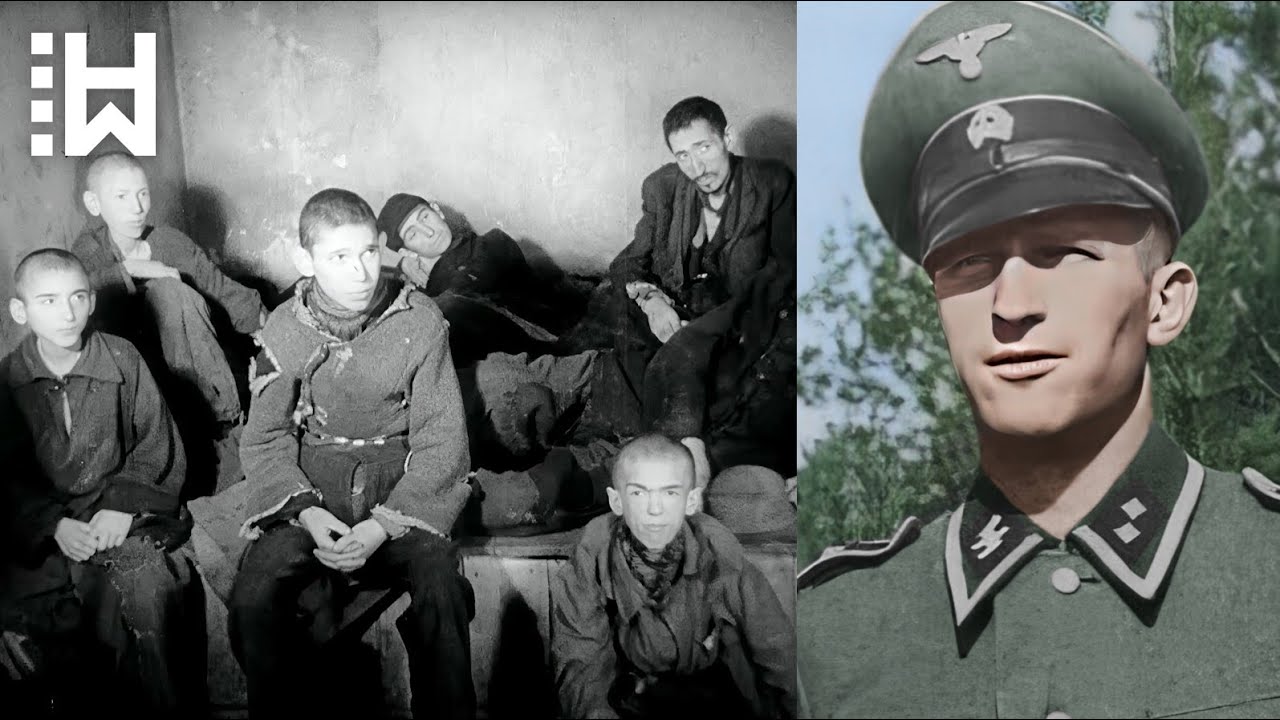
One perpetrator was Siegfried Graetschus, a German SS functionary. He was born on June 9, 1916, in Tilsit, then part of the German Empire. After attending elementary school, he worked as a farmer.
A key part of Nazi ideology was defining the enemy and those who posed a threat to the so-called Aryan race. Propaganda promoted the myth of a national community and identified who should be excluded.
Jews were considered the main enemy, but they were not the only group excluded. Others included Roma and Sinti people, homosexuals, Jehovah's Witnesses, and Germans viewed as genetically inferior or harmful to national health, such as people with mental illnesses, intellectual or physical disabilities, epileptics, congenitally deaf and blind persons, chronic alcoholics, and drug users.
While most Germans disapproved of anti-Jewish violence, dislike of Jews was easily stirred up in hard times and extended far beyond the Nazi party faithful. The majority of Germans at least passively accepted discrimination against Jews.
Propaganda campaigns created an atmosphere tolerant of violence before new measures against Jews were introduced. This propaganda also prepared the German population for harsher measures, including mass deportations and eventually genocide, in which Siegfried Graetschus played an important role.
In 1935, he joined the SS, and one year later he joined the Nazi Party. From 1939, the SS assumed responsibility for solving the so-called Jewish question, which culminated in 1941 when the leadership planned, coordinated, and directed the so-called Final Solution.
That solution was the genocide of European Jews during World War II, also known as the Holocaust. SS officers such as Siegfried Graetschus were directly responsible for the management of concentration camps, where millions of Jews were murdered by poison gas.
Graetschus first served in Sachsenhausen camp, located north of Berlin. The camp held Jews, homosexuals, Jehovah's Witnesses, Roma and Sinti people, and later Soviet civilians.
One of the camp's most prominent prisoners was Yakov Dzhugashvili, Joseph Stalin's son, who died at Sachsenhausen in 1943 after his father refused to make a deal to secure his release.
After World War II began on September 1, 1939, Graetschus started to work for the Nazi Euthanasia program code-named T4. This was the systematic murder of institutionalized patients with disabilities in Germany.
Patients were transported by bus or rail to six killing centers, where they were murdered. The Nazis gassed, shot, or killed by lethal injection those deemed unworthy of life, including residents of welfare institutions, some concentration camp inmates, the chronically sick, the mentally and physically disabled, homosexuals, and even sick German soldiers.
Graetschus worked in the Grafeneck, Brandenburg, and Bernburg killing centers. His duties included moving murdered victims from the gas chambers to the crematoria.
The T4 program predated the Holocaust by approximately two years. Historians estimate that the program claimed the lives of 250,000 men, women, and children.
In the fall of 1941, Nazi Germany implemented a plan to systematically murder the 2 million Jews living in German-occupied Poland. The plan was code-named Operation Reinhard, and as part of it, three killing centers were established: Belzec, Sobibor, and Treblinka.
Construction of Belzec, the first killing center to implement Operation Reinhard, began in November 1941. During the experimental phase of the camp's operation, a confiscated post office vehicle was transformed into a mobile gas chamber, which was used to murder people.
However, the killing process often failed to complete quickly, inflicting horrific suffering on victims as they suffocated. Commandant Christian Wirth ultimately decided not to use it more widely, deciding that stationary gas chambers would be opened in Belzec.
Beginning in March 1942, Jews from various parts of the General Government, an annexed territory of Poland run by German authorities, were deported to Belzec. There they were murdered in gas chambers with carbon monoxide gas generated by large diesel engines.
The authorities at Belzec consisted of a small staff of 20 to 30 German SS and police officials. Between March and December 1942, when the last transport arrived, the Germans deported approximately 434,500 Jews and an undetermined number of Poles and Roma people to Belzec, where they were killed.
When the camp was liquidated in June 1943, Jewish forced laborers were either shot or deported to the Sobibor killing center to be gassed. Belzec was the third deadliest extermination camp, exceeded only by Treblinka and Auschwitz.
Only seven Jews performing slave labor with the camp's Sonderkommando survived World War II. The lack of viable witnesses able to testify about the camp's operation is the primary reason Belzec is little known.
After the Belzec camp was dismantled, the Germans plowed over the site. They built a manor house and planted trees and crops to disguise the area as a farm. A former auxiliary police guard was placed on the site to farm the property to further camouflage it.
Siegfried Graetschus then briefly served in Treblinka extermination camp, which was constructed in the summer of 1942. It was the third killing center after Belzec and Sobibor established by Operation Reinhard authorities.
Deportations to Treblinka came mainly from the ghettos of the Warsaw and Radom districts in the General Government and continued until the spring of 1943. Most prominent among the deportations were the approximately 7,000 Jews transported from the Warsaw Ghetto after its liquidation following the Warsaw Ghetto Uprising.
By the time the Treblinka killing center was dismantled in the fall of 1943, camp personnel had murdered an estimated 925,000 Jews, as well as an unknown number of Poles, Roma people, and Soviet prisoners of war. As with Belzec, all traces of the camp's existence were destroyed.
Lupine flowers were sown onto the grounds, and an ethnic German farmer was installed on the property to camouflage the reality of what had occurred there.
In August 1942, Siegfried Graetschus was deployed to the Sobibor extermination camp. There he was promoted to SS Obersturmführer and commander of the 90 to 120 Trawniki men, Eastern European collaborators trained in the SS camp at Trawniki.
These men, who guarded the camp, were considered difficult to manage and unreliable. Graetschus succeeded Erich Lachmann, an alcoholic, thief, and mentally handicapped SS functionary.

German SS and police officials conducted deportations to Sobibor between May 1942, when regular gassing operations began, and the fall of 1943. Most Jews brought to Sobibor were immediately gassed by carbon monoxide piped into the gas chambers from an engine.
About 250,000 victims were murdered in this killing center. Approximately 50 German and Austrian personnel served at the site, and according to survivors, they were generally of lower middle class backgrounds.
Female local civilians from the village of Sobibor were often employed in the camp as housekeeping staff and cooks. These civilians had economic incentives for the camp's existence, and it is believed they also knew what was going on inside.
The Germans constructed Sobibor as a rectangle, 1,312 by 1,969 feet. A double barbed wire fence woven with tree branches surrounded the perimeter, intended to hide the view of what was inside.
The camp had two side-by-side gates, one for trains and another for foot traffic and vehicles. The Nazis paid special attention to the front compound, which consisted of living quarters and recreational buildings for camp personnel.
SS officers lived in cottages with colorful names, which helped conceal the purpose of the camp from new arrivals who arrived on the adjacent ramp. When transports of 40 to 60 freight cars arrived at the Sobibor railway station, only 20 cars at a time were taken into the camp, while the rest of the victims remained locked in the rail cars.
Victims were brought into the so-called arrival area, where an SS man would give a speech welcoming them, saying they had reached a transit camp on their way to labor camps. They were told that before the next part of their journey, they were to take showers, have their clothes disinfected, and get a meal.
Men and women were then separated, and children were sent with the women. The Nazis ordered the victims to remove their clothing and hand over their valuables. The Jews were then marched on the run to the gas chambers.
The honking of geese would obscure the cries of the victims from those still sitting in the locked rail cars as they were beaten, screamed at, and had warning shots fired at them. About 450 to 550 Jews were forced into the chambers at a time.
The gas chambers were sealed once the maximum number of victims was inside, and poisonous gas was piped in. Within 20 to 30 minutes, all those inside were dead. Those too ill, weak, or elderly to make the walk to the gas chambers were shot in an open pit.
SS personnel working at Sobibor enjoyed privileges such as higher pay and regular visits home. Every three months, they could visit their families for two weeks.
The SS also stole possessions of the victims, including gold, food, hair, and other valuables. Guards would even take toys from murdered children back home to their families.
Camp commandant Franz Reichleitner tolerated this plunder among his SS men, but not among camp inmates and Trawniki men. In one case, Reichleitner investigated a theft and then had three Jews and two Trawniki men shot. The man who shot them was Siegfried Graetschus.
Between transports, SS personnel played music and enjoyed card and board games. All of this took place in a camp where thousands of people were being murdered.
The camp's personnel consisted of barbers and butchers. One guard had owned a photo store in Weimar, and there was even a champion boxer who counted how many whiplashes it took for him to kill a Jew. He had a special heavy whip made for him. As an award, personnel had an official trip to Berlin and Potsdam.

During the year and a half that Sobibor was operational, several attempts were made by prisoners to escape. On one occasion, when 72 Dutch Jews were organizing an escape and were betrayed by a capo, they were executed on the order of Johann Niemann, the camp's deputy commander.
Afterward, in the summer of 1943, rumors began to circulate that Sobibor would soon cease operations, and prisoners understood this would mean certain death for all of them. The Sobibor prisoners knew this because Belzec prisoners, who did the same work they did, had sewn messages into their clothing before they were killed by Sobibor guards who had shot them the same day they arrived at the camp.
The next day, the Sobibor prisoners found all their clothes full of blood. Haim Engel, a Polish Jewish prisoner, found a note in a pocket which said, "We worked at Belzec for 1 year and did not know where we would be sent next. They said it would be Germany. Now we are in Sobibor and know what to expect. Be aware that you will be killed also. Avenge us."
In September 1943, 20 Jewish Red Army prisoners of war, soldiers who had the necessary expertise to pull off an escape, arrived at Sobibor on a transport from the Minsk ghetto and were selected for labor. One of them, Alexander Pechersky, would become a leader of the revolt, which began late in the afternoon on October 14, 1943.
The targets were carefully selected, and the first person to be assassinated by the prisoners was deputy commander Johann Niemann, the highest-ranking SS officer on duty that day. Another man executed was Siegfried Graetschus, commander of the Trawniki guards.
On October 14, 1943, the conspirators lured Graetschus to the tailor's workshop. The camp prisoner Arkady Weispapier, a former sergeant in the Red Army, and Paul Yehuda Lerner had been instructed by the military head of the underground committee, Alexander Pechersky, to eliminate Graetschus.
When Siegfried Graetschus entered the workshop, he stopped at the door and tried on a coat that the tailors had made for him. Arkady Weispapier stepped out from behind the curtain, walked past Graetschus to the door, turned around, and hit him on the head with the sharp edge of an axe.
Graetschus let out a scream, but because the blow was obviously not forceful enough, he did not immediately fall to the ground. Then Lerner came at him and buried the axe into his skull, splitting it open. Graetschus was dead before he hit the floor.
Weispapier then took the gun from his holster and pocketed his papers. The tailors dragged the body away from the door and covered it with clothes.
At that moment, the Ukrainian guard Ryklat entered the workshop. He bumped into the pile of clothes under which Graetschus was lying, bent down, and asked what that was. The tailors panicked, but Lerner and Weispapier kept their cool and killed the guard with their axes as well.
Lerner took his pistol, and they reported to the military leader, Alexander Pechersky, that they had completed their assignments.
Another of the targets was Rudolf Beckmann, who was to be killed by two inmates, but at the last moment one of them got scared and did not want to go. Chaim Engel, the previously mentioned Polish prisoner, knowing there was no turning back because too many Germans were dead, volunteered to kill Beckmann in his office.
Chaim and a Kapo named Pozhicki went to the administration building where they found Beckmann behind his desk. While Pozhicki restrained Beckmann, Engel stabbed their overseer with a bread knife and with every stab he cried, "This is for my father, for my brother, and for all the Jews you killed."
When Beckmann was dead, the two, not having enough time to better hide his body, pushed Beckmann under his desk and took his rifle. In total, 11 SS officers were killed by the rebels.
Chaos then took over. The prisoners had to escape by climbing over a barbed wire fence or by running out of the main gate through a minefield under heavy machine gun fire. Some stepped on mines. Some gave up and did not run at all.
Approximately 300 prisoners were able to escape, but most of those were chased down and killed. Those prisoners who had not joined the escape were killed as well. But some 50 of the escapees did survive the war, among them Arkady Weispapier and Yehuda Lerner.
After the war, Lerner recalled how a Polish train worker told them that they were bound for Sobibor to be cremated. However, nobody believed him. The occupants of Lerner's railcar had opened a hole in the bottom of the car to use as a toilet and could have escaped through it, yet nobody did because they could not believe they would be killed when they arrived at the camp labeled Sobibor. It was too late.
After the prisoner revolt, SS chief Heinrich Himmler ordered that Sobibor camp be closed. There were no tears shed for Siegfried Graetschus.