For nearly eight decades, one question has haunted historians, survivors, and ordinary readers alike: who told the Nazis where Anne Frank was hiding? After more than 75 years of speculation, dead ends, and carefully kept secrets, a team of cold case investigators believes it finally has an answer.
Anne Frank was 15 years old when she died in the Bergen-Belsen concentration camp in 1945. The diary she left behind became the most intimate and widely read first-hand account of Jewish life under Nazi occupation.
In July 1942, the Frank family went into hiding in a concealed annex behind a movable bookcase at 263 Prinsengracht in Amsterdam. They were joined by four others, making eight people in total, all living in secret and completely dependent on a small group of trusted helpers who brought them food and supplies.
They lived this way for over two years, staying silent during business hours and surviving on rations, fear, and the hope that the war would end before they were found. Anne spent those years writing in her diary, documenting everything from her frustrations with the cramped quarters to her dreams for the future.
On August 4, 1944, just months before the liberation of the Netherlands, the Nazi security service raided the annex. All eight people were arrested and deported to concentration camps. Anne and her sister Margot died of typhus at Bergen-Belsen in early 1945. Their mother had already died at Auschwitz. Only Otto Frank survived.
The raid had clearly been the result of a tip. Someone had told the Nazis exactly where to look. The question of who made that call haunted Otto Frank for the rest of his life, and it haunted Dutch historians long after he was gone.
For decades, suspicion fell on a warehouse worker named Willem van Maaren, a known thief who crept around the buildings at odd hours, left objects on desk edges to detect nighttime movement, and asked questions about the sounds coming from the annex. He was investigated twice, in 1948 and again in 1963, but nothing was ever proven.
Anti-Nazi in his political leanings and hiding his own son from German work duty, van Maaren was ultimately ruled out by most serious investigators, though the whispers never fully went away.
In 2016, a team of more than 20 researchers led by a Dutch filmmaker and a retired FBI agent named Vince Pankoke set out to crack the case using modern investigative techniques. Over the course of six years, they examined around 40 suspects.
They used computer algorithms to map connections between individuals, something that would have taken human researchers thousands of hours to do manually. They dug through wartime archives, cross-referenced records, and followed threads that previous investigators had either missed or deliberately avoided.
The team eventually zeroed in on a man named Arnold van den Bergh, a Jewish notary and prominent figure in Amsterdam's wartime Jewish Council. The Council was a body the Nazis forced into existence to implement their policies within Jewish communities.
It was a brutal arrangement that put Jewish leaders in an impossible position, forcing them to carry out orders that harmed their own people in exchange for some degree of protection for themselves and their families. When the Council was disbanded in 1943, its members were largely sent to concentration camps.
Van den Bergh, however, was not. He remained in Amsterdam living relatively openly at a time when that was nearly unthinkable for a Jewish man without some form of extraordinary protection.
The most significant piece of evidence the team uncovered was an anonymous note. Shortly after Otto Frank returned from Auschwitz, someone sent him a handwritten note naming Arnold van den Bergh as the person who had betrayed the annex.

The note suggested that van den Bergh had provided the Nazis with a list of addresses where Jews were hiding in exchange for his own family's safety. This was, the team concluded, the kind of transaction a cornered man might make when every other option had been stripped away.
Otto Frank received that note and kept it secret. He never made it public. The cold case team found the note in the files of a previous investigator, and its existence raised an immediate question: why had Frank stayed silent?
Retired FBI agent Vince Pankoke offered one explanation, suggesting that Frank may have feared the note would further inflame anti-Semitism at a time when Europe was still raw with it. There was also another reason, one rooted in something more personal.
Frank was reportedly not willing to destroy the lives of the betrayer's children for the sins of their father. That instinct toward mercy, complicated as it is, appears to have shaped how the story was told for generations.
There is another layer to the story that comes from an unexpected source. A Dutch writer named Mies Bouwmeester, who was a friend of Otto Frank and close to one of the annex helpers, claimed to know the identity of the betrayer and shared it privately in the year 2000.
She named Willem van Maaren, not van den Bergh, and said that Frank had confirmed the man's guilt after speaking with the Nazi officer who led the raid, an SS officer named Karl Josef Silberbauer. Silberbauer had been located by Nazi hunter Simon Wiesenthal in 1963 and brought before an investigation.
Bouwmeester claimed that Frank quietly spoke with Silberbauer and received confirmation of who had tipped off the Nazis. Whether Bouwmeester was told the truth or whether she was herself misled is impossible to say with certainty.

What the cold case team did notice, however, was a clear shift in Otto Frank's behavior between the 1948 investigation and the 1963 one. In 1948, he was actively pressing to find the betrayer. By 1963, he had gone quiet.
Anne Frank's biographer, Melissa Müller, later told investigator Vince Pankoke that Miep Gies, one of the helpers and a lifelong friend of Frank, had been a very difficult interview and that Müller strongly suspected both Miep and Otto knew more than they were saying. It seemed, as Müller put it, less like a mystery unsolved and more like a secret well kept.
Not everyone accepted the cold case team's finding about van den Bergh. Dutch academics pushed back hard. Bart van der Boom from the University of Leiden called the conclusions defamatory nonsense.
Johannes Houwink ten Cate, an emeritus professor of Holocaust and Genocide Studies at the University of Amsterdam, argued that if lists of hidden Jews had existed and circulated, they would have surfaced in historical records long before now. His position was direct: with serious accusations come serious evidentiary requirements.
The Anne Frank House Museum, while impressed with the scope of the investigation, stopped short of endorsing its conclusions. Its executive director, Ronald Leopold, described the findings as a fascinating hypothesis that deserved further research, a careful and measured response. The museum had shared its archives with the team but was not directly involved in the investigation itself.
The cold case team acknowledged they were working largely with circumstantial evidence and that a definitive answer might never be possible. What they offered was the most rigorously constructed theory to date, built on six years of work and a mountain of archival material.
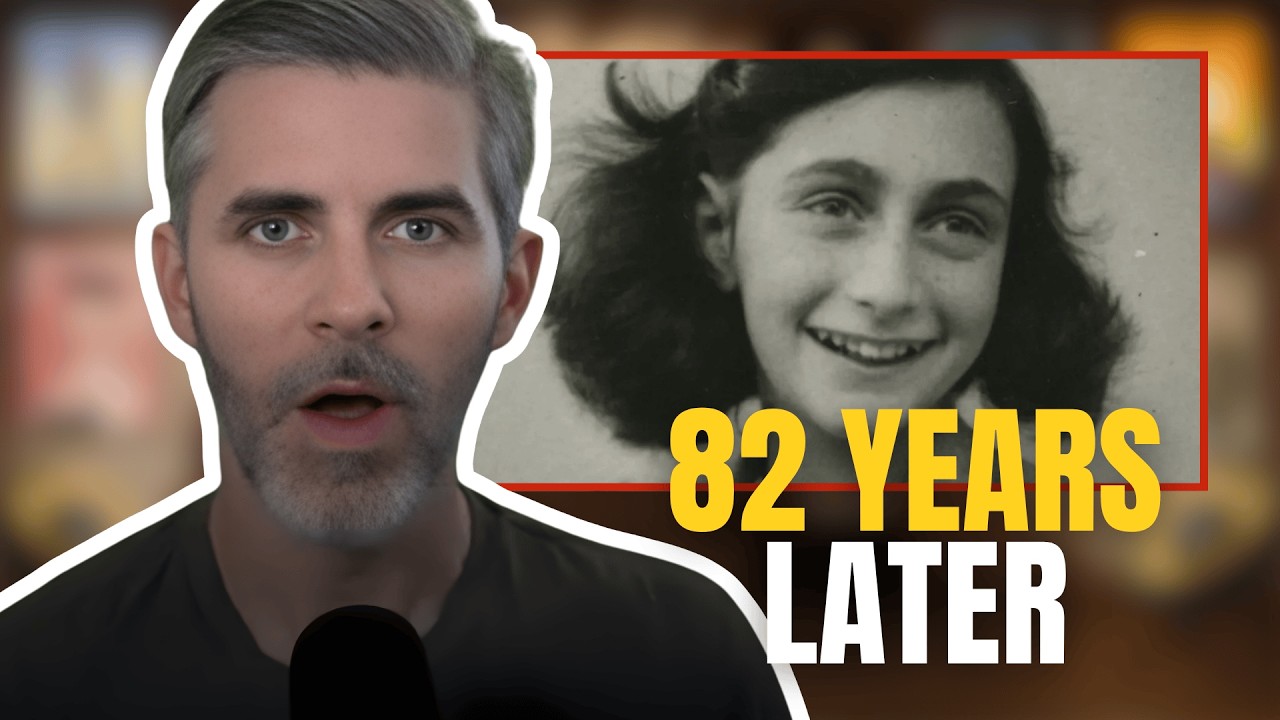
The weight of the story is not just in the name of a suspect. It is in what the search itself reveals about survival, impossible choices, and the lengths to which ordinary people were pushed under extraordinary evil. After 82 years, the question of who betrayed Anne Frank remains one of history's most painful unsolved puzzles.