In February 1945, the leaders of the United States, the United Kingdom, and the Soviet Union met at Yalta in Crimea to discuss the postwar reorganization of Germany and Europe. One key point of their meeting was that after the war, Nazi leaders would be found and prosecuted.
In November 1945, a tribunal of American, Soviet, British, and French judges and prosecutors in Nuremberg began the trial of senior Nazis. The defendants were accused of crimes against peace, war crimes, and crimes against humanity, including murder, extermination, enslavement, and the deportation of civilian populations.
Less than a year later, on October 1, 1946, the verdicts were delivered. Twelve of the 22 defendants were sentenced to death by hanging. One of them was a man who, during the Second World War, ran a program that involved the deportation of more than 12 million men, women, and children for slave labor, many of them under terrible conditions of cruelty and suffering. His name was Fritz Sauckel.
Ernst Friedrich Christoph Fritz Sauckel was born on October 27, 1894, in the Bavarian town of Hassfurt, then part of the German Empire. He came from a lower middle-class background. His father was a post office employee and his mother was a seamstress.
In 1909, at the age of 15, Sauckel left school without graduating and went to sea in the Norwegian, Swedish, and German merchant marine. When the First World War began on July 28, 1914, the 19-year-old Sauckel was captured when his German cargo ship was stopped in the English Channel on its way to Australia.
From August 1914 until October 20, 1919, he was interned as an enemy alien in France. During this time he studied mathematics, languages, and economics, and began to develop political views, in particular anti-Semitism.
After the First World War ended with Germany's surrender on November 11, 1918, Sauckel initially lived in great poverty as an unskilled laborer and adopted radical views. He claimed that Jews were to blame for his situation and that world Jewry was to be fought.
He worked as an apprentice locksmith and toolmaker in the ball bearing works. In 1919 he joined the German Nationalist Protection and Defiance Federation, the largest and most active anti-Semitic federation in Germany after the First World War. Its members rejected the democratic parliamentary system of interwar Germany, and many eventually joined the Nazi Party.
Sauckel joined the Nazi Party in January 1923 with membership number 1,395. The following year he married Elisabeth Wessel, with whom he had 10 children.
Sauckel steadily rose through the ranks of the Nazi Party in the state of Thuringia. In 1927 he became a Gauleiter, or regional Nazi Party leader, and was a member of the Thuringian legislature from 1927 to 1933.
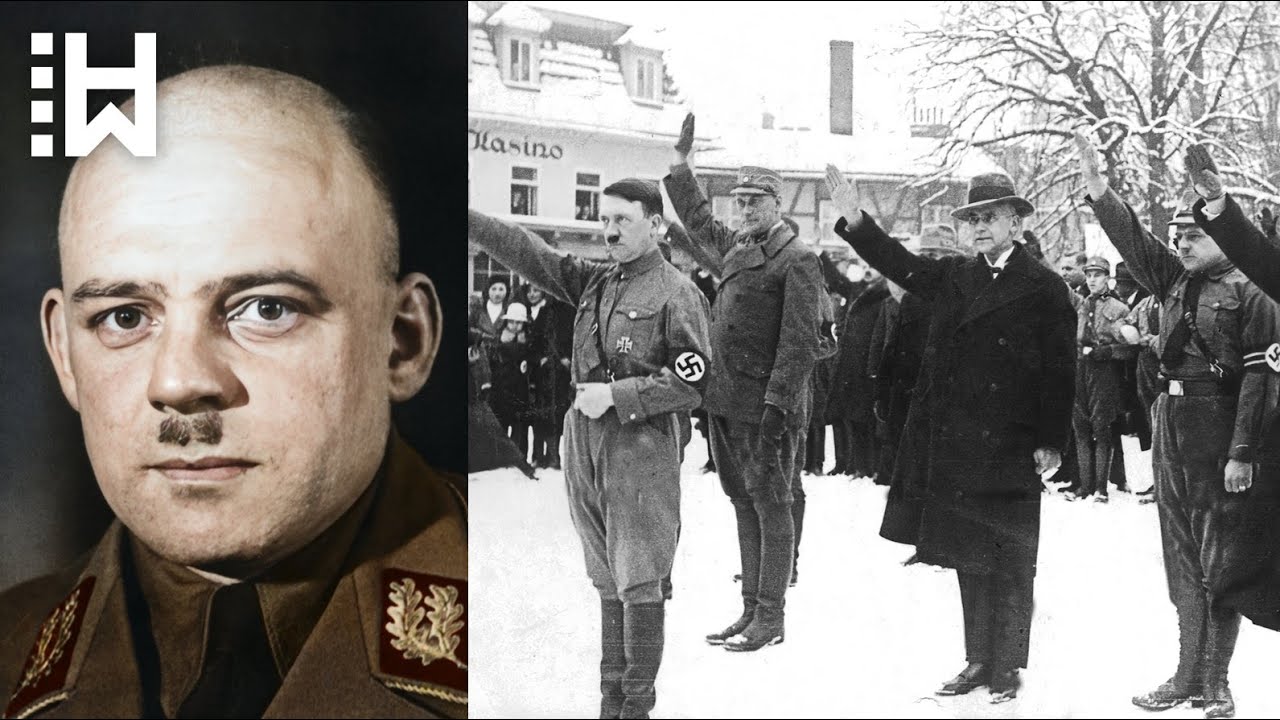
Following the July 31, 1932, Thuringia state election, the Nazis captured 42.5 percent of the votes and 26 seats. Sauckel became the new leading Minister of State as well as Interior Minister, a portfolio that gave him control of all state police and security apparatus.
Adolf Hitler and his Nazi Party came into power on January 30, 1933. On May 5 of the same year, Sauckel was appointed to the new position of Reich Governor of Thuringia, a post created to provide more centralized control over the state governments. He would retain this position until May 1945.
On November 12, 1933, he became a member of the Reichstag, the German Parliament. On September 9, 1934, at the invitation of Heinrich Himmler, the leader of the SS, Sauckel joined the SS as an SS-Gruppenführer, equivalent to major general.
In 1936, Adolf Hitler initiated the Four-Year Plan, a series of economic measures whose primary purpose was to provide for the rearmament of Germany and to prepare the country for self-sufficiency from 1936 to 1940. The plan sought to reduce unemployment, increase synthetic fiber production, undertake public works projects, increase automobile production, initiate building and architectural projects, and further develop the Autobahn.
Within the Four-Year Plan office, Sauckel worked directly under Reichsmarschall Hermann Göring, obtaining and allocating labor for German industry and agriculture. As early as 1937, the Nazis increasingly exploited the forced labor of so-called enemies of the state for economic gain and to meet desperate labor shortages. By the end of that year, most Jewish males residing in Germany were required to perform forced labor for various government agencies.
The Second World War began on September 1, 1939, when Nazi Germany invaded Poland. The last operational Polish unit surrendered on October 6 of that year. The German invasion of France, Belgium, Luxembourg, and the Netherlands began on May 10, 1940, in what became known as the Battle of France. Paris fell to the Germans on June 14, 1940.
Germany's military campaigns created a huge manpower shortage in the German economy, which Nazi authorities filled by conscripting foreign workers. On March 21, 1939, Hitler appointed Sauckel General Plenipotentiary for Labor Deployment, with authority to put under uniform control the utilization of all available manpower, including workers recruited abroad and prisoners of war. Sauckel was instructed to operate within the framework of the Four-Year Plan.
On March 27, 1942, Göring issued a decree as Commissioner for the Four-Year Plan transferring his manpower sections to Sauckel. On September 30, 1942, Hitler gave Sauckel authority to appoint commissioners in the various occupied territories and to take all necessary measures to enforce the decree of March 21, 1942.
Under the authority he obtained by these decrees, Sauckel set up a program for the mobilization of the labor resources available to the Reich. One important part of this mobilization was the systematic exploitation by force of the labor resources of the occupied territories.
Shortly after Sauckel took office, he had the governing authorities in the various occupied territories issue decrees establishing compulsory labor service in Germany. Under these decrees, Sauckel's commissioners, backed by the police authorities of the occupied territories, obtained and sent to Germany the laborers necessary to fill the quotas given to them by Sauckel.

Voluntary numbers were insufficient, and forced civilian labor was introduced within a few months. That real voluntary recruiting was the exception rather than the rule is shown by Sauckel's statement on March 1, 1944, when he said, "Out of 5 million foreign workers who arrived in Germany, not even 200,000 came voluntarily."
The majority of the acquired workers came from the eastern territories, especially Poland and the Soviet Union, where the methods used to gain workers were very harsh. The army was used to press-gang local people, and most were taken by force to the Reich.
In addition to forced civilian laborers, Sauckel authorized the use of prisoners of war. Conditions of work were extremely poor and discipline severe, especially for concentration camp prisoners. All of the latter were unpaid and provided with starvation rations, barely keeping those workers alive.
Such slave labor was widely used in many German industries, including coal mining, steel making, and armaments manufacture. For prisoners, the ability to work often meant the potential to survive, and those deemed physically unable to work were often the first to be killed.
The Nazis also pursued a conscious policy of annihilation through work, under which certain categories of prisoners were literally worked to death. Camp prisoners were forced to work under conditions that would directly and deliberately lead to illness, injury, and death. At the Mauthausen concentration camp, for example, emaciated prisoners were forced to run up 186 steps out of a stone quarry while carrying heavy boulders.
The use of forced and slave labor continually increased throughout the war, especially after Albert Speer, the Reich Minister of Armaments and War Production, brought about the formation of the Central Planning Boards in April 1942. These boards determined the labor requirements of industry, agriculture, and all components of the German war economy, and requisitioned that labor through Sauckel's office.
Sauckel had overall responsibility for the slave labor program and was constantly in the field supervising the steps being taken. He was aware of the ruthless methods being used to obtain laborers and vigorously supported them on the ground that they were necessary to fill the quotas.
Sauckel's regulations also provided that he was responsible for transporting the laborers to Germany, allocating them to employers, and taking care of them, and that other agencies involved in these processes were subordinate to him. He was informed of the bad conditions that existed, and said, "All the men must be fed, salted, and treated in such a way as to exploit them to the highest possible extent at the lowest conceivable degree of expenditure."
On one occasion, at a meeting of high party officials, he explained, "If we lose this war, not only will they hang me, but they will also hang you. This can be taken for granted."
It has been estimated that over 12 million such laborers were eventually brought forcibly to Germany to work, often by brutal coercion. Millions of them died. At the peak of the slave labor program, forced laborers constituted 20 percent of the German workforce.
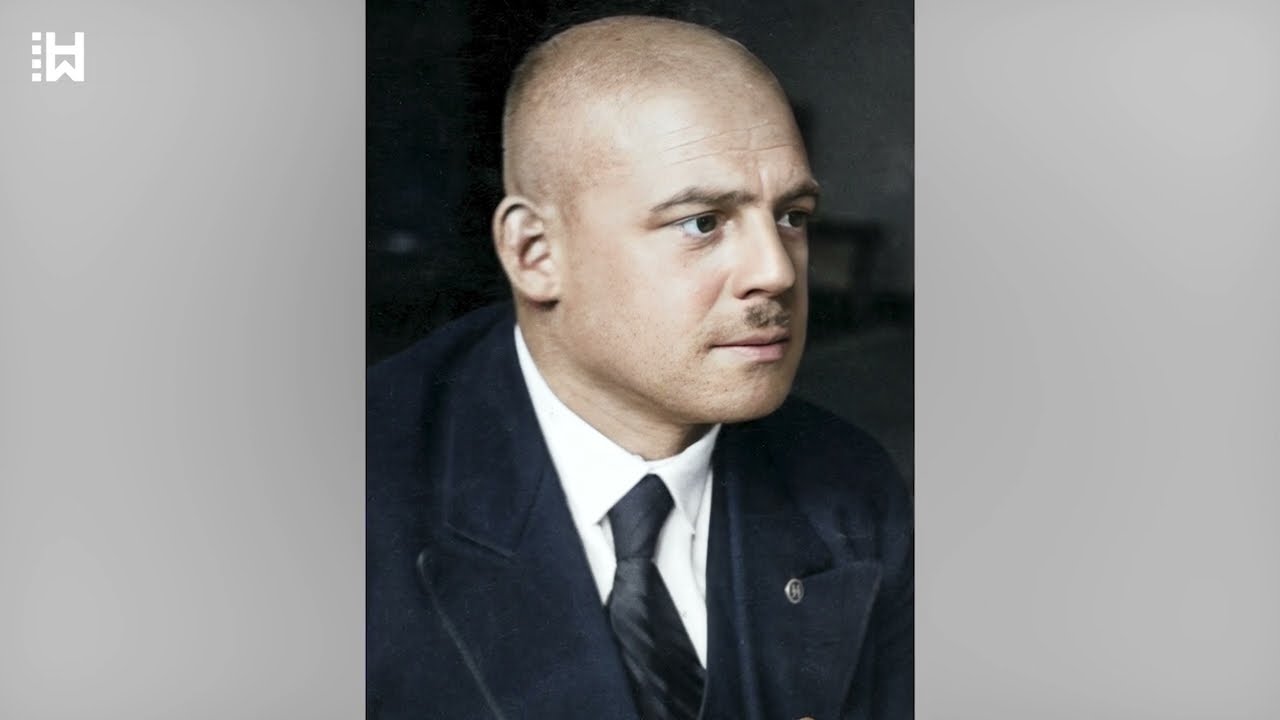
On July 1, 1944, following the division of the Prussian province of Saxony, Sauckel was named supreme president of the government district of Erfurt, which became part of Thuringia.
In the autumn of 1944, as Allied armies crossed the borders into Germany, the Nazi regime conscripted German youths under 16 to defend the Reich alongside seniors over the age of 60 in the militia units of the Volkssturm, meaning "people storm." Poorly equipped and inadequately trained, thousands of youths fought and died for the German war effort even as defeat had become inevitable.
On September 25, 1944, Sauckel was named leader of the Volkssturm forces in his district. One month later, in honor of his 50th birthday and for his contributions to the Reich, he was given a cash award of 250,000 Reichsmarks, equivalent to almost 2.4 million United States dollars today.
On April 10, 1945, only a day after declaring Weimar a fortress city and exhorting his Volkssturm forces to resist the approaching American army, Sauckel fled the city by car. The Second World War in Europe ended on May 8, 1945. Four days later, Sauckel was arrested in Salzburg by members of the US Army Counter Intelligence Corps.
Justice finally caught up with Sauckel at the Nuremberg trials, held against representatives of the defeated Nazi Germany. He was convicted of conspiracy to commit crimes against peace, planning, initiating, and waging wars of aggression, war crimes, and crimes against humanity.
Robert H. Jackson, the chief United States prosecutor at Nuremberg, told Sauckel that he was the biggest and cruelest slave owner since the Egyptian pharaohs. Sauckel denied that the labor employment was slave labor, or that it was common to deliberately work people to death through extermination by labor or to mistreat them. He argued that he was not responsible for these excesses in the administration of the program, which he described as only an economic process for supplying labor, and that he was constantly urging humane treatment.
On October 1, 1946, the International Military Tribunal found Fritz Sauckel guilty of war crimes and crimes against humanity and sentenced him to death by hanging. Sauckel had not expected a death sentence and broke down in tears. He claimed that he had never been a cruel person and thought that translation errors of his statements were the cause. He also could not comprehend that Albert Speer, the co-defendant Reich Minister for Armaments and War Production, at whose request Sauckel had supplied ever more new batches of forced laborers, received only a prison sentence.
Sauckel was executed on October 16, 1946, by American Army Sergeant John C. Woods, who had no documented prewar experience as a hangman. It is believed that he was deliberately bad at his job to make the 10 Nazi war criminals he executed that day suffer, as they all died a long, agonizing death. The Nazis executed by Sergeant Woods fell from the gallows with a drop insufficient to snap their necks, resulting in death by strangulation that in some cases lasted several minutes.
When summoned for his last walk, Sauckel refused to dress, so he went to the gallows wearing a sweater with no coat and looking wild-eyed. He cried, "I die an innocent man. My sentence is unjust. God protect Germany. May it live and one day become great again. God protect my family. I pay my respects to US soldiers and officers, but not to US Jews."
Afterward, he was hanged, and there was a loud groan under the gallows pit as the noose snapped tightly under the weight of the body. Because the trapdoor was too small, he suffered painful head injuries, and as he fell with insufficient force to snap his neck, his convulsions lasted 14 long minutes before he died. He was 51 years old.
His corpse was cremated and the ashes scattered in the Wenzbach, a small tributary of the River Isar. Sergeant Woods later insisted he had performed all executions correctly and stated he was very proud of his work. Joseph Malta, the US Army military policeman who held the noose as Woods carried out the executions, said 50 years later, "It was a pleasure doing it. I'd do it all over again." There were no tears shed for Fritz Sauckel.