CHICAGO — Al Capone, the most feared gangster in American history, controlled the police, the politicians, the judges, and every square inch of Chicago’s criminal underworld. But there was one man he would not touch. One man whose territory the Chicago Outfit avoided for nearly two decades.
One man who made the most violent mob boss in the country do the math and walk away. His name was Theodore “Teddy” Roe, and the story of how he held the South Side against the Italian mafia is the most dangerous story in Chicago history that few have ever heard.
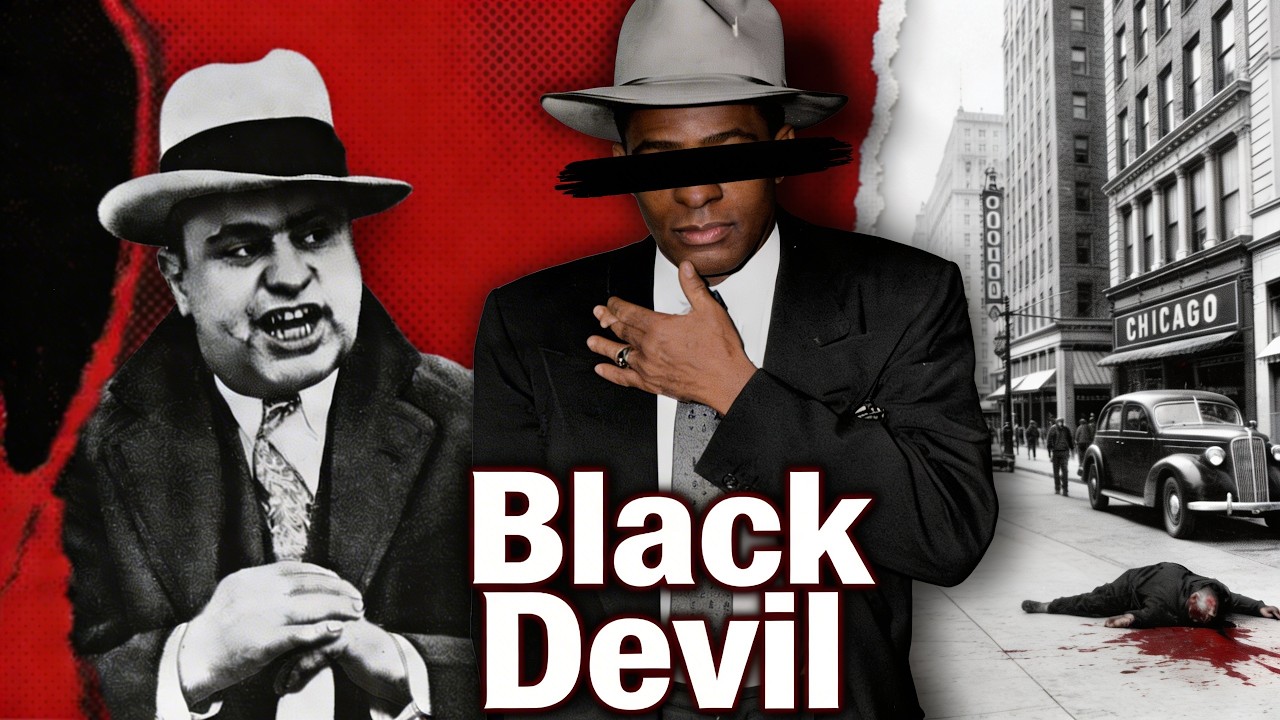 Roe was born on August 26, 1898, in Galliano, Louisiana, deep in the bayou, as far from power as a human being could get. His father was a sharecropper, working another man’s land and staying poor no matter how hard he labored. The family eventually moved to Little Rock, Arkansas, where Roe never received a single day of formal education.
Everything he learned, he taught himself or learned on the street.
As a boy, he worked for a tailor, running errands and learning to sew. That skill would follow him his entire life. Years later, when he was the most powerful black racketeer in Chicago, with a wardrobe that made movie stars jealous, people would ask where he got his suits made.
He made them himself. The man could sew a suit by hand and shoot a mafia enforcer in the face on the same day.
Roe had another quality that set him apart from almost every other black man in his era. His complexion was light enough that in certain rooms, certain settings, people assumed he was Italian or Mediterranean or anything other than what he was. In Jim Crow America, that ability was a weapon.
It gave him access to places, information, and conversations that no one expected a black man to hear.
By his early twenties, Roe was bootlegging, building a reputation as a man who was reliable, tough, and not to be trifled with. When he married Carrie in 1923, he tried to go straight. He moved to Detroit and worked in an automobile plant.
But the job did not last. He was laid off. With no money, no prospects, and no education, Roe did what millions of black Americans had done before him.
He headed for Chicago.
He arrived on the South Side in the late 1920s and walked into a world that would make him a king. In the 1930s, in the neighborhood called Bronzeville, there was an underground economy bigger than most legitimate businesses in the city. It was called the policy game, a street lottery.
You paid a nickel and you picked your numbers. If your numbers hit, you got paid. It was illegal, wildly popular, and it generated millions of dollars every single year.
The men who ran the policy wheels were called the policy kings. In an era when segregation locked black Americans out of banks, out of business loans, and out of the legitimate economy entirely, the policy kings were the community. They were the employers.
They were the banks. They were the ones who funded churches, opened department stores, paid for funerals, and kept the South Side alive. The famous writer Richard Wright once said of them, “They would have been steel tycoons, Wall Street brokers, and automobile manufacturers had they been white.”
Roe started at the bottom. He was hired as a runner, a salesman who walked the streets collecting bets. But his boss, the biggest policy king in Chicago, saw something in him immediately.
Not just intelligence, not just loyalty, but controlled, purposeful, terrifying violence. Roe became the enforcer first, the fixer, the man they sent when a rival wheel was stealing customers, the man they sent when a collector was skimming. The man they sent when somebody needed to understand, physically, painfully, permanently, that the South Side had rules and those rules were not suggestions.
He climbed from runner to enforcer to lieutenant to partner. And by the time he reached the top, every hustler, every bookie, every street operator on the South Side knew two things about Teddy Roe. He would give you the shirt off his back if you were in need, and he would put you in the ground if you crossed him.
There were stories, the kind that do not make the newspapers but travel through neighborhoods like electricity through a wire. Stories about what happened to men who tried to cheat Roe’s operation. Stories about men who had walked into meetings with Roe confident and walked out missing teeth, or did not walk out at all.
By the mid-1940s, the policy game on the South Side was generating over $25 million a year. And Teddy Roe had become a policy king himself, running his own wheels, commanding his own territory, building his own empire inside the empire. Al Capone knew about the policy game.
Of course he did. Capone controlled Chicago. He controlled the police, the politicians, the judges, the unions, the bootlegging, the gambling, everything.
His organization, the Chicago Outfit, was the most powerful criminal enterprise in America.
Capone had taken over the North Side by machine-gunning seven men in a garage. He had taken over Cicero by sending 200 armed men into the streets on election day. He had taken over the labor unions by bombing businesses that refused to comply.
Al Capone did not ask permission. Al Capone took what he wanted from everyone except the South Side. Capone sent scouts into the black belt.
They came back with reports, and the reports all said the same thing. The men who ran the policy game were not soft. They were not businessmen pretending to be tough.
They were armed, organized, deeply embedded in a community that would die for them, and led by a man, Teddy Roe, who had a reputation for settling disputes with a pistol, not a handshake. Capone’s men had seen what happened to people who tried to muscle in on Roe’s territory. They had heard what Roe did to collectors who betrayed him.
 They knew that Roe’s crew included off-duty Chicago police officers who were loyal to him, not to the department. And they knew that starting a war on the South Side meant fighting in neighborhoods where every face was hostile, every alley was a trap, and the man at the top would rather die shooting than surrender a single dollar.
So Capone did something he almost never did. He backed off. His men would stay out of the South Side.
The policy racket belonged to the black community. In exchange, the policy kings would stay out of the beer and liquor business. Capone controlled booze.
The kings controlled numbers. Each side stayed in its lane. But make no mistake about what that deal really was.
That was not a partnership between equals. That was not diplomacy. That was Al Capone, the most feared man in America, looking at Teddy Roe and deciding that the cost of war was too high.
That deal held for nearly 20 years, through Capone’s reign, through his imprisonment, through the transition of power to the men who came after him. For two decades, the South Side of Chicago was the one piece of territory that the Italian mafia did not control. And then Capone was gone.
And the new generation, younger, hungrier, and stupid enough to think they were tougher than the men who came before them, decided to break the old deal. They had no idea what they were walking into.
In 1946, the Italian mafia made its move. The new leadership of the Chicago Outfit had looked at the numbers. $25 million a year flowed through the South Side.
Pennies and nickels from the poorest people in Chicago added up to a fortune. All of it was controlled by black men with no protection from the outfit, no political allies powerful enough to stop a takeover, and no military force that could match the full weight of the Italian mafia. The boss sent his most ambitious soldier, a young killer who had learned about the policy game while sharing a prison cell with a policy king who had foolishly trusted him.
The first move was a kidnapping. They snatched the biggest policy king in Chicago, grabbed him off the street, and held him for five days with tape over his eyes and cotton in his ears. The ransom was $100,000 in cash and a promise to hand over the entire policy operation.
Teddy Roe paid the ransom. His boss was released, but the message was clear. The outfit was taking over.
Pay the street tax. Hand over control or die. The policy king who had been kidnapped took his money and fled to Mexico.
His brother went with him. They were never heard from in Chicago again.
Then one by one, every other major policy operator on the South Side made the same choice. Some paid the tax. Some handed over their wheels.
Some simply vanished, packed a bag in the middle of the night and drove until they hit a state line. Within months, practically every black numbers operator in Chicago had either surrendered or disappeared. Every single one except Teddy Roe.
When the outfit came to him with the same demand, pay the tax, hand over control, or face the consequences, Roe did not negotiate. He did not ask for terms. He did not stall for time.
He said no. Flat, final, absolute.
And then he did not run. He did not hide. He did not leave Chicago.
He took over everything. Every wheel that the fleeing policy kings had abandoned, Roe absorbed. Every territory they had left behind, Roe claimed.
Every customer who had lost their operator, Roe served. He did not shrink. He expanded.
At the exact moment when the Italian mafia was trying to crush the black policy game, Teddy Roe became bigger than he had ever been. His operation was pulling in over a million dollars a year, all of it in pennies, nickels, and dimes.
The outfit sent enforcers into the black wards. They bombed Roe’s house. They fired shots at his wife and children.
They beat up his collectors on the street. They took over gambling parlors. They set up their own bookie joints in taverns, barber shops, even church parking lots, anywhere they could plant a flag in territory that had belonged to black operators for decades.
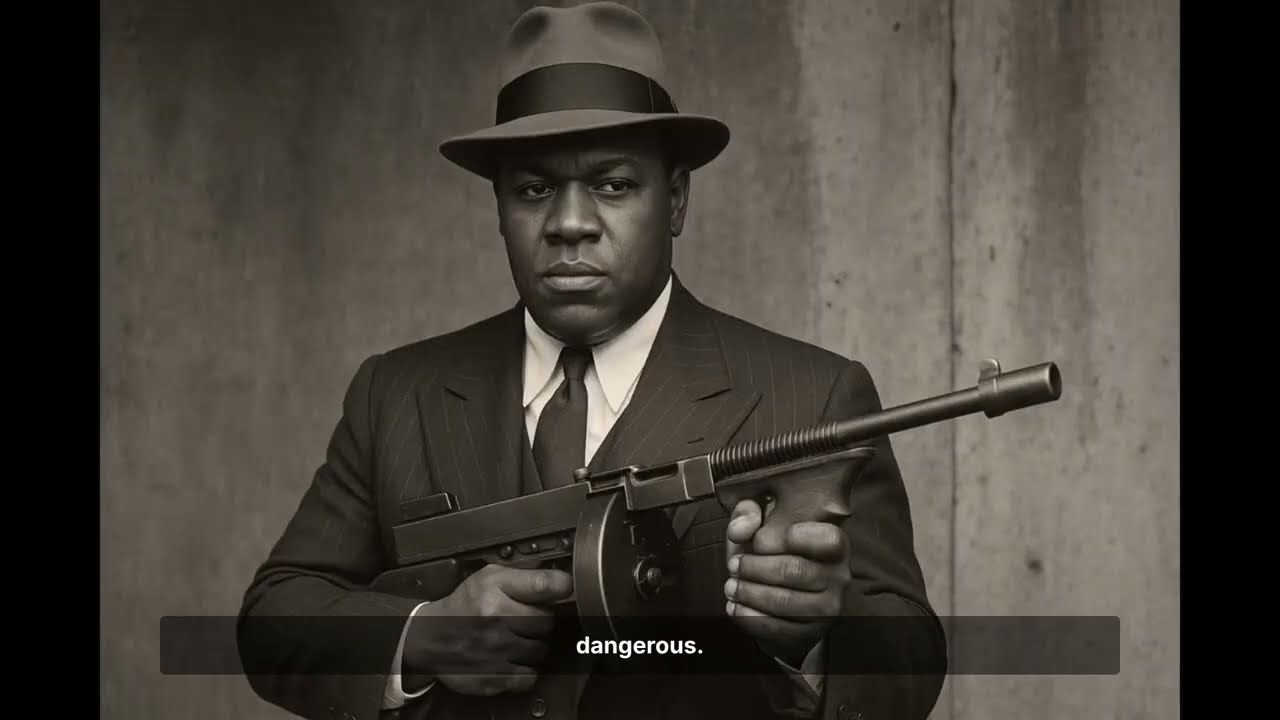 In six months, 12 Italian mob soldiers and an unknown number of Roe’s men turned up dead on Chicago streets and in its back alleys. This was a full-scale gang war, the most powerful criminal organization in America against one black man and his crew. And Roe was holding the line.
Now the Italians understood why Al Capone had stayed away. Now they understood what the old boss had seen and calculated when he looked at the South Side and decided it was not worth the blood. Capone had been smart enough to respect the danger.
These younger men had been arrogant enough to ignore it. They were paying for that arrogance in body bags. Every time they hit him, he hit back.
Every time they took a parlor, he took one back. Every time they sent a message, he sent a louder one.
Finally, the outfit’s top boss tried a different approach. He sat down with Roe personally. No soldiers, no threats, just two men in a room.
The boss offered Roe $250,000 in cash, an astronomical sum. Enough to retire, enough to disappear, enough to live comfortably for the rest of his life. The deal was simple.
Take the money and walk away. Quit the policy rackets. Let the outfit have the South Side.
Roe did not flinch. He did not think about it. He did not ask for a day to consider.
He looked the most dangerous man in Chicago in the eye and said he would die first. If he was going down, he would go down like a man. He said he did not run, and he told the boss to remember that.
In the summer of 1951, the outfit sent a crew to kidnap Teddy Roe. Not to 𝓀𝒾𝓁𝓁 him, to kidnap him the way they had kidnapped his old boss years earlier. Grab him, hold him, squeeze him until he broke.
The crew was led by a made man, a full member of the Italian mafia, sworn in with blood and oaths. He was a soldier, an enforcer, a killer who had been doing the outfit’s dirty work for years. He was also the brother of one of the outfit’s most feared captains.
This was not a low-level thug. This was someone who was supposed to be untouchable.
They set up along a South Side street and flagged Roe’s car down, pretending to be police officers. Roe pulled over. He demanded identification.
Before he could process what was happening, they jumped him. But Teddy Roe was always armed, and Teddy Roe did not freeze. A fight broke out between Roe and the made man.
Punches, grappling, and then a gunshot. Roe pulled his pistol and fired. The made man dropped with a bullet through his head, dead on the street.
Another attacker took a round in the shoulder. The rest of the crew scrambled into their car and fled.
Think about what just happened. In 1951, in Jim Crow America, in a city controlled by the Italian mafia, in a neighborhood where the police worked for the outfit, a black man had just shot and killed a made member of the Chicago mob in a street gunfight in broad daylight and walked away alive. In the entire history of organized crime in America, made men were untouchable.
Killing one was a declaration of war against the entire organization. It had almost never happened, and when it did, the person responsible usually ended up in a ditch within 48 hours.
Teddy Roe ended up in a courtroom charged with murder. His lawyers argued self-defense. They were able to prove connections between prosecutors and the mob, causing key evidence to be thrown out.
He was denied bail six times before and during the trial. The jury acquitted him. When word spread through the South Side that Teddy Roe killed an Italian made man and beat the case, he transcended gangster status.
He became something larger, a symbol, proof that a black man could stand up to the most powerful criminal organization in America and not just survive, but win.
After the killing, the outfit launched a brutal campaign of revenge against every black bookmaker in Chicago. Dozens were shot at, beaten, or driven out of the city permanently. The message was clear.
This is what happens when you associate with Teddy Roe. Roe retreated to his mansion on South Michigan Avenue. He hired bodyguards, off-duty police officers, armed men, a small army stationed around his home at all times.
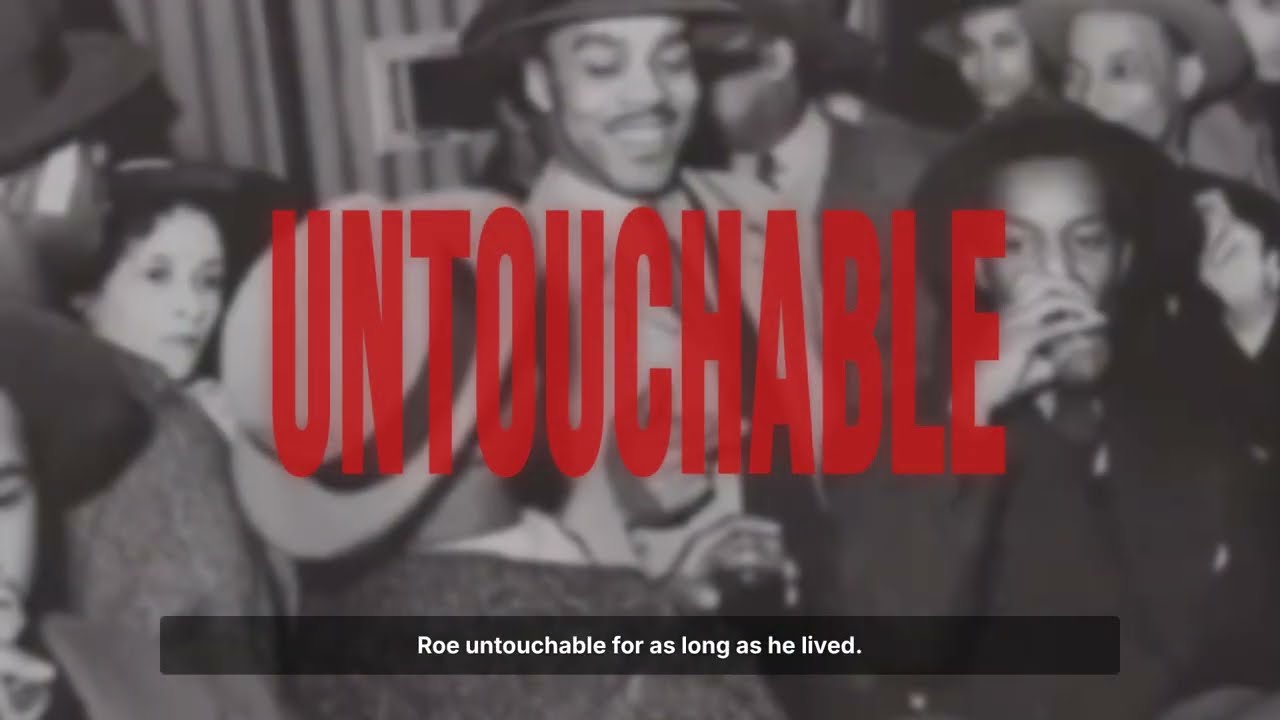 For months, he did not leave. He ran his operation from behind fortified walls, protected by guns and loyalty, waiting for whatever came next.
On August 1, 1952, what came next was not a bullet. Doctors told him he had inoperable stomach cancer. Terminal.
He was dying. Not from the outfit, not from a shotgun, from a disease that no amount of money or firepower could stop. And Teddy Roe made one final decision.
He sent his bodyguards home. Every single one. He dismissed the entire security detail.
He did not need them anymore. He was going to die on his own terms, not behind walls, not surrounded by guards, not hiding.
Three days later, on the evening of August 4, 1952, Theodore “Teddy” Roe put on a three-piece suit, a pressed shirt, and a hat, the same way he had dressed every day of his adult life. The sharecropper’s son, who had taught himself to sew, who had built a million-dollar empire from nickels, who had killed a made man with his own hands and beaten the charge. He dressed himself one last time like the king he was.
He told his wife Carrie he was going out. He walked out the front door of 5239 South Michigan Avenue.
Mafia hit men were already parked on the street. They had been watching, waiting. As Roe approached his car, someone called his name.
Roe. He turned. Five blasts from two 12-gauge shotguns hit him in the back, the jaw, and the face.
He never had a chance to pull his revolver. He died slumped against a tree on the sidewalk outside his own home. He was 53 years old.
His wife heard the gunshots. She screamed his name. No answer.
She opened the door and found him in a pool of blood on the pavement.
The next morning, the Chicago newspapers reported that the king is dead. Teddy Roe was laid out in a casket that cost $5,000. In 1952, that was more than most families earned in a year.
His funeral was the largest for any black person in Chicago since Jack Johnson, the first African-American world heavyweight boxing champion, had died in 1946. Over 6,000 people came to the church on Wabash Avenue. Thousands more lined the streets outside.
Eighty-one cars followed the hearse in a funeral procession that stretched for blocks through the South Side. People wept openly. Strangers held each other.
The minister stood before the mourners and said he was a friend of man and he had a pure heart. No one was ever charged with his murder. Police questioned a dozen high-ranking members of the Italian mafia, including the very men who had orchestrated the takeover of the policy game.
But no charges were filed, no trial, no justice. The outfit had won. After Roe’s death, the Italian mafia seized complete control of the South Side policy racket.
Within a few years, the numbers game became their most profitable operation, bringing in $150 million per year.
The money that had once flowed through black-owned businesses, employed black workers, and funded black institutions was now in Italian hands. The economic backbone of the South Side was broken. The community that Teddy Roe had fought to protect was dismantled.
Not by the police, not by the government, but by the same men who had come for Roe and found one man standing in their way for six years while every other man in the city ran.
And 20 years later, on a federal wiretap, the boss who had ordered Roe’s murder said words that proved even in death, even after two decades, Teddy Roe had earned the one thing the Italian mafia almost never gave anyone. Respect. “I’ll say this, black or no black, that bastard went out like a man.
He had balls.” That was the only time in the history of the Italian mafia that a boss admitted on tape, in his own words, that a black man was tougher than his entire organization.
That was Teddy Roe, the boy who never went to school. The bootlegger who taught himself to sew. The Robin Hood who paid for funerals and hospital bills.
The policy king who killed a made man and beat the murder charge. The man who was offered $250,000 to walk away and said, “I’ll die first.” The man who learned he was dying of cancer, sent his guards home, put on a three-piece suit, and walked out the front door one last time.
They killed him, but they never broke him. And the South Side of Chicago never forgot his name.