For roughly thirty years, Prince Philip, the Duke of Edinburgh and husband of Queen Elizabeth II, spent a great deal of time with a woman thirty-two years his junior. She rode in royal cars. She stood on the balcony of Buckingham Palace on formal occasions. She appeared at private gatherings, public events, and country-house weekends. She eventually attended the two largest funerals the country had seen in living memory.
Her name kept appearing on lists.
According to reports repeated in the British press for years, palace staff eventually coined a nickname for her. It grew out of a habit of Philip's that shows up in almost every account of how he ran his schedule. Whenever someone handed him a guest list to review, for a private or public occasion, formal or otherwise, he would add four words at the bottom. Always the same four words.
And also Penny.
That small administrative gesture is the entire scandal, and its engine. From those four words, the British press built a thirty-year epic about adultery and royal betrayal that no one has ever been able to prove. No photograph, no letter, no witness willing to attach his name to a direct account. No credible evidence of an affair has ever appeared in print.
Keep that sentence in mind, because it will return again and again.
What follows is not really a story about an affair. It is a story about grief, about horses, about a five-year-old girl who died of kidney cancer in 1991, and about what happens when a nation decides that a man and a woman cannot be in a room together for any reason beyond the obvious one.
Before the title Countess Mountbatten of Burma, before the nicknames and the tabloid accounts and the Netflix drama, she was Penelope Eastwood, or "Penny" to everyone who knew her. In 1979, she married a man named Norton Knatchbull, and with that signature she walked through a door most people spend their lives pressing their faces against from the outside.
Understand what marrying Norton actually meant, because the family tree here functions more as a load-bearing wall of the British establishment than as a tree. Norton Knatchbull is the grandson of Lord Louis Mountbatten, and Mountbatten was regarded as an uncle to Prince Philip. Not in the distant once-a-year Christmas card sense, but in the sense that Philip adored the man. Norton is also a cousin of the current king, Charles III. Philip was his godfather. The best man at the 1979 wedding was the Prince of Wales at the time, the man who now wears the crown.
On her wedding day, the Duke of Edinburgh was the groom's godfather, and the future king of England carried the rings down the aisle. Most of us settle for a university friend who forgets half his speech and cries during the toast, then spends the next decade arguing about seating arrangements. She married into the constitutional monarchy.
The friendship people would later find so suspicious did not come from nowhere, and it did not begin with a chance meeting at a horse race. None of it needed an introduction. Penny married directly into the innermost circle of a family of fewer than a dozen people, a family so closed and so wary of outsiders that an ordinary member's social circle could comfortably fit inside a medium-sized elevator. From 1979 onward, she simply existed inside it. In the room, at the table, on the list, and by the terms of a marriage document. All of that destroys the tabloid narrative before it even starts.
That narrative needs Penny to play the interloper, the glamorous stranger who somehow slipped past the guards and sank her claws into a lonely old duke. The documented version is far less dramatic. She married a man whose godfather held the title Duke of Edinburgh at a ceremony where the future king carried the rings, and she spent more than a decade inside that world before anyone raised an eyebrow at her presence.
The press eventually decided her presence required an explanation anyway. No one ever noticed that the explanation had been sitting in the marriage register the whole time, written in ink in 1979, available to anyone willing to visit the records office and look.
Carriage driving deserves its own chapter. None of this makes sense until you accept that Prince Philip loved the sport with a fervor most people reserve for religion, and that the sport resembles almost nothing you are picturing right now. You may imagine a quiet Sunday stroll across a meadow, a picnic basket, perhaps a blanket over the knees. Wrong.
Competitive carriage driving puts a person on a wooden box behind several enormous animals that have not collectively agreed on anything, then drives that arrangement through water, mud, and narrow obstacles at speeds that would make a health and safety inspector lie down from anxiety. Horses are not machines. They have opinions. Each horse weighs half a ton and is perfectly capable of deciding mid-obstacle that today is simply not a work day. The carriage does not glide smoothly either. It slams. Its joints groan, and it throws you in every direction like coins inside a clothes dryer.
This is what occupied the afternoons of a man in his seventies. Not golf, not gardening, not bridge, not any of the gentle pastimes the establishment imagines a royal consort should fill his diary with once the polo years are over.
In 1994, Philip introduced Penny to the sport and began teaching her to drive. That decision put them on the same fields for the next quarter century, and the tabloids have treated it as a pretext ever since rather than as a cause. A shared obsession does something very specific to two people. It gives them a reason to stand in the same weather, at the same events, inside long discussions about axle widths and horse temperaments and why the designer of the third obstacle deserves prison. This partnership lasted for decades. What began as lessons became the kind of shared passion that fills memoirs and consumes lives.
If you have ever loved something trivial, material, and expensive, you already know how it works from the inside. You do not spend time with the people who love it too because you are scheming toward something. You spend it with them because they are the only people on earth whose minds will not wander when you start talking. Philip found someone whose mind did not wander, and the British press spent the next three decades treating that discovery as the opening of a sordid story.
That is the crime.
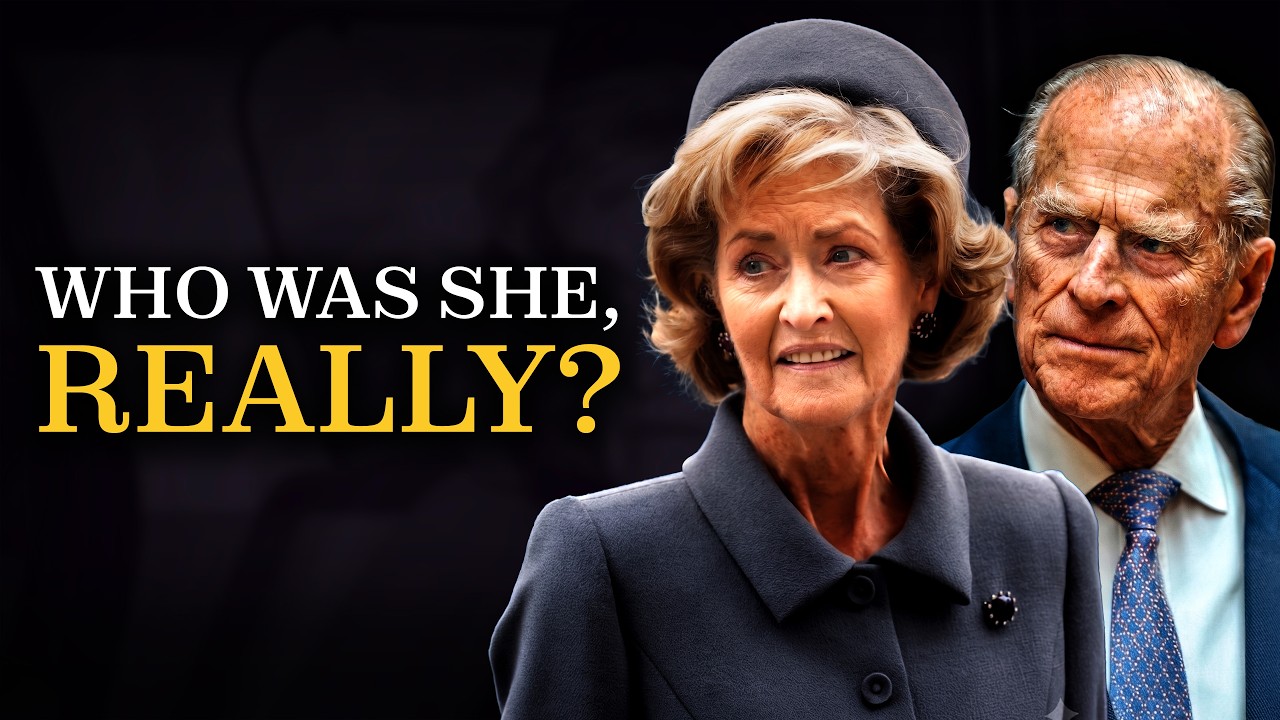
Now the joke stops for a while. On October 22, 1991, Leonora Knatchbull, the daughter of Penny and Norton, died of kidney cancer at the age of five. Every part of this story that follows descends from that date. There is no clever way to phrase that sentence, so I will not try. Five years old. Old enough to have a personality, a laugh you could identify from another room, and favorite things for everything. Kidney cancer took her.
A family the British press had photographed and archived for more than a decade suddenly carried a void that no amount of proximity to the throne could fill. Everything the British press later turned into a thirty-year sex rumor begins here, in the worst room any parent could be asked to stand in. Nothing began with flirtation.
After Leonora's death, Prince Philip began spending much more time with Penny, offering emotional support to a woman who had just buried her daughter. The lessons began in 1994. He handed her the reins of a carriage and taught her a sport that demands total concentration, physical commitment, and long stretches outdoors doing something hard enough that your mind cannot drift to where it keeps trying to go.
Let me put this plainly, because the British press misread it for three consecutive decades. Giving a grieving person a demanding, consuming, physically exhausting hobby is not a seduction technique. It is one of the oldest and kindest things one human being can offer another. Grief hates an empty afternoon. No one thinks about the worst day of their life while four horses are trying to negotiate a turn nobody asked for. You win an hour, then an afternoon, then a season, then a decade, and somewhere inside all of that you become a person capable of breathing again.
Philip, then in his seventies, had a sharp mind and almost nothing to point it at. He had spent his entire adult life in a role that largely amounted to walking two steps behind his wife, hands behind his back, smiling at things. Penny, in her thirties, stood on the other side of the worst year of her life. Grief and boredom on the same field.
What they built together from that over the following decades was never once described by the British press without a wink. Ingrid Seward, who has written about this family for most of her career, describes the deepening of that bond in the years that followed. Philip helped Penny manage the sprawling Broadlands estate during a period when her marriage to Norton faced difficulties. That explanation comes from Seward. I will flag it as a biographer's interpretation rather than documented fact, because I promised at the start to keep those two piles separate.
The point of origin requires no interpretation at all. A child's grave, and a man who kept showing up afterward for thirty years without anyone asking him to, and not one day of it appearing in the papers as anything other than suspicion.
Back to the absurd part, because the next detail in this story arrives with comic timing no screenwriter would dare invent and no news editor could hope to contain. Palace staff, according to reports widely repeated in the British press, gave Penny a nickname, and staff noticed the name originated from a habit of Philip's that apparently drove his schedulers mad. Someone would hand him a guest list for an occasion, private or public, formal or otherwise. He would review it, then instruct them to add a name at the bottom. And also Penny.
Four words at the end of a page, repeated so often and across so many years that staff eventually turned it into a running joke about the woman whose name they kept writing. I love this detail more than anything else in the story, partly for how human it is, and partly for what it reveals about the man. He never fought for her inclusion. No dramatic scenes, no memoir defending the decision, no confrontation with staff over a name on a page. Someone handed him a paper, and he added four words at the end of it, again and again, for years. Eventually staff invented shorthand because the instruction kept arriving.
The nickname appeared everywhere from The Sun to Cosmopolitan, which tells you it circulated long enough to become assumed. Its origin no one has ever been able to pin down. No record shows which member of palace staff coined it, leaked it, or first muttered it while holding a clipboard at eleven-thirty at night, and we most likely will never know. The nickname occupies that strange category of royal fact that everyone knows and no one can source. Like a family legend retold so many times that whoever first told it has faded entirely.
The nickname proves something, though not what the tabloids wanted it to prove. A secret affair, by definition, generates no paperwork and involves no repeated, open instructions to your staff to add your alleged mistress to official guest lists until those staff invent a running joke about how often you do it. If Philip wanted to hide something, he chose the worst available method for a man with unlimited access to discretion, privacy, and one of the most secretive institutions on the planet. Instead he chose the loud version, the one that leaves a paper trail, where roughly thirty people in the household know about it and turn it into an inside joke, which is roughly equivalent to taking out a full-page ad in the Radio Times.
Discretion was never part of it. Consider also who the instructions passed through. Private secretaries, equerries, diary managers, the people who arrange cars and seating and know precisely who sits where and why. Those roles attract discreet people. But discreet people retire, and retired people write books. Not one of them ever came forward to describe those four words at the bottom of the list as anything other than what they appeared to be. A man putting his friend on the guest list.
Every good news story needs a number, because numbers resemble evidence even when they are merely facts wearing a suit and carrying a clipboard. The number here is 32. Thirty-two years separate Prince Philip and Penny Knatchbull, and the British press used that number relentlessly across the decades until it stopped functioning as a biography and started functioning as a charge. Thirty-two years. Say it in the right tone of voice and the number does all the prosecution's work without anyone having to prove a thing before a lawyer.
Age gaps carry a strange power in this kind of coverage because the reader supplies the motive for free. Print the number next to a photograph and the audience fills the blanks with loneliness on one side and calculation on the other. No evidence needed. No correction possible. No one has to write it down. The same gap between two men at a shooting party would generate the word "mentor" and nothing else.
The rest of the tabloid case rests on similar circumstantial construction. Some British outlets pointed to the time the two spent alone at royal residences. A dramatic phrase, until you remember that royal residences are in fact homes where members of the royal family live, and that carriage driving requires large outdoor space owned by someone wealthy. They also pointed to Philip's decades-long history with women connected to the press, which is akin to arguing that a man must have robbed this bank because other papers previously accused him of robbing different banks.
So that is the case. An age gap, some geography, and the accumulated momentum of thirty years of prior speculation. Notice what never appears on the list. No hotel record, no memoir, no servant with a memory and a book deal, no long-lens photograph from the other side of a fence. The British press chased this family for decades with resources most newsrooms today can only dream of, and on this particular matter it came back holding a number and a horse.
No credible evidence of an affair has ever appeared in print, and across three decades, in a media environment where a walk by a royal aide's relative's dog can retire on the proceeds of a single tale about the most watched family in the Western world, nobody produced anything at all. That absence should lead the story. It never does, because "nothing happened" does not sell papers, and "we investigated this thoroughly for thirty years and found nothing" has never run as a headline.
In 2010, Norton Knatchbull left. He left Penny. He left the family estate. He moved to the Bahamas to live with his mistress, an account that comes from the newspaper El País and looks very strange indeed once placed beside everything else in this story. The husband moved to another hemisphere to live with another woman. The wife stayed and took over the running of Broadlands, a working estate that amounts to far more than a cottage with a pretty garden. Guess which of those two people the British press spent the next twelve years describing as the scandal.
Broadlands is vast. It operates as a small company attached to land, and managing it is a job rather than a lifestyle, which is roughly where Seward's account begins. She has Philip helping Penny run the estate and frames that period as the point where the friendship deepened further. An interpretation, not documented fact. I would rather bore you precisely than excite you inaccurately.

What remains genuinely unclear, even now, concerns the nature of what Penny actually took on. Press coverage of this waves vaguely and moves to the next paragraph. The precise legal and financial nature of her management, the dates of handovers of administrative duties, and how much practical advice Philip provided during that 2010 period compared with earlier decades are all matters wrapped in a fog no one in the mainstream press has bothered to clear. Estate and financial records could have settled it in an afternoon. No tabloid wanted the answer badly enough to file for them.
So look at the picture by 2010. A woman in her fifties whose daughter died at five, whose husband left for the Caribbean with another woman, now running a large estate alone, with the continued friendship and support of a man in his late eighties who had taught her to drive carriages sixteen years earlier. The papers looked at that and printed the word "affair."
To be fair, and I am genuinely trying, the people arguing that Prince Philip strayed during his marriage are not all junior reporters chasing deadlines and mortgages. Some write documented books. The biographer Sarah Bradford was as direct as anyone in the field can be, alleging that Philip conducted full affairs, more than one. No hedging or hinting in that phrasing. No references to "sources," no mention of an unnamed friend of a friend. That has value. She put her name to it in print as a historian working on this family's history, which carries a weight no tabloid headline or anonymous palace source can hope to match.
Then read the fine print, because the fine print collapses the entire structure. Bradford offered no documentary evidence of an affair with Penny Knatchbull, and her claim concerns Philip's fidelity across his long marriage in general, not any specific relationship. She produced no letter, no witness, no date, no place. Most importantly, she connected none of it to the woman in this story's headline. That distinction gets blurred constantly, and blurred deliberately. A serious biographer writes that Philip had affairs, and a newspaper writes that Philip spent a great deal of time with Penny. Print those two sentences side by side, add a photo of the pair at a horse event, and the reader completes the accusation without anyone having to write it explicitly and defend it before a judge.
That is not journalism. That is carpentry.
Historians disagree sharply on the broader question of Philip's fidelity, and I will not dismiss Bradford merely because she unsettles my thesis. She is a serious figure and her claim is on the record where anyone can read it. Both things remain true at once. Her claim and the Knatchbull rumor remain two entirely separate things, joined by thirty years of idle proximity and by editors who understood exactly what that juxtaposition would do inside a reader's mind.
Now to the other side of the courtroom. It holds far more people, much better seats, and a former private secretary who watched the man closely for years and never budged an inch. The royal historian Giles Brandreth, who knew Philip and wrote about him extensively, maintains that he remained faithful to the Queen. Mike Parker, Philip's former private secretary, spent years observing him from inside the operation and held exactly the same position, which carries more weight than any biographer working from newspaper clippings. The phrasing attached to that account leaves as little room for doubt as the English language allows. No "if," no "but."
Then comes Dickie Arbiter, the Queen's former press secretary, who stated publicly that the relationship between Philip and Penny remained entirely platonic. Arbiter watched him for years. Arbiter's version is plain and unglamorous. Penny was regarded as an old friend of the whole family, full stop, not the private acquaintance of one man. He also offered a comment about Philip's public behavior around attractive women that I think about far more than I would like to admit, describing him as a man who enjoyed "looking at shop windows but never buying." A crude image, and perhaps devastatingly accurate for a certain type of man of that generation: charming, mischievous, relentlessly interested in people, and entirely uninterested in destroying his life.
Philip's reputation as a flirt is not disputed by anyone, including his defenders, because that behavior is documented in the public record. What lies beyond it has no evidence at all.
Then there is the man himself. When a journalist asked him directly about the rumors, he answered with the same blunt, startling candor that defined him for seventy years, and the answer came in one breath. "Good God, woman." He began there before pointing out that for years he had not moved anywhere without a police escort, asking how on earth he could have gotten away with anything under those conditions.
That answer reads funnier than it does reassuring, because the argument "I lived under surveillance so intense it prevented adultery" leaves several doors ajar. It also contains the only practical objection anyone raised in this entire saga. Philip lived inside a security apparatus. That apparatus logged, drove, timed, and staffed his every move, using people who saw everything, whose successors later proved entirely willing to talk to publishers. The idea of a thirty-year affair continuing inside that apparatus without a single protection officer, driver, servant, or palace worker selling the story requires a level of institutional loyalty this family has never enjoyed. Servants talk. Nannies talk. Private secretaries talk at length in hardcover books with indexes and serialization deals. Someone would have talked.
Across three decades, with money on the table and no shortage of buyers, no one ever did.
The rumor became permanent because of a policy the family imposes on itself, a doctrine every person in Britain can recite from memory. Never complain, never explain. Buckingham Palace never issued an official statement confirming or denying the affair rumors. The Knatchbull family issued nothing either, and neither did Penny. The woman at the center of these events has not said one public word about them across thirty years of articles describing her as the Duke's mistress.
The logic behind the silence is somewhat understandable. If you deny a rumor, you confirm its existence, creating a story of its own. Your denial becomes the headline, while the original claims get a second lap on the front page with official concern added as seasoning. The doctrine assumes silence kills a story over time.
The doctrine fails, and has been failing for at least forty years, because silence kills nothing. Silence creates the gap described at the start, and those gaps feed this entire industry. An unanswered question stays perfectly fresh forever. It never expires, never needs correcting, and never faces a rebuttal because no one steps forward to rebut it. Every few years, a documentary or a book or a streaming series picks the question up, dusts it off, and finds it exactly as someone left it.
Worse, the policy protects the institution and abandons the individual. Buckingham Palace can absorb thirty years of speculation because it employs a communications department, a legal team, and a thousand years of precedence. An ordinary woman running an estate in Hampshire has none of that, yet she inherits the doctrine and carries its full bill, paid in headline reputation.
So Penny spent three decades unable to defend herself without breaking a family tradition that was not hers, that she never signed, and that she acquired by marrying a man who later left for the Bahamas with someone else. That is the trap. She cannot speak, the palace will not speak, and in 2022 Netflix walked into that carefully maintained void.
Season five of The Crown dramatizes the friendship, and it does so exactly as you would expect from a production whose entire commercial proposition rests on filling gaps elegantly. Philip and Penny exchange highly intimate dialogue on screen. In the scene that drew the most criticism, Philip touches Penny's hand and confides his marital problems to her. In the language of prestige television, that scene is extremely chaste. No undressing, no bedroom, no declarations, no confrontation in the rain. Just a hand touching a hand and a man talking about his wife while the camera lingers a few seconds longer than is customary between friends. The meaning lands fully for every viewer without a single line of dialogue to explain it. That is craft.
It is skilled screenwriting, and it is also an unusual thing to do to a woman who is still alive and has never had a chance to respond. The backlash from people who were inside the palace at the time came fast and unusually sharp. Dickie Arbiter called the storyline "disgusting and frankly cruel nonsense," which is not a diplomatic damage-control attempt. Ingrid Seward called the scene "pure fantasy," and her objection targets the mechanics of the drama itself rather than the general impression. She argued that Philip would never have discussed his marriage with an outsider. Not with Penny, not with anyone.
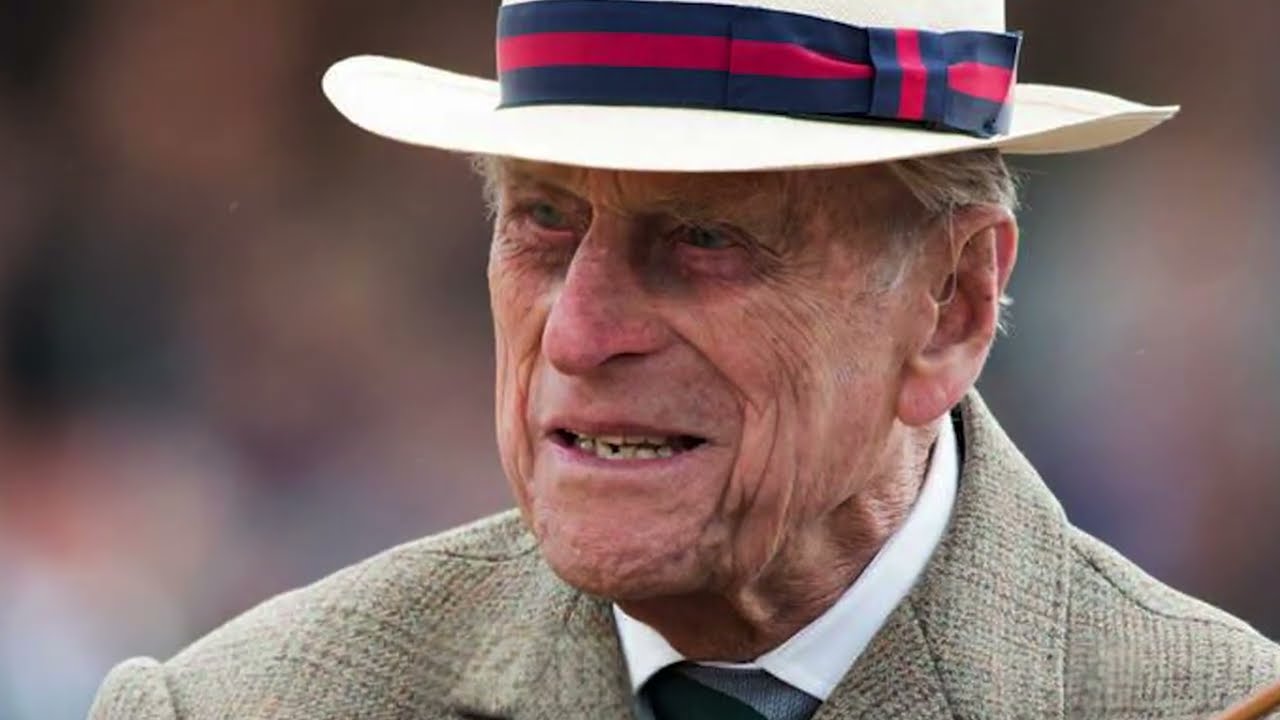
Compare that objection with everything documented about the man. When a journalist asked him about the infidelity rumors, he answered with a joke about his security detail rather than anything resembling an answer. Across seventy years in the role, he never opened up publicly about his marriage. Whatever you think of him, Philip was never a man who confided.
Building an emotional climax on a behavior everyone agrees he never displayed seems a strange choice for a work that markets itself as research-based. The makers' defense always runs in the same direction. It is a drama. Everyone knows it is a drama. No one watches Netflix for a history lecture. Fine. But the series rebuilds real rooms, real clothes, real letters, and real furniture with obsessive accuracy, spends a fortune doing it, then places an invented emotional confession at the heart of all that accuracy. The precision everywhere else is what gives the invention its weight.
The scene works dramatically. It constitutes no evidence whatsoever, and the gap between those two facts holds an enormous amount of what the public now believes about this friendship. Millions of people watched the hand-touch scene and took it as factual history. Netflix put a disclaimer on screen describing the work as drama. Human memory has never worked that way.
Forget the press secretaries' denials and the biographers' reassurances for a moment, and look at the diaries instead. Queen Elizabeth II knew about the friendship. Not as a suspicion, not as something she tolerated in pained silence, not as something discovered in a dramatic scene, but in the simple administrative sense of approving the arrangements around it. She knew, and her response included repeatedly inviting Penny to royal events.
Penny rode in cars with the royal family, stood on the balcony of Buckingham Palace during formal occasions, and attended private gatherings, the small ones, the ones without cameras, whose only purpose is for the family to behave as a family. Count the separate decisions that represents, because every one of those appearances required someone to say yes. Access to the Buckingham Palace balcony never happens by accident. The composition of that balcony is managed more strictly than any other image in British public life, calibrated to the millimeter and photographed by every news agency on earth, and yet someone placed her there.
Biographers go further, describing the Queen as sharing her husband's affection for Penny and actively encouraging her inclusion in family life. The invitations kept arriving. The two women kept meeting even after Philip's death, which no one can misread as a widow merely keeping up appearances for a press that stopped asking questions years ago. Those close to the situation suggest the Queen understood her husband's need for companionship and for the shared intellectual and sporting interests she did not personally share. That is a biographer's inference rather than a documented statement, and I will label it as an inference, though it fits neatly with a marriage of more than seventy years in which, by all accounts, each allowed the other private space.
The tabloid version of this story needs a deceived wife. No deceived wife appears anywhere in the record. Instead we find a woman who kept the alleged mistress on the guest list, placed her on the balcony, sat beside her in cars, and continued to see her socially after the man they shared was laid to rest. Either Elizabeth II staged the greatest marital deception in European history, or the rumor never made sense at all.
April 17, 2021, St George's Chapel at Windsor, and COVID restrictions limited the funeral of Prince Philip, Duke of Edinburgh, to thirty mourners. Thirty. For a man who spent most of seventy years as consort to the British monarch, who accumulated relationships equivalent to the area of palaces, and whose relatives fill a continent, the guest list shrank to a number you could fit inside a small village hall. Anyone who has organized a funeral under those rules knows exactly what that number does to a family. The arithmetic turns brutal. Thirty seats make every seat a reason for a quarrel. Someone's cousin does not attend, and his admirers watch the service on a laptop in their kitchen with the sound off. Every name on that list displaced another name that did not survive the cut, and the family worked through those calculations in a week of public mourning.
They gave one of those thirty seats to Penny Knatchbull, one of a very small number of mourners from outside the family. Consider that for a moment, because it requires no interpretation, no biographer to decode it, no anonymous insider or unnamed palace source drifting through the Sunday papers. With a cap of thirty people, the world watching, and every seat carrying a cost, they chose her. Not a head of state, not a foreign royal, not an old colleague, not a former prime minister. Penny.
No one does that for a scandal. No one, during the most scrutinized week that family had seen in decades, hands a seat to a woman the press had spent thirty years calling your father's mistress. Unless the accusation is entirely wrong and her place in that family is so established that the question of how it would look never seriously arose.
Remember also who signed off on a guest list that small. Not a staffer with a clipboard, but the family itself in the week they buried him, with a global audience sifting every seating arrangement for hidden meaning. Photographs from that day circulated everywhere. The Queen alone in her chapel seat, masked inside a chapel holding more empty stone than people. Penny sat in that same chapel, one of thirty, at the funeral of the man who appeared in her life after her daughter died and stayed for the next thirty years. The papers published her photograph and reminded everyone of the rumors.
Seventeen months later, she returned. Penny attended the official funeral of Queen Elizabeth II on September 19, 2022. An event with no capacity restrictions and no shortage of people with a stronger formal claim to a seat than a family friend from Hampshire. She attended anyway, which settles a question the tabloids had relied on for years. If her standing in that world depended on the affection of one man, it would have evaporated the moment he was gone. Instead the invitations kept coming after his death. First from the woman the affair narrative casts as the wronged party, then from the institution itself, once that woman was laid beside him.
Two funerals in seventeen months. She attended both in the capacity she had always been known by, as a member of that family's inner circle by marriage since 1979 and by friendship since 1991.
So here is the truth about the relationship between Prince Philip and Penny Knatchbull. There is no documented affair across thirty years of the most aggressive and best-funded press coverage any family on earth has been forced to live under. What exists instead? A five-year-old girl named Leonora who died of kidney cancer on October 22, 1991, and a man in his seventies who started showing up afterward. A man who three years later handed a grieving woman the reins of a carriage and taught her a violent enough sport to occupy a mind completely. A friendship of thirty years built on horses, mud, and estate management. A queen who kept her name on guest lists, a husband who left for the Bahamas, a nickname invented by exhausted palace staff, a seat at a funeral capped at thirty people, and a thirty-year accusation no one ever proved.
What we did with that friendship reveals far more about us than it ever revealed about them. We took the worst thing that can happen to two parents and reframed it as the opening chapter of a sex scandal. We watched a man quietly do something decent for a very long time and decided the only available explanation must be sordid, because we cannot conceive of a man and a woman spending thirty years together without it turning into something we recognize from our own worst impulses. A child's death at five became a plot point.
Sarah Bradford's claim about Philip's fidelity in general stands as it is, without evidence and without connection to this woman. Brandreth, Parker, and Arbiter take the opposite view. The palace never spoke and never will, and that silence keeps producing its bad results as it always has. At some point in the next decade, another series or another book will pick this up again, and Penny will not say a word about it, because the conventions she acquired by marriage do not permit it.
The records hold what they hold, and they hold no affair. They hold a guest list with four extra words written at the bottom, again and again, across thirty years, by a man who wanted his friend in the room.
And also Penny.
Thirty seats in that chapel, and one of them carried her name.