OBERSALZBERG, Germany — A vast subterranean bunker and tunnel complex built to shield Adolf Hitler from Allied bombs remains sealed beneath a wooded hillside here, its corridors, cells and machine-gun positions intact but permanently off limits to the public, according to newly circulated exploration footage that offers a rare look inside one of the most restricted Nazi relics in existence.

The network lies beneath the site of the Berghof, Hitler’s palatial mountain residence, which once anchored a Nazi gated community for the regime’s top leaders some five kilometers above the Bavarian town of Berchtesgaden. The tunnels were engineered to give Hitler, his companion Eva Braun, his personal staff and his bodyguards a comfortable refuge during an Allied bombing raid or a parachute or commando assault on the village.
Miles of additional tunnels run beneath the wider Obersalzberg complex, most of them constructed on the orders of Martin Bormann, Hitler’s powerful secretary, to provide air-raid shelters and an underground headquarters capable of keeping the Nazi state functioning had Hitler chosen to relocate here in the final weeks of the war.
Almost none of the complex is open to the public, yet the entire system survives intact, unlike most of the Nazi leaders’ homes that once stood above ground. Many of those villas, including Hitler’s own residence, were badly damaged in a Royal Air Force raid on the Obersalzberg on April 25, 1945.
Hitler had departed in 1944 and never returned, but the houses and the subterranean tunnels were kept in perfect working order and heavily guarded in case he came back. Much of the contents of Hitler’s bunker was dragged to the surface by the SS and burned before the guards set fire to the house on May 4, 1945, then abandoned the village and its properties to advancing U. S.
forces.
When the Americans arrived, they found a chaotic scene of damaged buildings and a moonscape of craters left by the British bombs, but discovered the huge tunnel systems to be completely intact and still full of furniture, equipment, weapons and art. Many of the buildings were subsequently repaired and used by the American occupiers, and many survive today.
Hitler’s Berghof was a special case. In 1952 it was blown up and the hillside planted with trees, but the bunkers beneath remained untouched apart from having been extensively stripped of their fixtures and fittings by locals. The bunker entrances and emergency exits were either bricked up or securely locked and have remained largely so to this day.
Rare access has been granted over the years to official expeditions and to filmmakers. Historical film shot by the U. S.
101st Airborne Division in mid-May 1945, combined with modern footage, allows a then-and-now tour of the hidden Berghof bunkers and shows how the wartime generation moved through them.

There are two ways into Hitler’s bunker today, both originally emergency exits. In Hitler’s day, the bunkers were reached through the Berghof’s rear door and across a small open space to a doorway set into a wall. The concrete there is slightly lighter, marking where the door once stood.
In 1945, a U. S. paratrooper stood guard at that same spot.
Following the path of a 101st Airborne Division war correspondent, a visitor descends a series of marble steps under the hillside. Today the same staircase looks up toward the bricked-up entrance. A passageway leads to a fork, allowing a turn either left or right, and is protected by a machine-gun position with a field of fire straight down the corridor.
Turning right leads into the area used by Hitler’s personal staff. The first compartment was a kitchen where meals for Hitler and his entourage were prepared, including by his personal dietician, Constanze Manziarly. It was the largest underground kitchen on the Obersalzberg.
Little remains of the fittings except in the ceiling, where a Zahn-made extraction unit is still bolted firmly in place.
The next room has come to be called the archive. It held Hitler’s personal documents, files, record collection, manuscripts and speeches, and was protected by a stout steel door designed to resist fire. In May 1945, after the Americans took over, it was photographed in disarray.
Today, small fragments of records from Hitler’s collection are mixed in with the debris on the floor.
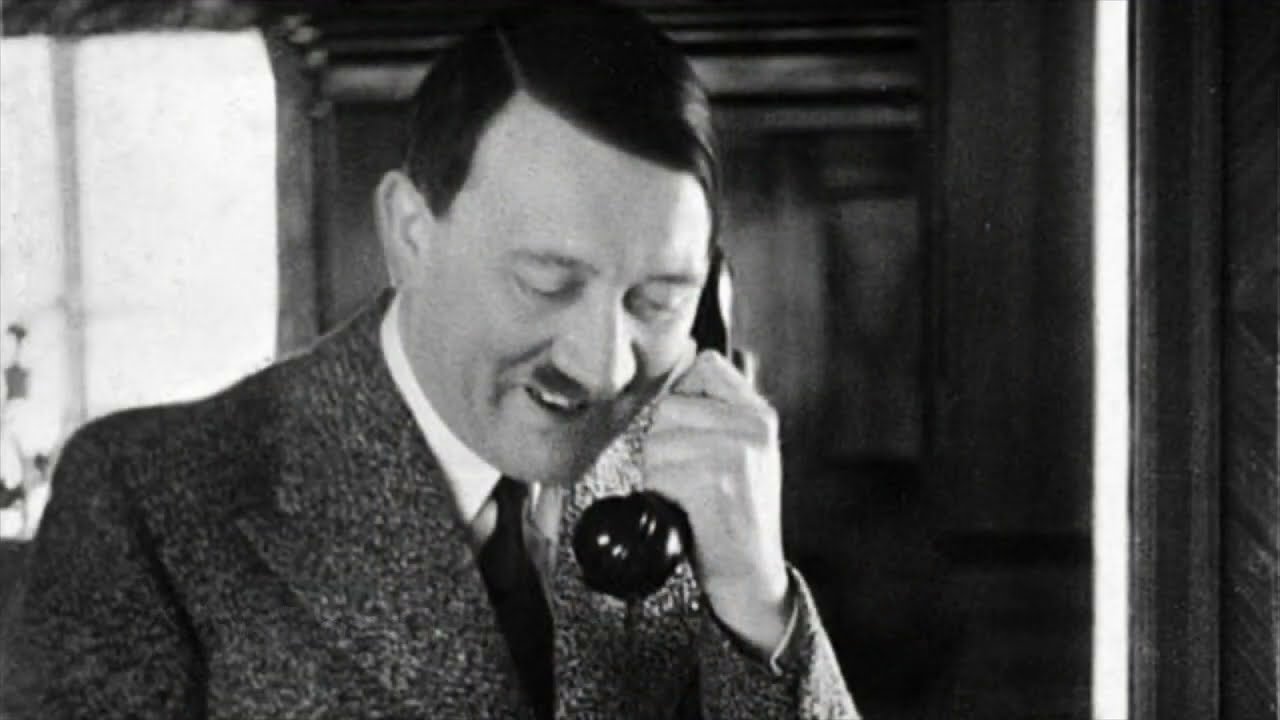
Moving along, on the left is the telephone switchboard. Obersalzberg had 800 separate telephone lines, and everyone was connected to the German national telephone network. Direct lines also existed to the Reich Chancellery in Berlin, the Wolf’s Lair in East Prussia and the various ministries of state and military headquarters throughout the Reich.
The wooden door frames are remarkably well preserved because the rooms are very dry.
 Past the ladies’ and gentlemen’s lavatories on the right, the next room is the battery room, which housed huge acid batteries to power the telephone switchboard machinery. Gas produced by the batteries was drawn out of the room through a gas lock visible at the top of the wall. The room has a tile floor because it was a working space, unlike the other cabins, which generally had parquet flooring for comfort.
This is the bunker for Hitler’s staff from his house above. The parquet floors were torn up and stolen after the war. In this bunker, the original electrical junction boxes have survived remarkably well.
The walls also show a line where wooden paneling was once installed, also looted postwar.
Back at the main entrance tunnel, going left instead of right leads toward Hitler’s area, a very private and well-guarded section of the bunker system. The first room on the left was a bunker for the Berghof’s manager, who ran the building above with his domestic staff. Opposite is the bunker for Hitler’s valet, SS Sturmbannführer Heinz Linge.
The remains of a bell line are visible, installed so that Hitler could ring for Linge when he was needed.
Beyond that lies the most secure part of the system, Hitler and Eva Braun’s private domain. It had an internal wooden door where bricks are now 𝓮𝔁𝓹𝓸𝓼𝓮𝓭. On the left are staff lavatories.
Immediately on the right beyond the door is Room 13, Hitler’s private suite, consisting of four rooms: an antechamber, a living room, a bedroom and finally a bathroom and toilet.
In Hitler’s time, the walls would have been paneled halfway up and the floors parquet, with rugs and expensive furniture similar to that from the Berghof filling the rooms. The bathroom door was bricked up postwar after guests at the nearby Hotel zum Türken were able to reach the Berghof bunker from the hotel’s own bunkers and used to chip off Hitler’s bathroom tiles as souvenirs.
The next bunker, Number 12, was the small medical room and operating theater used by Hitler’s personal physician, Dr. Theodor Morell. Morell was never far from Hitler, who was something of a hypochondriac.
Brackets remain on the wall where a large sink for cleaning medical instruments was mounted.
 Room Number 11 was Eva Braun’s suite, exactly the same as Hitler’s except that it had no antechamber and its bathroom was slightly larger. Film from May 1945 shows how it was furnished, with wood paneling, built-in cabinets and the rugs that would have appeared the same in Hitler’s rooms. Everything was stripped by looters just after the war or taken by American soldiers as souvenirs, and quite a bit of the material still turns up at auctions today.
Room Number 10 was Dr. Morell’s private living quarters. The final room in Hitler’s private section is Number 9, used as a shelter by his SS bodyguards and junior Berghof staff members.
At the end of the passage was another portal that originally held a wooden door to block off Hitler’s private domain from the rest of the bunker. Beyond it is a gas decontamination room and a bunker for Hitler’s escort command bodyguards.
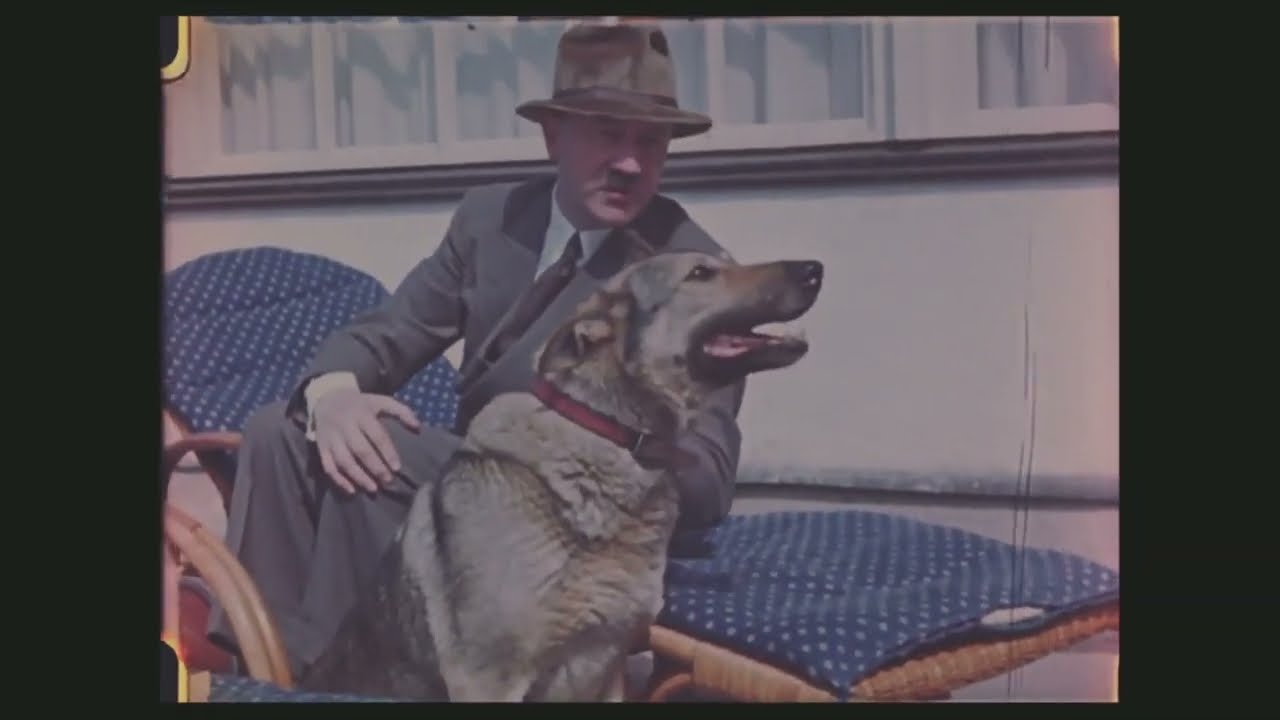
The tunnel is now bricked up, and visitors once could stand on the other side of it, which belongs to the Hotel zum Türken. Originally this area was used by the Reichssicherheitsdienst, the RSD, for its underground headquarters. A door with a metal grille served as a kennel for Hitler’s dog, Blondie.
The American war correspondent exits the Berghof bunker complex via Emergency Exit Number One, which still exists today below the road that passes around the Berghof ruins. The devastation from the British air raid is obvious as the officer makes his way up to the road. In a final piece of film, the famous American General Omar Bradley visits the Berghof bunkers and is seen leaving later with some souvenirs.
The closest a tourist could once get to Hitler’s bunker system was by exploring the bunkers beneath the Hotel zum Türken, the Bavarian hotel used to house members of Hitler’s special bodyguard unit, the Reichssicherheitsdienst. The house sits adjacent to and slightly above the Berghof, and the hotel’s bunkers are in fact part of the system beneath the Berghof.
That access ended with the closure of the Hotel zum Türken a few years ago, making it no longer possible even to see any part of the Berghof tunnel system. Occasional official expeditions have still been permitted access, and the footage they produced now serves as the primary record of what survives.
For the foreseeable future, and perhaps forever, Hitler’s bunker tunnels will remain closed to everyone. Historians note that the sealed complex is one of the last intact physical remnants of the Nazi leadership’s mountain retreat, a hidden world of concrete corridors, switchboards, medical rooms and dog kennels that the regime built to outlast the bombs that eventually destroyed the houses above.