On September 28, 1981, a police officer arrived at an apartment in Portsmouth, New Hampshire to deliver a parking ticket. Instead, he found the body of 23-year-old Laura Kemp on the floor. Beside her lay an empty wine bottle that investigators later believed was the murder weapon. It would take more than four decades to identify the man responsible, and by the time science finally caught up, he had already been dead for 17 years.
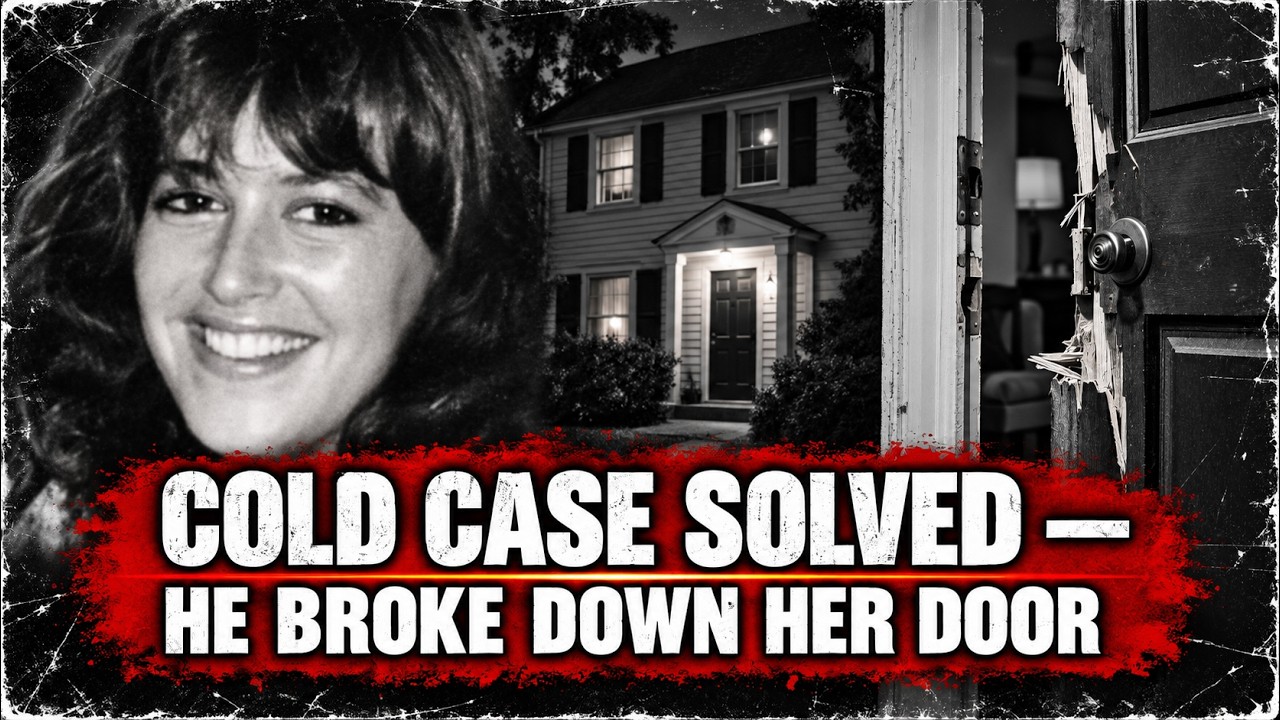
Laura Kemp was remembered by friends as outgoing, full of personality, and unafraid to enjoy life. She had a taste for new wave fashion, was enrolled at Portsmouth Beauty School training to become a hairdresser, and worked at a downtown gift shop called Marco Polo on Market Street. She lived alone in a ground-floor apartment at 20 Chapel Street, a fact that seemed unremarkable in a small port city where neighbors knew one another and doors were often left unlocked. The man she had been dating that weekend later told police a detail that stuck with investigators for decades.
Even when the pair stepped out at 2:00 in the morning just to grab food, Laura locked the door behind her. Before going to sleep, she checked the lock again. Nothing about her behavior suggested carelessness or recklessness. On the evening of Sunday, September 27, 1981, Laura went out with a friend to a restaurant downtown called Lucas.
The two stayed from around 9:00 p. m. until roughly 1:00 a. m.
, talking, laughing, and dancing. At the door to Laura’s apartment, the friend declined an invitation to come upstairs because she had to work early the next morning. That was the last time anyone who knew Laura Kemp saw her alive. Sometime after Laura went inside and locked her door, someone forced their way in.
The intruder used a mailbox from the building’s hallway to smash through a wooden panel on her front door, then reached through the hole to unlock it from the inside. A neighbor later discovered that the hallway light bulb had been loosened, making it appear burned out rather than simply dark. Whoever entered had planned at least part of the attack. The next morning, Monday, September 28, at 9:25, Officer Ron Grivois arrived at 20 Chapel Street to serve Laura a summons for a parking violation.
Through the gap in the door, he saw a body on the floor partly covered by a blanket. Blood was on the wall. Every window and door in the apartment was locked except the broken panel, the only point of entry. Laura was found covered from the knees up with sheets, her mattress, and box spring.
Her ankles were tied together with an electrical cord pulled from an electric blanket, and a telephone cord was looped loosely around her neck. The apartment had been torn apart, drawers opened, and items scattered. An envelope of cash that had been left on the kitchen table was never found. Pathologist Dr.
Dennis Carlson performed the autopsy later that day. He concluded Laura died from a severe beating to the head, with major trauma to the left side of her skull consistent with being struck by a heavy object, most likely the wine bottle found beside her. There was also evidence she had been struck with a fist. Time of death was estimated at around 2:30 in the morning.
Lab work confirmed the blood on the wine bottle matched Laura’s own blood type, and the phone cord and swabs carried signs of a sexual assault. Investigators collected hundreds of items, lifted fingerprints and palm prints, and sent evidence to the New Hampshire State Forensic Lab. But in 1981, DNA profiling did not yet exist. It would not be used to solve a criminal case anywhere in the world for another four years.
All investigators could determine from blood was a general type, which could rule people out but not point to anyone in. Detectives interviewed more than 200 people connected to the case, from friends to local men with criminal records to sailors passing through Portsmouth’s port. The man Laura had been dating that weekend was investigated closely and cooperated fully. Decades later, his DNA was tested and did not match, clearing him entirely.
Just over a year later, the case took on a second layer. On October 19, 1982, Tammy Little, 20, also a student at Portsmouth Beauty School, was found beaten to death in her own ground-floor apartment across town. The similarities were difficult to ignore: both women lived alone downtown, both were beauty school students, and both died from severe head injuries after an intruder forced their way in during the early morning hours. The connection has never been officially confirmed, and Tammy Little’s murder remains unsolved to this day.
By 1985, police were telling reporters the department was still actively working both cases. In 1996, the Boston Globe ran a feature on the two unsolved murders, describing an unidentified local man as the long-standing prime suspect. Investigators described him as a manual laborer of considerable physical strength with a sharp mind and only a minor record, someone they said they watched like a hawk for years without ever finding enough physical evidence to charge him. As one assistant attorney general put it, you can be certain who did something and still not have enough to win at trial.
That man was never charged, and investigators in 1996 could not have known he was not the one who did it. The real answer had been living in Portsmouth the entire time. His name was Ronnie James Lee. In 1981, he was 21 years old, recently discharged from the United States Army that May.
He moved back to Portsmouth to live with his mother and took a security job at a Liberty Mutual office. On paper, he appeared to be nothing more than a veteran getting his footing. But Lee’s behavior told a different story. In November 1982, just over a year after Laura’s death, he was arrested for attempted theft.
By the summer of 1983, he had moved on to breaking into apartments. One night that July, he broke into a home on Dennet Street and stole a woman’s purse, dropping a pack of cigarettes in his hurry. Hours later, he broke into a second apartment on Austin Street by prying open a window. One of his other break-ins revealed a pattern.
A resident on Wheel Street was watching television in her bedroom around 1:00 in the morning when she noticed her hallway light had gone dark. When she got up to check the bulb, she found a man standing beside the switch. He put a finger to his lips. She screamed for her sister, and he fled out the back door.
It was the same trick that had shown up at Laura Kemp’s building two years earlier: a dark hallway and a tampered light switch. Investigators connected Lee to four separate apartment burglaries that year, and he pleaded guilty to at least one. In 1987, he was convicted of burglarizing an apartment in Keene and sexually assaulting the woman who lived there. She woke to find him touching her around 3:30 in the morning, screamed, and startled her roommate awake in time to scare him off with cash and jewelry still in hand.
He served from December 1987 until July 1990. The pattern lined up disturbingly well with what had happened to Laura Kemp six years earlier: forced entry into a home where a woman lived alone, the middle of the night, a hallway light gone dark, a struggle. But nobody made that connection. Lee was never a suspect in Laura Kemp’s murder, not once, not for a single day during the 24 years he had left to live.
For years, science slowly caught up to the evidence sitting in storage. In 2000, advances in DNA testing let the Portsmouth Police Department send a thigh sample to a private lab, which pulled a partial male genetic profile. In 2002, analyst Kathy McMillan at the state police crime laboratory developed a full male DNA profile from one of the original vaginal swabs and found the cigarette butt from the crime scene carried a partial profile that matched it. For the first time, investigators had a complete genetic fingerprint of the man responsible.
What they did not have was his name. Between 2003 and 2016, the profile was uploaded to every database investigators could reach, including the FBI’s national system and law enforcement networks overseas. Officers collected comparison samples from hundreds of men connected to the case, ruling each one out. The DNA sat complete and specific but useless, unable to tell anyone where to look.
The shift came from a different direction entirely. In December 2016, Sergeant John Paraki heard about a cold case in Arizona cracked using genetic genealogy. Instead of matching a stranger’s DNA against a database of criminals, this method treats a DNA sample like the start of a family tree. It gets uploaded to genealogy sites where ordinary people search for their own relatives, and investigators look for anyone who shares enough DNA to be a cousin or grandparent, then work forward from there.
Paraki reached out to a company called Identifinders International. Early testing determined the man’s DNA reflected African-American heritage, a first real clue about who investigators should be looking for after decades of having a full profile with nowhere to point it. In September 2021, investigators revisited the case using whole genome sequencing. In May 2022, they resubmitted the original vaginal swab sample.
Within weeks, the profile matched two relatives inside a public genealogy database. Three days later, investigators had identified a family with ties to Rockingham County, the very county Portsmouth sits in. Genealogists traced the family tree forward and found the biological parents of their unknown contributor shared exactly one son. His name was Ronnie James Lee.
There was one complication. Lee had been dead for 17 years. Investigators found a blood card preserved from his 2005 autopsy. Analyst Kathy McMillan, the same scientist who built the original profile in 2002, compared Lee’s blood card directly to the DNA taken from Laura Kemp’s body in 1981.
It matched. Investigators did not stop there. In June 2023, McMillan compared Lee’s DNA against the cigarette butt found near Laura’s body and the skin scrapings taken from her thigh during the original autopsy. Both matched.
She then confirmed Lee could not be excluded as the source of a partial profile developed years earlier from the pillowcase found over Laura’s head. Four separate pieces of physical evidence collected in 1981 all pointed to one man in 2023. There was no record connecting Lee to Laura Kemp socially. No friends in common, no known encounter, nothing to suggest they had ever met before that night.
As one assistant attorney general later put it, there was no indication he even knew who she was. Whatever happened inside that apartment happened between two people who were, as far as anyone could determine, complete strangers. He simply chose a door on a random Sunday night and broke through it. On July 20, 2023, New Hampshire Attorney General John Formella stood before reporters in Portsmouth alongside Police Chief Mark Newport to announce that the case of Laura Kemp had officially been solved.
There would be no arrest and no trial. Ronnie James Lee had been dead since 2005. Formella told the room, We understand that today’s announcement is truly bittersweet. His office released a 25-page report laying out four decades of investigation in methodical detail, from the broken door panel in 1981 to the blood card compared in a lab in 2023.
The report stated plainly that if Lee were alive, the state would have charged him with first-degree murder committed in connection with a sexual assault. The report also addressed a question investigators had wondered about for years: whether Lee had intended to kill Laura or whether events had spiraled beyond what he planned. The conclusion was careful rather than certain. The extremely violent nature of the attack, combined with the calculated way the door had been broken, suggested he may have intended to kill her from the start.
But the evidence being entirely circumstantial was also consistent with a sexual assault that spun out of control into far more violence than he had originally set out to commit. Ronnie James Lee died on February 9, 2005, at 45 years old from acute cocaine intoxication. He died more than a decade before genetic genealogy would be capable of pointing back at him. As far as anyone can tell, he never knew the walls were closing in.
He lived out his final years an ordinary, forgotten man, not a fugitive, not hiding, simply unbothered by a case that had never once turned its attention toward him. Formella’s office formally closed the case in July 2023, declaring it solved even without an arrest. Laura Kemp’s family released a statement thanking the investigators who carried the case for over 40 years, praising the diligence, determination, and extraordinary personal commitment that finally led to this moment for Laura. One thread was left deliberately open.
Tammy Little’s murder, the case so many people had long connected to Laura’s, remains unsolved. Formella told reporters he hoped the Kemp announcement might shake loose new information about her case too, but he was careful not to speculate, saying only that his office was not prepared to discuss it that day. Laura Kemp was a 23-year-old woman building a life for herself in a small coastal city, one hair styling class and one retail shift at a time. She liked new wave fashion and live music and dancing until 1:00 in the morning on a Sunday because Monday could wait.
She locked her doors and checked them twice. For four decades, she existed mostly as a case file, a blood type, a set of swabs in an evidence locker, a DNA profile with no face attached. Science finally gave her back her name attached to an answer. It took 42 years, but it happened.
Laura Kemp did not get a trial or a verdict read aloud in a courtroom. What she got in the end was the truth, and a case finally marked closed instead of forgotten.