For 119 years, Lehman Brothers had stood resilient, surviving the Civil War, two World Wars, and the Great Depression. But in September 2008, the fourth largest investment bank in America collapsed over a single weekend, taking 26,000 jobs with it. The firm was not destroyed by war or natural disaster, but by a fracture that had begun decades before the bankruptcy filing. The real story starts more than 100 years earlier.
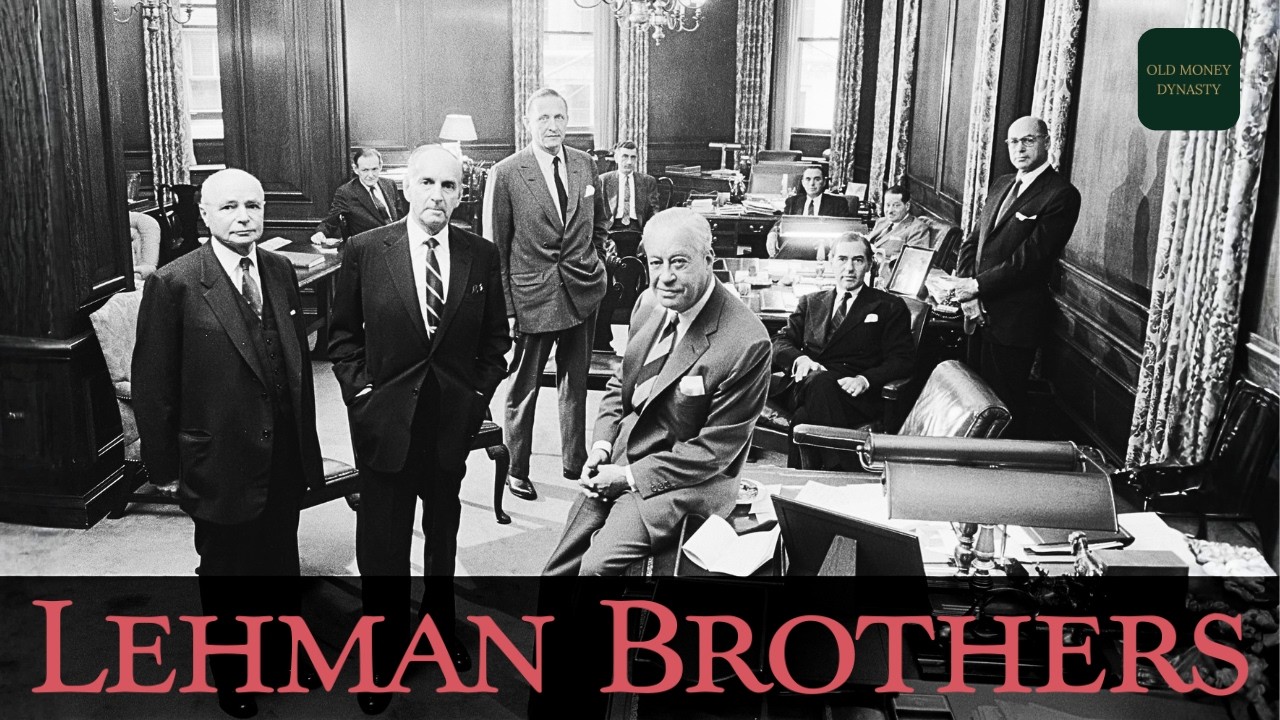
At the turn of the 20th century, Wall Street operated on unwritten rules, and Jewish families were often kept at arm’s length. Both Lehman Brothers and other small firms were led by Jewish families shut out of the establishment, a shared experience that shaped their path forward. One partner believed certain companies were the future, and he found a like-minded partner, together pushing into deals with Woolworth, Macy’s, and Studebaker. These were not small transactions.
The firm’s leadership passed through generations. Robert Lehman’s son, Robert, joined after serving as a captain in World War I and rose quickly, but family ties to the firm frayed over time. Herbert Lehman, another family member, chose public service instead, becoming Franklin Roosevelt’s lieutenant governor, then governor of New York for four terms. He never returned to the bank.
Robert’s own son, Robin, born in 1936, showed no interest in banking, instead becoming a documentary filmmaker who won two Academy Awards in the 1970s. Robert Lehman himself seemed to understand this distance. He served as chairman of the board and bred thoroughbred horses, finding a life beyond the balance sheets. He died in 2006, just two years before the firm he had fought to control ceased to exist.
By 1969, a 23-year-old named Richard Fuld started his first day as a commercial paper trader at Lehman Brothers. He spent the next 25 years inside the building, eventually leading the firm as it became a publicly traded company for the first time, with no founding family and no partnership to overrule him. Colleagues described Fuld as intense, confrontational, and fiercely loyal, but the loyalty only went one way. Reports from inside the firm say Fuld did not intervene to save certain colleagues when they were pushed out.
In 1999, Congress repealed the Glass-Steagall Act, which had separated commercial banking from investment banking. The removal meant Lehman Brothers could move into mortgage lending, loan origination, and real estate, areas that had been off-limits. The wall between making loans and trading securities vanished overnight. The firm embraced this new world, and revenue climbed year after year.
The turning point came when Lehman began buying mortgages in 1997, acquiring Aurora Loan Services, a lender focused on borrowers who did not fit the traditional mold. The firm bundled thousands of those loans into mortgage-backed securities. Many borrowers were given adjustable-rate mortgages that started low but jumped sharply after a few years. The system was not designed around whether borrowers could repay.
As long as home values rose, even struggling borrowers could refinance before the rates adjusted. That assumption held for a while. The risk was enormous. A 3% drop in property value could wipe out an entire stake, and Lehman was exposed to hundreds of billions in mortgages, commercial real estate, and related financial instruments.
When home prices began to fall, the ground shifted. The single assumption supporting the entire structure was failing. Instead of pulling back, the firm pushed forward. Inside the firm, the pressure to look strong led to questionable accounting.
According to court-appointed examiner Anton Valukas, whose 2,200-page report came years later, Lehman used transactions called Repo 105. The firm would sell assets before a quarterly reporting deadline, use the cash to pay down debt, then quietly buy the assets back after the report was released. The transactions were concentrated in the final days before each deadline and reversed almost immediately. The window of artificial health was brief, but long enough to satisfy credit rating agencies and keep investors from panicking.
Fuld’s attorneys argued he was not even aware of the details. They told the examiner that Fuld did not use a computer, accessing email only on his BlackBerry. The debt was real, and as the market worsened, Lehman’s position became untenable. By early September 2008, the government had placed mortgage giants Fannie Mae and Freddie Mac into conservatorship.
Markets went into freefall, and banks stopped lending to each other. Lehman’s collapse appeared imminent. Potential buyers emerged. Both Barclays and Bank of America examined Lehman’s books in the days before the collapse.
But for a deal to work, Lehman’s toxic assets had to go somewhere else. By Saturday evening, the situation shifted. Bank of America was negotiating to acquire Merrill Lynch instead, leaving Lehman without a buyer. Fuld believed Barclays was still in play, but that deal fell apart too.
Over the weekend, the firm’s fate was sealed. Lehman Brothers filed for bankruptcy on Monday morning. In the aftermath, Fuld testified before Congress, blaming short sellers, credit rating agencies, and a loss of market confidence for the failure. He claimed Lehman Brothers was the only major firm the government had forced into bankruptcy.
Yet no criminal charges were ever brought against any senior Lehman executive. Whether the government’s decision was correct remains a question economists and regulators still argue about today. In 2015, Fuld made his only public appearance since the crisis. He was 91 years old and worth an estimated $2 billion, nearly all earned at the Blackstone Group, the firm he built after leaving Lehman.
He told the audience that his advice was simple. He did not elaborate on what that advice was. Lehman Brothers was not destroyed by a war or a crash. It was destroyed by a bet on ever-rising home prices, a culture that rewarded risk-taking over caution, and a leadership that refused to say no.
The Lehman name no longer adorns the building, but the questions it left behind remain unresolved.