A 62-year-old dying man, a former cavalry corporal named Wendell Crane, confessed a story to a Catholic priest in the mining town of Bavispe, Sonora, that he had carried for half a century. The priest, fearing the words were too dangerous, copied the confession into the back of a parish register in Latin. The register eventually ended up in a private collection in Tucson, where it was read by the source of this account. The story begins in April 1886, when a 16-man U.
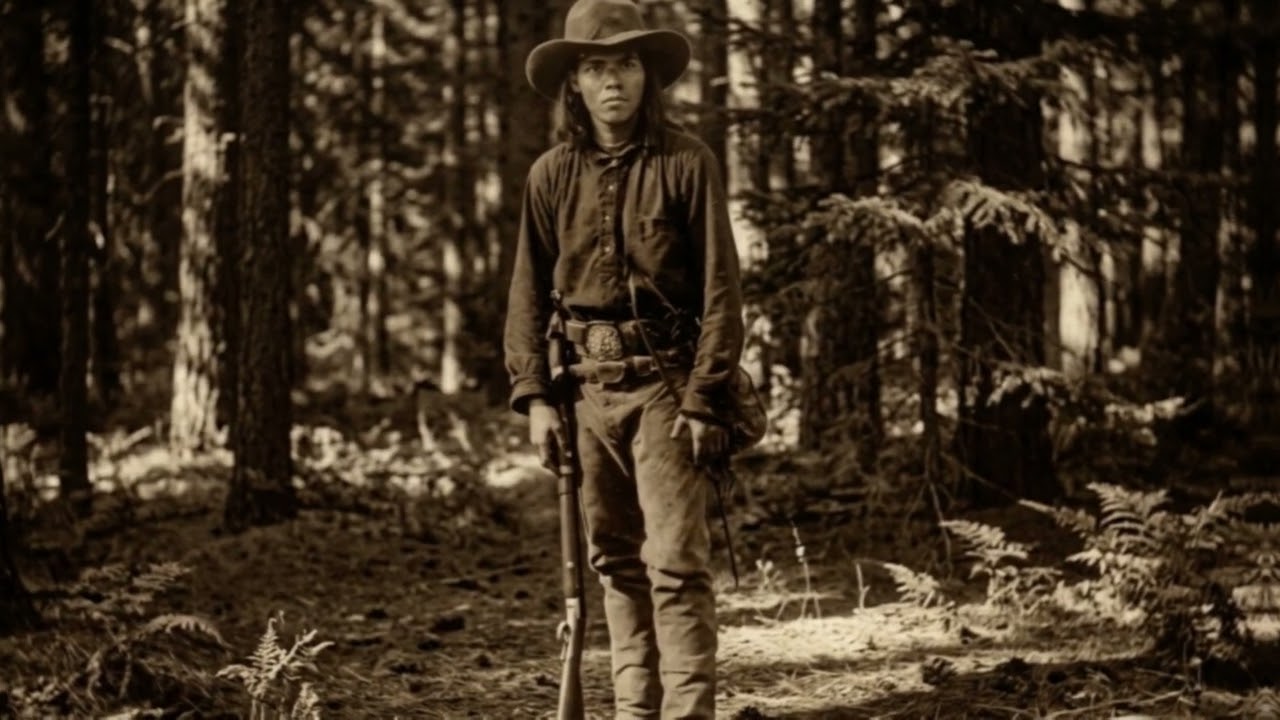
S. Cavalry patrol under Captain Garrick Vosan crossed the border into Mexico’s Sierra Madre. They were pursuing a small band of Apache renegades under a new treaty that allowed them to operate 50 leagues into Sonoran soil. The patrol included a Chiricahua Apache scout known only as Closen, a tall man with a scar running from his left eye to his hairline, who wore a small leather pouch around his throat that no man ever saw him remove.
By the fourth day, Closen found a strange sign at a dry canyon: a single, perfect mountain lion print in the mud, followed by a man’s bare footprint, then another, then nothing. He told the captain they were not following the men they sought. When pressed, he gave a name in Apache that made the other two scouts go silent. One of them translated it as “a skin one, a wearer of skins,” and advised the patrol to turn back.
Captain Vosan, a careful officer who had ridden with General Crook before, laughed tiredly and ordered the patrol onward. The patrol’s troubles escalated. One of the spare horses disappeared from its picket, and another died without any visible injury or sickness. A third horse was found dead downwind of the camp, and the sight of it left the captain visibly shaken, saying quietly to himself, “It was the way it had been opened.
” The men were told only that predators had gotten to the animal. On the sixth day, they camped in a basin near the ruins of an abandoned Spanish mission called San Lázaro de los Ojos. The Mexican packers refused to go near the ruin, whispering prayers all night. Around midnight, the corporal on watch saw a private from Ohio staring motionless toward the mission, unresponsive to being called or shaken.
When the corporal finally turned the man away, he gasped and began to cry, claiming he had only been watching the fire. In the morning, the private was gone. His boots were neatly set together, his rifle was leaning against his saddle, and his canteen was still full. They found a single set of bare footprints leading toward the mission that simply stopped midway across the basin.
Closen rode out alone to investigate. When he returned, he told the captain the patrol was being hunted by something that puts on the shape of what hunts—a lion in open country, a bear in timber, a man in the dark. He claimed it had chosen one of the men in the camp and had been with them the whole time. He said he would go find it, and warned that if he did not return by the second sunrise, the captain was to ride north, not look back, and not wait for any man who fell.
The patrol waited. The thing Closen described seemed to test them. During the night, the panther, the manticore, the hairy-faced beast, the night horror that stalked them finally revealed itself in the most chilling way possible. They saw a figure far out in the grass at the edge of the basin, wearing the same dark blue blouse and canvas trousers as the missing scout.
The corporal knew without doubt, though he could not say how, that it was not Closen—it was something else wearing his shape. Sergeant Augustus Threllfall, a 50-year-old veteran, began to behave strangely after a short sleep in the shade. When he confronted the corporal about a red cloth tied under the young man’s sleeve, his voice was too smooth, and his eyes were a paler blue than they should have been. The corporal, using a simple test about the sergeant’s past, stalled long enough to get away, and was told by the White Mountain scout, Nalan, that the thing was “sitting beside the sergeant, but it has not finished putting him on.
”
At first light on the seventh day, Closen returned on foot, alone, with dry brown blood on his blouse. He walked up to the captain and whispered six words into his ear. The corporal, standing at the picket line, could not hear them, but he watched the captain step back as if from a fire, his face turning white. Vosan immediately ordered the patrol to saddle up and ride north, ordering them not to stop until dark.
The thing wearing Threllfall’s face looked up and objected that the men had not eaten. Vosan simply repeated the order without looking at it. The patrol rode hard back to the border. The corporal noticed that Closen rode at the rear, a quarter mile behind everyone else, “making sure.
” The thing wearing the sergeant’s face grew worse during the journey—it held its head at an angle, stopped eating and speaking, and its horse eventually threw it and ran. The men did not look at it. On the night before they reached safety, the corporal saw it standing in the moonlight, its mouth full of something dark. In the morning, it was gone, leaving only mountain lion tracks heading back south, which did not change into anything else this time.
The patrol reached the American outpost at noon. Vosan reported three losses: one private to desertion, one sergeant to “brain fever in the field,” and one civilian packer to dehydration. The sergeant’s body was reportedly buried in Sonora, but the grave’s coordinates were never recorded. Closen was honorably discharged two weeks later with his final pay of $14.
40 and walked east, alone, on foot, never to be seen at a cavalry post again. Captain Vosan never accepted another field command, retired as a major in 1898, and died a year later. His sister wrote that he slept with a lamp burning and was afraid to be alone because of something he had heard long ago. Corporal Crane mustered out, went prospecting, married a Mexican woman, and lived in Sonora until his death.
On the corporal’s deathbed, the priest asked him the question he had been waiting to ask: what were the six words? Crane said he had not heard them that day, but that the captain had told him two weeks later, during a night of heavy drinking, and that he had never said them aloud since. The six words, translated roughly from the priest’s Latin, were: “It came back wearing my face. ”
The corporal’s own conclusion, after half a century of thought, was that the warning proved nothing.
If Closen was real, then the warning made sense—watch for the second one. But a thing wearing Closen’s face could have said the exact same words to gain the captain’s trust. One Closen had gone into the mission, and one had come out, and the corporal had ridden three days beside that Closen without being able to tell which one it was. Crane told the priest that he had spent his life checking his own eyes in the mirror, avoiding strangers, and crossing himself when he saw a man walking alone in the long grass.
He felt he was still being watched. He revealed the red cloth on his arm, which he had worn, at the instruction of the scout Nalan, for exactly 50 years and seven months. He asked to be buried with it in his hand, not on his arm. At the bottom of the register page, the priest wrote a single Latin phrase he did not translate: “Domine, finita non est ista.
” Hear me, Lord, for this story is not finished.