On September 17, 1971, Maureen Brubaker Farley left her apartment in Cedar Rapids, Iowa, and never came back. She was a newlywed, barely settled into her first place of her own.
Seven days later, two boys out hunting found her body lying across the trunk of a junked car in a ravine. Her shoes were gone. Her feet were clean.
Someone had killed her somewhere else and carried her there. Police interviewed dozens of people. They had a suspect. They had a motive. What they didn't have was proof.
So the case went cold and stayed cold for decades. In the weeks after the murder, one man kept showing up at the police station asking how the investigation was going. Nobody could figure out why a man with nothing to hide would keep checking on a case that wasn't his to check on.
It took 50 years and science that didn't exist in 1971 to answer that question.
Maureen Ann Brubaker was born on July 4, 1954, in Sioux City, Iowa, the oldest of seven kids. In a house that full, the oldest doesn't get to just be a sibling. She becomes something closer to a second parent.
Her mother and father, Mary Ann and David Brubaker, worked hard and relied on Maureen more than most parents rely on their oldest. When they wanted a night out, it was Maureen who stayed behind with six younger brothers and sisters, feeding them, settling their fights, getting them into bed.
Anyone who grew up as the oldest of a big family knows what that does to a person early. It teaches patience most adults don't have. It teaches you to notice when someone else needs something before they ask for it.
Sioux City in the 1960s was a working town full of families just like the Brubakers, stretching a paycheck as far as it would go. Nobody had much extra. What families did have was each other and neighbors who actually knew your name.
Maureen grew up inside that kind of closeness, and it shaped how she treated people. She was warm. She was steady. Her younger siblings didn't just tolerate having her in charge. They looked up to her.
By the time she reached her late teens, Maureen had done something a lot of people her age were still working up the nerve to do. She got married, and not long after the wedding, she made an even bigger move.
She left Sioux City behind and relocated to Cedar Rapids, more than 100 miles east, to start a life of her own as a newlywed. Leaving your hometown, your parents, and six siblings who'd grown up depending on you takes nerve.
Maureen found an efficiency apartment on 10th Street Southeast and she found work fast, taking a job at a diner on 1st Avenue Northeast. Waitressing work is not easy work.
It means being on your feet for hours, remembering a dozen orders at once, smiling at strangers even on the days you don't feel like smiling. But it also means talking to the same regular faces every single day.
In a city that was still new to her, that diner counter was where Maureen was building something like a community, one regular customer at a time. One of those regulars was a man named George Smith.
He was in his 50s, decades older than Maureen, and he came around often enough that the people at the diner knew his face. Nobody thought anything of it. He was just one more customer at the counter.
Maureen had only been in Cedar Rapids a few months. She was still learning the bus routes, still figuring out which grocery store had the best prices, still writing home to her mother about how the new job was going.
She had no way of knowing that one of her regulars at the diner counter was about to end that life completely.
The morning of September 17, 1971, was a Friday like any other. Maureen woke up in her small apartment, got ready, and by all accounts left home planning to go about her regular routine. She was seen that morning. And then she wasn't.
Nobody sounded an alarm right away, and there's a simple reason for that. Maureen was newly on her own in a new city, still building her circle of friends and routines. A missed phone call or a quiet weekend wasn't unusual yet.
Her apartment sat empty. Her car stayed parked in the lot behind the building. But work doesn't wait, and neither do bosses who count on their staff showing up.
When Monday, September 20, arrived and Maureen didn't walk through the diner door for her shift, her employer noticed. This wasn't a woman who blew off work without a word. Something was wrong, and her boss knew it.
That day, the diner owner called the Cedar Rapids Police Department and reported her missing. Officers went to her building and let themselves into the apartment. What they found told them almost nothing.
Nothing was torn apart. Nothing looked like a struggle. Her belongings sat where she'd left them, and her car sat exactly where she'd parked it, untouched. Whatever happened to Maureen, it hadn't happened inside those four walls.
For four more days, Cedar Rapids searched for answers it didn't have. Then came Friday, September 24, and the search ended, but not in the way anyone had hoped.
Two boys out hunting in a wooded ravine off Ely Road on the edge of the city came across an abandoned junk car sitting among the trees. Lying across the trunk of that car was a body. It was Maureen.
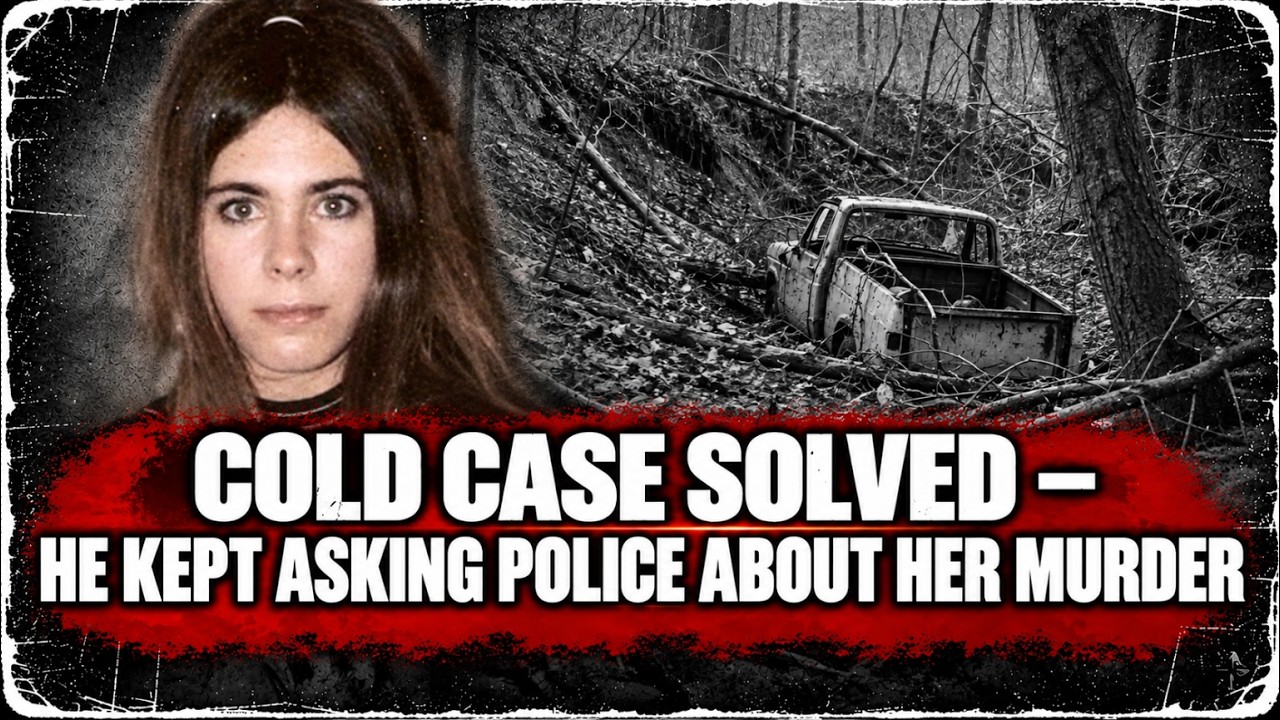
She was partially dressed, her shoes were missing entirely, and investigators noticed something small but telling right away. Her bare feet were clean. Not a scratch, not a smear of mud, nothing that would suggest she'd walked or run through that rough overgrown ravine herself.
Someone had brought her there after the fact and left her on that trunk. The ravine wasn't where it happened. It was only where she was left.
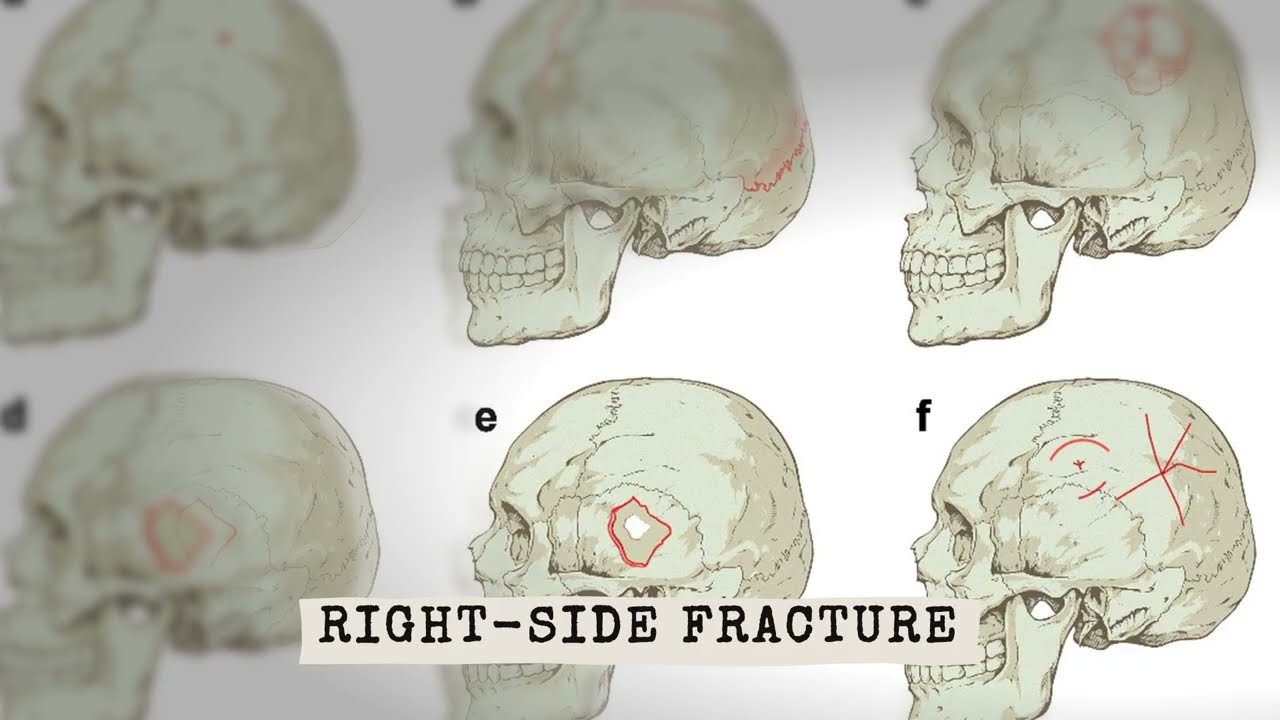
An autopsy gave investigators the first hard facts of the case. Maureen had died from a single severe blow to the right side of her head, hard enough to fracture her skull.
The medical examiner in Linn County called it a massive blow, and based on the state of her body, estimated she had been dead somewhere between two and four days before the boys found her.
That timeline mattered. It meant Maureen had likely been killed not long after she vanished on the 17th, and her body had been kept somewhere else before it ever reached that ravine.
The evidence also showed she had been sexually assaulted before she died. Investigators noted it plainly in their reports and moved forward with what it meant for the case.
This wasn't a robbery gone wrong, and it wasn't random. Whoever did this had gotten close enough to Maureen to catch her off guard, or she had trusted them enough not to see it coming.
Detectives weren't looking for a stranger who'd crossed paths with Maureen once by accident. They were looking for someone already inside the edges of her daily life.
The location itself raised its own questions. The ravine off Ely Road sat near a landfill on the edge of town, the kind of out-of-the-way spot a stranger wouldn't stumble into by accident.
Whoever left Maureen there either knew the area well or had a reason to be driving through it that had nothing to do with her murder at all. That detail wouldn't mean much to investigators in 1971. It would take decades before anyone connected it to the right person.
Cedar Rapids police did not treat this case lightly. They interviewed dozens of people: co-workers from the diner, neighbors from Maureen's apartment building, friends, family, and a long list of men who'd crossed paths with her.
One name kept surfacing. George Smith, the diner regular in his 50s who'd become a familiar face to Maureen over the months she worked the counter. Multiple people who knew Maureen from the diner pointed investigators toward him.
He wasn't a stranger. He was someone she likely recognized, maybe even someone she smiled at when he walked in the door. But recognizing a name and proving a case are two very different things.
Detectives brought Smith in and questioned him extensively. Investigators offered him a polygraph test. Smith turned it down.
In 1971, refusing a polygraph wasn't proof of anything on its own, and it certainly wasn't enough to charge a man with murder. Investigators had no DNA testing to fall back on. That technology simply didn't exist yet in any form useful to police work.
Fingerprinting existed, but it required a clear print left on a hard surface, and nothing at the scene gave them that. What they had was circumstantial: a familiar face at the diner, a declined polygraph, and a gut feeling that something about George Smith didn't add up.
Then came the detail that would stick with this case for 50 years. In the month after Maureen's murder, Smith went to the Cedar Rapids Police Department. Not once, more than once.
He kept showing up asking how the investigation was progressing, wanting updates on a case where he was, by his own choice, only a witness. Most people who lose someone they barely knew don't check in with police more than once, if at all.
Most people who are actual suspects in a murder do everything they can to stay away from the police station, not walk back through its doors again and again. Smith did the opposite. And investigators noticed.
There was more, too. Smith ran a hauling business, work that plausibly took him near landfills and dump sites around the edges of Cedar Rapids, including the area near where Maureen's body was found.
He'd also worked at a liquor store sitting right next to Maureen's apartment building. He wasn't just a diner regular. He was someone whose daily life kept intersecting with hers in more places than one, in more places than should have been possible by chance alone.
None of it was enough. Without physical evidence tying him to the crime, prosecutors couldn't move forward. Detectives had a man they suspected, strong enough to keep him on the list for decades, but not strong enough to arrest.
In 1971, suspicion built on coincidence and behavior simply wasn't the same thing as proof a jury could weigh. It never would be, not without something detectives in that era had no way of getting.
The case went quiet, not dead, dormant. Files went into storage, boxes of evidence sat labeled and untouched on shelves. Detectives who'd worked it retired, moved on, or simply grew old.
Years passed, then more years. And through it all, George Smith kept living his life in plain sight. An ordinary man in an ordinary Iowa city, never charged, never cleared, going to work every day in the same town where a young woman he knew had been murdered.
George M. Smith was born in 1919, which made him 52 years old in the fall of 1971, more than three decades older than Maureen. By the time he crossed paths with her at that diner counter, he'd already lived most of an ordinary working life in Cedar Rapids.

He wasn't a drifter or a stranger passing through. He ran a hauling business, the kind of steady physical work that had him driving trucks and trailers around the outskirts of the city on a regular basis, often near the landfill sites that dotted the edge of town.
He'd also worked retail hours at a liquor store, the same one sitting practically next door to Maureen's apartment building. Between the diner, the liquor store, and his hauling routes, Smith's daily life overlapped with Maureen's in more places than any coincidence should.
To the people around him, Smith would have looked like nothing out of the ordinary. He showed up to work. He ran his business. He was simply one more middle-aged man going about his routine in a mid-size Iowa city, the kind of person nobody looks at twice.
That's what makes this case land so hard. The person investigators suspected wasn't hiding in the shadows or living off the grid. He was hauling trash past the very ravine where Maureen's body would be found.
He was pouring drinks a few doors down from where she slept at night. He was sitting across the counter from her ordering coffee while she smiled and took his order like she did for every other regular.
And in the weeks after her murder, instead of staying far away from the investigation, he inserted himself into it, walking into the police station again and again to ask how things were going.
Investigators in 1971 noticed the pattern. They just couldn't turn that pattern into proof. Smith was interviewed at length. He was asked to take a polygraph and he said no. Beyond that, there was nothing solid enough to hold him.
He went home. He kept working. He kept living in the same city as the people who suspected him, year after year, as the case that could have ended his freedom sat unsolved in a filing cabinet.
For more than 40 years, that's exactly where things stood. Detectives came and went. Whole careers in the Cedar Rapids Police Department started and ended without Maureen's killer ever being named out loud.
But somewhere in a records room, her file stayed exactly where it had always been, waiting for someone to open it again.
In 2006, a Cedar Rapids detective named Doug Larison pulled Maureen's case file back out. Larison wasn't chasing a new lead. He was doing something simpler, going back through old evidence with new eyes and asking whether any of it might hold up to testing that hadn't existed when the case was fresh.
DNA technology wasn't a factor at all in 1971. Investigators back then didn't have it, full stop. But by 2006, forensic science had come a long way, and Larison found something worth sending to a lab.
A swab collected during the original examination of Maureen's body, preserved all those years in evidence storage, produced a complete male DNA profile. It was a real breakthrough, the first hard physical evidence the case had ever had.
Investigators ran that profile through CODIS, the FBI's national DNA database, hoping for an automatic match. CODIS works by comparing an unknown profile against millions of profiles already on file, mostly from people convicted of serious crimes elsewhere in the country.
If the person responsible had ever been arrested for a qualifying offense anywhere in the United States, there was a real chance his profile would already be sitting in that system, waiting to be flagged. Nothing came back.
Whoever that DNA belonged to wasn't in the system. That meant the answer wasn't going to come from a lucky database hit. It was going to have to come from somewhere else entirely.
The case went quiet again, but it wasn't finished. In 2017, the Cedar Rapids Police Department's Cold Case Unit picked the file back up for another look. This time, the approach was methodical instead of hopeful.
Investigators started tracking down every man ever listed as a possible suspect across the decades of the case and asked each one for a DNA sample to compare directly against that profile from the swab.
One by one, names came off the list. It was slow, patient work, tracking down men who'd scattered across the country over five decades. Some of them now elderly themselves. Some of them hard to even locate.
By the spring of 2021, investigators had eliminated more than 15 men through direct comparison. Each cleared name narrowed the search a little further. Each one also meant the answer was still out there, still waiting to be found.
One name on that list had never been cleared and never could be tested the same way as the others. George Smith had died back in 2013 at the age of 94. He'd lived a long life and he'd died without ever being charged with anything connected to Maureen's murder.
But investigators weren't ready to close the door on him just because he was gone. They found a confirmed living relative of Smith's and obtained a search warrant to collect that relative's DNA.
Family members share enough genetic material that a comparison against a relative can point investigators toward the right person even when the original suspect is no longer alive to test directly. It's not a perfect match the way testing someone's own DNA would be, but it's close enough to draw a clear, confident line.
Both samples, the DNA profile from Maureen's original examination and the buccal swab from Smith's relative, were sent to a lab called DNA Labs International in Deerfield Beach, Florida, for advanced comparison.
It's the kind of specialized forensic work that simply didn't exist as a police tool in 1971, and even in the early 2000s wasn't refined enough to compare a crime scene profile against a relative with real confidence. By 2021, it was.
On September 24, 2021, Cedar Rapids police reviewed the results. The math was almost impossible to believe. That date was exactly 50 years to the day since two boys had found Maureen's body in that ravine.
The profile matched. George M. Smith was confirmed as the source of the DNA recovered from Maureen's body back in 1971. The man who'd kept walking into the police station asking about the investigation, the man who'd declined a polygraph and never been cleared, had been the one they were looking for the entire time.
Confirming a name in a lab report is one thing. Telling a family who has waited half a century for that name is something else entirely.
Maureen's mother, Mary Brubaker, was 86 years old by the time investigators finally had an answer. She was still living in Sioux City, the same town where she'd raised Maureen and six other children, the same town Maureen had left behind for a fresh start in Cedar Rapids.
Mary's husband, David, had passed away years earlier, never learning who killed his daughter. But Mary was there, and she was still asking the same question she'd been asking since 1971.
When Cedar Rapids detectives called to tell her the case had been solved, her response wasn't shock. She wasn't surprised. Mary Brubaker had believed for 50 years that she already knew the answer.
"I told you guys," she said. "I told you it was George Smith."
It's a small handful of words, but they carry the weight of five decades. Mary had lived her entire life since 1971 believing she already had the answer, and watching the system fail to prove what she felt certain of in her gut.
"They kind of knew it," she said, "but they couldn't prove it. We can rest, and we know he did it."
That word, rest, says everything about what 50 years without an answer does to a family. It isn't only about grief over losing Maureen. It's the exhaustion of living for decades with a name in your head and no way to prove it.
No way to force the system to act. No way to make anyone else believe what you already knew. Mary Brubaker had carried George Smith's name in her mind since she was a younger woman, through the rest of her own life, through the loss of her husband, through raising six more children into adulthood.
Maureen had six younger siblings, the brothers and sisters she used to look after back in Sioux City when their parents needed a night out. They grew up, built their own lives, and carried the unanswered question of their sister's death with them the entire way.
One of those siblings, her sister Lisa Shenzel, would later describe what it meant to finally have those answers, calling it proof that Maureen's case showed the importance of never giving up, even though her killer was gone by the time the truth came out.
In most cold cases like this one, identifying a killer is the beginning of the next chapter. An arrest, a trial, a jury, a sentence. Maureen's case doesn't have that chapter, and it never will.
George Smith died in 2013, eight full years before the DNA match that would have identified him as her killer. He never sat in an interrogation room facing the evidence against him. He never stood before a judge. He never had to answer in any courtroom for what happened to Maureen in September of 1971.
Cedar Rapids police were direct about this when they announced the resolution of the case. There would be no prosecution, they said, because George M. Smith was deceased. The case was officially closed, not through a conviction, but through certainty.
Investigators knew, beyond reasonable doubt, exactly who had done this. They simply couldn't bring him to account for it, because he was already gone.
It's a strange kind of ending. Most true crime stories build toward a verdict, a moment where a jury says the word guilty out loud, and a family finally sees justice land. Here there was no jury, no defense attorney, no sentencing hearing.
There was only a lab report, a phone call to a mother in her 80s, and a name that had been sitting on a suspect list since the very first weeks of the investigation 50 years earlier.
Police Chief Wayne German spoke publicly about what the resolution still meant, even without a courtroom outcome. He said that no matter how much time passes, Cedar Rapids officers remain committed to seeking justice for every victim of violent crime and their families.
He specifically credited the generations of officers who touched this case over 50 years, from the detectives who first knocked on doors in 1971 to Doug Larison, who pulled the file back out in 2006, to investigator Matt Dellinger and the cold case unit that finally closed it in 2021, along with retired investigators who'd contributed over the decades in between.
Justice in this case didn't come as punishment. It came as truth. And for a family that had waited 50 years, sometimes the truth is the only kind of justice still available.
It would be easy, after 50 years and a DNA report, to let Maureen Brubaker Farley become nothing more than a case number. A name attached to an old file, a profile matched against a swab. But that was never who she was.
Maureen was the oldest of seven, the one who kept the household running whenever her parents needed a break. The sister six younger kids in Sioux City looked up to before any of them fully understood why.
She was someone who left home at a young age, not because she had to, but because she believed something good was waiting for her. And she went and built it herself in a city where she didn't know a single soul when she arrived.
She was a newlywed with her own apartment and her own paycheck, learning a new city one bus route and one grocery store at a time. She was a waitress who remembered how her regulars took their coffee, who smiled at strangers even on long shifts, who was, by every account, simply trying to build an ordinary life.
She never got the chance to see that life unfold. She never got to grow old with the marriage she just started. She never got to go home to Sioux City and tell her six younger siblings how things were going in her new city.
All of that was taken from her on a September morning in 1971 by a man who then had the nerve to walk into the police station and ask how the search for her killer was coming along.
For 50 years, Maureen's family carried her memory and the unanswered question of what happened to her together. Her mother lived to be 86 years old, still believing, still certain, still telling anyone who'd listen that she already knew the name.
And in the end, she was right. Some cases close with a verdict. This one closed with a phone call and two words a grieving mother had been waiting 50 years to say out loud. We know.