In October 1986, on the first state visit a reigning British monarch had ever made to China, the Duke of Edinburgh appeared to go out of his way to call on one man in Beijing. The man was Max Boazo, a professor of 42 and the son of a cabaret star the Duke had known since he was three years old. Within days of the visit, the oldest whisper of Philip's life was back in the newspapers.
By most accounts, Philip had stood beside Helen Cordet at her wedding. He had stood godfather to her daughter, and by several accounts to her son, and the same accounts say he paid the boy's school fees. Every one of those kindnesses had become evidence. The question that followed was simple: who in the end paid for a love affair that no one ever proved?
The story the newspapers told for more than 50 years was a love story. A secret romance between a prince and a cabaret star, with a child hidden at its heart. Nothing in the record ever proved it. What the record does show is quieter and in some ways harder to sit with. It shows a boy, a young wife, a showgirl, and a forgotten airman, each of whom paid a price for a story that none of them could end.
In 1922, a British cruiser called the Calypso carried a banished Greek prince and his family away from their country. The baby, the story goes, traveled in a fruit box. That baby was Philip, born at a villa called Mon Repos on the island of Corfu on June 10, 1921, the fifth child and only son of his parents.
His father, Prince Andrew, had been banished in the upheaval that followed the Greek defeat in Asia Minor. The family that left on the Calypso had a royal name and very little money of its own. They came to rest on the edge of Paris at St. Cloud, in a house lent to them by a wealthy aunt, Princess George of Greece.
It was the pattern of the whole childhood. The roof was borrowed. The exiled family lived, in the plain words of the record, on the generosity of others, in houses that belonged to someone else.
The boy was sent first to a school in Paris called the Elms. From 1930 he was sent across the Channel to Cheam, a preparatory school in England. In 1933 he went to Germany to Schule Schloss Salem, and after two terms there he moved again, this time to a new school on a cold stretch of the Scottish coast called Gordonstoun. Four schools in three countries before he was a teenager. He learned to arrive, and he learned to leave.
While he was learning it, the family itself came apart. From 1930, over roughly three years, all four of his older sisters married German princes and moved to Germany. His mother, Princess Alice, was diagnosed with schizophrenia and placed in an asylum, the Bellevue Sanatorium at Kreuzlingen in Switzerland. For about five years, her son had no contact with her at all. His father settled in Monte Carlo.
By the time Philip was about 10, the boy who had once been carried out of Greece in a fruit box had four sisters in another country, a mother in an asylum, and a father on the Riviera. The household that should have raised him had scattered to four points of the compass. It is against that emptiness that the other family in this story has to be seen.
Among the Greek royalists driven into France in those years was a wealthy family named Fufouni. They were monarchists loyal to the crown that had fallen, and the grandfather is described as a cotton magnate who had been exiled from Greece for that loyalty. When the monarchy lost, the Fufouni lost with it, and they settled in France among the other displaced families of the old court.
Their daughter, Helen, had been born in Marseilles on July 3, 1917. She was about six years old when she first met a small Greek prince of about three. It was the beginning of a friendship that would last the rest of both their lives.
Where exactly it took root, the accounts do not quite agree. One places the two children growing up together in Paris. Another sets their friendship in holidays at her parents' villa at Le Touquet on the French coast of the Channel. What the tellings share is the atmosphere of exile, a small world of displaced Greek families who clung to one another because they had lost everything else.
One account describes her parents as staunch royalists who helped to support Philip's parents during their years in France. Her younger brother, Yanni, is remembered in some tellings as one of the young prince's close childhood companions. So the house of the Fufouni, whatever its address in a given summer, was one of the places where a boy with almost nothing of his own found other children, other meals, other voices, and something that resembled a family.
Helen was nearly four years older, old enough to be the one who kept an eye on the little boys. Much later, when people tried to explain why the Duke of Edinburgh never let go of this family, they would come back to these years. The explanation some biographers offer is a humane one, and it is only a reading. A child who is passed from house to house, they suggest, learns to hold on hard to the few people who were kind to him when he had nothing to give back.
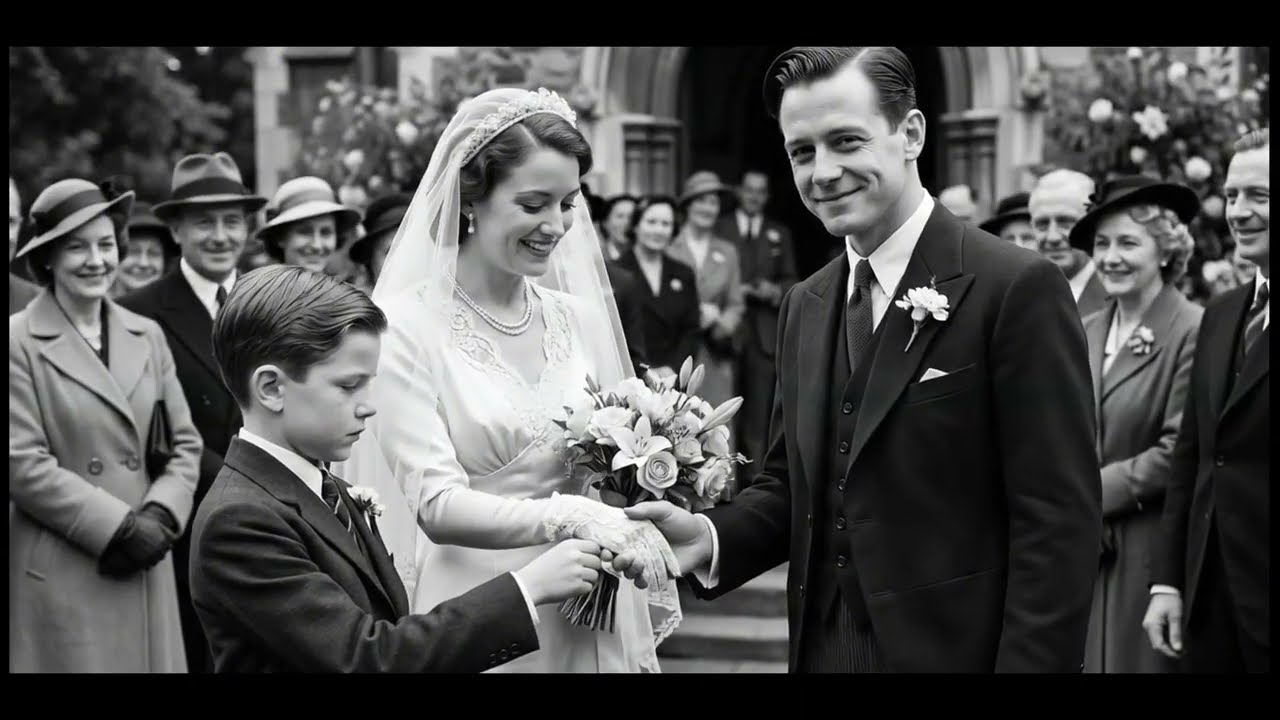
Her father was dead by her wedding year, and the one who took his place was a boy of 17 with no money and no country. In 1938, Helen Fufouni married an Englishman named William Kirby. Of the wedding itself, the record keeps very little. What it does keep is the name of the young man who stood with the bride.
By the most repeated account, it was Philip. Her father had died, and the prince, then 17, gave her away in his place. The royal writer Christopher Wilson tells it slightly differently and calls Philip her best man. Either way, the documented heart of the scene is the same. At the most important ceremony of her young life, the person standing closest to her in the place of family was the exiled prince she had known since he was three.
Even his age that day is uncertain. Philip was born in June 1921. If the wedding fell early in 1938, he was still 16. If it fell later in the year, he was 17. He was, in any case, a schoolboy on the edge of a naval career with no house of his own, no fortune, and no nationality he could easily claim. He had nothing to give a bride except his presence. He gave that.
The two versions of the day are worth holding side by side, because they would matter later. To give a bride away is to stand in for her father, the closest thing a wedding has to a declaration of family. To be best man is to stand beside the groom as his friend. The first version makes the prince part of her family. The second makes him part of the couple's circle.
Either one puts a teenage royal exile at the very center of an ordinary London marriage, with no idea that his presence there would one day be combed over by strangers looking for clues. It was the first of the gestures. Each one in its moment was an ordinary thing that an old friend does. Only later, when the boy became the most watched husband in the world, would anyone look back at a 1938 wedding and see anything in it but a family friend doing a sad duty well.
The marriage did not last. By one account, Helen and William Kirby had already been living apart for two years by the time her first child was born. On paper, she was still his wife. In life, she was a young woman on her own in wartime England, and she had met someone else.
He was a Frenchman named Marcel Boazo. One record describes him as a French army officer, another as a captain in the Free French Air Force, the airman who went on fighting under General de Gaulle after France itself had fallen. He is the quietest figure in this whole story, and in many ways the most wronged, because almost every later telling of the romance would leave him out.
Christopher Wilson records that Boazo was posted to Cairo during the war, far from the woman he would eventually marry. Helen had two children by him. The first was a son. Max Henri Boazo was born on November 11, 1943, in Maidenhead in Berkshire. The second was a daughter. Louise was born on February 8, 1945, at Wraysbury, also in Berkshire.
Here the record opens the gap that the rest of this story would fall into. Helen was still married to William Kirby when both children were born. The man she would later marry was, by Wilson's account, posted far away in Cairo. And the births, by the most repeated account, were registered with no father named at all. A boy and a girl came into the world in wartime Berkshire with a blank where the law expected a name.
In the confusion of the war, a blank on a form might have stayed a private matter. It did not stay private for long, because of who had stood at the mother's wedding.
The boy who had given her away had already known more grief than most men twice his age. In November 1937, the year before the wedding, his sister Cecilie had been killed with most of her family in an air crash at Ostend. At 16, he had walked in the funeral procession in Germany.
He left Gordonstoun early in 1939 for the Royal Naval College at Dartmouth and graduated the following year as the best cadet in his course. While Helen was raising two small children in Berkshire, he was at sea, and he was very good at it. At the Battle of Cape Matapan in March 1941, he worked the port searchlight of the battleship Valiant in a night action and was mentioned in dispatches. In October 1942, at 21, he became second in command of the destroyer Wallace, one of the youngest first lieutenants in the Navy. In September 1945, he was in Tokyo Bay aboard the destroyer Whelp when the Japanese surrendered.
He had also met a young woman who would transform the way the world looked at him. In July 1939 at Dartmouth, the 18-year-old cadet had been introduced to a girl of 13, and the two had begun to write to each other. Her name was Princess Elizabeth, and she was the heir to the British throne. By the time the war ended, the young naval officer from nowhere was on his way to becoming a member of the most famous family on Earth.
That changed the meaning of everything he had ever done, retroactively. A wedding where a teenage refugee had given away a friend in her dead father's place would become, in the retelling, a curious detail in the life of a royal duke. Two children registered without a father's name would become, in the retelling, a mystery. And the friendship between two exiled children would become a question that the Duke, as a matter of royal discipline, would never once answer in public.
By March 1947, the Greek prince had stopped being Greek and had taken his mother's family name, Mountbatten. He had become a naturalized British subject, and he gave up his Greek and Danish royal titles to do it. The engagement was announced on July 9, and the court that was taking him in made its terms clear in one small telling decision. His three surviving sisters, the girls who had helped to raise him before they married into Germany, were left off the guest list for his wedding. The prince was welcome. His past was to be kept out of sight.
It was a lesson in how the institution handled inconvenient attachments, and Helen Cordet would learn it, too. On the morning of November 20, 1947, he was created Duke of Edinburgh, Earl of Merioneth, and Baron Greenwich. Later that day, he married Princess Elizabeth in Westminster Abbey. The prince with no country had, in a single morning, acquired three British titles and a wife who would one day be queen.
That same year, by the family's account, Helen married Marcel Boazo, the Free French airman who was the father on the record of her two children. The children took the Boazo name. Her second marriage made her life respectable again in the eyes of the world. It did nothing to close the question that was already beginning to form.
Because the new Duke of Edinburgh did not drift away from the family of his childhood. He became godfather to Louise, Helen's daughter. That much is documented beyond argument. Several accounts go further and say that he became godfather to both children, the boy as well as the girl. One newspaper headline years later would put it in Max's own voice: Philip is my godfather.
For a young man who had just married into the royal family, it was a striking public commitment. A godparent in the Christian tradition promises to stand by a child for life. The new duke was promising to stand by the children of an old friend, children born in the war to a woman who had been separated from her husband, with no father named reportedly on their birth registers. To the family, it was love and loyalty. To anyone inclined to count on their fingers, it was something else.
And there was more. After the war, Helen moved to London. According to Christopher Wilson, it was with Philip's help that she found her way into show business. Whatever the Duke's part in it really was, her rise was quick.
Her stage was the most exciting thing in postwar Britain, the television set. The British Broadcasting Corporation had begun a variety program called Cafe Continental. It was the idea of a producer named Henry Caldwell, who had developed the format during the war for ENSA, the service that put on entertainment for the forces in the Middle East.
Cafe Continental was the first variety show ever televised in Britain. It went out live on Saturday evenings at 8:00 from the studios at Alexandra Palace in North London, and it ran for 45 minutes. The set was dressed as an elegant continental cafe, with tables laid for guests, and the audience at home was welcomed in with the words that became its signature: your table has been reserved by the maître d'.
The show's first host was a man named Al Burnett. When he left, the program needed a new face to greet the viewers. The face it found was Helen Cordet. She was exactly what austerity Britain had never seen on a screen. French-accented, glamorous, worldly, faintly exotic. She welcomed a nation of ration books into an imaginary cafe of evening gowns and cabaret acts.
The show drew real stars. On June 26, 1948, the great Josephine Baker appeared on it with her husband, the bandleader Jo Bouillon. For a few minutes on a Saturday night, a star of the Paris music halls was performing in the front rooms of British families who had never been further than the seaside. Most of the program is lost now. Of all those live Saturday nights, only three episodes are known to survive, all from 1950. The run itself is given as 1947 to 1953, though some accounts carry it into the middle of the decade.
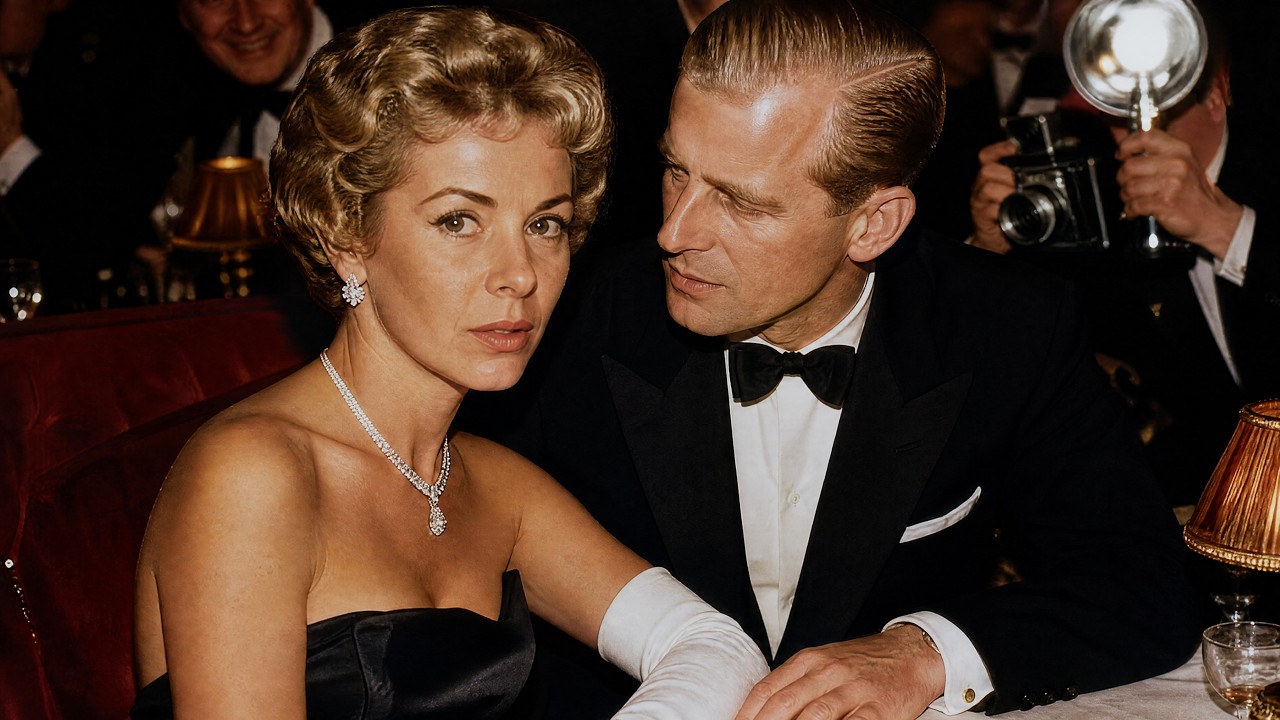
So picture the two lives at the end of the 1940s. The girl from the Greek exile in France had become one of the first women to host a program on British television, a name and a face that ordinary families knew. The boy from the same exile had become the husband of the heir to the throne, a royal duke with three titles. Each had climbed further than anyone in the old emigre world could have imagined, and the thread that ran between them was plain for anyone to see, because the Duke had stood beside her at her wedding, and now stood godfather at the font.
It was the high point of both their stories, and the moment of greatest danger. For the Duke, the new life came with a new kind of scrutiny. Everything about him was now public property. His friends, his clubs, his past. And the press had discovered that a royal husband sold newspapers. For Helen, fame came with the same price in a smaller coin. A woman on the television every Saturday night was a woman people talked about, and people did talk about the accent, the gowns, the nightclubs, and the royal friend.
Neither of them had chosen to be watched in quite this way. Both of them now were. Before the war, a friendship between two refugee children had been nobody's business. Now a television hostess and a royal duke were connected by a wedding, by godchildren, and by a rumor of help behind the scenes. The country knew her face, and it knew whose friend she was, and those two facts together were about to become a story.
On the Moray coast of Scotland stood a school built on cold water, hard exercise, and early responsibility, and Philip had been shaped by it. Gordonstoun had been founded by a German educator named Kurt Hahn, a Jewish opponent of Hitler who had been arrested by the new regime, allowed to leave for Britain, and had started his school again in Scotland. Its motto was plus est en vous, there is more in you, and its creed was simple and severe. Boys were to be made strong by hardship, trusted early with real responsibility, and taught that character was built in the cold rather than the comfortable.
Philip had arrived there as a boy after two terms at Salem in Germany, and the school had given him something his scattered family could not. It gave him a place to belong, a set of rules, and a sense of what kind of man he was supposed to become. He flourished there. He captained the cricket and hockey teams and became guardian, the school's name for its head boy.
Hahn's report on him has been quoted ever since. Prince Philip is a born leader, Hahn wrote, but will need the exacting demands of a great service to do justice to himself. The boy never lost his loyalty to the school or to the man. In 1956, he and Hahn together founded the Duke of Edinburgh's Award to carry the same ideas to young people across the country. When he had sons of his own, he sent them to Gordonstoun.
So when the Duke of Edinburgh chose a school for someone else's boy, the choice said something. Max Boazo was educated at Gordonstoun. That much is plain fact. What sits beside it is a claim repeated across account after account and set down by Christopher Wilson among others. The claim is that Philip paid the fees.
The records of that payment have never been published and no figure has ever been given. What the accounts agree on is the shape of it: the Duke's own school, the school that had made him, the school he would choose for his own sons, and a bill reportedly settled by the Duke for the son of his childhood friend. It is the single most suggestive fact in the whole story, and it is only suggestive.
There are two ways to read it, and both were available to the country at the time. On one reading, it was exactly what it appeared to be on its face. A man who had been given a home and a table by the Fufouni family when he had none, and who had stood godfather to this boy, reportedly did what a godfather of means might do. He made sure the child had the best start he knew how to give, at the one institution he believed in more than any other. For a man with Philip's history, there could hardly have been a more natural gift.
On the other reading, a royal duke was paying to educate a boy born in the war to a woman separated from her husband, a boy with no father named on his birth register by the most repeated account, and a boy who was said to look rather like him.
That last detail did more damage than any document. Over the years, the tale grew that Max resembled the Duke. Newspapers ran photographs of the young Max beside photographs of the young Philip, inviting readers to compare the faces for themselves. It is one of the cruelest instruments a press can use, because it cannot be answered. A boy cannot argue with his own face. He cannot publish a statement against a jawline. Whatever features Max carried, he carried them into every room, and every stranger who had seen the pictures could look at him and wonder.
And here the pattern of the whole story comes into focus. Each gesture the Duke made toward this family was, on its own, the ordinary loyalty of an old friend. He stood at the mother's wedding. He stood godfather at the font. He reportedly helped her find her way onto the stage. He reportedly paid for the boy's schooling. Laid end to end, those gestures turned into a case for the prosecution. Every kindness became evidence.
That is the cruelty at the heart of this story, and it had nothing to do with anyone's intentions. The more the Duke did for Max, the louder the whisper about Max became. The boy was the reason for every act of generosity, and he was also the one who carried every rumor that the generosity produced. He was a schoolboy on the Moray coast being toughened by cold water and early rising, and somewhere far to the south, in newspaper offices and at dinner tables, people he would never meet were discussing who his father really was.
It is worth remembering who could have ended it. The Duke could have said something. He never did in public at any point in his life. The palace could have issued a denial. It never confirmed the rumor, never denied it, and never so much as acknowledged that it existed. Helen could have named the father of her children plainly and in print. She would later write a whole book about her life and still, by the most repeated account, declined to do so.
Each of the adults had reasons for silence: pride, discipline, privacy, perhaps a sense that a denial would only feed the story. But the silence of the adults left one person to carry the question, and he was a child. The same silence gave the rumor its strange durability. A story that is denied can be tested and dismissed. A story that is never addressed simply waits. And every new photograph, every new public moment, every new kindness brings it back to life.
The Duke's reputation as a man with many glamorous female friends did the rest. On the day he died, decades later, a news agency piece on those friendships still listed Helen Cordet first among them. The association had outlived almost everyone who could have explained it.
None of this touched the Duke's own position in any way that mattered. He was the queen's husband, and nothing a newspaper printed about a godson's school fees could change that. The damage fell downward onto the people with the least power to answer. It fell on a woman who worked in television and needed her name. It fell on a French airman whose fatherhood was being quietly written out of his own children's story. Above all, it fell on a boy at a Scottish boarding school whose face and whose fees had become exhibits in a trial that never took place.
For now, the palace had simply said nothing, and silence can look like tolerance. But in the summer of 1953, the court would act quietly on the most public day of the reign.
On June 2, 1953, about 8,000 guests filled Westminster Abbey, and 27 million people in Britain watched on television. It was the first coronation of the television age. For the first time, the crowning of a British sovereign was shown live to the people at home on the television service of the BBC. For most people in Britain, this was the day that television stopped being a novelty and became the way the nation watched itself.
At the center of it all stood the Duke of Edinburgh. He had chaired the coronation commission, the body that planned the ceremony, a break with precedent for a royal consort. And in the abbey, when the moment of homage came, he was the first of the royal peers to kneel and pay homage to his wife.
The husband knelt, the country watched, and somewhere outside the abbey, one of the best known faces on British television was watching, too. Helen Cordet was not there. She was by then a familiar figure to millions of viewers, the hostess who welcomed Britain every Saturday night into a cafe that did not exist. She had known the Duke since he was three. He had stood with her at the most important moment of her own young life, and he had stood godfather to her daughter. If any private friend of the royal husband might have expected a place at his wife's crowning, it was surely her.
And 1953 was for her a year of rising fame. It was the year her face moved from the small screen to the large one. She appeared in two films released that year, The Limping Man and Three Steps in the Dark, with a third, Tale of Three Women, to follow. The exile's daughter, who had once minded a little prince in France, was now an actress and a television hostess known in homes across the country. By any ordinary measure of London society, she had arrived.
She was, in the words of one account, reportedly barred. Christopher Wilson, the royal writer, attributes her absence to the courtiers. By his account, the men who managed the palace did not want the Duke's glamorous old friend on display at the sacred centerpiece of the new reign. Whether anyone ever told her so directly, the record does not say.
What the record does keep is her own explanation. She said later that she had simply overslept and missed it. It is a small sentence, and it has been read in two ways. On its face, it is a joke at her own expense, the kind of thing a performer says to make an awkward question go away. Many who have told the story since have read it as something sadder, a proud woman covering a snub with a shrug. That second reading is only a reading. No letter survives in which she complains of being shut out, and no courtier ever put his name to the decision. There is only the absence and the joke she made about it.
It matters, though, to be precise about where the line was drawn and by whom. There is no recorded word from the queen herself about Helen Cordet on that day or any other, in any direction. There is no record that the two women ever met. The exclusion, as Wilson tells it, was the work of the court, the professional guardians of the monarchy's image doing what they did as a matter of routine. To blame the young queen for it would be to invent a feeling that no source records. What the day shows is something colder and more impersonal. An institution had noticed a friendship, judged it a risk, and quietly closed a door.
Set the numbers side by side, and the scale of that closed door becomes clear. About 8,000 people were inside the abbey that morning. 27 million more were watching at home. In the run-up to the day, the number of television license holders in Britain had doubled from about 1.5 million to about 3 million as the country equipped itself to see a crowning for the first time. The occasion belonged to television more than to any ceremony before it. And the woman who had been one of the young medium's first hostesses, whose face had been in those same front rooms every Saturday night, watched the crowning of her oldest friend's wife from outside like everyone else.
There is a particular cruelty in the kind of exclusion that leaves no record. A public snub can be answered. A quarrel can be patched. But a door that closes without a word, without a letter, without anyone ever admitting that it closed, gives the person outside nothing to push against. Helen could not protest a decision that no one admitted making. She could only make a joke about sleeping late and carry on.
What the Duke knew of it, the record does not say. There is no account of him learning that his friend had been kept away, no account of him objecting, and no account of him agreeing. He was that day the most visible husband in the world, kneeling before his wife under the eyes of the abbey and the cameras, and whatever he thought about the absence of one guest, he kept to himself, as he kept everything about this friendship to himself for the rest of his life.
It is possible he never knew. It is possible he knew and accepted it as the price of his position. The silence runs both ways, and it leaves the question open. What can be said is that the coronation fixed the pattern of the years to come. Whatever the Duke gave to this family, he would give in private. Whatever the court decided about this family, it would decide without explanation. And whatever the country suspected, it would be left to suspect.
For the court, the coronation settled one thing. The friendship would be tolerated in private and kept out of sight in public. The Duke could keep his old friends and his godchildren, and whatever kindnesses he chose to show them, so long as none of it appeared beside the crown on a day that the whole nation was watching. It was a line, and for a few years it seemed to hold. But the court had drawn a line around a friendship, and within four years the press would test the marriage itself.
In 1956, the Duke sailed away on the new royal yacht Britannia on a world tour that would keep him from home for about five months. The yacht had only just been commissioned, and the Duke traveled around the world aboard her. He had given up his active career at sea when his wife came to the throne in 1952, and in a sense, this voyage gave some of it back: months on the open ocean, far from the palace and its rules. In Australia, he opened the summer Olympics in Melbourne.
The absence came only a few years into the reign. Beside him on the voyage was his private secretary and friend, Mike Parker, who had served the Duke since the year of the wedding. Both were members of the Thursday Club, an exclusive weekly luncheon group of the Duke's friends that met away from the formality of the palace. It met in a private room on the sixth floor of Wheeler's Restaurant in Old Compton Street in Soho, and its members were drawn from actors, artists, and naval men. It was a world of long lunches among men, and to a press that was hungry for royal gossip, it looked like something more.
In 1957, the story broke, and it broke abroad, beyond the reach of the British newspapers and their habits of deference. On February 8, 1957, the Baltimore Sun, an American newspaper, published a story by its London correspondent, the journalist Joan Graham. It reported rumors that the Duke was interested in an unnamed woman whom he was said to meet in the West End flat of a society photographer. The woman in that story was never named. Nothing in it concerned Helen Cordet, but it landed in an atmosphere that the old whispers about the Duke's glamorous friends had helped to create, and it spread quickly.
Then came a second blow. On the return leg of the voyage, Mike Parker's wife sued him for divorce. In the Britain of the 1950s, a divorce was still treated by the press as a scandal, and a divorced man close to the crown was an embarrassment. Parker resigned. To the newspapers, the timing seemed to confirm everything. The Duke's best friend, the man who had been at his side for five months at sea, was leaving in disgrace, and it was easy to suggest that he had been leading the Duke astray.
The truth was simpler. His marriage had ended, and in that decade, a divorce was enough to end a courtier's career. The press, as it had in the Townsend affair only a few years before, still treated divorce itself as a scandal, and a man who had been through one could not easily stay close to the crown.
Further reports followed, claiming that the royal couple were drifting apart. The Duke's reaction, as Parker later described it, was fury. The Duke was incandescent, Parker said. He was very, very angry and deeply hurt.
The palace did something it almost never did. It answered. The reports had enraged the Duke and dismayed the queen, and a strongly worded denial went out. It is quite untrue, it said, that there is any rift between the queen and the Duke.
The woman in whose name those words were spoken had been crowned less than four years before. She was about 30 years old and five years on the throne. Her husband had been away for months, and she was reading in the newspapers that her marriage was failing. The whole apparatus of the monarchy had been built to keep private life private, and here was the most private thing she had, her marriage, being discussed in public by strangers. She could not correct the story herself. She could only authorize a statement and wait for her husband to come home.
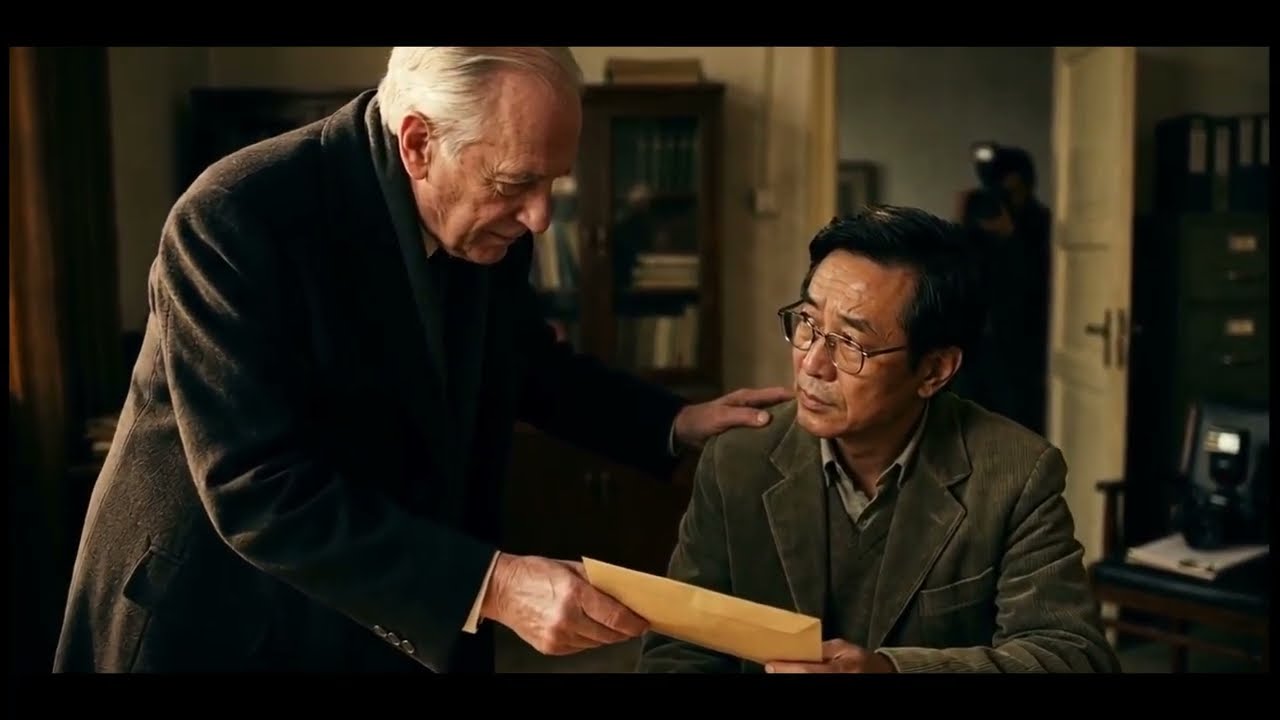
She did one more thing. In a public show of support for the man the newspapers were blaming, the queen made Mike Parker a commander of the Royal Victorian Order, an honor in her personal gift. It was a quiet signal that the palace did not believe the worst of him. Parker himself would later insist that the Duke had been faithful.
The Duke had his own answer to stories like these, and in later years he gave it with a kind of weary exasperation. In 1992, asked about the endless rumors of other women, he pointed to the one fact of his life that no newspaper could argue with. Have you ever stopped to think, he said, that for the last 40 years, I have never moved anywhere without a policeman. It was a practical man's defense, the answer of someone who had spent his adult life shadowed by protection officers. It did nothing to stop the stories.
The scale of that year is easy to lose among the headlines. Five months at sea. An Olympic Games opened on the other side of the world. A private secretary honored twice by the crown, made a member of the Royal Victorian Order in the Coronation Year of 1953 and raised to commander in 1957, and gone from the household soon after. A young sovereign five years into her reign, answering in public a question about her own marriage.
None of it had anything to do with a television hostess in London, but it showed her exactly where she stood. Because notice what the palace denied and what it did not. It denied a rift in the royal marriage forcefully and in writing. It had never once denied the rumor about Helen Cordet and her son, and it never would. The only denial the court ever made about the Duke's private life concerned the marriage in general. The specific women and the specific children were left to the silence. Helen and Max and Marcel Boazo in Paris were never given the protection of a single sentence.
This was the point of no return. After 1957, the court's method was settled. It would defend the marriage when it had to, and it would never touch the friendships. The rumor about the cabaret hostess and her son would be allowed to run unchallenged for as long as the newspapers cared to run it. The court would deny a rift, but never a friendship. And the woman at the center of the other whisper was about to try, in her own way, to tell her own story.
On October 4, 1961, a press photographer caught Helen Cordet trying out a brougham, a closed horse-drawn carriage, for her newest venture. The picture went out on the news agency wire with a caption that reads like a small time capsule. It said the brougham would be a feature of her new venture, the Saddle Room, next door to her famous French club in London's West End. The Saddle Room, the caption promised, would be an inexpensive, informal nightclub, and as the name implied, would have a horse and carriage theme. The brougham would be available to take guests home as a novel form of transport in the jet age.
It is a perfect image of the woman she had become by the early 1960s. Here was a refugee's daughter who had lost one country and one marriage, climbing into a horse-drawn carriage to advertise a nightclub in the age of the jet. She understood exactly what the newspapers wanted from her: a picture, a novelty, a little glamour. And she gave it to them on her own terms.
She had been remaking herself for years. By one account, long before the television lights, she had worked in a Paris dress shop and then moved to London to open a nightclub and sing cabaret. Cafe Continental had made her famous. When the program came to an end, she did not fade with it. The films had followed: The Limping Man and Three Steps in the Dark in 1953, Tale of Three Women in 1954. By 1956, she owned a nightclub under her own name, Chez Helen Cordet.
The French club mentioned in the caption was the next stage of the same career, and the Saddle Room was the stage after that. She founded it in 1961 with a partner, Major Peter Davies, on Park Lane. It is remembered as London's first discotheque, a club where the music came from records rather than a band, opening just as the 1960s began. Some of the stories told about it come from Helen herself and belonged to her own legend. By one account, the club began with a stock of only about 50 records. By her own telling, the American comedian Bob Hope was turned away at the door three nights running. She reportedly sold her share of the business in 1969. The room itself carried on into the early 1980s, long after the brougham had gone.
Lay her working life end to end, and the range of it is remarkable. Three films in two years. A nightclub under her own name by 1956. A famous French club in the West End. Then in 1961, the Saddle Room. A career that ran from a live studio at Alexandra Palace in the late 1940s to the first discotheque in London and a room on Park Lane that stayed open for about 20 years. For a woman who had arrived from France with a failed marriage and two small children, it was an extraordinary run.
And through every reinvention, one question followed her in. It followed her into the television studio and onto the film set. It followed her into her own nightclubs, where every guest who came through the door knew, or thought they knew, the story about her and the Duke.
It is possible, as some have suggested, that the mystery was part of the attraction, that a hint of royal intrigue did a nightclub hostess no harm at all. That is a reading, and a cynical one, though a reasonable one. A woman in her trade lived on being talked about. The whisper that hurt her son may also have helped to fill her rooms. That double edge is the hardest thing in her story to hold.
She had very little power in the world she moved through. She had no title, no fortune of her own beyond what she earned, and no protection from the court that had shut her out of the coronation. What she did have was a name that people recognized and a story that people wanted to hear. The mystery around the Duke was, in a sense, the one asset that no one could take away from her. The question was what it would cost to use it.
Her old friend's life in those same years ran on a very different track. The Duke was building structures of his own, the award he had founded with Kurt Hahn in 1956, the endless round of public duty that came with being the queen's husband. There is no record that he ever set foot in any of her clubs, and no record that he did not. The two lives that had begun in the same exile now touched, as far as the public could see, only through the children at the font and the question in the newspapers.
Eight years had passed since the coronation. In that time the court had defended the royal marriage in print and had never said one word about her. She had answered the silence in the only language she had, by being seen: on the screen, in the films, at the door of her own clubs, and now in a horse-drawn carriage in the newspapers. A woman who could not be invited could still be photographed.
For the moment, the cost was invisible. In the autumn of 1961, she was at the height of her fame, a television pioneer turned nightclub owner posing for the cameras in a horse-drawn carriage on the eve of the swinging decade. Her son was a young man about to turn 18. Her daughter was a teenager who would soon have a hit record of her own. And the Duke of Edinburgh, whom she had known for nearly 40 years, was the husband of the queen, as silent as ever about the friendship.
She had built a public self several times over out of almost nothing. Now she wanted to tell the story of that self in her own words. The same year she opened the Saddle Room, she put her life into a book, and the book did not do what she hoped.
Her book came out in 1961 under a title that told the reader almost everything and nothing at once: Born Bewildered. It was an apt title for a woman whose life had begun in exile and never quite settled. It promised candor. Here, at last, the reader might expect, was the story from the woman at the center of it: the childhood in France, the little prince, the wedding, the war, the children, the television years, the nightclubs.
The book told her story as she chose to tell it. What it did not do, by the most repeated account, was answer the one question everyone was asking. Even in her own memoir, Helen declined to name the father of her children. The man who was the father on the record, Marcel Boazo, was of course known, but she chose not to set down, in plain words, the sentence that would have closed the matter for good.
The effect was the opposite of what a memoir is supposed to achieve. Philip's biographer, John Parker, delivered the verdict that has stuck to the book ever since. Unfortunately, he wrote, far from quelling innuendo, Miss Cordet's autobiography merely fanned it. That way, her book sold more copies.
It is a harsh judgment, and it contains an accusation. Parker was suggesting that the silence at the heart of the book was deliberate, that a performer who understood publicity knew perfectly well that an unanswered question sells better than an answer. Whether that is fair, no one can now say. She may simply have believed that the paternity of her children was her own business and nobody else's. She may have been protecting someone. She may have been protecting herself. But the result was the same. Whatever the motive, a book that could have ended a rumor made it louder.
There was another detail around the book that the gossip seized on. According to Christopher Wilson, Marcel Boazo did not formally acknowledge the children as his own until shortly before the memoir appeared. If that account is right, then for most of their childhood the paperwork had left the question open, and it was closed on paper only when a book was about to put the family's life before the public. It could be read as a sensible tidying of legal loose ends before publication, or as something more. Either way, it fed the story instead of starving it.
Her own recorded words about the rumor were few, and they pulled in different directions. She is reported to have called the rumors ridiculous. Christopher Wilson also records that, watching the Duke on television, she admitted she got hot under the collar. It is a small human line, the kind of thing a woman might say about a man she had known and been fond of for a lifetime. It proves nothing. But in the hands of people already looking for a romance, it was one more thread to pull.
This is where the cruelty of the story turns on her. Helen was in many ways the one with the least protection. The court had shut her out without a word. The Duke would never speak for her. The newspapers treated her as a character in someone else's scandal. The mystery was the only thing she controlled, and in using it, in keeping it, perhaps in profiting from it, she kept the question alive around the person she most needed to protect.
Because the book did not only fan innuendo about her and the Duke. It fanned innuendo about her son. Max Boazo turned 18 in November of the year the memoir was published. He was a young man at the start of his adult life, and his mother's book had just made sure that the question of his parentage would follow him into it. Every reader who closed Born Bewildered without an answer was a reader who might look at Max one day and wonder.
There is a strange echo in the timing. In the very same years, the Duke of Edinburgh was fighting a private battle of his own over a name. When it had been decided early in the reign that the royal house would keep the name Windsor rather than take his, he is recorded as complaining in private. I am nothing but a bloody amoeba, he said. I am the only man in the country not allowed to give his name to his own children. A compromise, the name Mountbatten-Windsor, came only in February 1960.
So at the very moment that the world was questioning whose name belonged to Helen's son, the Duke himself was smarting over the court's refusal to let his own children carry his. The machinery that governed royal names had no sympathy to spare for anyone, the husband of the queen included.
There is no record of what Max thought of the book. There is no record of a quarrel between mother and son, and it would be wrong to invent one. What the record does show is the shape of what came after. For the next quarter of a century, the rumor would rise and fall with the news, and the young man at its center would do the only thing he could. He would get on with his life and build one that had nothing to do with the rumor.
Set against the scale of her public life, the book was a small thing, a single volume from a television personality, published in the same year she opened a nightclub. But it was the only time she ever tried to tell the whole story herself, and it became, in the hands of her critics, the proof that she wanted the mystery to go on. It was her one chance to end the whisper in her own words and on her own terms, and the whisper grew.
The same pattern had now caught all three of them. The Duke's generosity had become a clue. The court's silence had become an accusation. And now Helen's own story, told in her own words, had become one more exhibit in the case. The only person who had never done anything at all was the one who would pay the most. The whisper would sleep and wake for another quarter century, until a kindness in China woke it for the last time.
By the middle of the 1980s, the boy from Gordonstoun was running a European business school in the capital of the People's Republic of China. Max Boazo had taken a long road to get there. After Gordonstoun, he had studied architecture at Cambridge, then city planning at the Massachusetts Institute of Technology, and he had taken a doctorate at Imperial College London. He had worked as a manager at the construction firm Trafalgar House, co-founded an architectural partnership, and advised on projects in France and the Middle East.
Then his career had turned east. From 1983 to 1989, he was the director and dean of the China-Europe Management Institute in Beijing, a European management school in the Chinese capital. He was, in other words, a serious man doing serious work a very long way from the London gossip columns. He had built the whole of that career without once trading on the story that followed him. And in Beijing, half a world away from Fleet Street, he might reasonably have hoped the story could not reach him. He was also, as he would soon discover, not far enough away.
In October 1986, Queen Elizabeth made the first state visit by a reigning British monarch to the People's Republic of China. The Duke of Edinburgh came with her. And during that tour, according to Wilson, the Duke visited Max, seemingly going out of his way to do so.
Forty-one years earlier, the Duke had been a young naval officer aboard the destroyer Whelp in Tokyo Bay as the Japanese surrendered in September 1945. Now he came to China at the side of his wife on a journey that no British sovereign had ever made before. It was one of the great set pieces of the reign, watched and photographed at every step.
It is not hard to imagine what the visit meant to the man who made it. Here was the son of the family that had sheltered him in exile, the boy he had stood godfather to by several accounts, and whose schooling he had reportedly paid for, now a professor in his 40s, running an institute in Beijing. For a man of 65 who had spent his childhood being passed from house to house, it may have been simple pride, a godfather calling on a godson who had done well. That, at least, is the humane reading, and nothing in the record contradicts it.
But the world did not read it that way. The press seized on the visit at once: a royal duke calling on the rumored secret son in the middle of a historic state visit on the other side of the world. It was irresistible. The old story roared back into the newspapers as if the intervening decades had never happened. The kindness had become evidence once again.
Here, the foreshadow of a 1938 wedding pays out in full. The boy who had once given away a bride in her dead father's place had gone on standing beside her family again and again for nearly 50 years. And every single time, the gesture had been read in a way he never intended. This time the cost fell on the one person who had never chosen any of it.
Max, in Wilson's word, snapped. After a lifetime of saying nothing, he spoke. And what he said was the plainest sentence in the whole long story. I have heard these rumors all my life, he said. But they are ridiculous. My father, my real father, lives in Paris, and it is silly to say otherwise.
Read it slowly, because every clause carries weight. I have heard these rumors all my life, always from childhood, from before he could have understood them. But they are ridiculous. A flat denial with no hedging and no wink. My father. My real father. The repetition is the sound of a man correcting the record yet again and insisting on a word that the world had spent 40 years trying to take from him. Lives in Paris. Marcel Boazo, the Free French airman, the man almost every version of the romance left out, restored in a single phrase to his place. And it is silly to say otherwise, the weariness of it, the dignity of it.
The accounts differ slightly on when he said it. Wilson places his outburst in the aftermath of the Beijing visit. A news agency report dates a public statement from Max, insisting that the Duke was not his father, to 1988. Perhaps he said it more than once. Perhaps he had to. What matters is that he said it, and that it was the most direct statement any member of the family ever made on the question.
The numbers of that moment are simple. He was 42 years old in October 1986. He had been running the institute in Beijing for three years and would run it for three more. The rumor about his parentage had been following him since before he could remember, more than 40 years. And it took one visit from a kind man of 65 to force him, in middle age, halfway across the world, to defend in public the plain fact of who his father was.
That is the climax of this story, and it has two edges that cannot be separated. The visit was a kindness. The kindness was a cruelty. They were the same act. The Duke had wanted, in all likelihood, to see a godson who had done well. What he achieved was to drag that godson back into a story he had spent his whole life trying to live beyond.
The Duke himself said nothing. He never did. He went back to the state visit and then back to Britain, and the silence resumed as if it had never been broken. It was Max who had to speak, and Max who had to live with having spoken. And the queen, whose historic journey had been the occasion for it all, found the oldest rumor about her husband's friends running beside the coverage of her visit. What she thought of that, the record does not say. It never says.
Long before, Max Boazo had already built a life that owed nothing to a rumor and everything to his own mind. Look at the shape of that life, and it is hard to find the whisper anywhere in it.
The boy from Gordonstoun went up to Cambridge to read architecture. He crossed the Atlantic to study city planning at the Massachusetts Institute of Technology. He came back to London and took a doctorate at Imperial College on the transfer of technology. He worked as a manager at the construction firm Trafalgar House. In 1972, he co-founded an architectural partnership, Boazo Waters Cohen. From 1975 to 1978, he worked as a consultant on projects in France and the Middle East. And then came the long years in China, running the management institute in Beijing through most of the 1980s.
Any one of those careers would have satisfied most people. Max went on to a fourth, as a scholar and a writer on information, knowledge, and strategy. The titles of his books announce the subject plainly. Information and Organization appeared in 1987. Information Space followed in 1995. Then in 1998 came Knowledge Assets. In the year 2000 it won the Ansoff Prize. He became professor of strategic management at EADA, the business school in Barcelona. He was an associate fellow of Templeton College, Oxford, a senior associate of the Judge Institute at Cambridge, and a research fellow at the Wharton School in America. With a colleague named Dave Snowden, he helped to develop what became known as the Cynefin Framework.
Put the career side by side, and the scale of it is striking. Three universities on two continents for his own training. A partnership founded in 1972. Six years at the head of an institute in Beijing. Three books across 11 years, one of them a prize winner in the year 2000. Posts at Barcelona, Oxford, Cambridge, and the Wharton School. For a man whose name, to the readers of gossip columns, meant only a rumor, it was a life of formidable substance.
There is a particular irony in the subject he chose. Max spent his working life writing about information and knowledge, as the titles of his books make plain. His own life had been shadowed from the start by a piece of information that could never be confirmed, never be disproved, and never be made to go away. Whether he ever saw the connection himself, the record does not say. It would be a stretch to claim that the rumor drove his choice of subject. But the parallel is there for anyone who looks.
What the people who worked with him remembered was not the rumor at all. They remembered the mind. A colleague described him as one of the last true polymaths, a man known for his rigor and for drawing knowledge together across disciplines. They remembered his generosity with his time and his intelligence, and the habit he had of pointing younger colleagues toward the next book. If you are interested in that, he would say, then you really need to read, and a title would follow. He taught at universities from Warwick to Athens, from Hong Kong to Barcelona and Birmingham. And the colleagues who wrote about him afterward remembered the teacher and the scholar and almost nothing else.
They also remembered his humor, which was dry and aimed mostly at himself. To one colleague who admired him, he once said: sometimes I think you take me too seriously. Nobody else does. It is the joke of a man who knew exactly how good his work was and saw no need to insist on it.
He made his home in the end in Sitges, on the coast of Spain, in a house he had designed himself. The architect who had trained at Cambridge and the scholar who had written about knowledge had come together under one roof of his own making. It is hard to think of a more fitting image for the whole of his life. He had been handed a story by the world, a story about a secret father and a royal romance. He had declined to live in it. He had built his own house instead.
That is what makes his single public denial so powerful. He gave no interviews about his mother and the Duke, and he wrote no memoir to answer hers. For almost all of his life, he simply got on with the work and let the work speak. When he finally did speak, after Beijing, it was once, briefly, and plainly, and then he went back to his books.
There is dignity in that refusal, and there is also cost. Every achievement in that long list was an achievement he had to earn twice: once in his field, and once against the story that followed him. Every room he walked into, there was the chance that someone knew the rumor before they knew the work. That he built so much regardless is the answer he chose to give to the whisper. It is a better answer than any denial.
Beijing itself did not drive him away. He stayed on at the head of the institute until 1989, three more years after the visit that had revived the old story, and then carried his ideas west to Barcelona and to the scholarly world of Europe and America. The rumor had interrupted him for a moment. It had not been allowed to redirect him.
His work outlived him. An annual award in his name was established by the European Group for Organizational Studies, the scholarly society in his field. His frameworks are still taught. The prize he won for Knowledge Assets stands in the record beside his name. None of it mentions a duke. The whisper never touched his work, but it had followed his mother to the end of her life, and it had long since erased another man from the story entirely.
The man Max called his real father had once been a captain in the Free French Air Force, and almost no one telling the love story ever used his name. His name was Marcel Boazo. He is the quietest figure in this whole history and the one who has been most thoroughly wronged by it.
The records describe him in slightly different ways. One as a captain in the Free French Air Force, another as a French army officer. Christopher Wilson records that he was posted to Cairo during the war. One account credits him with a daring flight in 1940 from Meknes in Morocco to Gibraltar without maps, to reach the side that was still fighting. Whatever the details, he was a Frenchman who served in the war, who fathered two children with Helen, who married her, and whose surname those children carried for the rest of their lives.
And yet, in almost every version of the romance that the newspapers told, he simply disappears. The story needed a secret father, a royal one, and a real father in Paris was an inconvenience to it, so he was left out. The resemblance photographs set the young Max beside the young Duke, never beside Marcel Boazo. The gossip asked who the real father was, as if the question had not already been answered on the record.
According to Wilson, Boazo did not formally acknowledge the children until shortly before the memoir appeared in 1961. If that is right, it was a gap in the paperwork, and the world filled the gap with a prince. It is also the only thing the popular story ever seemed to know about him. Of his own words, his own feelings, his own view of the rumor that his son was another man's child, the record keeps nothing at all.
There is something fitting and something sad in how little survives of him. The story had no use for a Free French airman with a posting in Cairo and two children who carried his name. It wanted a prince. And so the one man in the whole history who had the plainest claim to be part of the family became the one man the popular story never troubled to name.
It took his son to put him back. My father, my real father, lives in Paris. That sentence, spoken in the aftermath of Beijing, is the only place in the whole long story where Marcel Boazo is given his due. It is a son's defense of a father, and it is also a quiet rebuke to everyone who had spent 40 years telling that father's story without him.
His daughter's story ran in a different direction. Louise Boazo, born at Wraysbury in 1945, was the one member of the family whose link to the Duke was documented beyond question. She was his goddaughter. She grew up to become a pop singer under her mother's stage name, as Louise Cordet. In 1962, her record I'm Just a Baby, written by Jerry Lordan and produced by the former Shadows drummer Tony Meehan, reached number 13 on the British singles chart. She toured with the Beatles, with Roy Orbison, and with Gerry and the Pacemakers in the early 1960s. By 1965, she had stopped recording. She married a Greek national and has three children. Her eldest son is the singer and songwriter Alexi Murdoch.
Her part in this story is brief, and it should stay brief. Of the two children, she was the one whose tie to the Duke the record had always acknowledged openly. She lived her own life and made her own music, and the public record of her is a record of work and family, not of scandal.
Her mother's story, meanwhile, was drawing to a close. In the years after the Saddle Room, the record of Helen's own life grows thin. What it keeps is the one thing that never changed. She never confirmed the rumor. In her own recorded words, she called it ridiculous. And in her own book, she declined to settle it.
She died on April 30, 1996, in Switzerland. She was 78 years old. The cause of her death was not made public. She had carried the ambiguity for more than half a century, and she carried it to the end.
The timing held one last small cruelty. In the same year that Helen died, the biographer Sarah Bradford published her belief that the Duke had been unfaithful. The claim did not concern Helen Cordet, but it meant that the year her life ended was a year in which the old questions about the Duke and other women were being asked again. The story she had lived inside for 50 years was still being written as she left it.
Of the first husband, William Kirby, the record keeps almost nothing beyond his name and the year of the wedding. He too was a man whose absence the rumor had rushed to fill. Between them, Kirby and Boazo are the two husbands of Helen Cordet, and the popular story has room for neither. It had room only for the prince who had stood beside her at the first wedding.
So by the spring of 1996, the shape of the story was almost complete. The mother was gone, having never answered the question. The daughter had long since stepped away from the spotlight. The father in Paris had been written out of his own children's history. And the son had said his one plain sentence and gone back to his work. Two of the three people at the center of the whisper were now beyond its reach, and the one who had never said a word about it was still alive.
Max Boazo was told in July 2011 that he had an aggressive cancer, and he was dead by September. The illness moved fast. In his last weeks, from a hospital bed, he sent a message to a colleague that caught his humor to the very end. Ailing fat Greek, it read, would welcome a pastoral visit from pseudo-Welsh druid. On September 7, 2011, after a cardiac arrest following a hospital scan, he died. He was 67 years old. The colleagues who wrote about him afterward wrote about the polymath, the teacher, the author of Knowledge Assets. None of them needed to mention a duke.
The Duke of Edinburgh outlived him by almost 10 years. He had been married to the queen for 73 years. The refugee boy from Corfu grown into the longest serving consort in British history. A man who had given up the naval career he loved when she came to the throne. He died at Windsor Castle on the morning of April 9, 2021, at the age of 99. In all those years, he had never said one word in public about Helen Cordet or her son. On the day he died, a news agency piece on his glamorous female friends still named her first.
Set the lives against one another, and the arithmetic of the story is laid bare. Helen was 78 when she died in 1996. Max was 67 when he died in 2011. The Duke was 99 when he died in 2021. Between the three of them, they lived for more than 240 years. And for more than 50 of those years, the same rumor followed all three of them, unproven, unconfirmed, and never once addressed by the man at its center.
The verdicts on the Duke himself were never settled. Sarah Bradford, who had written that he was unfaithful, admitted some 15 years later that she might have been mistaken. Gyles Brandreth, writing in 2004, concluded that the female friends were merely playmates, not mistresses. Mike Parker, the friend who had sailed with him on Britannia, insisted that the Duke had been 100 percent faithful to the queen. And the Duke's own view of the claims that he had strayed was brisk. It's absolutely cuckoo, he said.
The queen herself died the following year. In all the decades of the rumor, from the wedding year to the end, there is no record of a single word from her about Helen Cordet, warm or cold. Whatever she knew, whatever she felt, she kept, as she kept almost everything to herself.
None of those verdicts was about Helen Cordet specifically. None of them could have been, because the only record that ever existed about her and the Duke was a record of kindness. A wedding in 1938. A place at the font. A career helped along, reportedly. A school reportedly paid. A visit in Beijing. Every kindness became evidence, and in the end, it was the only evidence there was.
So who paid? The cruelty in this story was real, but it did not come from where people expected. It cost a boy his name, or at least the piece of it, from the day the whispers began until the day he said the plainest sentence of his life. It cost a young queen the privacy of her marriage in a year when strangers wrote that her husband was drifting away. It cost a woman her place at the most public day of her oldest friend's life, and left her making jokes about oversleeping. It cost an airman in Paris his fatherhood in every story but the true one.
The cruelty in this story was never in a secret bedroom. It was in the silence. A monarchy that would not explain, a court that would not deny, and a proud man who would not dignify the rumor with an answer left the people with the least power to carry the whole weight of a story they could not end. The kindness and the cruelty were the same gestures, and the silence let the country read them however it liked.
The Duke understood better than most how that machine worked, even if he never chose to stop it. Asked once about the women he was supposed to have loved, he put it in a single weary sentence. As far as I'm concerned, he said, every time I talk to a woman, they say I've been to bed with her.
And so the story ends where it began, in October 1986 in Beijing, on the first state visit a reigning British monarch ever made to China. A man of 65, who had once been a refugee boy in a borrowed house, seemed to go out of his way to call on the son of the family that had taken him in. It was very probably the kindest thing he could think of to do. And the man he visited spent the rest of his life making sure the world knew the one thing that visit had made it forget: that his father was a Frenchman who lived in Paris.