In 1985, Joseph McBride, a former Daily Variety writer, was researching a book about filmmaker Frank Capra at the California State University, San Bernardino Library. While browsing FBI documents related to the JFK assassination on a microfilm machine, he came across a memorandum that would raise questions for decades.
The memo was dated November 29, 1963, seven days after President Kennedy's murder. It was from FBI Director J. Edgar Hoover to the Director of the Bureau of Intelligence and Research at the State Department, with the subject line "Assassination of President John F. Kennedy."
Buried in the third paragraph was a name that would haunt American politics for years. The memo stated that the substance of the foregoing information was orally furnished to Mr. George Bush of the Central Intelligence Agency.
George Bush of the CIA was briefed on Kennedy assassination matters one week after Dallas. The same George Bush would become CIA Director in 1976, Vice President in 1981, and President in 1989.
The full Hoover memo is precise in its bureaucratic language. It was written on November 29, 1963, six days after Kennedy's funeral. The FBI was monitoring anti-Castro Cuban exile groups in Miami, concerned they might use Kennedy's death as an excuse to launch unauthorized attacks on Cuba.
Hoover's memo describes the mood among Cuban exiles as one of stunned disbelief. Even those who disagreed with Kennedy's Cuba policy mourned his death. Then comes the critical paragraph.
The memo states that the information was orally furnished to Mr. George Bush of the Central Intelligence Agency and Captain William Edwards of the Defense Intelligence Agency on November 23, 1963, by Mr. W. T. Forsythe of the FBI.
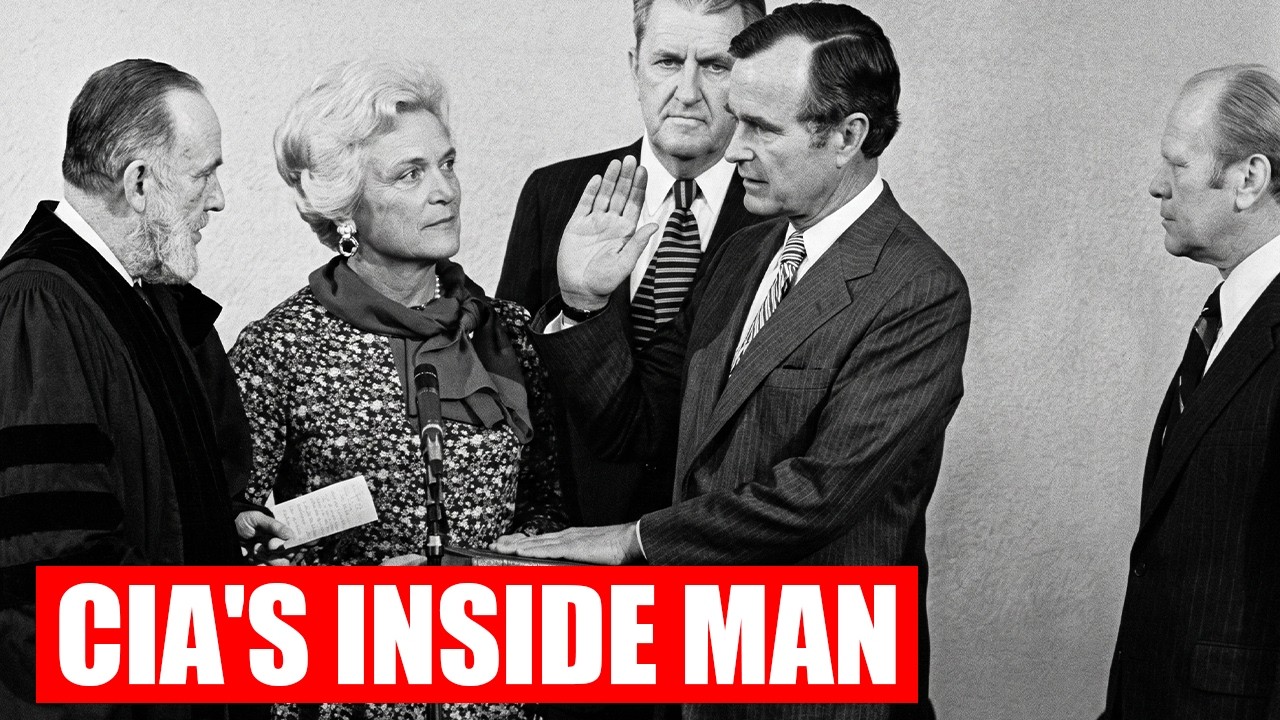
November 23 was the day after the assassination. Someone from the FBI briefed Mr. George Bush of the CIA about Cuban exile reactions. The CIA was running anti-Castro operations, and Cuban exiles were CIA assets. Someone needed to manage those assets in the wake of Kennedy's murder, and according to Hoover, that someone was George Bush.
When McBride published his findings in The Nation magazine in July 1988, George H. W. Bush was vice president and running for president. His spokesman, Steven Hart, issued a swift denial.
Hart said Bush was in Houston, Texas at the time, involved in the independent oil drilling business, and running for the Senate in late 1963. Hart added that Bush had no idea what McBride was talking about, and suggested it must be another George Bush.
McBride pressed for clarification. Did Bush do any work for the CIA before becoming director in 1976? Did he receive FBI briefings about Cuban exiles after Kennedy's death? There were no answers, only stonewalling.
In 1988, Bush submitted a sworn affidavit to the FBI. He stated he did not receive any information relating to the Kennedy assassination during his time at the CIA from the FBI. He concluded that he was not the Mr. George Bush of the Central Intelligence Agency referred to in the memorandum.
The wording was careful. Bush officially became CIA director in 1976, while the memo is from 1963. Technically, Bush could claim the memo does not refer to him, even if he was working for the CIA covertly before 1976.
The CIA offered its own explanation. They claimed the George Bush in Hoover's memo was actually George William Bush, a low-level CIA employee who worked in the agency's records department.

In 1988, reporters tracked down George William Bush. He was 64 years old and living in retirement. He told reporters he never received any such briefing and had no idea what they were talking about.
George William Bush submitted his own sworn affidavit. He stated that to his knowledge, he was never briefed by anyone from the FBI concerning the assassination of President John F. Kennedy. He did not recognize the name of any person listed in the memorandum as someone he would have known in connection with his employment at the CIA.
So George William Bush denied it. George Herbert Walker Bush denied it. But Hoover's memo exists. Someone named George Bush was briefed.
To understand George Bush's CIA connections, one must look at Zapata Petroleum. Bush founded Zapata in 1953, an oil company focused on offshore drilling in the Gulf of Mexico.
Declassified documents reveal that Zapata provided cover for CIA operations. Offshore drilling rigs were ideal for covert activities: isolated, mobile, equipped with communications gear, and a plausible reason to be near Cuba. Two ships used during the Bay of Pigs invasion were named Barbara and Houston, after Bush's wife and his home city.
Thomas Devine, Bush's business partner at Zapata, was actually a CIA officer. Devine admitted in later years that Zapata was a CIA front. By 1961, George Bush was deeply connected to CIA anti-Castro operations. His oil company was CIA cover, his business partner was CIA, and his drilling rigs supported covert missions.
Where was George Bush on November 22, 1963? For decades, Bush claimed he could not remember. A man who would become president of the United States could not remember where he was when Kennedy was shot. Everyone from that generation remembers, yet Bush's memory was blank.

Finally, after years of pressure, Bush produced evidence. A November 22, 1963 FBI memo where Bush reported a tip about a potential Kennedy assassination threat from a man named James Parrott in Houston. Bush's explanation was that he was in Tyler, Texas on business. When he heard about the assassination, he called the FBI to report Parrott, who had made violent threats.
Researchers found problems with this story. Tyler, Texas is only 110 miles from Dallas, placing Bush suspiciously close to the assassination site. Bush's FBI call seemed staged. He reported Parrott, who had nothing to do with the assassination, as a possible suspect, perhaps to establish an alibi and create a paper trail showing he was in Tyler, not Dallas. FBI records show Bush did not make the call until after Kennedy was dead.
The anti-Castro Cuban network that Bush allegedly supervised included some notorious characters. Felix Rodriguez was a Cuban exile, CIA operative, and Bay of Pigs veteran. Rodriguez later admitted working for Bush on CIA operations in Central America during the 1980s. Rodriguez was photographed in Dallas on November 22, 1963. Multiple witnesses placed him in Dealey Plaza.
E. Howard Hunt was a CIA officer, Bay of Pigs planner, and later Watergate burglar. Hunt made a deathbed confession claiming involvement in the JFK assassination. He named CIA officers and Cuban exiles as conspirators. Hunt had worked with Bush in the early 1960s. Both were involved in anti-Castro operations, both had ties to Cuban exile groups, and both were in Texas on November 22.
During the Watergate scandal, Nixon's smoking gun tape featured Nixon and H. R. Haldeman discussing using the CIA to stop the FBI investigation. On that tape, Nixon mentions the Bay of Pigs thing. Haldeman later revealed that Bay of Pigs was Nixon's code for the Kennedy assassination.
On that same tape, Nixon discusses George Bush's business partner, Robert Mosbacher, as one of the Texas fundraisers. Nixon keeps referring to the Cubans and the Texans. According to researchers, the Texans were Bush, Mosbacher, and James Baker, all Houston oilmen with CIA connections. Nixon knew Bush was involved in something related to Dallas and used that knowledge to try to control the CIA during Watergate.
In 1996, another document was declassified: a CIA internal memo dated November 29, 1975, the day George Bush was nominated to become CIA director. The memo revealed that Bush had prior CIA connections, specifically a CIA project called WUBRINY/LPDICTUM, covert commercial operations in Europe.
According to the memo, Bush was aware of this project through Mr. Thomas J. Devine, his Zapata business partner. The CIA dates Bush's connection to at least 1953, the year he founded Zapata, 23 years before he officially became CIA director. When Bush claimed he had no CIA ties before 1976, the CIA's own documents prove he had been connected to the agency since 1953.
Was George H. W. Bush involved in the Kennedy assassination? The evidence is circumstantial but troubling. An FBI memo places George Bush of the CIA in Kennedy assassination investigations in November 1963. Bush's oil company provided CIA cover for anti-Castro operations. Bush supervised Cuban exile teams, including men photographed in Dallas. Bush was in Texas on November 22, 1963. Bush could not remember where he was when Kennedy was shot. Bush's FBI alibi call seemed staged. CIA documents prove Bush had covert agency ties since 1953. Bush denied everything for decades until documents forced admissions.
Did Bush pull the trigger? No. Was he in Dealey Plaza? Probably not. But was he connected to the network that killed Kennedy, the Cuban exiles, the CIA operatives, the anti-Castro operations? The FBI memo says yes. When a future president's name appears in classified documents about the most important murder in American history, that is not nothing.