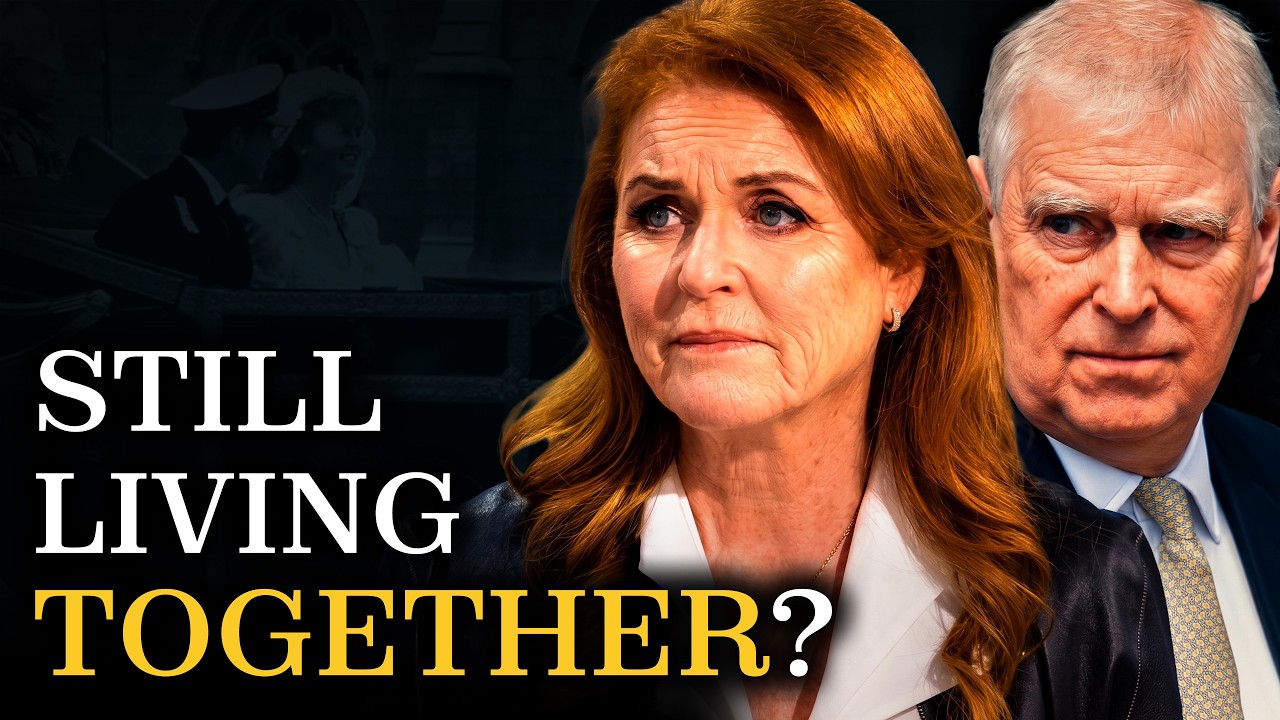
In 2018, Sarah Ferguson looked into a camera and told the world something no one had asked her to explain. "We are the happiest divorced couple in the world," she declared, smiling as if she had just invented a new category of relationship. "We are divorced to each other, not from each other."
Let that sentence settle for a moment. Divorced to each other, not from each other. She said it as if grammar alone could explain why a woman whose divorce was finalized in 1996 kept sleeping under the same roof as her ex-husband for, well, most of recorded history since.
Two people who were no longer married wandered through a 30-room royal residence in Windsor Great Park as if nothing had changed, except that everything had. The marriage ended. Scandals piled up. The money vanished. A king stripped his brother of every title he held. And through all of it, amid tabloid hysteria, financial disasters, and one ill-fated scented candle, Sarah Ferguson stayed.
Most accounts estimate roughly 20 years of cohabitation. That sounds dramatic enough on its own. But the actual math tells a different story, and it is stranger than the headline suggests.
The wedding was legendary. The collapse was spectacular. The divorce technically ended everything. Then came 26 years of living together anyway. Not 20. Twenty-six.
So why? Was it money, love, loyalty, habit, fear, or a mix of motives that defies every relationship self-help book ever printed?
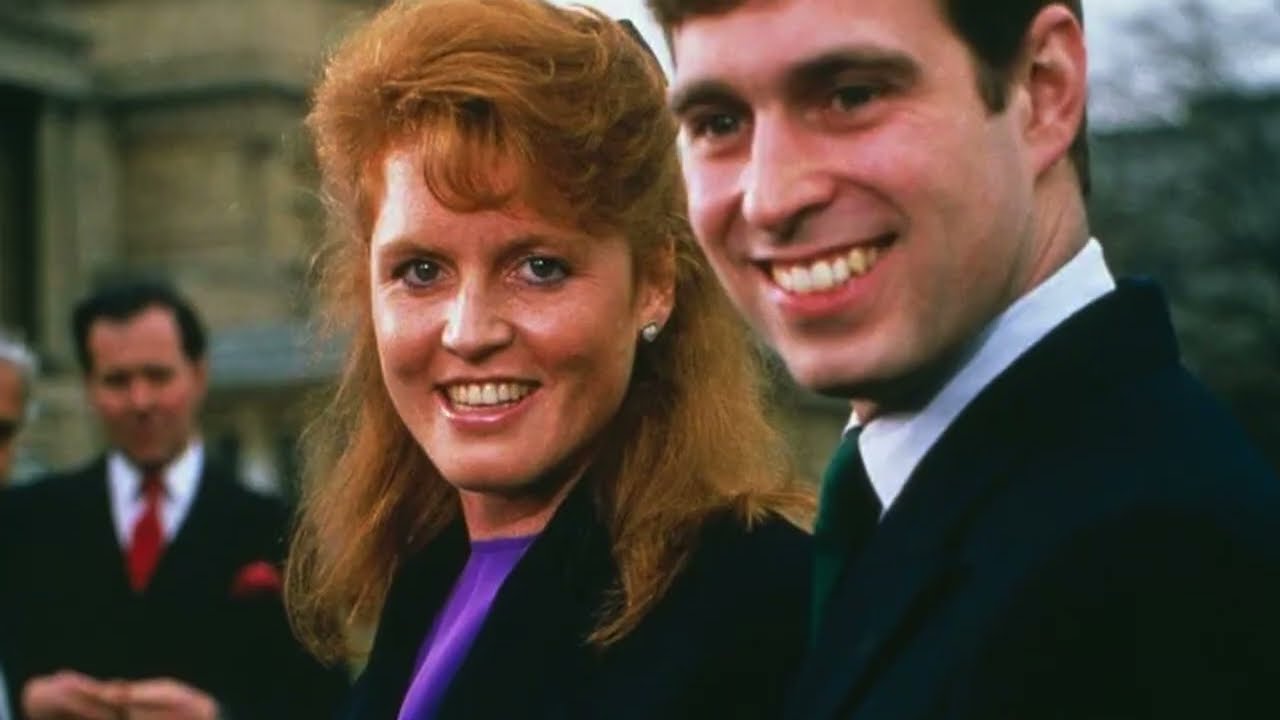
On July 23, 1986, London threw a party. Andrew, then a prince, a Royal Navy helicopter pilot, and the Queen's favorite son, married Sarah Margaret Ferguson at Westminster Abbey. The wedding dress weighed roughly 1,000 pounds. The guest list may have weighed more.
Millions watched on television, and the tabloids rushed to declare the whole thing a true love match. A breath of fresh air meant to bring warmth back to a royal family that sometimes seemed as cold as a marble statue. For a moment, it worked.
Sarah brought energy and personality, and she refused to behave like a museum piece. The press loved her before it decided to destroy her, which, if you know anything about the British tabloid cycle, took about 18 months. Maybe less.
Andrew returned to naval duties, meaning long stretches away from home, months at a time. That left Sarah alone inside a royal system that expected flawless behavior but offered almost no emotional support in return.
She gave birth to two daughters, Beatrice in 1988 and Eugenie in 1990, and handled the suffocating reality of palace protocol with diminishing patience and increasing scrutiny from the tabloids. Every outfit she wore was subject to judgment. Every public appearance was an invitation to dissection. Every pound spent on clothes or holidays faced harsh condemnation from the same papers that had showered her with congratulations two years earlier.
The fairy tale lasted six years on paper, though insiders suggest the cracks appeared much earlier. Andrew's naval absences strained the relationship, and Sarah's frustration with royal constraints leaked into public view. The press, having smelled blood, shifted from admiration to demolition with a speed and glee only the British tabloids can muster.
By 1992, everything had broken down so publicly that Princess Margaret sat down and wrote what may be the harshest letter any royal family member has sent to another human being. On March 19, 1992, Andrew and Sarah formally separated.
The separation alone might have passed quietly. Royal marriages fall apart all the time. Charles and Diana were barely speaking by that point too, and the entire institution seemed to be crumbling from within. A quiet separation, some dignified distance. It could have happened. It almost did.
Then the photographs appeared. In August 1992, the Daily Mirror published images of Sarah sunbathing topless in the south of France while a man named John Bryan, her financial adviser, appeared to be sucking her toes. The pictures exploded inside Buckingham Palace like a mortar shell.
Sarah learned about the publication herself while eating breakfast at Balmoral with the royal family, the kind of nightmare that makes you want to crawl under the table and dig your way to another continent. The fallout burned everything. Public sympathy evaporated overnight, replaced by a particular kind of British contempt that blends moral outrage with barely concealed delight.
The tabloids that once adored Fergie now treated her as punchline material. Princess Margaret, who never hid much, is said to have written Sarah a letter containing the line: "You have brought shame to the family beyond what could be imagined."
Imagine receiving that letter. Imagine receiving it from your husband's aunt while newspapers publish close-ups of your feet. Prince Philip, Andrew's father, a man whose warmth could be described as tactical at best, is said to have despised Sarah from that moment on.
Multiple sources claim Philip personally blocked any possibility of Andrew and Sarah remarrying, so deep was his humiliation over the scandal. Whether that veto actually changed anything remains one of those royal mysteries no one can confirm or deny, but the rumor persisted for decades.
Andrew's only public comment on the matter landed somewhere between ambiguity and defeat. "I don't rule out marrying again," he told Tatler in 2000. "And I certainly don't confirm it." That, ladies and gentlemen, is a man describing his romantic future with the enthusiasm of someone ordering beige curtains.
On May 30, 1996, the divorce became final. Officially, Sarah walked away with an annual settlement of 15,000 pounds. Fifteen thousand. For comparison, that would not cover a year's rent on a one-bedroom flat in most of London. It would not come close to maintaining the lifestyle of a woman who had spent a decade inside the royal bubble.
Palace insiders later leaked a very different set of numbers to the Sunday Telegraph, claiming Sarah actually received 350,000 pounds in cash, a 500,000-pound housing fund, and cumulative allowances approaching half a million by 2010. The gap between 15,000 a year and more than a million in total value remains legally unresolved to this day, which tells you something about how royal finances operate in fog thick enough to land aircraft.
What no one disputes is that Sarah Ferguson left her marriage broke. Not royal broke, where you still have a country house and a Bentley. Truly broke. Catastrophically, chronically, soul-crushingly broke. That financial reality would echo through every decision she made over the next three decades, including and especially the decision not to leave Andrew's house at all.
The legend of the "happiest divorced couple" began to take shape here, because what happened after the divorce papers dried should have been a clean break. Separate lives, separate headlines, co-parenting on alternating weekends like any other divorced couple on earth.
Instead, Sarah and Andrew chose a completely different path. Sarah initially moved to Romenda Lodge, a property in Surrey, but the arrangement changed quickly. Between 1996 and 2004, the two effectively shared Sunninghill Park, the marital home the Queen had given Andrew as a wedding gift, to raise Beatrice and Eugenie together.
Eight years under one roof, co-parenting after divorce in a house most people would need a map to navigate. On one hand, the children certainly benefited from stability, and many divorced couples try to minimize disruption. On the other hand, most divorced couples do not usually move back in with their ex as if the divorce decree never happened.
The arrangement went beyond co-parenting logistics. Sarah and Andrew ate meals together, attended events together, and presented themselves to the world as a single entity without the legal paperwork that made it, you know, official. Two people who could not stay married somehow managed to stay roommates.
Beatrice and Eugenie grew up watching their parents interact, daily breakfast conversations, school pickups, birthday parties, in a home that did not resemble divorce as usual. None of the standard divorced-parent arrangements. No alternating weekends, no awkward handoffs in parking lots, no dad's house on Thursdays. Just two parents living together, functioning as a family, minus the marriage certificate gathering dust in a filing cabinet somewhere.
The Queen, whether out of pragmatism or exhaustion, looked the other way. Elizabeth II had survived 1992, the year she called her "annus horribilis," which included not only Sarah's scandal but Charles and Diana's separation and a fire that destroyed 45 rooms at Windsor Castle. By the mid-1990s, she seemed content to let things be.
Reports suggest she even provided the initial housing fund that helped Sarah keep a foothold in the property world, though the details of that fund remain as murky as everything else in palace records. If Andrew and Sarah wanted to play house at Sunninghill without actually being married, fine. At least no one's feet were making headlines anymore.
Philip, predictably, felt differently. But Philip's objections, by this stage, had calcified into a permanent ambient hostility, always present, rarely acted upon. It expressed itself sometimes through a kind of icy silence that could freeze a swimming pool in July. Philip did not approve and did not intervene. He radiated disapproval the way a radiator radiates heat, and everyone adjusted around it.
For eight years, it worked. Or at least it held, which by royal standards counts as success.
In 2003, Andrew signed a 75-year lease on Royal Lodge with the Crown Estate, and the terms were, frankly, close to unbelievable. He paid a million pounds upfront and committed to funding 7.5 million pounds in renovations. All for what is called a peppercorn rent, a thoroughly British way of saying almost nothing. A token payment with a funny name and very real financial benefit.
Royal Lodge holds 30 rooms across a sprawling estate in Windsor Great Park, a Grade II listed building dating to the 1830s. It had previously been the home of the Queen Mother until her death in 2002. Andrew spent heavily renovating the place through 2003 and 2004 before formally moving in, updating systems and restoring rooms that had kept their charm under the Queen Mother but needed a significant cash injection to remain habitable for the next 75 years.
This created an interesting gap in the timeline of their living together, one most people do not know about. Between 2004, when Andrew left Sunninghill for Royal Lodge, and 2008, when Sarah joined him, the two actually lived apart. Four years of separate addresses.
Four full years in which the "happiest divorced couple" story took a break, and everyone quietly wondered whether the arrangement had finally, mercifully, returned to normal. Sarah rented a property called Dolphin House in Surrey during this period, where she ran her own household, paid her own bills, and lived as an independent figure for the first time since her marriage collapsed in 1992.
For a while, it looked like a final break, like progress, like two people finally learning to live on their own terms. Then a candle caused a fire.
In February 2008, Sarah Ferguson was living independently in a rented property called Dolphin House in Surrey, going about her day like anyone else, and lit a scented candle, perhaps lavender or vanilla, though reports never specified, a tragic omission in the historical record. The candle started a fire. The fire destroyed the bathroom. The bathroom damage made the entire house uninhabitable.
And so Sarah Ferguson, former Duchess of York, mother of two princesses, a woman who once appeared on the cover of every tabloid in the English-speaking world, packed her bags and moved into Royal Lodge with Andrew, her ex-husband, because her rented home burned down due to a scented candle.
If you wrote this in a screenplay, your producer would reject it and ask for something more realistic. But this is what happened. The candle burned, the bathroom flooded, Dolphin House became uninhabitable, and Sarah drove to Windsor Great Park and unpacked her bags in Andrew's 30-room mansion, where she would stay, wait for it, for the next 18 years.
That is correct. Eighteen years. Add the eight years at Sunninghill Park, and the total cohabitation after divorce reaches 26 years, nearly three full decades of being legally separated and physically intertwined, all of it set in motion by a bathroom fire caused by a scented candle. History is far stranger than anything anyone could invent.
Once Sarah settled into Royal Lodge, the two began building a public narrative that, depending on your level of cynicism, either warms your heart or makes you suspicious. "The happiest divorced couple in the world" became Sarah's standard explanation, delivered with such steady cheerfulness that it started to sound rehearsed, not because she did not believe it, but because she clearly understood its value as a soundbite that shut down further questions.
In her memoirs, Sarah went further. She wrote: "The marriage was a marriage, and it ended, but what binds us is a marriage of souls, and we never parted and never will." A marriage of souls. It is a phrase that either resonates on a deeply spiritual level or makes you want to gently close the book and go for a long walk. There is not much middle ground.
Maybe she meant every word. Maybe two people who could not sustain a legal marriage found an honest way to sustain something else, something deeper or at least more durable outside the framework of marriage. Humans contain contradictions, and relationships contain more.
The idea that love can survive divorce is not radical. Therapists have said so for years. What set Sarah and Andrew apart from any other divorced couple was not the feelings. It was the logistics.
Most people who maintain affection for an ex do so from separate zip codes. These two did it from separate bedrooms in the same enormous house, sharing meals, school runs, holidays, and public appearances while remaining technically single for a quarter century under the scrutiny of the entire British press. That takes something. Stubbornness, perhaps. Genuine affection. Financial necessity, without a doubt. Maybe all three, tangled so tightly that Sarah and Andrew themselves could not tell where one motive ended and another began.
Royal biographer Andrew Lownie offered a less romantic interpretation. He suggested the "happiest divorced couple" narrative worked as a cover story, a warm human-interest tale that lent respectability to Sarah's various money-making schemes and her reliance on Andrew's royally subsidized lifestyle. Lownie's thesis does not require you to believe Sarah felt nothing for Andrew. It merely suggests that whatever she felt, the living arrangement happened to solve about 15 other problems at once.
Money sits at the center of this entire story like a black hole distorting everything around it. After her divorce, Sarah Ferguson suffered financial disaster on a scale that might be impressive if it were not so depressing. Strip away the royal trappings, and you find a woman who spent three decades lurching from crisis to crisis, borrowing against future earnings that never materialized, launching ventures that collapsed, and accumulating debts that would make a small nation tremble.
The timeline of financial misery runs long. An annual settlement of 15,000 pounds that barely covered utility bills in the kind of properties she occupied. A string of sponsorship deals and television appearances that provided income but never enough, because Sarah's expenses consistently outpaced her earnings by a margin that defies simple arithmetic. Weight Watchers spokesperson, reality TV contestant, children's book author, motivational speaker, wellness entrepreneur. Every venture brought money. None brought stability.
Then came Hartmoor LLC. In 2009, Sarah's wellness company, a venture that promised, frankly, it is not entirely clear what it promised, because it collapsed before delivering anything meaningful. It folded with debts of roughly one million dollars. A million dollars in debt from a wellness company.
Now consider the alternative. Living at Royal Lodge with Andrew cost Sarah nothing at all. Zero rent, zero mortgage, no utility bills she had to cover personally. Andrew's 75-year lease, with its peppercorn rent, meant the property functioned as a de facto free mansion, funded by the Crown Estate and whatever resources the royal family chose to allocate.
For a woman drowning in debt, the math was brutally clear. Leave Royal Lodge and face the open rental market without reliable income and a track record of financial catastrophe, or stay and maintain the "happiest divorced couple" narrative, living rent-free in a 30-room mansion in Windsor Great Park. Some choices are not really choices.
The divorce settlement itself remained a source of contradictions no one ever resolved. Sarah publicly claimed she received 15,000 a year, a figure designed to generate sympathy, and it worked. But palace officials painted a very different picture when they leaked numbers to the Sunday Telegraph. 350,000 in cash, a 500,000-pound housing fund, and cumulative allowances approaching half a million by 2010.
If those leaked figures are accurate, Sarah received well over a million pounds in total divorce compensation while simultaneously telling journalists she was living on 15,000 a year. Both stories existed in the press at the same time, and neither side produced documents to settle the dispute.
Reducing Sarah's decision to pure economics would be unfair and probably inaccurate. No one endures 26 years of living with an ex just for free housing. You would lose your mind within six months if you did not at least enjoy the person's company. But ignoring the financial dimension entirely would be equally dishonest, and Sarah herself never addressed the gap between her claimed spiritual bond with Andrew and the obvious material benefits of sharing his home.
Everything described so far, the divorce, the cohabitation, the financial chaos, the "happiest divorced couple" branding, could have continued indefinitely as one of those odd royal footnotes the British public grumbles about but ultimately tolerates. Strange? Certainly. Costly to taxpayers? Arguably, but ultimately harmless, or at least containable within the general category of "the royal family doing something weird." A fixture in the news.
Jeffrey Epstein changed those calculations permanently. Sarah Ferguson publicly admitted accepting 15,000 pounds from the convicted sex offender to pay off personal debts. Fifteen thousand pounds from a man whose crimes against children were already documented, prosecuted, and widely reported. She accepted the money through an introduction from Andrew and later expressed regret. The regret came after the headlines, not before.
Biographer Andrew Lownie claimed the actual figure Sarah received from Epstein may have reached two million pounds. A number that, if accurate, would transform the payment from an embarrassing lapse in judgment into something far more troubling. That claim remains unconfirmed. The gap between 15,000 and two million pounds sits in the same murky space where many royal financial details reside. Reported, denied, never fully confirmed, never fully disproven.
For Andrew himself, the Epstein connection proved catastrophic on a timeline that stretched for years and then accelerated violently. His 2019 interview with BBC Newsnight, in which he tried to justify his friendship with Epstein and made his now-legendary claim about being unable to sweat, became one of the most disastrous television appearances in modern British history.
Watching that interview today is like watching a slow-motion car crash. You can see every wrong answer coming before he says it, and somehow each response is worse than the last. Public opinion, already skeptical, shifted toward something closer to contempt. Calls to strip Andrew of his titles grew month by month, gaining momentum from civil lawsuits and continuing media investigations.
The pressure on the palace became unbearable, and the institution that had protected Andrew for decades began visibly and deliberately distancing itself. Through all of it, the Newsnight disaster, the civil suit, the rising public fury, Sarah remained present. She stayed at Royal Lodge. She stayed by Andrew's side. She stayed loyal to a man whose public reputation had turned genuinely toxic.
Whether you interpret that as admirable devotion or strategic calculation, the fact remains that Sarah Ferguson did not leave when leaving was the easiest and safest option. That loyalty would cost her everything she had built. But not yet. Not for a few more years.
While the Epstein scandal consumed public attention, Royal Lodge itself was undergoing a quieter, more physical decline. No one wrote front-page stories about it for years, but the property was deteriorating. Andrew's 75-year lease included certain obligations. He was required to maintain the building structurally, aesthetically, and functionally.
A 30-room residence in Windsor Great Park does not take care of itself. It requires continuous investment, attention, and money. Andrew, whose royal income had shrunk dramatically as his public role evaporated, allowed maintenance to lapse. Year after year, repair bills accumulated unpaid. Plumbing aged. Roofs weakened under years of neglect. The elegant facade began showing a kind of frailty that even fresh paint could not hide.
By 2025, the Crown Estate commissioned a survey that revealed the full extent of the neglect. Royal Lodge needed between 4 and 5 million pounds in urgent structural repairs. Not cosmetic touches. Not new wallpaper in the drawing room. Urgent repairs to fundamental supports. Repairs to prevent the roof from collapsing. Costs Andrew could not cover or reasonably raise.
That survey gave King Charles exactly the ammunition he needed, because Charles had wanted Andrew out of Royal Lodge for years. The King saw his younger brother's heavily subsidized lifestyle and Epstein baggage as a slow-acting poison seeping into the monarchy's public image, and he wanted the problem solved.
Throughout 2024 and 2025, Charles applied increasing pressure through private conversations, formal palace communications, and strategic media leaks that made Andrew's position increasingly untenable. The property's own deterioration sealed the matter. Andrew's failure to maintain Royal Lodge constituted a breach of his lease obligations, and that breach had harsh practical consequences.
When eviction finally came, Andrew forfeited any right to financial compensation. He had signed a 75-year lease, invested millions in initial renovations, and would leave empty-handed because he could not afford to keep the building standing. The contract that once seemed unbreakable, that ironclad agreement the press loved to cite, collapsed just like the walls he had once promised to protect.
Consider the irony. Andrew paid a million pounds upfront and spent 7.5 million on renovations for the privilege of living at Royal Lodge at near-zero rent. A deal so generous it triggered formal parliamentary scrutiny. And he lost all of it, not because the Crown revoked his lease out of spite, but because the building physically decayed under his stewardship and he lacked the funds to stop it. The man who lived in a 30-room mansion rent-free for over two decades could not afford the plumbing.
On October 17, 2025, Buckingham Palace announced that King Charles had formally stripped Andrew of his royal titles, his status as a royal highness, and every honor tied to his former position. Andrew became Prince of Nothing, simply Andrew Mountbatten-Windsor, a private citizen with a very recognizable face and no institutional protection whatsoever.
Sarah lost her title too, though it was not her choice or a separate punishment. When Andrew's dukedom evaporated, the honorary "Duchess of York" title she had carried through decades of public life after the divorce evaporated with it, a legal consequence rather than a deliberate punitive act, though the effect was the same. She became simply Sarah Ferguson. Not Duchess of York. Not former Duchess. Not even her prior style. Just a 65-year-old woman with a famous name and no title for the first time since her wedding at Westminster Abbey at age 26.
Consider what that meant in practical terms. For nearly 40 years, every dinner invitation, every charity gala, every business meeting, every magazine profile identified her through that title. The Duchess of York opened doors, booked speaking engagements, and lent credibility to product endorsements. Without it, Sarah Ferguson became just another celebrity, and not one riding a wave of public goodwill.
The de-titling process was surgically complete. It was not merely a punishment for Andrew but a comprehensive erasure of the styles that had shaped their public identities since 1986. One week later, on October 24, the palace confirmed what everyone already suspected. Andrew and Sarah would vacate Royal Lodge.
The UK Public Accounts Committee had already written to the Treasury demanding an investigation into how a disgraced former royal continued to occupy a Crown Estate property on a peppercorn rent that bordered on the absurd. Political pressure left Charles no room for compromise, even if he had wanted one. The happiest divorced couple in the world received an eviction notice from the King of England.
Let that settle for a moment. They left in February 2026. After 18 years at Royal Lodge, 18 years of shared meals and holidays and the constant construction of a public narrative that reframed cohabitation as spiritual partnership, Andrew and Sarah packed their belongings and departed the 30-room mansion that had anchored their unusual arrangement since 2008.
Where do you go when the King of England evicts you from your home? If you are Andrew Mountbatten-Windsor, you go to Norfolk. Andrew moved temporarily to Wood Farm on the privately owned Sandringham estate, a secluded spot in the Norfolk countryside, as far from the London spotlight as one can get without leaving England entirely.
Wood Farm carried its own historical weight. Prince Philip had lived there during his retirement years, giving Andrew's stay a faintly tragic echo, the son who lost his standing retreating to his late father's refuge. The man who was said to have never tolerated the woman Andrew refused to separate from. Whether Andrew appreciated that irony or simply needed a roof that did not come with eviction proceedings, no one outside his inner circle could say. But appearances told their own story. A former prince stripped of everything, wandering a farm in rural Norfolk while the palace he occupied for two decades stood empty behind him.
Sarah charted a completely different course, leaving England for Switzerland and later Austria, putting physical distance between herself and the wreckage of the arrangement that had defined her adult life. For a woman who spent 26 years insisting that proximity to Andrew represented a spiritual bond, the abruptness of the departure said more than any public statement. No joint interview explaining the move. No carefully worded press release about maintaining their relationship across borders. Just a plane ticket and silence.
Then, on February 19, 2026, matters deteriorated in a way even the most pessimistic royal watchers had not anticipated. Andrew Mountbatten-Windsor, formerly Prince Andrew, formerly Duke of York, formerly his mother's favorite son, found himself arrested on suspicion of misconduct in public office. He was released under investigation, meaning the legal process remained open and unresolved, hanging over everything like weather that refuses to clear.
The arrest transformed the story from "disgraced royal loses his home" into something darker and more ambiguous, a narrative with no clear ending or comfortable place to settle. For Sarah, the arrest appeared to accelerate a separation that was already rapid, perhaps not emotionally, but physically and practically.
After months abroad, reports in September 2026 indicated she planned to rent a six-bedroom property in the Home Counties for 10,000 pounds a month. Ten thousand a month for a woman whose financial history includes a wellness company that collapsed with a million dollars in debt and a public admission of accepting money from Jeffrey Epstein. Whether that rental budget came from savings, family support, new business ventures, or some other source the press had not yet identified remained unclear.
What is clear, and for the first time in 26 years, is that Sarah Ferguson and Andrew Mountbatten-Windsor will occupy different buildings, different counties, and different lives. The "happiest divorced couple in the world" narrative, according to many royal commentators, can no longer be sustained. Not after the eviction. Not after the arrest. Not after living in separate countries with a 10,000-pound monthly rent that looked like the start of an entirely new chapter at age 66.
So return to the question from the beginning. Why did Sarah Ferguson live with Andrew for 26 years after their divorce? Start with the charitable reading. She loved him. Not romantically, or at least not in a way that fits conventional definitions of romantic love, but with something durable and strange that resisted the forces of scandal, debt, public humiliation, and royal displeasure that should have driven them apart. A marriage of souls, she called it. Maybe she meant it. People believe stranger things about their hearts, and who is anyone to tell another person what they feel?
Then there is the practical reading. She needed housing. Sarah Ferguson's post-divorce financial life resembled a controlled demolition that no one was controlling, and Royal Lodge provided a free refuge from a world that kept sending bills she could not pay. Living with Andrew solved her most urgent problem, where to sleep without declaring bankruptcy, and it solved it elegantly, wrapped in a narrative about spiritual connection and co-parenting that made the arrangement acceptable to the public, to the press, and perhaps to Sarah herself.
But the real answer, the complicated one, involves both interpretations tangled with dozens of others. Loyalty. Stubbornness. Genuine affection between two people who raised children together, endured humiliations together, and built a shared life that happened not to include a marriage license. The comfort of familiarity. The terror of starting over. The knowledge that walking away from Andrew meant walking away from the only stable address she had known in decades, and doing so with a financial reality that offered no safety net beneath her.
She stayed because leaving frightened her more than staying embarrassed her, and because staying gave her a version of life that, however unconventional, however mocked, however dependent on a man the entire country had turned against, at least looked like hers. The arrangement contained contradictions she could live with. Love without marriage. Dependence without the paperwork that usually accompanies it. She broke every rule of divorced behavior, and it worked perfectly until the moment it did not.
And then, one day, it was no longer up to her. A king decided. A building crumbled. An arrest happened. And the woman who spent 26 years insisting she had found happiness in an arrangement no one else understood finally found herself looking for a flat to rent.