Federal authorities confirmed Tuesday that the undercover operation that placed FBI agent Joseph Pistone inside the Bonanno crime family came within hours of ending in his murder, according to newly surfaced accounts of the six-year infiltration that reshaped American mob prosecutions.
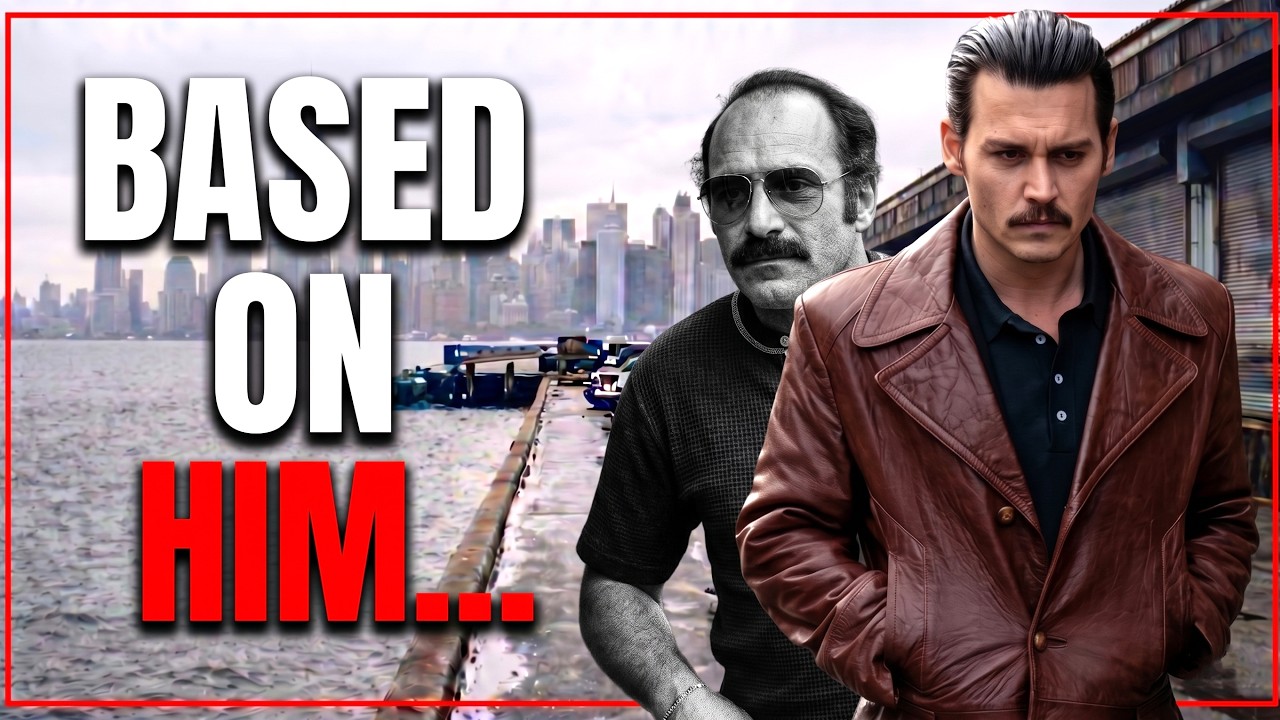
Pistone, operating under the alias Donnie Brasco, was extracted from a Brooklyn apartment on July 26, 1981, with less than an hour to gather his belongings before disappearing into protective custody. Within 72 hours, the Bonanno family issued an open contract on his life worth $500,000, payable to any made member of any of the five families who could complete the hit.
The contract was never officially rescinded. More than four decades later, Pistone, now in his late eighties, continues to live under an assumed identity at an undisclosed location, a security arrangement that federal officials describe as permanent.
The operation began in September 1976, when Pistone was a 37-year-old agent with seven years at the Bureau, working primarily truck hijacking cases. Born in Erie, Pennsylvania, and raised in Paterson, New Jersey, he was the only agent the FBI believed could sustain a long-term deep cover infiltration of La Cosa Nostra, an effort no law enforcement agency had ever attempted.
He told his wife the assignment would last six months. It lasted six years. He had three young daughters at the time.
He saw them roughly once every few months, sometimes for a single night, always under the cover story of a girlfriend in California.
Pistone constructed the identity of Donnie Brasco, a quiet, competent jewel thief from California who did not ask questions and did not volunteer information. He began in bars in Little Italy and Queens, worked into the orbit of a Colombo associate, and eventually drew the attention of Benjamin “Lefty” Ruggiero, a Bonanno soldier who had been made in the mid-1960s and who, by his own account, had killed 26 men.
Lefty saw Donnie as a meal ticket, a young earner he could mold. He was a soldier with bad knees, a sick child, gambling debts, and a beat-up car. He ate at the same Italian restaurant on Madison Street every night.
He talked too much because, according to investigators, nobody ever really listened. Donnie Brasco listened.
For two years, Pistone ran scams, hauled stolen goods, and sat in on conversations he had no business hearing. He carried a tape recorder hidden in his car and filed reports through dead drops. Every time he considered pulling out, Lefty produced another piece of intelligence: a murder, a loan shark route, a construction shakedown.
The Bureau kept extending the operation, six months at a time.
By 1979, Pistone was no longer merely an associate. He was being groomed for induction. That development introduced the most dangerous phase of the operation, because in the Bonanno family, a man who spent years around made members without being straightened out became a man who looked suspicious.
 Induction into La Cosa Nostra requires a prospective member to “make his bones,” meaning participation in a homicide as a shooter, a lookout, or a driver. The requirement exists to bind members through shared guilt. An FBI agent could not participate under any circumstances, and Bureau officials understood that the moment an induction ceremony was scheduled, the operation would have to end.
In late 1979, Lefty began discussing the ceremony. Around the same time, the Bonanno family was fracturing. Boss Carmine Galante had been gunned down in July 1979 at Joe and Mary’s restaurant in Bushwick while eating lunch on the patio.
The hit was sanctioned by the commission, and the faction that carried it out was led by a captain named Dominic “Sonny Black” Napolitano.
Sonny Black, 50, silver-haired and soft-spoken, ran his crew from the Motion Lounge on Graham Avenue in Williamsburg and raised racing pigeons on the roof. Investigators who worked the case described him as the most dangerous man Pistone ever encountered, and also the one who liked Donnie Brasco most.
That affection created a command problem. Lefty considered Donnie his prospect, but Sonny was a capo, and when Sonny took an interest, the chain of command shifted. By early 1980, Sonny was using Donnie as a courier between New York and Florida, where the Bonannos were attempting to muscle into a Holiday, Florida nightclub called the King’s Court Bottle Club.
The Florida operation represented the closest Pistone came to dying. Holiday, a small town north of Tampa, hosted competing factions, including the Trafficante family out of Tampa and local associates who resented New York muscle in their territory. Pistone ran security, managed the floor, and handled cash while sharing drinks with men who would have killed him instantly had they known his identity.
He slept four hours a night with a pistol under his pillow. The Bureau maintained two backup agents in Holiday posing as crew members, along with vehicles and a safe house, but the coverage was thin. On at least three occasions in the spring of 1981, Pistone entered rooms with no backup and no exit.
On one night in particular, he was driving with two Bonanno soldiers on a back road outside Tampa when the conversation turned strange. One of them began asking specific questions: where exactly did Donnie grow up, what was his mother’s maiden name, who was the priest at his confirmation. Pistone answered every question from a cover identity he had memorized for years, but he later said he could feel something shifting.
He decided that if the car pulled over, he would take both men before they took him. The car continued to a diner. They ate and laughed.
Nothing happened. Pistone sat on the edge of his motel bed with his pistol in his lap until sunrise.
By the spring of 1981, Sonny Black had decided that Donnie Brasco would be made. He had spoken to acting boss Joseph Massino and vouched for Donnie personally. The ceremony was planned for that summer, and to qualify, Donnie had to complete a piece of work.
 Sonny had a target picked out. Accounts differ on the identity, with some sources naming a rival Bonanno associate and others a Philadelphia-connected hood, but what is documented is that by June 1981, Sonny was telling Lefty that Donnie needed to handle a specific contract. The body would be the price of the button.
Pistone reported the conversations, and his handlers were terrified. If he refused, Sonny would know something was wrong. If he faked the killing, the conspiracy would require other people and other agents in an elaborate ruse that risked exposing everything.
If he simply disappeared, the Bonanno family would know it had been infiltrated and would destroy evidence overnight. There was no clean exit.
A second problem emerged from Lefty, who was furious that Sonny was receiving credit for a prospect he had brought in. Lefty began telling people he would perform the induction ceremony himself. In a conversation captured on tape and later played at trial, Lefty told Donnie, “You and me, kid.
We’re going to do this together.”
That recording, of an FBI agent being told by his mob mentor that he would soon be inducted into La Cosa Nostra, prompted the Bureau to terminate the operation at the highest levels.
On July 26, 1981, two agents knocked on the door of Pistone’s New York apartment and told him to grab everything he could carry. He had kept a few personal items there over six years. He left most of them behind.
He walked out, got into the back of a Bureau car, and never saw Lefty Ruggiero or Sonny Black as a free man again.
The operation did not end with the extraction. On August 12, 1981, two FBI agents walked into the Motion Lounge and asked for Sonny Black. He came out expecting a warrant or a subpoena.
Instead, the agents handed him a photograph of Donnie Brasco in an FBI windbreaker and told him his friend had been an agent for six years. Sonny said nothing. He took the photograph, went back inside, sat at the bar, lit a cigarette, and began to laugh, softly at first and then harder, because he understood exactly what was coming.
In the mob, letting an undercover agent into a crew for six years and vouching for his induction was not a crime but an unforgivable mistake, and the only currency the commission would accept was his life. Sonny removed his jewelry and gave it to his girlfriend. He told his crew he loved them.
He gave a friend the keys to his pigeon coop and asked him to care for the birds.
On August 17, 1981, Sonny Black received a call to attend a meeting in Brooklyn. He knew what it meant and went anyway. He walked into a basement on Bath Avenue where several men were waiting.
 According to cooperator testimony that emerged later, they beat him, shot him, and after he was dead, cut off his hands. The message was deliberate: Sonny had shaken hands with Donnie Brasco, Sonny had vouched with his hands, and the hands had to go. His body was found nearly a year later, in August 1982, in a creek in Staten Island.
It was identified through dental records. The hands were never recovered.
Lefty Ruggiero met a different fate. On the day Pistone disappeared, Lefty was supposed to attend a meeting at the Motion Lounge that some investigators believe was a setup for his murder alongside Sonny. The FBI reached him first, arresting him on the street that August before the Bonannos could send him on a final car ride.
He was convicted on multiple racketeering counts and served 11 years. Released in 1992 while dying of testicular cancer, he returned to his wife in Manhattan and died on November 24, 1994, broken and broke. He never publicly said a bad word about Donnie Brasco.
The fallout was catastrophic for the Bonanno family. Pistone’s testimony, delivered across trials in 1982 and 1983, helped convict more than 100 made members and associates across multiple families. The commission, the ruling body of the American Mafia, voted to remove the Bonannos from its ranks entirely, treating them as untrustworthy pariahs.
It would take more than two decades for the family to regain standing in the underworld.
Joseph Massino, the acting boss on the day Pistone walked out, eventually became official boss, only to cooperate with the federal government in 2004, becoming the first sitting boss of a five family to do so. Investigators credit the Brasco operation with writing the playbook for later prosecutions, including the cooperation of Salvatore Gravano and the racketeering cases that gutted the five families through the late 1980s and 1990s.
Pistone paid a personal price that has not ended. He moved his family repeatedly and changed their names. His daughters grew up under aliases.
He wore disguises to court appearances for years and testified in dozens of trials, sometimes from behind screens. He retired from the FBI in 1986 and wrote a book that became the basis for the 1997 film starring Johnny Depp, but he never used his real face in publicity and never stopped looking over his shoulder.
One final detail has stayed with investigators who worked the case. After Sonny Black’s remains were identified, an investigator checked the capo’s apartment one last time. The pigeons were still on the roof.
Someone had kept feeding them. For nearly a year, while Sonny lay in a Staten Island creek, someone, perhaps the friend who had been given the keys, perhaps a member of his crew, had climbed those stairs every morning and put grain in the trays. The birds did not know their owner was dead.
They kept flying out and coming back.
Sonny Black built his life on the belief that the family would always come home, just like his pigeons. Joseph Pistone spent six years pretending to be Donnie Brasco and survived. The men who trusted him did not.