Lyudmila Pavlichenko was born in 1916 in Bila Tserkva, a large Ukrainian city south of Kiev. At the time, Ukraine was not an independent country but part of the Russian Empire. Her early years were shaped by uncertainty as resentment against the Tsar grew, leading to civil war, famine, and political repression that touched every family, including hers.
When the civil war ended and the Soviets took control in 1922, her father, Michael, a loyal contributor to the revolutionary cause, was rewarded with a job at the People's Commissariat for Internal Affairs, the Soviet secret police. Because of the nature of his work, the family was constantly on the move. This nomadic lifestyle exposed her to new places, people, and ideas, and shaped her personality as more assertive, adventurous, and daring than the typical girl of her era.
In her own words, Lyudmila was a tomboy, unruly in class, and a challenge for her teachers. Her energy found an outlet in sports, and among her favorite games was Cossacks and Bandits, Russia's version of cops and robbers. She swam in the local river Ross, roamed Alexandria Park in spring, and raided neighborhood orchards in autumn. Remarkably, despite being a girl in that era, she became the leading spirit of a gang of teenage boys because she was the best shot with a slingshot, could run faster than anyone, swam well, and was never afraid of a fight.
At 14, Lyudmila found her first job as a metal grinder in the Arsenal Munitions Factory. The job gave her a trade and a place in the Young Communist League. She and her sister signed secrecy papers and joined the staff of the Arsenal complex, a massive building of brick and steel that looked like a fortress. She operated a DIP-300 screw-cutting lathe, learning to adjust speed and pressure by feel. Later, that same finesse for metal in motion would live in her trigger pull and the slow cycle of a bolt.
The factory offered organized activities including theater groups, art studios, and aviation training through a gliding club. The instructor of the factory shooting circle, Fyodor Kushchenko, worked in her shop and constantly urged young people to come to the shooting range. Lyudmila was hesitant until one day during a dull Young Communist League meeting, she teased Kushchenko with a sarcastic remark. Others laughed, but the organizer thought they were laughing at him, and both were expelled as supposed instigators.
Kushchenko approached her and suggested they go to the range to calm down. Once there, he handed her a TOZ-8 rifle. The cold metal sat naturally in her grip. He stepped aside, nodded at the target, and said, "Get acquainted." For the first time in her life, she held a deadly weapon. She raised the rifle, fired, and Kushchenko walked out to the target without a word. When he returned, the grin was gone. He studied her and said, "For a beginner, that is simply amazing. You have a real ability."
Twice a week, Lyudmila walked through Kiev's frozen streets to sniper school. Her fingers stiff from the cold, she would load, aim, and fire again and again. After 200 hours of drills, she could read the wind like a second language. She studied ballistics, learned how a bullet travels in an arc, and practiced calculating range quickly. She mastered the Mosin army magazine rifle, moving up from her small-bore TOZ-8. Her instructors included veterans such as Alexander Potapov, a former Red Army sharpshooter who had earned a name during the Civil War.
Potapov showed students how to hide in the bush and made them do it until his sniper lens lost them. He drilled them on fieldcraft, stealth, camouflage, and using natural terrain to their advantage. They even ran precision drills called bottle base, where a single shot had to pass through the neck of a bottle lying down without touching the sides. Lyudmila trained vigorously, learned ballistics, and eventually earned her Voroshilov Marksman Badge. For her, the rifle became "the most perfect creation of human mind and hand."
Lyudmila had already lived through a quiet heartbreak. Still a schoolgirl, she married an older man, Aleksey Pavlichenko. She described that choice as a voluntary blindness, a loss of reason, and a schoolgirl love. Despite growing resentment, they remained together for some time and had a son, Rostislav. However, her desire for education and personal growth meant the marriage could not last. Her love for learning came from her mother, Elena Trofimovna Belova, a teacher whom Lyudmila deeply admired.
Watching her mother, Lyudmila found her own quiet dream to be a school teacher or a research assistant in a library. But the path forward meant leaving her husband behind, who did not support her dream. Divorce in the Soviet Union was neither rare nor simple. Legally, it could be complicated by bloated bureaucracy. Socially, even though the Soviet state encouraged women's independence, divorce still carried a stigma, particularly for young mothers. She kept the surname Pavlichenko, the name history would remember.
Leaving behind her former life, Lyudmila entered Kiev University to study history, pursuing her childhood dream of education. Alongside her classes, she trained in the Osoaviakhim shooting courses. One might think she would join the army, but it was the late 1930s. Before the German invasion, the Soviet Union was not yet at war, and there was no call for her to serve. She stayed on her civilian path, planning for a life in classrooms and archives, not trenches.
Even as the Soviet Union joined the Great War in 1939, Lyudmila didn't enlist. When 1941 came around, she had completed her fourth year of studies. But on June 22 of that year, everything changed. At dawn, Nazi Germany broke the non-aggression pact with the Soviet Union and launched Operation Barbarossa, a massive invasion aimed at seizing land, resources, and key cities like Kiev, Leningrad, and Moscow. Planes struck airfields, massive armies poured across the border, and artillery and tanks followed, devastating everything in their path.
The assault hit without warning and caught the Soviet leadership off guard. For the Soviet Union, it was a turning point. The country was suddenly at war on its own soil against an enemy hell-bent on the complete annihilation of it and its people. Millions were mobilized and civilian life shifted to total war. Men were drafted, but many women also tried to join voluntarily. This included Lyudmila. For her, it was the end of one life chapter and the start of a new one.
She walked to the recruiting office with her marksmanship certificates in hand. If war came to her country and threatened the survival of her people, she would fight. She rushed to the Odessa military commissariat dressed in a light flowing dress and high-heeled sandals. The registrar took one look at her and tried to shunt her into the medical corps, saying, "Medical staff will be enlisted from tomorrow." Lyudmila refused. "I'm not a medic," she asserted, and placed her sniper certificate on the desk.
The registrar barely glanced at it. He said there was no sniper category for women on his lists and added a sarcastic remark about women who thought they could be soldiers. He forced her to leave his office, but Lyudmila was not easily dismissed. She came back the next day. She realized the issue had been with her registered residence. Her sniper records were in Kiev while she was trying to enlist in Odessa. The registrar didn't know of them and didn't search them up to confirm, assuming a woman wouldn't have them.
This time, she pushed harder. She insisted they check her sniper files in Kiev and refused to accept a medical posting. Only after two days of arguing and paperwork did the registrar finally sign her on as a sniper. By the evening of June 20, 1941, the train from Kiev to Odessa stood ready on the platform. She was bound for the 20th Chapaev Rifle Division, a unit named after Vasily Chapayev, a Red Army commander and celebrated hero of the Russian Civil War.
Her whole family came to the station to bid her farewell. Her father was stern and reserved. Her mother offered last words on healthy eating. Her sister Valentina whispered words of encouragement. The most emotional moment was with her son, who did not want to let go of her hand. Tears welled up in his young eyes as he asked his mother to take him with her. Lyudmila tried to comfort him, believing they wouldn't be separated for too long. She later reflected that saying farewell to her family at the station was one of the most difficult moments in her life.
A week later, she arrived at a small station at 3:00 in the morning. She was now on Bessarabian soil and near the front lines. Unlike many new recruits, Lyudmila arrived fully trained. She was already a certified super sharpshooter, ready for the fight. But she would have to prove herself, something she was used to. Officers tested her with two Romanians as her targets, enemy soldiers allied with Germany. "When I picked off the two, I was accepted," she later said, noting she did not count them in her death toll because they were test shots.
Soon after, her tally officially began when a German scouting party stepped out into an open patch of ground, completely exposed and with nowhere to hide. She lay prone in the dirt, the rifle trembling in her hands. Her finger was frozen on the trigger. She hesitated. This was the real test. Beside her, a young soldier smiled, adjusting his own sights as if this were just another drill. The next moment, a shot ripped through the air. He collapsed, blood blooming across the snow.
Lyudmila froze, staring at him. The grin, the youth, the way the frost sparkled in his hair, and then the blood. It was here that something in her snapped. She spotted two figures darting across the field, rifles raised, metal glinting against sunlight. She fired two shots, and two bodies fell. The first shock passed, the work continued. The real baptism of fire was not only passing a test to her skeptical officers, but confronting the reality of the siege of Odessa.
The Axis forces, chiefly German and Romanian units, set a plain objective: take Odessa as soon as possible. The city was under constant bombardment from German planes and artillery. Smoke rose over the rail lines and docks. Dust hung in the streets and nerves tightened with each blast. But despite the chaos around her, Lyudmila remained calm and focused. On her first day, her focus was mostly on her first army breakfast, which seemed very tasty. The new recruits jumped at the sound of explosions, but seasoned sergeants calmed them down.
Later that day, Lyudmila's Chapayev Rifle Division was to launch a counterattack, supported by a continuous stream of fire from coastal gun batteries, two armored trains, and heavy howitzer artillery. Soviet tanks moved through the gaps, but the defense was fierce. The Romanians held the line, but a massive Soviet counterattack at a flank hit them hard. Rockets fired from the Katyusha, a multiple launch rocket system capable of devastating barrages, finally forced the Romanians to roll back. Lyudmila was now deeply immersed in the violent chaos of total war.
She learned an important lesson from the chaos. Ferocity alone never wins a siege. Angles, distances, and most importantly, patience do. Acceptance came fast and so did the learning curve. Open ground gave her nothing to hide behind, so her plan had to be simple and disciplined. She worked from prepared positions, settled into trenches with the troops, and picked her targets carefully as the enemy pushed in mass. As her division approached the city's outer districts, dense cover changed the problem and the options.
If the flat land exposed you, trees could swallow you whole. She adapted the Finnish cuckoo method, firing one or two rounds and then moving before the enemy could pinpoint her location. For camouflage, Lyudmila sewed together a hood with patches of cloth and netting, blotchy in pattern so it would blend with tree bark and foliage. She wore the hood over her uniform, breaking up her outline like a crude form of a modern ghillie suit. Carefully, she climbed into the branches, positioning herself above the ground where the enemy would not expect her.
From this vantage point, she could see entire streets and courtyards without being seen. On one occasion, she fired from a maple tree growing above a large black stone tomb in a cemetery, taking out several enemy soldiers. The irony was that the cemetery itself was German. The area had long been inhabited by a community of German settlers. As much as sniper duty near the front line demanded patience and stealth, it also required an exit strategy. Night helped, shrubs helped more.
She picked tall, dense bushes about 600 meters ahead of the main Soviet line and turned them into small sniper hides. Before each mission, she and another sniper, Pyotr Kulakovstev, divided the field into sectors, making sure each could cover different angles. They even prearranged a signal with a nearby machine gun crew. If the enemy spotted them, the machine guns could help keep the enemy busy. Every distance was measured in advance, every shot calculated. In the chaos of battle, this careful preparation meant the difference between life and death.
The appearance of German tanks and armored vehicles on the battlefield required an immediate paradigm shift. Soviet forces had to fall back to defensive trench positions, and for snipers like Lyudmila, angles mattered more now than ever. She watched the machine guns and mortars from a hidden flank trench, which allowed her to fire without being easily seen by the enemy. Her target was an enemy officer standing at a 35-degree angle from her position. Then she would switch to targeting enemy machine gun nests and mortar crews if they were visible. Her tally was now 100 confirmed kills.
Across the Rapel, the Germans pulled back and reorganized days later for a fresh assault. This time, the enemy had their own way of playing with nerves, and they didn't hide it. Music floated over the ruins and grew louder across the empty ground between the Soviet trenches and the advancing German-Romanian lines. The enemy infantry marched in tight columns, shoulder to shoulder. They did not spread out. They moved like a parade. Drums set the pace. A banner waved above them. Officers walked between the ranks with sabers bared. A priest in full vestments moved along the flank with three church banners following behind.
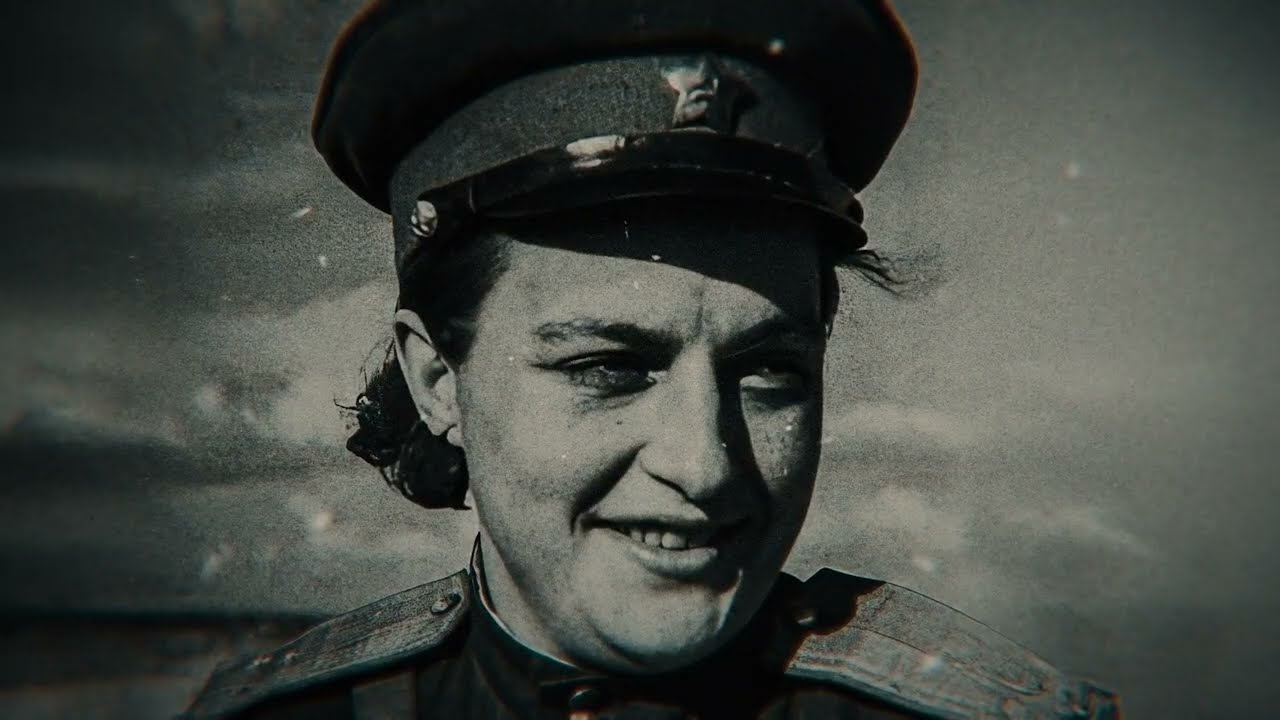
The sun caught the gold thread of enemy banners and the bayonets. It was a display of certainty designed to rattle Soviet nerves. The enemy forces began their offensive to take Odessa with artillery on August 8. It boomed for about 20 minutes. The Soviet troops stayed in deep dugouts and suffered few losses. Then everything went quiet. The soldiers lifted their heads and peered over the edge of the dugouts. Across the open ground, a column of infantry was advancing, 2,000 men moving in tight formation, closing steadily toward the 400 in the Soviet battalion.
At first, the movement seemed mechanical, almost methodical, but as the distance closed to 700 meters, it became clear many of the attackers were drunk. They staggered slightly, their steps uneven, their discipline faltering. The alcohol in their veins numbed fear and made them reckless, turning what should have been a careful advance into a series of suicidal charges. Soviet mortars struck and tore gaps, but the columns closed their ranks and kept coming. The German bayonets went up. They quickened the march. Music, marching, and sheer numbers were used to unsettle the defenders, but in the end, the display and concentrated charges only made the enemy visible and easy to hit.
But that did not mean the Soviet positions went unscathed. Without warning, the air erupted in thunderous cracks, a rapid series of explosions shaking the ground beneath them. Dust and smoke spiraled upward, blotting out the morning light. Soldiers stumbled, bracing themselves against the tremors, ears ringing from the sudden roar. Lyudmila pressed herself low, her heart racing as the explosions grew louder. When the bombardment ended, it gave way to the shrill screams of wounded comrades. A sudden sharp sting on the side of her head made her fingers instinctively rise to her temple.
Lyudmila felt the warmth spreading and the realization hit that she was hurt, too. A fragment from a shell had struck her, blood closing the eye, the world fogging out. She would recover days later and immediately returned to her unit. That was her first wound on the battlefield, but it wouldn't be her last. Recognition for Lyudmila's valor on the front line arrived the way soldiers understood it. Not with speeches, but with steel. On October 15, Coastal Army Commander Major General Petrov presented her an SVT-40 sniper rifle engraved with a dedication marking her first 100 confirmed kills.
She saluted and returned to duty. By October 1941, her performance during the siege had solidified her reputation in the ranks of Soviet sniping legends. Two months at Odessa for 187 confirmed kills. However, the battle for Odessa came to an abrupt end with orders for a deliberate withdrawal. The Soviet High Command chose to sacrifice the city to save the Red Army, preserving their troops for battles where it was thought they could make a difference. On the evening of October 15, Lyudmila climbed aboard the Zanzores, a Soviet cargo ship. By October 17, she arrived in Sevastopol ready for the next front.
This next city was vital for controlling access to the Black Sea coast, and the Germans were determined to capture it at all costs. The fighting here was intense with constant bombardment, machine gun fire, and tank assaults that left no area safe. On October 19, heavy artillery began shelling. Then the Stug IIIs arrived, crawling forward with two battalions of German infantry behind them. To Lyudmila, these tank-like German vehicles were terrifying mechanical beasts, lowered, heavily armored, with a massive fixed gun built into the front. They rolled on tracks, survived hits that would destroy a truck, and fired explosive shells that could smash through fortifications.
She stayed pressed against the trench observing targets when a shell exploded close by. A fragment shattered nearby debris and ricocheted into her back, leaving a deep painful wound. The shell that wounded her didn't just tear up the position but threw her several meters into a collapsing firing trench. The battlefield was fated to have a fellow sniper enter her life. Amid the rubble and chaos, Alexey Kitsenko, who had been operating nearby, saw the impact from afar but not where she landed, and the drifting smoke made every heap of rubble look the same.
He searched for Lyudmila for hours, found her, and carried her to the medical battalion. Surgeons pulled the splinters from her back and stitched the wound. She was nearly sent out on the transport to Chekhov with hundreds of serious cases until he and other comrades from her division pleaded to keep her. Alexey and others even promised their own blood for transfusions. They managed to persuade the surgeon to keep her in Sevastopol instead of evacuating her. Lyudmila stayed in the field hospital for two and a half weeks, during which time Alexey visited her several times.
The battle for Sevastopol meant adapting to a new kind of front. Hills, gullies, and a narrow strip of no man's land watched by patient eyes. Snipers and scouts slipped across at night. By day, trenches, wire, and machine gun nests locked the lines in place. Command sent her on tour along the front line, moving her wherever a precision shot or a delicate task was needed. Her assignment stretched from No Name Height, a heavily contested bare wind-cut ridge with almost no cover, to the Gas Fort area, a rough ridge of ground at the edge of Sevastopol's outer defenses.
Lyudmila earned a quiet nickname, the Lynx. She could wait motionless for hours, no easy feat under bitter cold and constant enemy bombardment. At No Name Height, she and a pair of fellow snipers once caught a German group of submachine gunners probing the front line at dawn. They let the enemy drift into the open ground before taking their shots. The Germans fell down in seconds. Meanwhile, Gasfort was stony, uneven, and threaded with ravines, perfect terrain for a sniper who could use every dip and shadow. Her most difficult shot came here on a summer morning with a haze-blurred distance. Most would have held fire. She calculated the drift, trusted her eye, and sent the round anyway. Two seconds later, the distant silhouette of a man fell out of sight.
It was also in the midst of this tour that something unexpected happened. Mila was assigned a partner, Alexey Kosenko himself. They immediately worked well as a team. With him, she felt for the first time the meaning of requited and all-consuming love. And for a brief moment in Sevastopol, surrounded by the ravages of war, she was completely happy. Before long, Alexey confessed that he always had a fondness for her. She was surprised at first, but grew warmer over time. Over the next weeks, small gestures grew into shared moments. A quiet conversation in the dugout, a hand lightly brushing hers as they checked their rifles, a laugh stolen amidst violent chaos.
One afternoon, he tore a leaf from a tree near their dugout, handed it to her like a token, and half solemn, half shy, offered her his hand and his heart. They sent a request up the chain to formalize it, signed by their battalion and regimental commanders, and stamped at division headquarters. A frontline marriage, registered in a council office instead of a church. Earth walls, a low log ceiling, and a potbelly stove turned their dugout into a kind of home. From there, she went out to hunt German soldiers and came back to hot water, sweet tea, a fresh undershirt, and a bunk with a flannel-lined blanket.
That bond was tested in the spring. After only a short season of this borrowed peace, the guns found them again. During a heavy bombardment on their sector, an artillery hit smashed into the company command post. Shrapnel and debris flew through the air, some of it striking Alexey and sending him to the ground. By the time she reached him, the medics were fighting to keep him alive. A deep wound had torn through his torso. Gauze and bandages were used to prevent further blood loss. She sat by his bunk through the night, listening to his ragged breathing and the shells outside, but by morning, he was gone.
Was it grief or was it anger? Lyudmila didn't give the feeling a name. In the days that followed, she often lay awake at night hearing Alexei's voice in the pauses between artillery. She worked the bolt until her fingers ached just to keep her mind off her loss. And beneath it all was a private vow. She would kill 100 enemies to avenge Alexei Kosenko. In the final months of the siege, that vow shaped everything. She had finally learned that love was the only thing louder than the guns, only to realize that grief was the heaviest thing she would ever have to carry.
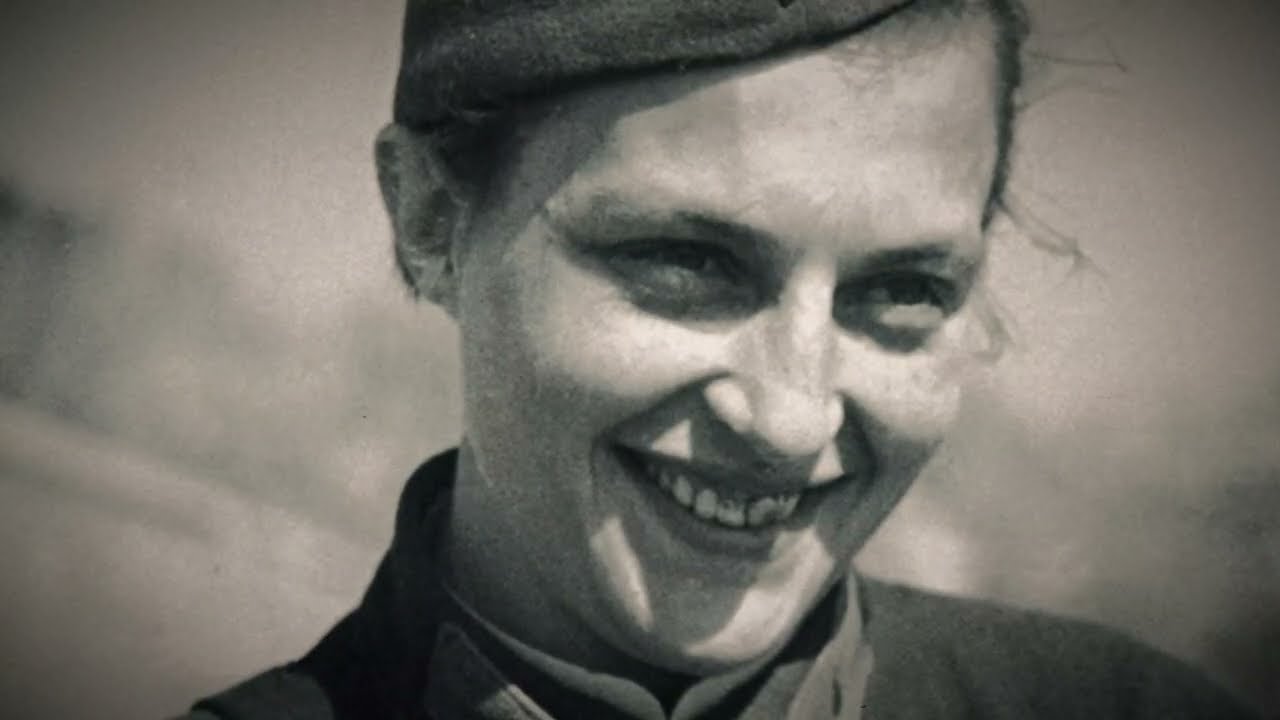
Her days became methodical and hyper-focused on her task. Find a position, wait for the moment, fire, move. It was disciplined, deliberate work. By May of 1942, even the army newspapers began to follow her kill count. 257 confirmed kills. Even the high command at Moscow had begun to notice her tally and started publishing it for propaganda. Political officers pushed pamphlets and headlines about her bravery. Photographs of the woman sniper ran through the winter in streets and barracks. Kids and soldiers asked for her kill count, but behind the cold statistics lay the grueling reality of the missions themselves.
When enemy sharpshooters began picking off observation and mortar crews, she switched to counter-sniping. It was a game of patience. The hours would stretch like taut wire. She'd lay flat in the dirt, breathing steady, eyes catching every flicker. Sunlight bouncing off a scope, dust stirring among the ruined buildings, even a helmet edge peeking over rubble. Enemy snipers tried tricks. A shard of glass angled to mimic a scope. A rifle butt raised just enough to draw a shot. She never fired at the first sign. She watched, waited for the real thing, the tiny mistake. Then she fired once with deadly precision. By the time the echo died, she had vanished.
Lyudmila moved through the battlefield constantly. One day, she was overlooking the Bystraya River, where the ruined bridge and tall poplar trees provided good vantage points. Another day, she was on the slopes of Azizoba Hill, where the ground dropped in folds and every approach carried its own traps. These were the special difficulty assignments, difficult terrain, skilled enemy shooters, and no margin for noise or error. Yet, as the fighting tapered off and she thought she had a chance to breathe, tragedy struck.
Lyudmila was crouched in a shallow trench when a loud, thunderous crack split the air. The first thing she felt after was a sharp sting under her eye, followed by a hot flash. The blast threw her against the trench wall, her rifle skittering from her hands. Dust and smoke filled her nose. Every nerve screamed in pain. Blood trickled down her cheek, burning. She tasted iron, her vision blurred, then faded. The orderly got her to the surgeons. The order was for urgent treatment and to keep her in Sevastopol if at all possible. They worked quickly. The shrapnel had carved into her forehead, but missed the eye. The operation saved her and, for the moment, kept her in the fight she knew. The scar from the injury would remain with her.
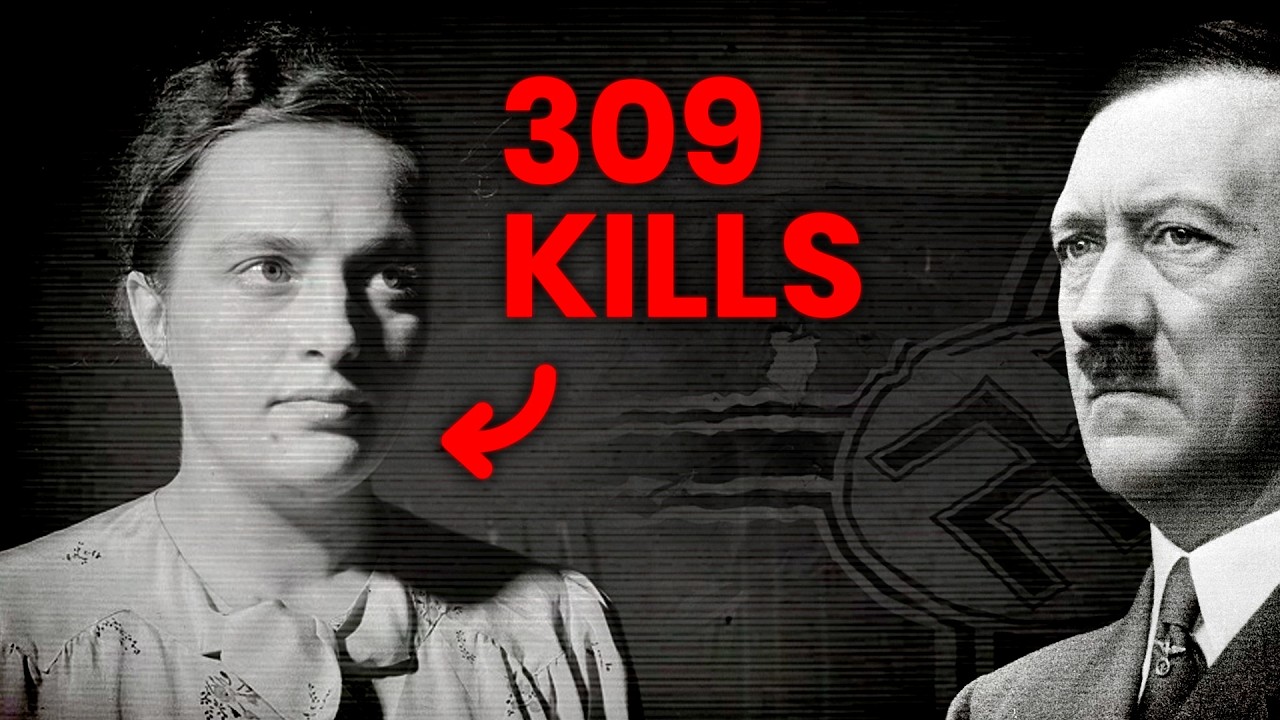
Nevertheless, when the dust settled on this chapter of her life, one figure followed her out. 309 kills confirmed. Her results drew attention in Moscow. By early 1942, Lyudmila was assigned new, unexpected orders directly from the regimental staff headquarters. Lyudmila was to leave the front line for the capital and take part in a conference of women activists, give an address, and devote herself to the training of new snipers going in for the defense of Sevastopol. The order confused her. She was trained for silence and stealth, not public speaking. But the higher command thought differently. To them, she was simply too valuable, not just as a combat-proven sniper who could pass on her knowledge to others, but also as a symbol that brought her into rooms few soldiers ever saw.
One of them was in the Kremlin, where she was brought to high-ranking officers and political leaders. The Soviet leadership wanted to showcase the capabilities of women in combat, inspire troops, and reinforce morale on the home front. The next step was to carry the message abroad. Stalin's circle green-lit a student delegation to send to the United States to attend the Washington International Student Assembly. The label wasn't literal. It was a diplomatic cover that allowed his selected army personnel to attend the assembly and move more freely without drawing political attention. It was composed of Lyudmila and two other decorated war heroes. They would also tour the US with a hope of pressuring the US government to open a second war front to divert some of the Axis forces away from Soviet territory.
Lyudmila arrived in Washington in late September 1942 and spoke at the International Student Assembly, met dignitaries, and drew major coverage. She put it plainly for Americans, "We await active assistance at the opening of the second front." Then she was invited to a reception at the White House and faced the US press. Flash bulbs popped. The first question was if she got hot baths at the front. Another followed with, "Are women able to use lipstick?" And a smirk ran through the row. Someone near the aisle called out, "What color underwear do you prefer?" The room tittered. Lyudmila let the noise settle, then stepped closer to the microphones, face calm. "In Russia, you would get a slap in the face for asking a question like that."
That culture shock, the tabloid fixation on hemlines and makeup, was a recurring theme in US coverage of her tour and was vastly different from her experience with Soviet media, which focused on her marksmanship, her service at the front, and the sacrifices Soviet soldiers were making. It would be her interactions with Eleanor Roosevelt, a highlight of the trip, that would embolden her. Their encounter at the White House started with a photo opportunity, but ended with a friendship that would be long-lasting. Eleanor Roosevelt privately encouraged Pavlichenko to assert herself against the press. And so Lyudmila adapted fast.
In Chicago, she spoke in an old park looking out at rows of men in their 30s and 40s smiling up at the girl sniper they'd read about in the papers. She began softly with a few sentences about the war raging far away in Russia. Then, suddenly, she raised her voice. "Gentlemen, I'm 25 years old. At the front, I have already wiped out 309 fascist soldiers and officers. Don't you think, gentlemen, that you have been hiding behind my back for too long?" The promise under the rebuke was simple. She and the Red Army had been fighting and bleeding while America and Britain had been hiding behind her back. The park exploded with yelling, whistling, and stomping feet as journalists rushed the stage, suddenly less interested in her uniform and much more interested in what she actually had to say.
Still, even as she learned to navigate American media, the discrimination didn't fully disappear. The difference was that now she met with dry humor and pride. After one reporter mocked her uniform as making her look fat, her reply was firm and mature. "I am proud to wear the uniform of the legendary Red Army. It has been sanctified by the blood of my comrades." American and British outlets latched onto nicknames like Lady Death and Girl Sniper. Lyudmila's itinerary didn't stop at the US border. After America, she spoke to massive crowds in Canada and Britain. The reception ranged from mayoral welcomes to gifts, even an entire song dedicated to her by the famous singer Woody Guthrie with lyrics like, "Miss Pavlichenko's well-known to fame. Russia's your country, fighting is your game. The whole world will love her for a long time to come, for more than 300 Nazis fell by your gun."
When she arrived back home, Lyudmila was promoted to major and awarded the title of Hero of the Soviet Union. She also received the Order of Lenin Award twice. Lyudmila never returned to combat. She spent the rest of the war training new snipers and giving lectures. While most of her time was spent in classrooms and training ranges, she also made short trips to the front lines to observe German tactics firsthand and refresh the curriculum accordingly. As the war concluded, her fight turned to rebuilding a life from war's ashes.
From 1945 to 1953, she worked as a research assistant at Soviet Navy headquarters, a quiet, methodical job worlds away from the harsh battlefields she once endured. It was the intellectual, book-driven life she'd once dreamed of leading before the war. Were her later years spent happily? It's unclear, but one can assume she achieved a kind of hard-won, purposeful peace rather than simple contentment. But according to her, old war wounds and trauma played up more and more until she was forced to retire on a disability pension.
Still, Lyudmila didn't see it as a reason to sit home and do nothing. She stayed active in veterans groups, mentoring younger soldiers, attending commemorations, and helping preserve the memory of Soviet wartime sacrifices. She even met Eleanor again when the former first lady came to Moscow while on an official visit. During the '60s, Lyudmila began compiling her diary notes and recollections into a memoir, which would eventually turn into the book Lady Death: The Memoirs of Stalin's Sniper.
Although she did live long enough to see her fame reach its peak, her story ended in quiet tragedy. Lyudmila died in Moscow on October 10, 1974, at age 58 from complications related to her old wounds and heart issues. She was honored in death as she had been in life, remembered as one of the Soviet Union's most skilled and celebrated snipers. Her legend kept growing long after. The Soviet Union put her face on a postage stamp and a commemorative envelope. Numerous songs were written about her. Then, in 2015, a joint Ukrainian-Russian feature film, Battle for Sevastopol, further popularized her story in cinemas. Even decades after her death, the woman behind the legend never quite left the stage.
Lyudmila Pavlichenko lived a life far richer than the legend around her. She wanted a classroom, not a battlefield, but instead of a teacher, she became a symbol. But behind the nickname of Lady Death was someone who still flinched at shellfire, carried shrapnel in her body, and grieved for the friends and the man she loved. She never fully healed, but she learned to live with the weight she carried, turning trauma into discipline and doubt into stubborn purpose. That is the real story. Not how a woman became Lady Death, but how she held herself under the weight of that name.