On November 22, 1963, Robert Kennedy was having lunch beside the pool at Hickory Hill in McLean, Virginia, with Attorney General Robert Morgenthau and an aide. They had just returned from a Justice Department conference on organized crime.
His wife, Ethel, called him to the phone. J. Edgar Hoover was on the line. Kennedy picked up the receiver. Hoover's voice was devoid of emotion. He told Kennedy the president had been shot and that the wound might be fatal.
Within hours, the worst was confirmed. His brother was dead. Robert Kennedy, the 38-year-old attorney general and brother of John F. Kennedy, now had to find a way to keep living.
What happened in the following weeks inside the Justice Department, inside Hickory Hill, and inside the private world of a man who, as PBS's "American Experience" put it, had lost not only someone he loved but the role that gave his life meaning, is one of the most documented and least understood stories of the entire Kennedy era.
To understand Robert Kennedy's grief in those first weeks, it is necessary to understand his life before November 22. Kennedy did not simply work for his brother. He organized his life around his brother in a way that left him almost no independent identity.
He managed John F. Kennedy's Senate campaign. He managed his presidential campaign. He took the job of attorney general not because he wanted it, but because John F. Kennedy needed someone he trusted absolutely in that position. Everything Robert Kennedy did professionally since graduating from law school had served his brother's ambitions and safety.
The death of John F. Kennedy did not just remove a person from Robert Kennedy's life. It removed the organizing principle of his existence.
The immediate aftermath at Hickory Hill was documented by those who were there. Kennedy's body twisted with grief when Hoover told him what had happened. His wife, Ethel, moved to comfort him. A few minutes later he spoke quietly to his aide Ed Guthman.
"There's so much bitterness," Kennedy said. "I thought they'd get one of us. I thought it would be me."
Those words, documented by Guthman in his firsthand account and recorded by PBS's "American Experience," are among the most revealing Kennedy ever spoke. He knew they had enemies. He had spent years making them: organized crime figures, Teamsters leaders, Cuban exiles, political rivals, and intelligence operatives whose programs he sometimes approved and sometimes tried to scale back. He believed he was the target.
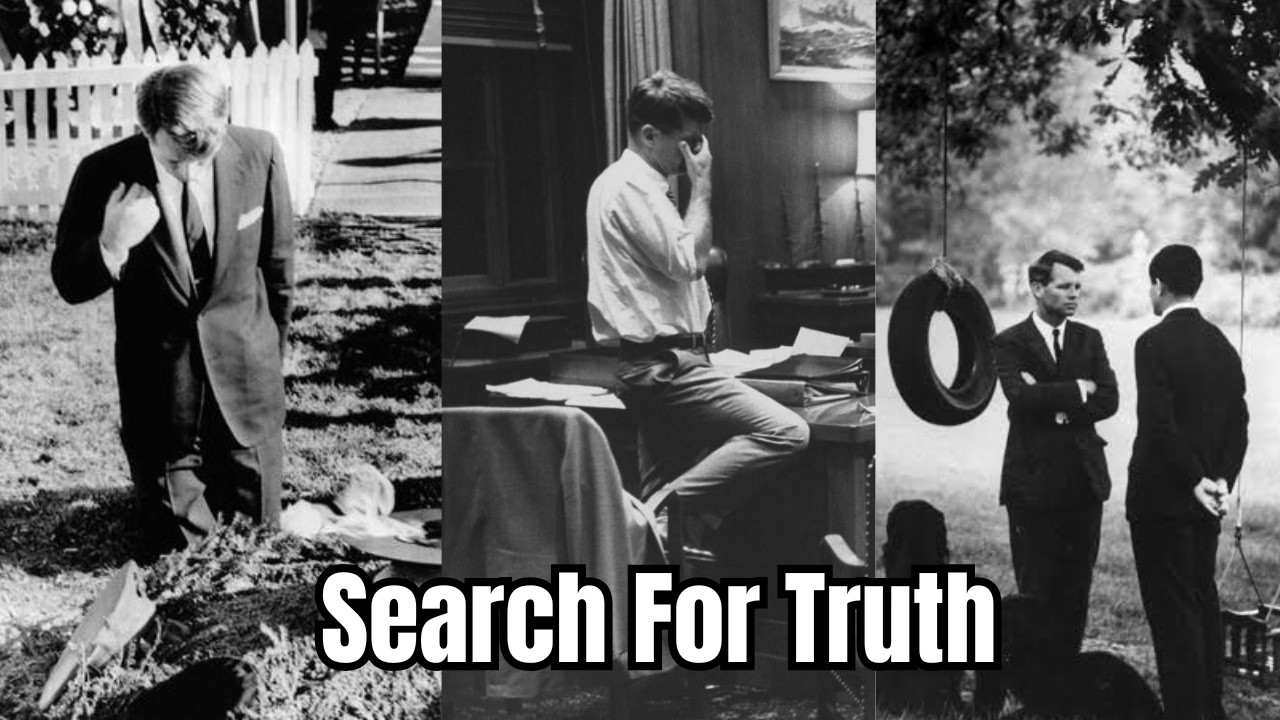
The idea that his brother had died in his place, and that the steady accumulation of his own enemies may have contributed in some way to creating an atmosphere that exposed the president to danger, would haunt Robert Kennedy for the rest of his life.
That evening, Kennedy went to Andrews Air Force Base to meet the plane returning from Dallas. He arrived before it landed and climbed onto the movable platform that would be used to lower the coffin. He rushed aboard as soon as the door opened, passing Lyndon Johnson and going straight to Jackie Kennedy. He accompanied her off the plane.
These movements, documented in numerous eyewitness accounts, including Secret Service agents and White House staff present at Andrews, tell us something about the state of mind Kennedy was already in. He was not treating the assassination as a political event requiring a political response. He was responding as a brother, as a protector, and as the person who had always been responsible for maintaining safety and had failed.
In the days immediately following the assassination, before Kennedy returned to the Justice Department, his private behavior was documented by many witnesses. He walked the grounds of Hickory Hill alone. He sat for long periods without speaking. He asked questions, urgent and almost feverish questions, of anyone who might have information about what happened in Dallas.
According to Evan Thomas, whose biography "Robert Kennedy: His Life" drew on extensive research and the John F. Kennedy Library forum transcript "Remembering Robert Kennedy," Kennedy immediately began trying to determine whether the various matters he had been involved in had backfired on his brother. He asked John McCone, director of the CIA, who walked with him on the grass at Hickory Hill, whether the CIA had done it. McCone swore to him, in what Thomas described as a kind of religious oath, that the agency was not involved.
Kennedy did not settle for easy answers. He contacted Walter Sheridan, his aide in the war on organized crime, and asked whether there was any evidence linking James Hoffa to the assassination. Sheridan told him he had found nothing.
This search, this urgent private interrogation of anyone who might know anything, was the first stage of Kennedy's grief. He could not accept the random horror of a lone gunman without exhausting the possibility that his own work, his own enemies, and his own decisions had somehow contributed to his brother's death. The question he could not answer, and could never entirely escape, was whether the enemies he had made during his relentless prosecutorial career had somehow created the conditions that led to Dallas.
When Kennedy finally returned to the Justice Department in the weeks after the assassination, Arthur Schlesinger Jr., one of Kennedy's closest friends, documented what he found, recording his observations in his Pulitzer Prize-winning biography "Robert Kennedy and His Times." Schlesinger's paragraph about this period is one of the most precise and influential biographical passages ever written about an American figure of the twentieth century.
In those dark weeks and months, Schlesinger wrote, in solitary walks across the winter fields; in long reveries at his desk in the Justice Department; in the late afternoon before the fireplace in Jacqueline Kennedy's living room in Georgetown; and in readings that now became more intense than ever, as if the next page might contain the essential clue, Bobby was wrestling with the fundamental question of whether the universe had any meaning at all. His faith had taught him that it did. His experience now raised that agonizing and terrifying doubt.
That image, of the long reverie at his desk in the Justice Department, is the heart of this story. Kennedy returned to the office. He sat at the desk where he had spent three years pursuing organized crime, battling the Teamsters, and building federal law enforcement, but he could not work.
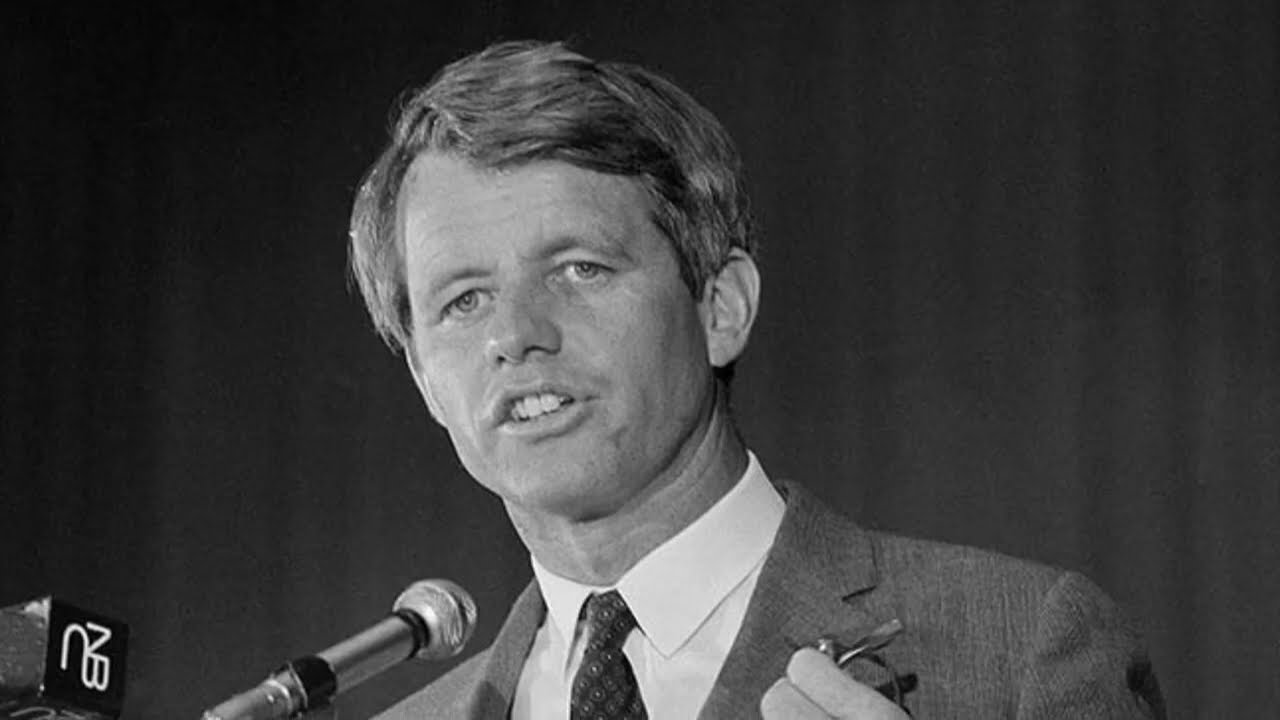
Colleagues who came to see him in those weeks documented what they found. A man present in body but entirely elsewhere in thought. A man performing the tasks of an office that had lost its central meaning the moment his brother was killed.
Justice Department staff gave Kennedy his space. They recognized that the attorney general who had driven them with relentless intensity for three years was no longer capable of that intensity. They managed the department's operations themselves. They brought him papers when necessary. They did not pressure him.
What Kennedy was doing in those long hours at his desk, according to documented accounts of those who observed him during that period, was reading. He had always been a reader, but reading now became something different. It became a search.
The turn toward the ancient Greeks is one of the most documented aspects of Kennedy's grief, and one of the most important. It did not happen in the first days after the assassination. It developed over months.
According to numerous biographers, including Evan Thomas and the documented JFK Library forum transcript, it was Jacqueline Kennedy who introduced Robert to Aeschylus and to the wider world of Greek tragedy and philosophy in the period after the assassination. Jackie gave Robert her worn copy of Edith Hamilton's "The Greek Way" during the Easter holiday in 1964, when Kennedy was in Antigua.
According to the documented account, Kennedy was absorbed by the book. He barely left his room. He read with the urgency of a man who had been waiting for this particular language without realizing he had been waiting for it.
What Kennedy found in the works of Aeschylus was something contemporary American culture could not offer him. A framework for suffering that did not deny its reality. A tradition that looked directly at the worst human experience. The killing of a king, the destruction of a family, the collapse of everything that had seemed safe, while saying that suffering is not meaningless, but is in a terrible and obscure way the price of wisdom.
The line of Aeschylus's poetry that Kennedy would later carry with him, and would quote in his Indianapolis speech announcing the death of Martin Luther King Jr. in 1968, came from Hamilton's translation of "Agamemnon." In our despair, against our will, comes wisdom through the awful grace of God.
Kennedy wrote lines from Aeschylus's works in his own hand. He began collecting passages from Greek tragedians and other writers who dealt directly with loss and suffering. Albert Camus became another reference point for him. Kennedy marked passages and returned to them. He carried the books in a way his colleagues noticed.
The man known for his ceaseless motion, for the constant advance toward the next case, the next prosecution, the next campaign, now spent hours sitting quietly with very old books.
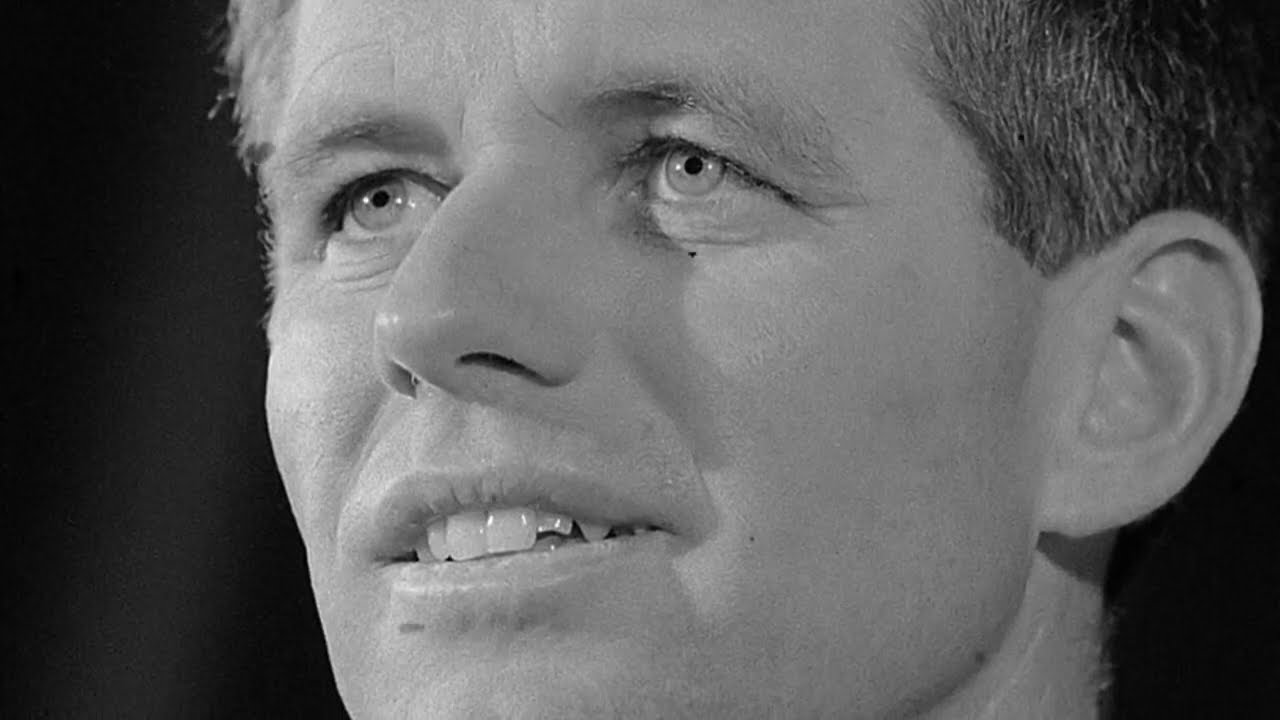
Schlesinger documented that Kennedy walked alone through the winter fields in those months. These solitary walks were noticed by the staff at Hickory Hill and by family members and friends who visited him during the winter of 1963 and 1964. Kennedy would leave the house without explanation and walk for long periods. He was not heading anywhere in particular. He was simply moving through the space in a way that the walls of his office or his home could not contain. Grief required a physical expression that sitting at a desk could not provide.
The documented transformation Kennedy underwent during this period is one of the most commented-upon aspects of his biography. People who knew him before and after November 22, 1963, consistently described meeting a person who seemed entirely different.
The harshness that had defined his early career, the aggressive prosecutorial instinct, the willingness to use tough tactics against enemies, the certainty that his cause was right and his methods justified, all of this was softened by something observers struggled to name precisely.
PBS's "American Experience" quoted historian Ronald Steel directly. He emerged from his grief only gradually and in part. It left a sadness in his eyes that was evident, and it softened his arrogance and his impatience.
The John F. Kennedy Library's "Remembering Robert Kennedy" forum transcript documents what journalist and former Kennedy aide Peter Maas observed about Kennedy's transformation. According to the text, it happened only after President Kennedy's assassination, when he was wounded and burdened with grief for many months, and Jacqueline Kennedy gave him the works of Aeschylus and Camus, which he read for the first time at the age of 38, in the deepest state of grief and mourning, and they had an enormous effect in changing his personality. He shed much of his certainty and much of his sharpness because of his profound emotional experience.
Kennedy eventually began practicing his work at the Justice Department again, but the performance was different. He remained in his post as attorney general under Johnson until September 1964, managing the department during a period marked by considerable political difficulties. Organized crime prosecutions continued. Civil rights work continued, but Kennedy himself had changed in ways his colleagues documented.
He became more willing to listen. He became more aware of the suffering of others, especially those whose suffering was not politically connected to anything that directly affected the Kennedy family.
The outward turn that followed Kennedy's grief, toward poverty in Appalachia, hunger in the Mississippi Delta, farmworkers in California, and the urban poor, is documented as a direct result of what happened to him in those months of solitary walking and long reveries at his desk. He had been stripped of the organizing certainty that his brother's political career had provided. In that stripping, he found a different kind of purpose, a purpose that was truly his own rather than borrowed from his brother's ambitions.
The line of Aeschylus that comforted him in the winter of 1963 and 1964, and that he would carry with him until his death, ends with those words: wisdom comes through the awful grace of God.
Kennedy returned to that line in Indianapolis on April 4, 1968, the night of Martin Luther King Jr.'s assassination, speaking to a crowd that did not yet know what had happened. He told them that a member of his own family had also been killed. He quoted Aeschylus. He urged them not to respond with violence. Indianapolis saw no riots that night, while most American cities did.
Robert Kennedy was assassinated on June 5, 1968, more than four years after his brother's assassination. The line of Aeschylus is engraved on his grave at Arlington National Cemetery.
The man who sat alone at his desk in the Justice Department in the winter of 1963, unable to work, searching for a language worthy of what had happened, finally found it in an ancient Greek poet who understood that suffering is real, that it is not resolved by easy answers, and that something called wisdom, acquired painfully and unwillingly and arriving against our will, is what remains in the end.