Only hours had passed since John F. Kennedy was buried. Late on November 25, after the White House reception ended and the guests had gone, the public rituals of mourning were finally over.
That evening, Jackie Kennedy had stood in Arlington as soldiers, dignitaries, cameras, and a grieving nation watched her light the eternal flame at her husband's grave. Now she returned to a nearly empty White House with Robert Kennedy.
A later historical reconstruction of that night preserves a simple suggestion from Bobby. "Shall we go visit our friend?" Jackie took lilies of the valley from the White House. Shortly before midnight, she and Bobby left for Arlington.
They had already buried John F. Kennedy once that day, before the eyes of the world. Now they were going back. This time, the world was not with them.
Earlier that day, America had watched the funeral reach what appeared to be its final end. Kennedy's coffin left the capital. The procession moved through Washington to St. Matthew's Cathedral and then to Arlington National Cemetery.
At about 3:15 p.m., Jackie lit the eternal flame beside the grave. The scale of public mourning was difficult to overstate. Roughly 250,000 people had passed by Kennedy's coffin as it lay in the Capitol. Heads of state and representatives of more than 100 countries came to Washington for the funeral. Millions more watched on television.
After the burial came the White House reception. By late that night, the ceremonies were over. But Jackie and Bobby's return to Arlington was not the only private moment from those days that history would preserve.
Four days later, Jackie sat with journalist Theodore H. White. During that conversation, she remembered a question she had asked Bobby. White wrote it down. His handwritten notes still exist at the John F. Kennedy Presidential Library.
We know what Jackie said she asked him. What the surviving record does not provide is Bobby's answer.
Before reaching Jackie's question, there is something more important to understand. For three days after Dallas, Jackie was deeply involved in shaping the rituals with which the country would mourn her husband. Only afterward did the boundary between mourning and historical memory become part of the story.
Dallas gave Jackie almost no control over what happened. The assassination was sudden, violent, and irreversible. What followed was different.
Over the next three days, Jackie engaged deeply in decisions about how the nation would mourn John F. Kennedy. She looked to presidential history. She wanted meaningful ceremonies. Arlington mattered. The funeral procession mattered. Military ritual mattered. So did the symbols that would remain after the funeral itself ended.
None of this meant Jackie believed the grief was false. She never told Theodore White that Arlington was a mistake or that the funeral should have been done differently. Her concern was harder than mere regret.
Over three days, the ceremonies gave structure to chaos. Something had happened in Dallas that Jackie could not control. In Washington, she could take part in decisions about how loss was translated into public memory, and the result was extraordinarily powerful. The images became part of American history almost as soon as they occurred.
That success created its own troubling question. When grief is shaped through ceremony so that an entire country can understand and remember it, how do you know where mourning ends and history-making begins?
One of the first questions after Kennedy's death was also one of the most personal. Where should he be buried?
Massachusetts was an obvious possibility. Kennedy was born there. His political career began there. The Kennedy family roots were there.
But another possibility began to carry different weight. Arlington National Cemetery. The choice forced two versions of John Kennedy into the same decision. There was Jack, the husband Jackie had lost, and there was President Kennedy, whose death now belonged to a grieving country.
Contemporary accounts preserve Jackie's expression of the idea that, in essence, Kennedy belonged to the country as a whole. Robert McNamara and members of the Kennedy family inspected possible sites at Arlington, and Jackie approved the hillside location where he would be buried.
It was more than a matter of geography. A grave in Massachusetts would link Kennedy to home and family. His placement at Arlington put him inside the physical landscape of the nation.
Jackie's decisions did not stop at the burial site. She deliberately looked toward presidential history while planning the funeral. Lincoln became an important reference point.
On Sunday, Kennedy's coffin was placed in the Capitol rotunda on the same platform that had been built for Abraham Lincoln in 1865. On Monday, the caisson stopped at the White House before the procession continued to St. Matthew's Cathedral, with Jackie, members of the Kennedy family, and dignitaries walking behind.
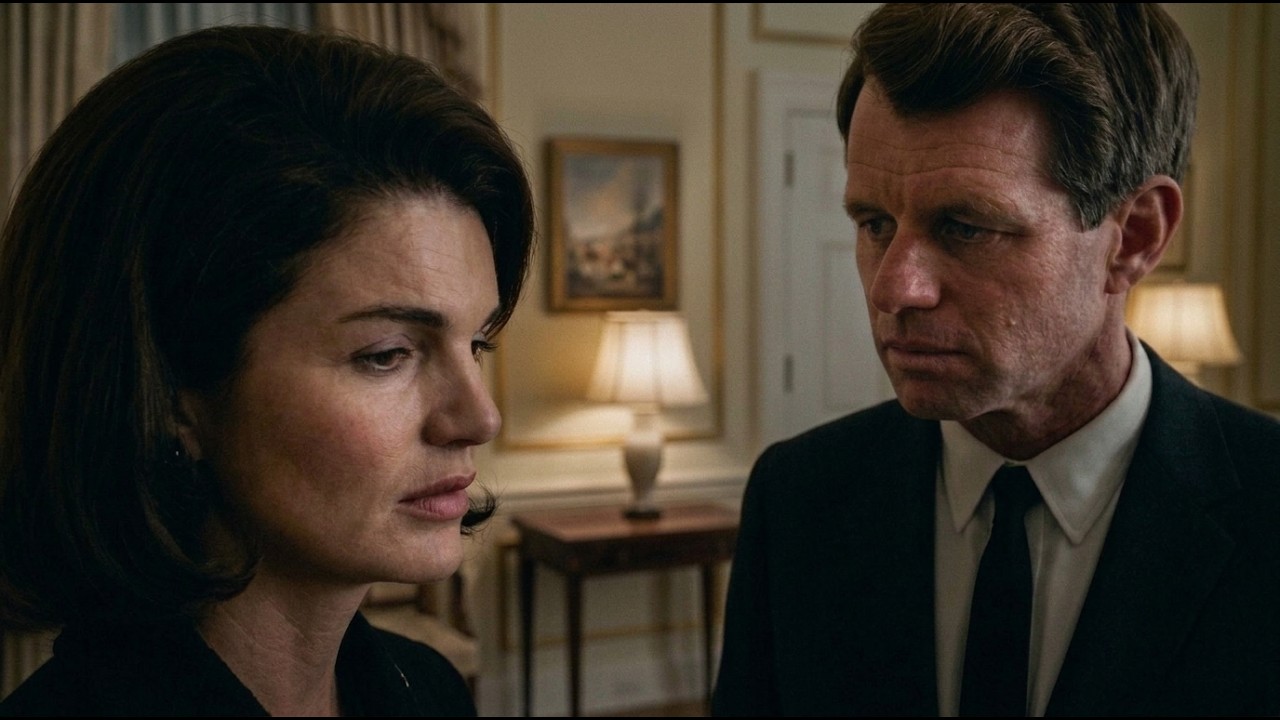
These were not small details for the people organizing the funeral. They linked Kennedy's death to an older language of presidential mourning. It did not make the grief less real, but it meant that personal loss was translated into public memory almost immediately.
Then came one of Jackie's most enduring decisions, the eternal flame. She wanted a flame at Kennedy's grave, something that would continue after the funeral ended.
At Arlington that evening, the sequence was precise. The funeral procession left St. Matthew's Church at 1:30 p.m. The aircraft flyover came shortly after the procession reached Arlington. "The Last Post" was heard at about 3:07. The flag was folded minutes later. At about 3:15, Jackie lit the eternal flame.
Those times are still preserved in the official funeral timeline. They show how carefully the public rituals were arranged in the final minutes of the burial. The moment was filmed. The flame remained burning after the people gathered around the grave began to leave.
By then, the burial site was becoming more than a place where John Kennedy had been laid to rest. It was becoming a place where people who never knew him could come and remember him. That is what makes what happened later that night so striking.
Only hours after helping the country gain an enduring symbol of President Kennedy, Jackie returned to the same grave as his widow. The flame was still there. The country was no longer.
Robert Kennedy was 38 years old when his brother was killed. By then, John Kennedy was far more than an older brother. He was Bobby's closest political partner, the president under whom he served as attorney general, and one of the central relationships in Bobby's adult life.
Dallas destroyed all of that in a moment. In the days that followed, Bobby became one of the people most attentive to Jackie and the children. But he was also dealing with his own loss, and one memory from those days reveals something important about how he handled it.
Milton Gwirtzman later recalled Bobby returning to Washington looking exhausted. Bobby asked him to go to the Capitol, where Kennedy's body was lying in state. A long line of mourners was still waiting.
Gwirtzman recalled that when people recognized Bobby, they made way for him. Gwirtzman and the others stayed back. Bobby moved forward alone. He knelt beside his brother's coffin and prayed for a while. Then he returned to the White House.
Gwirtzman's memory is useful precisely because it does not tell us what Bobby was thinking. It gives us something more solid. Where he went, what he did, and that after going there, he returned to the White House. There is no need to invent what was in his mind at that moment. The act itself is enough.
Bobby's instinct was not always to stay away from places connected to Jack's death. Sometimes he went back to them. That matters because by late on November 25, he was about to do exactly that once again.
Earlier that day, Bobby had helped bury John F. Kennedy as a president. But the man in the grave was still his brother. And when the White House finally emptied that night, Bobby suggested returning to Arlington. This time, Jackie would go with him.
Late that night, the reception ended. The foreign dignitaries had gone. The ceremonies that had filled the day with military precision and diplomatic protocol were over.
Jackie Kennedy was 34 years old. Bobby Kennedy was 38. Only hours earlier, they had walked behind John F. Kennedy's coffin through Washington, with cameras pointed at them and the world watching.
Now there was no procession to organize, no diplomatic schedule to keep, no public ceremony waiting for them at Arlington. The historical reconstruction of that night describes Jackie taking lilies of the valley from the White House before leaving with Bobby.
One detailed account places the flowers in a cup on a table in the hall after the reception. A small domestic detail left behind by an event staged on an international scale.
The same grave they had approached before the nation that afternoon waited across the Potomac. And this time, the flowers leaving the White House were not part of an official funeral. They were in Jackie's hand.
Only a few hours separated this trip from the one they had made earlier that afternoon. But Arlington was no longer the same place.
During the funeral, the cemetery had been full of soldiers, government officials, foreign dignitaries, photographers, and mourners. Military ritual surrounded the burial. "Taps" was played. Aircraft flew overhead, and cameras recorded Jackie as she lit the eternal flame beside the new grave.
Now it was late at night. The public ceremonies were over and the crowds had gone. What remained was the new grave and the flame Jackie had lit only hours earlier.
She had brought lilies of the valley from the White House. Earlier, flowers had been part of an official funeral watched by the entire world. Official wreaths and tributes naturally matched the scale of the occasion. But the lilies were different. The widow had carried them there herself.

Historical accounts describe Jackie and Bobby arriving at the grave and kneeling. They prayed. Here the surviving records must be allowed to set limits on the story.
We do not know the words of those prayers. We do not know what Jackie said to Bobby beside the grave. We do not know what Bobby said to Jackie. There is no recorded text of that private visit.
It would be easy to fill that silence. A dramatic story could give Jackie a line to say to her husband. It could imagine Bobby trying to comfort her. It could decide who cried, who spoke first, or what either was thinking. But none of that is necessary, and none of it is ours to invent.
What history preserves is already extraordinary enough. Earlier that day, Jackie and Bobby had approached this grave as part of a national event. Now they returned as members of a family. The grave was the same. The attendance was different.
Hours before, every movement had carried public meaning. Where the coffin moved mattered. Who walked behind it mattered. The military ritual mattered. The location mattered, and the eternal flame mattered. All of it became part of the way the country would remember President Kennedy.
But there was no comparable national purpose for this return. Jackie no longer needed to show America anything. Bobby did not need to represent the administration. There were no official ceremonies left to complete. They went back after everything was over.
The eternal flame makes the contrast impossible to ignore. That afternoon, Jackie had lit it before cameras and dignitaries. By night, the same flame was burning beside the same grave without any of that public machinery around it. Nothing about the flame itself had changed. But everything around it had.
Perhaps the most revealing part of that night is how little the records tell us about what happened once Jackie and Bobby arrived. We know about the return. We know about the lilies. Historical accounts describe them kneeling and praying. Then the words fade.
That absence matters because another part of the story still survives. Four days later, Jackie Kennedy sat with Theodore H. White and told him about a question she had asked Bobby. White wrote it down.
But we cannot honestly connect that question to Arlington here. The surviving evidence does not tell us she asked it beside the grave. It does not specify the exact room where she asked it. It does not preserve the moment itself.
What remains is Jackie's later recollection that she asked Bobby something. And after seeing both versions of November 25, the funeral before the world and the return after the world had gone, it becomes easier to understand the problem beneath that question.
Four days after the funeral, on November 29, Jacqueline Kennedy spoke with journalist Theodore H. White in Hyannis Port. That morning, Jackie contacted White and asked to speak with him. White traveled from New York to Massachusetts for the interview that evening.
He was not a stranger to the Kennedy story. He had written "The Making of the President 1960," and he knew the political world around John Kennedy. But Jackie was not giving him a sanitized history written safely from a distance. She was speaking one week after Dallas and four days after the funeral.
The conversation covered her life with Kennedy, what happened in Dallas, her plans for herself, her hopes for her children, and the place the Kennedy years might hold in history. White took handwritten notes as she spoke.
Those original notes still exist among his papers at the John F. Kennedy Presidential Library. Seventeen numbered pages preserve the November 29 interview. White's papers related to the interview remained closed to researchers until 1995, a year after Jackie's death. The physical record that now allows us to study this question stayed private for more than three decades.
White did not hear Jackie ask Bobby the question himself. That distinction matters. He preserved Jackie's memory that she had asked it.
In the later published version of White's notes, Jackie remembered telling Bobby, "What is the line between history and drama?" For a moment, leave it there. Because after everything since Dallas, the question carried more weight than seven words might suggest.
Jackie had spent three days involved in decisions that gave shape to national mourning. She had looked to history, helped shape the funeral, approved Arlington, and lit a flame meant to last. Then she remembered asking Bobby where that line falls.
There is one textual complication. White's original handwriting is difficult to read at this point, and the line has also been read as, "What is the line between tackiness and drama?" The exact handwriting is not entirely clear. But both readings point to a closely related concern. Where do sincere feelings meet performance?
The most puzzling part of the surviving text is not the question itself. It is what the record did not preserve afterward. White wrote down Jackie's question. But he did not preserve Bobby's reply.
This does not mean Bobby stood speechless. It does not mean he had no answer. It does not mean he stared at Jackie, turned away, or could not find words. History tells us none of that. It means only this. Jackie's question survived. Bobby's answer did not.
Why would Jackie Kennedy ask such a question only days after the funeral? The surviving record offers no single explanation. Any answer must remain interpretation. But the events of those days give the question context.
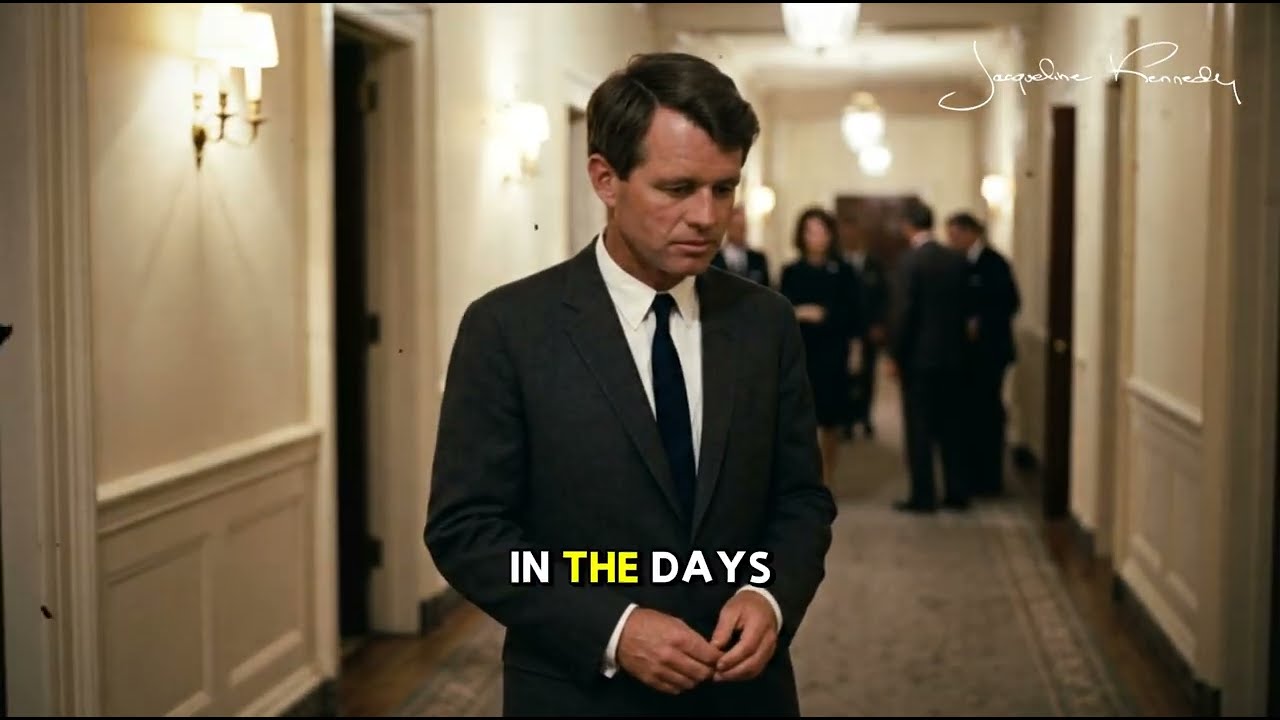
Jackie had just witnessed a funeral she helped shape become extraordinarily influential. The procession through Washington, the military ritual, Arlington, the eternal flame, each carried meaning, and the images entered the visual record of Kennedy's death immediately.
Perhaps that success itself created doubt. Not because Jackie believed the grief was false. Nothing in White's notes requires that conclusion. There is no basis for saying she regretted the funeral.
The harder question was whether something could be entirely sincere and still deliberately shaped. An official funeral cannot be spontaneous. It has roots, music, military ritual, symbols, and a sequence people can follow. Human beings use ceremony to give form to events that are otherwise difficult to absorb.
Ritual does not automatically make emotion less genuine, but once ceremony becomes powerful enough to define how millions remember an event, another problem appears. Does the ritual still express what happened, or can it begin to replace it?
The late-night return to Arlington offers a striking comparison. We cannot say Jackie planned it consciously that way at the time. Only hours earlier, she had stood before the country and lit a flame meant to last. Later, she returned to the same grave with lilies of the valley. No official purpose required that second visit. No national audience needed it.
That contrast helps explain the deeper conflict inside the question she later remembered asking. There was Jackie, the widow who had lost Jack. And there was Jacqueline Kennedy, who had already begun to become one of the people most responsible for how President Kennedy would be remembered. Those roles were connected, but they were not identical.
One concerned a husband and the father of her children. The other concerned a president whose image now belonged partly to history. And Bobby understood that division better than almost anyone.
John Kennedy was his brother. He was also Bobby's political partner and the president Bobby had helped serve in his administration. Bobby had gone secretly to his brother's coffin and knelt in prayer. He had also taken part in burying a president before the world.
This does not mean Bobby had a definitive answer to Jackie's question. We simply do not know what he told her. Theodore White preserved no reply from Bobby in the relevant passage, and Jackie offered none there.
But we can understand why she may have asked him. Few people were as close as Bobby to both faces of the loss, the private man named Jack and the public figure named President Kennedy. The funeral was history performed before the world. The midnight visit was grief without witnesses. There is a difference.
Jackie spent three days determining how the world would remember John Kennedy. Afterward, she asked Bobby how you know whether the memory has remained true.
Theodore White's notes are not orderly. They are hurried, dense, and difficult to decipher in places. That matters. These were not memoirs written years later, when memory had been polished and arranged. Jackie was speaking to White on November 29, only four days after John F. Kennedy's funeral.
White preserved what Jackie offered him. He preserved the question she remembered asking Bobby. But in the surviving text, he preserved no answer.
That absence is not proof that Bobby said nothing. It is not evidence that he had no reply. It tells us only that what he said was not recorded in White's notes.
Jackie had lost a husband. Bobby had lost a brother. America had lost a president. They buried the same man under three different meanings. History kept Jackie's question. What Bobby said afterward remained theirs alone.
Theodore White's handwritten notes are still preserved today at the John F. Kennedy Presidential Library. There is nothing ceremonial about that page. No marble, no flag-draped coffin, no military procession, just hurried handwriting preserving what Jackie Kennedy told White four days after the funeral.
The funeral itself survives through images, film, the official timeline, and the memories of those who watched it. One of Jackie's most revealing questions survives in a less polished form, in handwriting on paper.
Then there is Arlington. The permanent grave site Americans know today was not yet complete. In those early days, Kennedy's grave was temporary. The eternal flame remained. The Kennedy Library also holds a black-and-white photograph from November 25 showing that flame at night from the direction of the Lincoln Memorial.
It is important not to confuse that archival image with the private visit. It does not show Jackie and Bobby at the grave, but it confirms something simple and visually powerful. After the funeral crowds left, the light remained there. So did Jackie's question.
The lilies of the valley were part of the historical reconstruction of that late-night visit. We do not need to invent anything beyond what the sources preserve about them. And perhaps that contrast tells us something. National symbols are built to last. Private gestures are easier to lose.
History is not only what happens. It is also what remains after people decide which images, words, rituals, and memories will carry an event into the future.
That evening, Jackie helped stage a funeral for the country. Late that night, she returned to the grave with Bobby and lilies of the valley. No witnesses. Perhaps that difference contained part of the answer she was looking for. Perhaps.
Jackie asked Bobby where the line falls between history and drama. History preserved her question. His answer was never recorded.