Six members of one family were found shot to death in a refugee lodging in the American occupation zone of Austria in the first week of May 1945, and the killer was not a Soviet soldier, an Allied bomber, or a Nazi executioner, but the family’s own patriarch, a respected ophthalmologist named Dr. Wilhelm Reich, who believed he was saving his wife, daughter, and three young grandchildren from a fate worse than death.
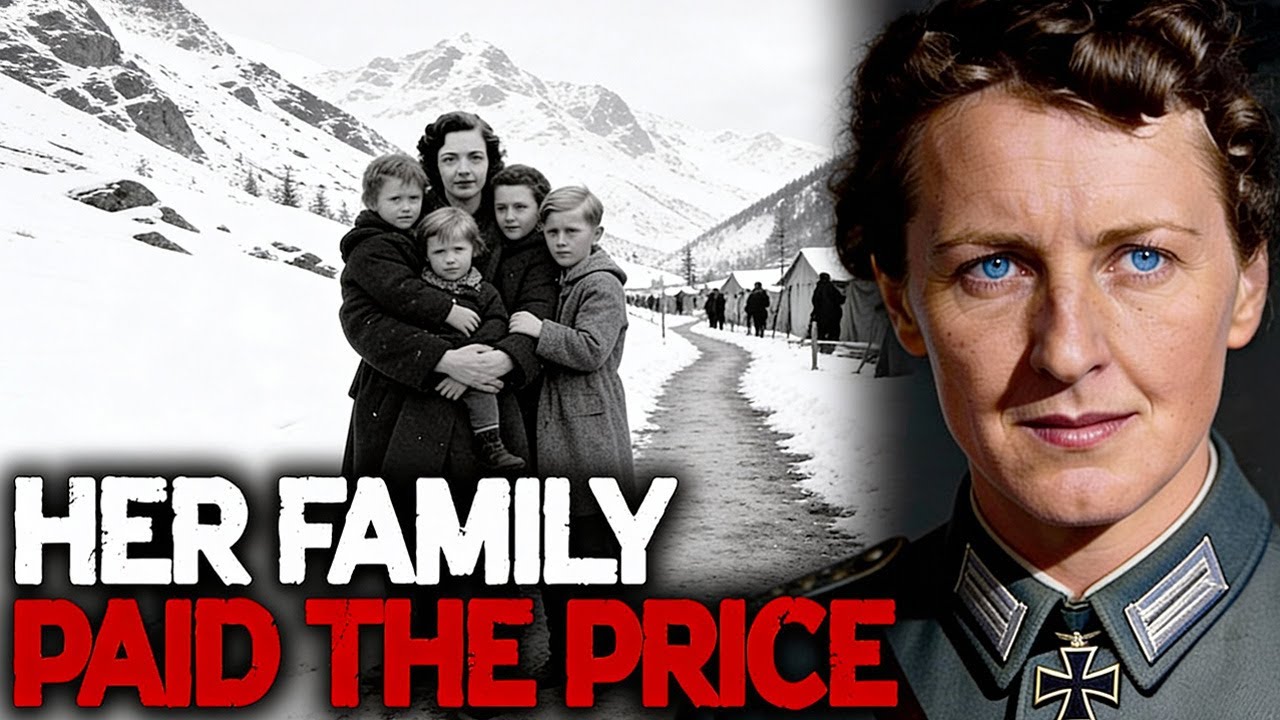
The victims included Reich’s wife Emmy, a devout Catholic from Austrian nobility, his daughter Heidi, who had married and was raising children of her own, and Heidi’s three children, Hans, Jürgen, Ellen, and Bern, all under the age of ten. The killings occurred three days after Adolf Hitler shot himself in Berlin and five days before Germany’s official surrender, in what should have been sanctuary.
The family’s story would be a footnote to the collapse of the Third Reich were it not for one fact: Dr. Reich’s middle child was Hanna Reitsch, the most famous female pilot in Nazi Germany, the woman who had flown into Hitler’s bunker during the final apocalyptic days of the Reich and who, at the moment her family was dying in Austria, was in American custody in Bavaria being interrogated about the Führer’s final hours.
The Reitsch family, spelled Reich in some records, were exactly the kind of German family expected to survive the war’s end better than most. Educated, connected, resourceful, they were not SS officers or concentration camp guards. They were the professional bourgeoisie that kept the country running regardless of who sat in Berlin.
Dr. Wilhelm Reich, known to everyone as Willie, treated patients in Hirschberg, Silesia. His wife Emmy remained a devout Catholic throughout her life.
Together they raised three children in an atmosphere of education, discipline, and respectability.
Their eldest, Kurt, became a naval officer in the Kriegsmarine. Their youngest, Heidi, had married and was raising young children by 1945. And in the middle was Hanna, the record-breaking pilot who would win the Iron Cross and eventually fly into Hitler’s bunker during the final days of the Reich.
By January 1945, the Red Army was grinding westward through Poland and into the German heartland. Silesia, where the Reitsch family had lived for generations, lay directly in the path of the Soviet advance. What followed was one of the largest mass movements of people in human history.
Millions of German civilians fled west in the brutal winter of 1944 to 1945, moving by foot, by cart, by any vehicle that still had fuel.
The roads were clogged with refugees, and Soviet forces were never far behind. Stories spread through the columns, stories of what happened to Germans who did not escape in time. Rape, murder, deportation to labor camps in Siberia.
Whether these stories were exaggerated or not, they were believed. And belief was enough to keep people moving through snow and ice, abandoning everything they had built.
The Reitsch family joined this exodus. Dr. Willie, his wife Emmy, their daughter Heidi, and Heidi’s three young children made the journey west, hundreds of miles through a collapsing country, past burned villages and abandoned military equipment, past the bodies of those who had not made it.
They reached the Salzburg region in Austria, deep in what would become the American occupation zone.
By every reasonable measure, they had escaped. The Soviets would never reach them there. The family had survived the most dangerous phase of the war’s end.
But the psychological terror followed them west, and it would prove more deadly than any Soviet soldier.
In the chaos of April and May 1945, information was unreliable. Rumors spread through the refugee camps like fire through dry grass. Some were true, some were exaggerated, some were completely fabricated.
But in the absence of official news, rumors were all anyone had.
One rumor in particular began circulating among the Silesian refugees. The Americans were going to forcibly repatriate all of them back east into Soviet hands. The Western Allies had made agreements with Stalin.
Silesia was going to be Polish territory now, and the refugees who had fled from there would be sent back, delivered directly to the enemy they had spent months escaping.

We do not know if this rumor was accurate. Forced repatriation did occur in some cases. Soviet prisoners and citizens were sometimes handed over despite their protests.
But wholesale deportation of German civilians from the American zone back to Soviet territory remains unclear in the historical record. What is certain is that Dr. Wilhelm Reich believed it.
For a man who had spent months absorbing horror stories about Soviet occupation, the mass rapes in East Prussia, the executions, the cattle cars heading to Siberia, belief was enough. He had brought his family hundreds of miles to safety. Now he was convinced that safety was an illusion.
The Americans would hand them over. The Soviets would do what the Soviets did. Everything he had sacrificed to protect his wife, his daughter, and his grandchildren would amount to nothing.
On the night of May 3, 1945, Dr. Wilhelm Reich made a decision that would destroy his family forever. The exact sequence of events that night remains somewhat unclear, pieced together from later investigations and the physical evidence left behind.
But the broad outline is horrifying in its deliberateness.
Some accounts suggest Dr. Reich first tried poison. When that proved uncertain, when it did not work quickly enough or completely enough, he moved to a more direct method.
Room by room through their refugee lodging, a pistol in his hand. His wife Emmy, his daughter Heidi, then the children, Hans, Jürgen, Ellen, and Bern. Three grandchildren under ten years old, killed by the man who was supposed to protect them from exactly this kind of violence.
Then himself.
Six bodies in a refugee lodging in the American zone. Killed not by enemy soldiers, not by bombs or artillery, but by a seventy-year-old ophthalmologist who convinced himself that death was the only protection left to offer. The war was effectively over.
Germany had lost. The killing was supposed to stop. Instead, Dr.
Wilhelm Reich became one of its final perpetrators.
The murders happened in what should have been sanctuary. The American zone was the place refugees fled to, not from. Thousands of families in identical circumstances survived those same weeks and went on to rebuild their lives in postwar Germany.
The Reitsch family could have been among them. Instead, they became a footnote to the regime’s collapse, another family consumed by the Nazi “death before dishonor” mentality that had already claimed millions.
While her family was dying in Austria, Hanna Reitsch was in American custody in Bavaria. She had been captured shortly after flying out of Berlin on April 28, 1945, one of the last people to see Hitler alive. She had landed in the middle of a collapsing Berlin, dodging Soviet artillery to deliver a message that no longer mattered.
Now she was leaving, carrying Hitler’s final letters and the knowledge that the war was lost.
The Americans found her a useful source. She had been present for things almost no one else had survived. She had spoken with Hitler, with Goebbels, with Magda Goebbels and the children who would soon be murdered by their own mother.
She had carried letters out of the bunker. She was quite literally a witness to history’s end.
At some point during this interrogation, she was told the news. Her parents were dead. Her sister was dead.
Her nieces and nephews were dead. All of them killed not by the Soviets she feared, not by the advancing armies, but by her own father. Sources describe her reaction as devastated.
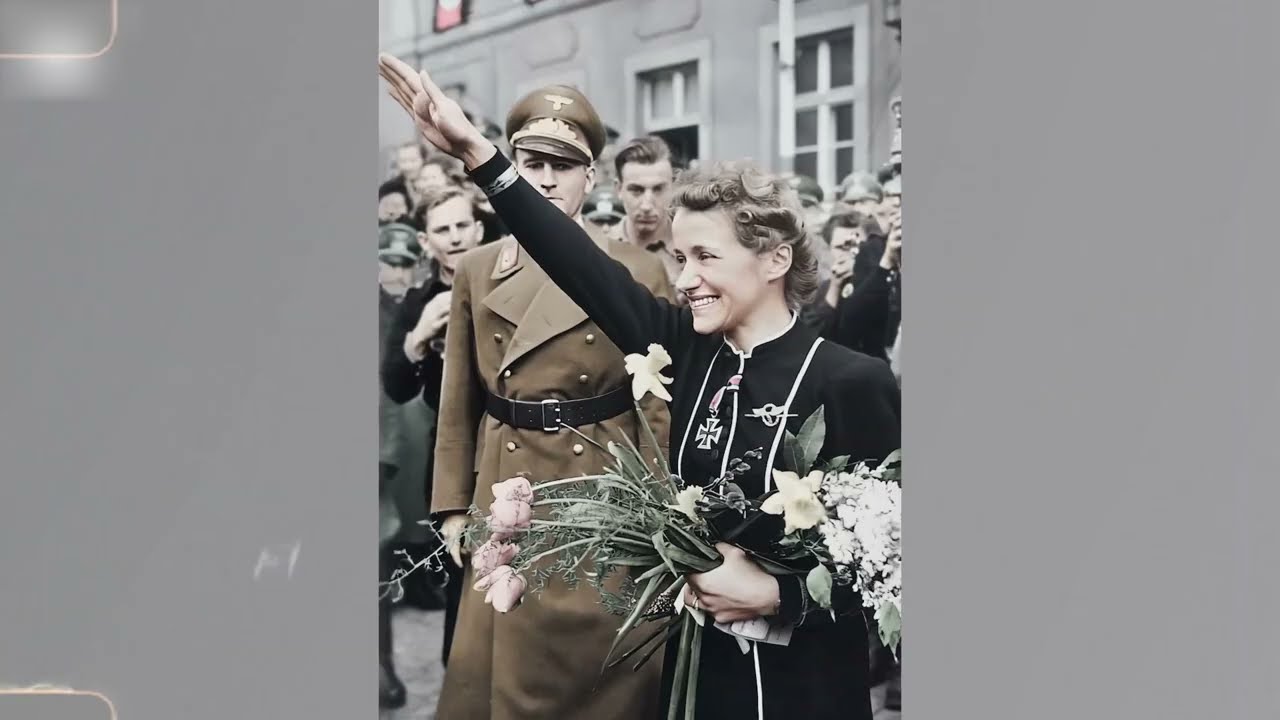 “In misery,” one report noted. The famous pilot, the Iron Cross recipient, the woman who had shaken Hitler’s hand in the bunker, reduced to grief by news from the American zone.
But here is the bitter irony that makes this story something more than just another wartime tragedy. Hanna Reitsch had wanted to die in that bunker. She begged to stay when the order came to leave.
She later described it as the blackest day of her life. Not the day her family died, but the day she was denied the chance to die at Hitler’s side. She had looked at the collapsing Reich and seen honor in sharing its destruction.
She survived against her will. Her family died because they wanted to live.
This is the central tension that makes the Reitsch family story so difficult to process. The most dangerous Nazi among them, the one who flew test missions for Hitler, who visited the bunker, who remained defiantly loyal to National Socialism until her dying day, is the only sibling who survived the war.
Hanna Reitsch was a true believer, not a reluctant participant, not someone swept up in circumstances, but a devoted adherent of the regime. She wore her Iron Cross with pride for the rest of her life. She defended Hitler in interviews decades after his death.
She embodied the fanaticism that had driven Germany to destruction.
Her mother was a devout Catholic who had nothing to do with the regime’s crimes. Her sister Heidi was raising young children, focused on family rather than politics. The grandchildren Hans, Jürgen, Ellen, and Bern were innocent by any definition.
None of them had flown for Hitler. None of them had received medals from Nazi leadership. None of them had begged to share in the regime’s final destruction.
Yet they were the ones who died. And Hanna, who wanted death, who sought it, who romanticized it, lived another thirty-four years.
The question the story forces us to ask is uncomfortable. Was Dr. Reich’s act really about protecting his family from the Soviets?
Or was it the final expression of the same ideology his famous daughter embodied? The Nazi cult of death before dishonor. The belief that surrender was worse than annihilation.
The conviction that a German should never submit to the enemy. These ideas had been drilled into the population for twelve years. Dr.
Reich may have absorbed them more deeply than anyone realized.
He killed his family to save them. That is the story he would have told himself. But the Soviets were never coming.
The Americans were not going to hand them over. The danger existed only in his mind. A mind shaped by years of propaganda about what awaited Germans who fell into enemy hands.
There was a third Reitsch sibling, and his story is defined almost entirely by silence. Kurt Reitsch, Hanna’s older brother, served as a frigate captain in the Kriegsmarine, the German Navy. He survived the war entirely, while his parents and sister and nieces and nephews were dying in Austria, while Hanna was being interrogated about the bunker.
Kurt was somewhere in the collapsing naval infrastructure of the Reich, waiting out the end like thousands of other officers.
After the war, he settled in Hamburg. He lived there quietly for forty-six years, dying in 1991 at the age of eighty-one. He left no memoirs.
He gave no interviews. He made no public statements about his famous sister, about his father’s act, about what it meant to carry the Reitsch name after May 1945. What did he think of Hanna’s unrepentant Nazism?
Of the interviews where she defended Hitler, of the Iron Cross she wore to meet John F. Kennedy? We do not know.
He never said. The silent survivor, choosing to live out his years without engaging with the history that had consumed his family. Perhaps that was the only sane response.
 Perhaps there was nothing to say that would have made any of it make sense.
Hanna Reitsch spent fifteen to eighteen months in American custody before finally being released. She had answered their questions about the bunker, provided her account of Hitler’s final days, and served whatever intelligence purpose she could serve. Then they let her go, and she resumed living.
She went back to flying gliders, mostly, the aircraft she had first fallen in love with as a young woman. She set new records. She competed internationally.
She became an aviation adviser to the government of Ghana, helping establish their gliding program. The most famous female pilot in Nazi Germany, now teaching Africans to fly.
In 1961, she visited the United States and met President John F. Kennedy at the White House. The photos from that visit show her wearing her Iron Cross, the medal Hitler had personally awarded her for test flying the V-1 flying bomb.
Kennedy apparently found her charming. He did not know, or did not care, that she remained an unrepentant defender of the regime his country had helped destroy.
Throughout the postwar decades, Hanna gave interviews defending Hitler. She described him as kind, as gentle, as misunderstood. She insisted that the Holocaust was not his fault, that he had been surrounded by bad advisers, that he did not know what was being done in his name.
This was denial on a spectacular scale, but she maintained it until the end.
Hanna Reitsch died on August 24, 1979, officially of a heart attack. She was sixty-seven years old. But a letter she wrote to a friend shortly before her death has fueled decades of speculation.
“It began in the bunker,” she wrote. “There it shall end.” Some historians interpret this as evidence of suicide, a final act connecting her death to the place she had wanted to die thirty-four years earlier.
Others see it simply as the dramatic language of a woman who had always been theatrical about her Nazi convictions. She was buried in Salzburg, not far from where her family had died. The pilot who escaped the bunker finally at rest near the people she could not save.
The Reitsch family story ends with uncertainties that may never be resolved. Genealogical records suggest Heidi may have had more than three children, possibly some who were not with her on the night of May 3, 1945. Did anyone else survive?
We cannot say for certain. The records conflict, the witnesses are dead, and the chaos of that period makes documentation unreliable.
What we know is this. The Reitsch family line effectively ended in a refugee lodging in the American zone in the first week of May 1945. Killed not by Soviet soldiers, not by Allied bombers, not by the violence that had consumed Europe for six years.
Killed by a rumor, killed by fear, killed by a father who convinced himself that murder was mercy.
The enemy never came. The danger was imaginary. Six people died because of what might happen, not what actually did.
And the one family member most aligned with the ideology that created such fear, she lived another three decades, defended Hitler to the end, and died an old woman in her bed.
Sometimes history offers no moral. Sometimes the story is simply the story, brutal, ironic, and unresolved. The Reitsch family gave us one pilot who became famous and one doctor who became a murderer.
Both believed they were doing the right thing. Both were wrong.