On the morning of January 15, 1983, a man died of lung cancer at Mount Sinai Medical Center in Miami Beach. He was in his eighties. No member of his family was in the room.
The FBI believed he controlled hidden fortunes worth $300 million, perhaps $400 million, scattered across secret accounts around the world. Forbes had just placed him among the 400 richest Americans, estimating his wealth at $200 million. Agents had tracked him for decades, waiting for the money to surface.
Then the estate was opened. It showed about $57,000. Some accounts put the figure even lower.
The greatest financial mind in the history of organized crime had died looking, on paper, like a retired shopkeeper. The money was never found. His name was Meyer Lansky.
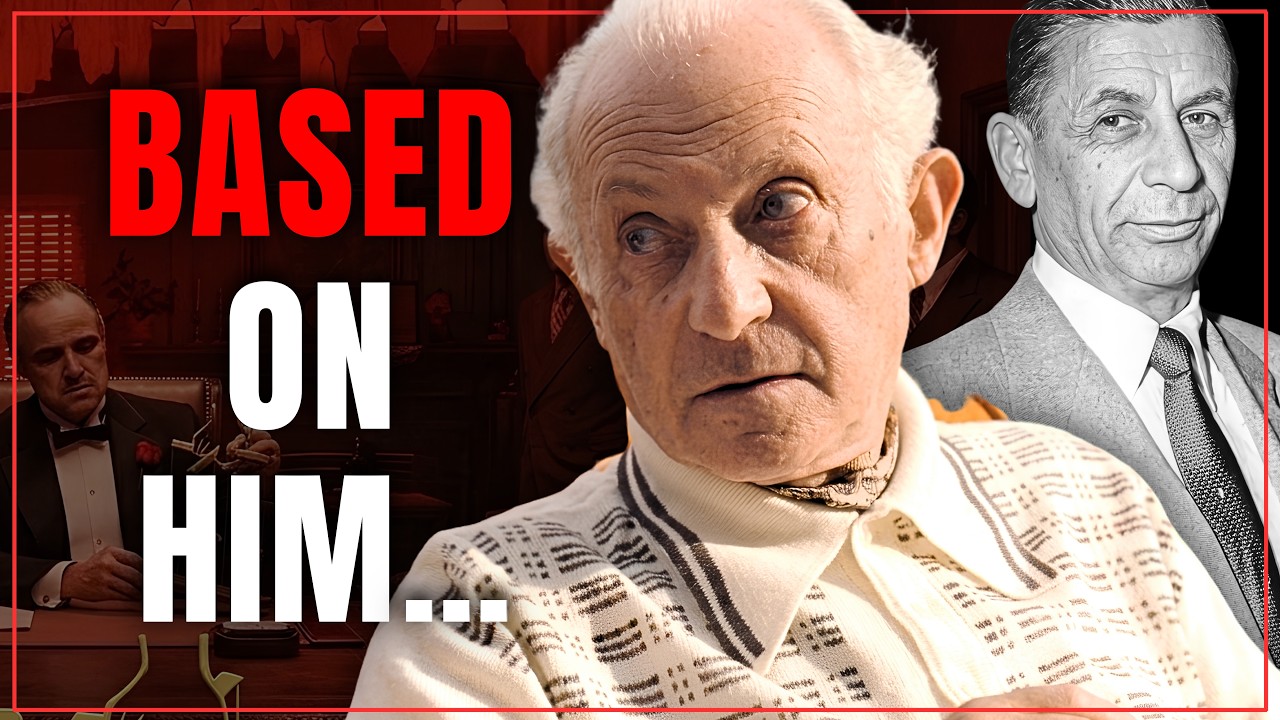
If you have seen The Godfather: Part II, you already know his ghost. The character Hyman Roth, played by Lee Strasberg, was the soft-spoken old man in Miami who watched football on a small television, ate tuna sandwiches, and quietly controlled an empire stretching from Havana to Las Vegas. That character was built on Lansky.
The parallels are not subtle. The Cuban casinos, the partnerships with Italian families, the flight to Israel, even the line about being "bigger than U.S. Steel" all came from Lansky's world. But the film gave Roth a bullet at the airport. Reality gave Lansky something stranger. It let him die free in his bed, perhaps broke, perhaps not.
This is the story of the real financial man behind Hyman Roth: the immigrant child who decided craps was just mathematics, the partner who helped build the Commission, the architect who turned a Caribbean island into an offshore paradise for the mob, and then watched a revolution take everything in a single night.
One question hangs over all of it. Lansky was never convicted of anything worse than illegal gambling across roughly 50 years. So was he truly the secret banker of a criminal empire? Or was the little man's greatest con convincing the entire world, including the FBI, that he was bigger than he really was?
Meyer Suchowljansky was born on July 4, 1902, in Stary Khroday in the Russian Empire, in what is now Belarus, to a Jewish family living under the constant threat of pogroms. In 1911, nine-year-old Meyer arrived in New York with his mother and his brother Jake, and became Meyer Lansky of the Lower East Side.
He was small. As an adult, he never stood taller than five feet five inches. But he had a mind for numbers that stunned his teachers.
The famous story from his childhood is a dice game. Young Meyer bet his mother's precious coins on a street-corner craps game and lost everything. Instead of crying, he came back and watched for weeks until he understood that the game was rigged, and exactly how. The lesson became his entire philosophy. There is no such thing as a lucky gambler. There are only the players and the house. Be the house.
Two friendships from those streets built his life. The first was a reckless, handsome, violent boy named Benjamin Siegel, whom everyone called "Bugsy" except to his face. The second was a Sicilian youth named Charlie Luciano. A Jewish mind for numbers, a Jewish gunman, and an Italian strategist.
In the 1920s, Prohibition handed this trio a business school. Lansky and Siegel ran the Bugs and Meyer gang, one of the most feared outfits in New York, hijacking liquor shipments and protecting their own. Lansky handled logistics and money.
When the bootlegger wars ended in 1931, with Luciano arranging the killings of old-world bosses Joe Masseria in April and Salvatore Maranzano in September, Lansky stood beside him as the new system was built: the Commission, organized crime run like a corporation. Luciano chaired the board. Lansky, though he was never a member of the Italian Mafia and was not eligible to be one, became something arguably more powerful: the man every family trusted with its money.
When Prohibition ended in December 1933, Lansky pivoted immediately. Gambling. He built what the trade called "carpet joints," illegal but luxurious casinos in Saratoga and New Orleans with Frank Costello, and in the towns of Broward County, Florida.
Understand the carpet-joint model, because it seeded everything that followed. The opportunity was simple. Americans loved to gamble, and the law did not let them. The inside connection was local. Sheriffs and county officials took envelopes in exchange for looking away. The execution was disciplined. Lansky insisted the games be honest, because a rigged game kills repeat business, while an honest game with a built-in house edge prints money forever.
The profit worked on two levels. The restaurant and the show looked legal up front. The casino was in back, where cash was counted on private tables before any number was written down. Everything skimmed before the official count belonged to the partners, invisible and untaxed.
The problem was always politics. A reform mayor or an anti-gambling commission wins an election, and a county that had been wide open for a decade shuts down within a week. Lansky needed a jurisdiction he could never lose to an election. He kept that idea. Its name was Havana.
The war years made Lansky respectable in a very strange way. After the French liner Normandie burned at a Manhattan pier on February 9, 1942, U.S. Naval Intelligence, fearing sabotage in a mob-controlled port, sought help from the underworld. The bridge they used was Lansky. He brokered the arrangement with the imprisoned Luciano, and dockworkers' eyes began working quietly for the Navy.
In 1946, Luciano's 30-to-50-year sentence was commuted for that cooperation, and he was deported to Italy. In December 1946, Luciano slipped into Cuba, and Lansky organized the famous Havana conference at the Hotel Nacional, bringing leaders from across America, with Frank Sinatra appearing as part of the entertainment.
The Godfather: Part II compressed that entire world into a single scene: mobsters on a Havana rooftop cutting a birthday cake shaped like the island of Cuba.
One item on the real agenda that winter concerned Lansky's oldest friend. Bugsy Siegel was in the Nevada desert bleeding money on a project called the Flamingo. The budget was about $1.5 million. Siegel spent $6 million, and partners believed some of it had been skimmed into Swiss accounts. The Flamingo flopped at its opening the day after Christmas 1946, then reopened and finally turned profitable in the spring.
It was too late for Bugsy. On June 20, 1947, Siegel was sitting on a couch in his girlfriend's Beverly Hills mansion when a sniper outside the window fired through the glass. He was hit several times, including twice in the head. Within about 20 minutes, before the story reached the press, Lansky's associates walked into the Flamingo and announced new management.
Whether Meyer Lansky approved the killing of his childhood friend has been debated for 75 years. He always denied it and publicly mourned him. No one was ever charged. What is not disputed is what the Flamingo became: the prototype for mob Las Vegas, and proof that the future of racketeering was a legal casino with an illegal counting room.

Through the 1950s, Lansky perfected the mechanism that would define his identity: the skim. Here is how it actually worked, and it is exactly what federal prosecutors would chase him over for 20 years. In the casino counting room, cash from the tables was stacked and counted. Before the official count, trusted men set aside a percentage of the total for hidden partners. The money moved through couriers, through front businesses, and according to many accounts through friendly foreign banks, with investigators treating Lansky as the system's chief accountant. No heist in history was ever that clean. The victims were tax collectors who could not audit money that did not officially exist.
But Vegas still sat on American soil, subject to American subpoenas. The Kefauver hearings of 1950 and 1951 dragged the syndicate into the television age. In 1953, Lansky himself pleaded guilty in the Saratoga gambling cases and served three months in prison. The only prison sentence of his life. He was done with reform politics. He wanted sovereignty.
And in Cuba, his old friend Fulgencio Batista retook power in a March 1952 coup and opened the door. What Lansky built in Havana over the next six years was the boldest project in the history of organized crime: a legal, state-sponsored, mob-run casino economy.
Break down the scheme. The opportunity lay in the law itself. In 1955, Batista's government passed the Hotel Law, granting a casino license to anyone who invested $1 million in a hotel or $200,000 in a nightclub, with matching public financing, a 10-year tax exemption, duty-free imports, and no background check at all.
The inside connection went straight to the top. Lansky was formally appointed to the government as a gambling adviser with a declared salary of $25,000 a year, while bags of cash were delivered to the presidential palace as Batista's cut of the tables.
The execution was Lansky's lifelong rulebook, applied at a larger scale. Clean up the crooked games that scared tourists, import professional American dealers, put his brother Jake in charge of the count at the Hotel Nacional, and then start building.
The crown jewel opened on December 10, 1957. The Riviera hotel on the Malecón, 21 stories, more than 400 rooms, the first fully air-conditioned hotel in Havana, at a cost most accounts put at around $14 million. Much of it was financed through Batista's state development bank. Ginger Rogers headlined opening night while American television cameras filmed the event. The casino made more than $3 million in a few months.
Lansky, the dice boy of street corners, now ran the largest hotel-casino outside Las Vegas in a country whose president was his partner.
That was the peak. It lasted about a year. Because while the roulette wheel spun, a rebel army was moving through the mountains. Lansky read the reports and, according to most accounts, recognized the danger before Batista did. There was no bribe that worked on Fidel Castro.
On New Year's Eve 1958, Batista fled the country with his fortune. On January 1, 1959, Castro's forces took Havana and crowds poured into the casinos, smashing slot machines and roulette wheels in the streets. The lobby of the Riviera became a military barracks. Lansky left the country and hoped, briefly, that the new government would want tourist money. Instead the casinos were closed and the hotels nationalized, and every dollar the mob had invested on the island evaporated. Lansky estimated his personal loss in the millions, with some estimates reaching $7 million. His verdict on the whole adventure came down to three words: "I lost everything."
The Godfather: Part II captured that collapse precisely. Roth's investors celebrate in Havana on the very New Year's Eve they lose their grip on the country. That part of the film is barely fiction at all.
Cuba broke the empire's momentum, and America turned up the pressure. The Justice Department under Robert Kennedy and the FBI made Lansky an obsession. A famous federal wiretap caught a boast that organized crime was bigger than U.S. Steel, a line attributed to Lansky and handed by Hollywood almost verbatim to Hyman Roth.

Agents recorded his movements for years, and what they mostly captured was a small old man in Miami, walking his little dog, arguing with his second wife Thelma, eating in diners, and caring for his elder son Buddy, who was born with cerebral palsy and whose treatment Lansky quietly paid for his whole life.
This was the maddening part of the little man. The alleged banker of the criminal world lived like a retiree, and juries could never find the money.
In 1970, with a federal tax case growing over the skimming of Flamingo funds, Lansky took the step the film borrowed for Roth's most heartbreaking scene. He traveled to Israel and applied for citizenship under the Law of Return, the law granting every Jew the right to immigrate. He was 68, a genuine lifelong supporter of Jewish causes who had fought American Nazi rallies in the 1930s and helped rally support for Israel in 1948. He wanted to die there. He even bought himself a burial plot on the Mount of Olives in Jerusalem, saying that if he could not return alive, at least his body would.
Washington pressured hard. Israel's Interior Ministry ruled that his criminal past made him a danger to the public good. In September 1972, Israel's Supreme Court upheld the rejection.
In November 1972, after a desperate journey through several South American countries looking for any open door, Lansky landed in Miami, where FBI agents were waiting at the gate. In the film, Hyman Roth is shot dead by a Michael man on arrival at the airport. In reality, the little man walked off the plane to be handcuffed, then did what he always did. He won.
In 1973, a Miami jury acquitted him of tax evasion. His contempt conviction was overturned on appeal, and the major Las Vegas skimming case collapsed when doctors convinced the court that the frail defendant with a heart condition was too ill to stand trial. He lived comfortably enough for nearly another decade.
He spent his days in Miami Beach in an apartment on Collins Avenue, strolling with his dog, receiving visitors for coffee, an old man whom tourists photographed like a landmark.
In December 1974, The Godfather: Part II was released, putting a reflection of his image on screen. Lee Strasberg's Roth, the modest Miami home, the tuna sandwich, the fury about "Mo Green," the line "this is the business we've chosen." The performance earned Strasberg an Oscar nomination, and accounts say Lansky himself later called the actor, praised the performance, and wondered why he had not made him look more sympathetic. He was, Lansky said, very good.
In 1980, while battling cancer, he asked Israel for one last visit. Israel refused. He died on January 15, 1983, and was buried not on the Mount of Olives but in Mount Nebo Cemetery in Miami. Luciano had died of a heart attack at Naples airport in 1962. Of the three boys from the Lower East Side, Meyer, who never carried a gun, outlived them all and outlived the empire too.
So what is the verdict on the film? The Godfather: Part II captured the essence accurately and softened the ending. Real, documented facts: the quiet Jewish financier who forged partnerships with Italian families. The Havana casino kingdom built with a dictator and lost to a revolution on New Year's Eve. The Israel maneuver and the forced return. The U.S. Steel boast that was invented. The airport assassination. The plots and counterplots with a Corleone family that never existed. And the implication that the money man died by a gunshot.
The truth is more unsettling than the fiction. The system never managed to punish Meyer Lansky, and it never found his money either. Perhaps the fortune was hidden so well that it still sits in dormant accounts today. Perhaps, as his family insisted, the myth was always bigger than the bank balance, inflated by the FBI and by Lansky's own interest in legend.
Either way, the lesson he left is the one the film understood. In organized crime, the gunmen fill the cemeteries, the bosses fill the prisons, and the man who controlled the books outlasted them all. Meyer Lansky proved that in the underworld, the most lethal weapon is a balance sheet no one else can read. He just never proved to anyone what was actually written on it.