On January 26, 1962, Charles “Lucky” Luciano collapsed and died of a massive heart attack in the arrivals terminal at Capodichino Airport in Naples, Italy. He was 64 years old and had been waiting to meet American film producer Martin Gosch, who wanted to make a movie about his life. His last words, according to witnesses, were about whether Hollywood was interested in the project. Luciano’s death marked the end of a life that had reshaped organized crime in America.
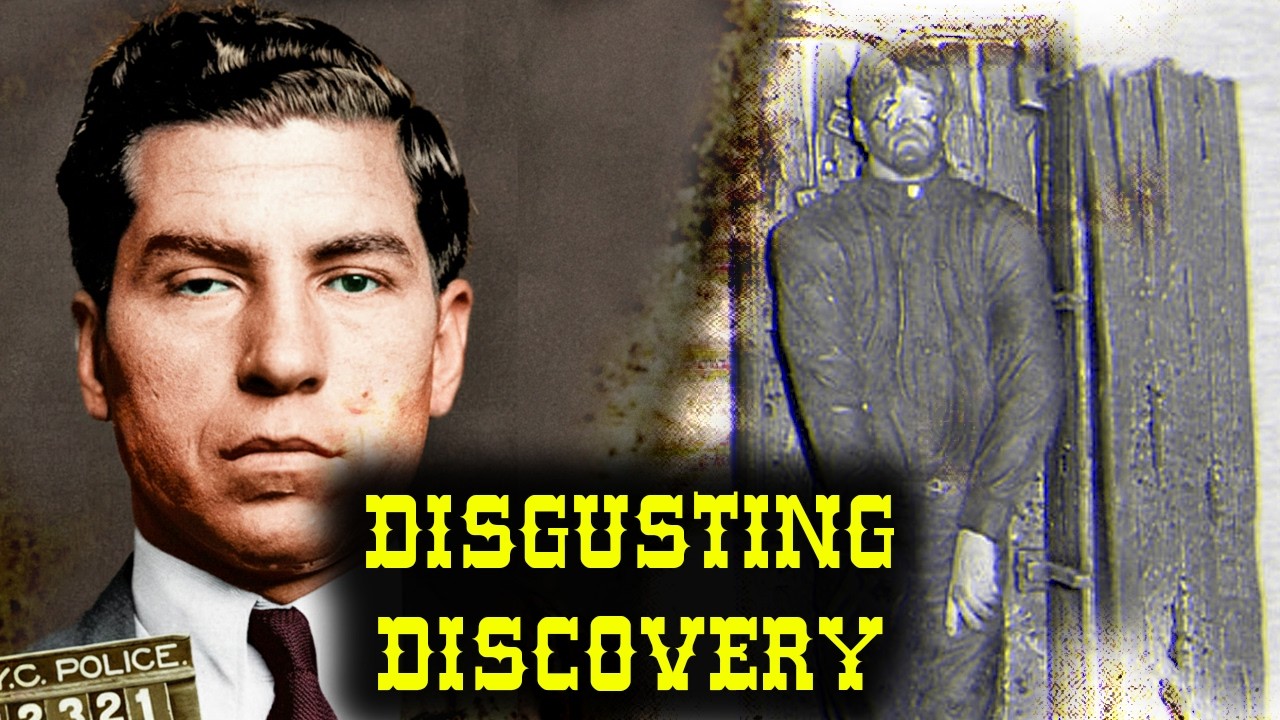
Born Salvatore Lucania in Sicily in 1897, he arrived in New York as a child in 1907. On the Lower East Side, he met a boy named Meyer Lansky, who refused to pay the penny-a-day protection fee Luciano charged neighborhood kids. The childhood confrontation became the foundation of a 50-year partnership. By the late 1920s, Luciano was a lieutenant to Joe “the Boss” Masseria, one of two men fighting for control of the New York underworld in the Castellammarese War.
Luciano concluded that the old feudal structure was doomed and that the future belonged to a more organized, corporate model. In April 1931, he invited Masseria to lunch at a Coney Island restaurant. When Luciano excused himself to the restroom, four gunmen entered and killed Masseria. Five months later, Luciano had his rival, Salvatore Maranzano, murdered in his Park Avenue office.
Luciano replaced the rule of a single “boss of bosses” with a Commission of equal family heads, creating the five-family structure that defined the American Mafia for decades. His allies included Lansky, Frank Costello, and Vito Genovese. The empire he built generated enormous revenue through gambling, narcotics, labor racketeering, and loan sharking. The empire collapsed for Luciano personally in 1936, when special prosecutor Thomas E.
Dewey convicted him on 62 counts of compulsory prostitution. He was sentenced to 30 to 50 years and sent to Clinton Correctional Facility in Dannemora, New York, a remote prison near the Canadian border. Historians and legal scholars have since questioned the trial, noting that prosecution witnesses were held for weeks before testifying and that several later recanted, suggesting Dewey may have relied on coerced testimony. While Luciano was in prison, the United States entered World War II.
After the SS Normandie caught fire and capsized at a Manhattan pier in February 1942, naval intelligence suspected sabotage and worried about German submarines threatening the Atlantic supply chain. The Navy reached out to Lansky, who contacted Luciano in prison. What became known as Operation Underworld involved Luciano using his influence over dockworkers’ unions to ensure port security and providing contacts in Sicily for the Allied invasion. In January 1946, Governor Dewey, the same man who had prosecuted Luciano a decade earlier, commuted his sentence on the recommendation of military authorities.
The condition was permanent deportation to Italy. As he boarded a ship from Brooklyn, Luciano was reported to have called his exile “a living death. ”
Less than a year later, Luciano traveled secretly to Havana, Cuba, where he met with the bosses of major crime families at a conference organized by Lansky, ostensibly for a Frank Sinatra concert. He sought to reassert his authority, reportedly telling the assembled leaders that he was not dead yet.
When U. S. authorities learned of his presence, they pressured Cuba with the threat of a pharmaceutical embargo, and Luciano was expelled back to Italy. In Naples, Luciano lived under constant surveillance by Italian police.
He found a measure of personal happiness with Igea Lissoni, an Italian dancer 20 years his junior. The relationship was genuine, and those close to him said Luciano softened in her presence. She died of breast cancer in 1958, leaving him devastated. Meanwhile, his empire slipped away.
In 1957, Genovese orchestrated the attempted assassination of Costello and seized control of the family that had been Luciano’s. It was renamed the Genovese family. From exile, Luciano could only watch as the organization he had built was stamped with another man’s name. After Luciano’s death, his body was buried temporarily in Naples.
But a campaign to bring him home to New York began almost immediately, driven by four converging forces: family, government, criminal symbolism, and Luciano’s own expressed wish. His family, led by his brother Bartolo, argued that Luciano was American in every meaningful sense. Home was not the Sicilian village of his birth or the Italian city of his exile, but New York, where he had built his empire. The Italian government had its own reasons to encourage repatriation.
Luciano’s grave in Naples was becoming a problem, attracting tourists and aspiring criminals who treated it as a shrine. Every news story about the American gangster’s resting place reminded the world that Italy had sheltered him for 16 years. A dead Luciano in New York was someone else’s problem. The American Mafia understood symbolism.
Luciano had created the organizational structure that every family still operated under. Leaving his body in a country that had been forced on him would have let the deportation have the last word. Lansky is believed to have helped coordinate the effort from Miami, while Costello lent his political connections. Finally, Luciano himself had said repeatedly during his exile that he wanted to return to America, alive if possible, dead if necessary.
His family honored that wish. After a bureaucratic process that took months, including petitions to Italian authorities, coordination with U. S. immigration officials, and arrangements with the receiving cemetery, Luciano’s body was exhumed, placed in a coffin, and flown across the Atlantic.
He was interred in a mausoleum crypt at St. John’s Cemetery in Middle Village, Queens, New York. The name on the crypt reads Charles Luciano. St.
John’s Cemetery became the resting place of numerous major organized crime figures, including Genovese, Carlo Gambino, and John Gotti. Luciano was buried among the very men who had succeeded him and adopted the system he created. Martin Gosch later co-wrote “The Last Testament of Lucky Luciano,” published in 1975, based on his conversations with Luciano before his death. The book’s accuracy has been disputed, but it preserved the version of the story Luciano wanted told.
Luciano’s legacy was not a monument but a structure. The Commission he created in 1931 functioned in recognizable form for decades after his death. The five-family system persisted into the 21st century. The organizational principles he introduced were, in their criminal context, genuinely innovative.
The deportation order that was supposed to end his influence did not. The U. S.
government could deport his body, but it could not deport his blueprint.