The Japanese commander on Iwo Jima spent the last weeks before the American landing fighting a very different kind of battle, one waged not with artillery but with paper and radio waves. His target was not the Americans but his own Imperial General Headquarters in Tokyo, and the argument was over how the island should be defended. He had spent the second half of 1944 trying to convince his own side that a defense at the waterline was suicidal, and he had eventually won that argument. But that victory came at a cost, as the quarrel had moved past the island itself and into the highest Army and Navy staffs in Tokyo.
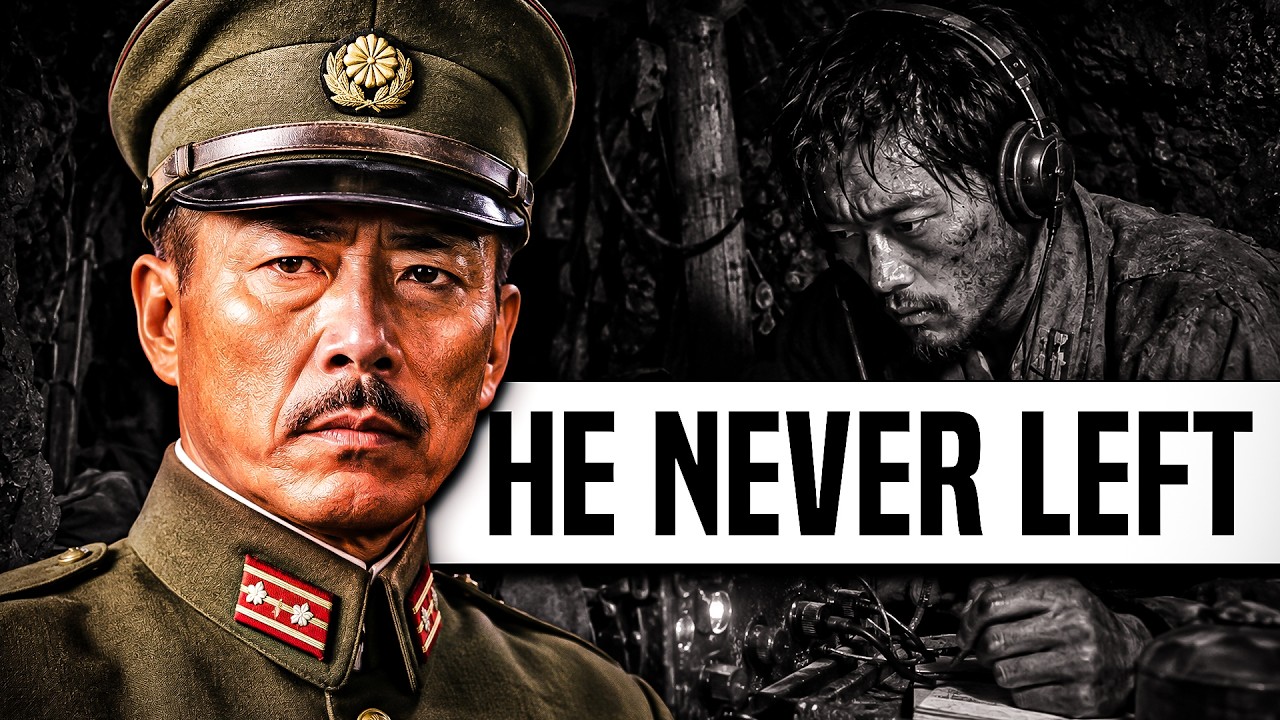
The traffic between the island and Tokyo ran both ways, relayed through a second island and a logistics officer who sat in the middle of a battle that every staff officer in Japan was watching. The Americans who most wanted to intercept that traffic were flying over it, but on the first days of the invasion, they could not get through. Most of the heavy bombers assigned to strike the island just before the landing never arrived at all, turned back by bad weather between Iwo Jima and the Marianas. When the Marines landed just after nine in the morning on the 19th of February, the beach was quiet.
For a stretch, almost nothing happened to them. The Japanese let the beaches fill with men and equipment, and then they opened up all at once from the high ground to the north and south. The Americans had expected a mass counterattack that night, a banzai charge in the old style. The intelligence officer writing the first daily assessment on the day of the landing listed it as the most probable course of action, noting that very few enemy dead had been found.
The Marines dug into sand that would not hold a foxhole and waited. Japanese doctrine expected that charge, too, and the garrisons on Saipan, Guam, and Tinian had all obliged. But on Iwo Jima, it never came, not that night or any other. Small teams went out on foot instead.
The Japanese commander, Lieutenant General Kuribayashi, had already filed his report on what American naval gunfire could do. It is a striking message to come from a man who otherwise wrote in flat administrative prose. He had watched the shelling in July and knew what was coming. On the night of the landing, the signal that went up the relay link concerned the Japanese Navy, not the Americans.
The American gunfire had cut his communications across the narrow neck of the island, and demolition teams with flamethrowers were working through his blockhouses one at a time. He had lost most of his heavy guns in the point-blank shelling before the landing even began. For the next day and a half, American battleships and cruisers stood in close and worked over every gun position that had shown itself. The Japanese commander had to file a correction after that, and it is the most revealing thing he wrote before the battle.
It was a list of the defensive positions he had left on the island: reinforced concrete emplacements on the southern coast, naval batteries, field guns, anti-aircraft guns, heavy machine guns, trench mortars, and searchlight units, each with its own line and its own figure. The garrison held the mountain on the southern tip of the island, and it held it far longer than its own commander had expected. The Japanese commander on that mountain had hoped to hold for ten days, perhaps a fortnight. He lasted four.
The mountain fell on the 23rd of February, four days into a fight that its garrison fought mostly underground. The Japanese commander on Suribachi had spent the first days of the battle sending requests to his own commanding officer for orders, but the Americans had cut the wires and the radio discipline of the Japanese army did not allow him to broadcast where the Americans could find him. On the 15th of March, with the end clearly near, the island commander sent his last real message to Tokyo through the relay station. He reported that he meant to attack at midnight on the 17th, he said his farewells to his senior officers, and he put three death poems into the same telegram.
He did not say what the attack would accomplish, and he did not need to. His men were expected to die, and he had filed his own assessment of the odds a week before the landing. The American intelligence officers working the battle were just beginning to understand the man they were fighting. They did not even know he was on the island until the ninth day of the battle, and when they found out, they discovered the garrison was half again the size they had allowed for.
They had intercepted his traffic for weeks, but the codebreakers had not been able to tell them the most basic facts. When they finally captured a prisoner who could talk, the interrogation took place in a hole in the black ash, with the American company commander trying German, then Italian, then Spanish, until the prisoner asked him in French whether he spoke French. The two men sat in the hole and talked, and the American took his notes on the back of an old set of field orders. The prisoner was cooperative and above average in intelligence, and he gave up the thing nobody had guessed.
Iwo Jima had a special intelligence section whose entire job was to stay hidden after the island fell, monitor American radio traffic from underground, and pass what it heard to the home islands. The garrison’s final arrangement with Tokyo was a reporting plan for after everyone on the island was dead. The two Japanese services on Iwo Jima, the Army and the Navy, fought together better than almost any other besieged garrison in the Central Pacific. The Navy gunners and infantry fought inside the Army’s scheme without friction and went on doing so for five weeks.
On the most dangerous night of the campaign, with the American force ashore and the southern sector cut off, the island commander spent his scarce link to Tokyo on an interservice argument he had lost seven months earlier. He had fought his own side over the defense plan, and he had won, but he did not let the matter drop. He raised it again on the one night when he could not afford to waste the radio. What survives of all this is thinner than it ought to be.
There is no complete file of Iwo Jima’s outgoing traffic anywhere. The messages that exist today survive through Marine Corps histories, prisoner reports, and Japanese accounts written after the fact, not through a signal log. The assessment of American naval gunfire carries no date in any source. The official Marine Corps monograph on the battle sites a Japanese major’s written explanation of the defense as a document of the 25th of January, 1949, while the Marine Corps commemorative history of the same battle dates it to 1946.
Both are official publications, and they disagree. When the official history of the battle was compiled, the material was not there. Orders, plans, and unit journals had been burned in the field or destroyed in the bombing of the ministries, and there were no strength returns at all. So the compilers did the only thing left.
Former officers of the Japanese Army and Navy, many of them the men who had drafted the original orders, sat down and rebuilt those orders from memory. American intelligence staff translated the manuscripts, and an editorial division working for the American command in Tokyo rewrote them in English. A radio message survives only if somebody at the far end takes it down and keeps the paper. That is why a handful of lines from that island still turn up in the histories, and why nearly everything else that went out has vanished.
When the official American historian needed a source for what the Suribachi commander had asked permission to do, he footnoted page eight of the Japanese major who had taken the message down at the relay station.