Clarence Saunders had only two years of formal schooling, yet he invented a retail concept that would outlast him by a century. He opened the first Piggly Wiggly store in Memphis in 1916, fundamentally changing how the world bought groceries by introducing self-service shopping—a model that endures in every supermarket operating today. Before Saunders, grocery shopping was a tedious, clerk-driven process. Customers handed over a list and waited while staff retrieved each item from behind the counter.
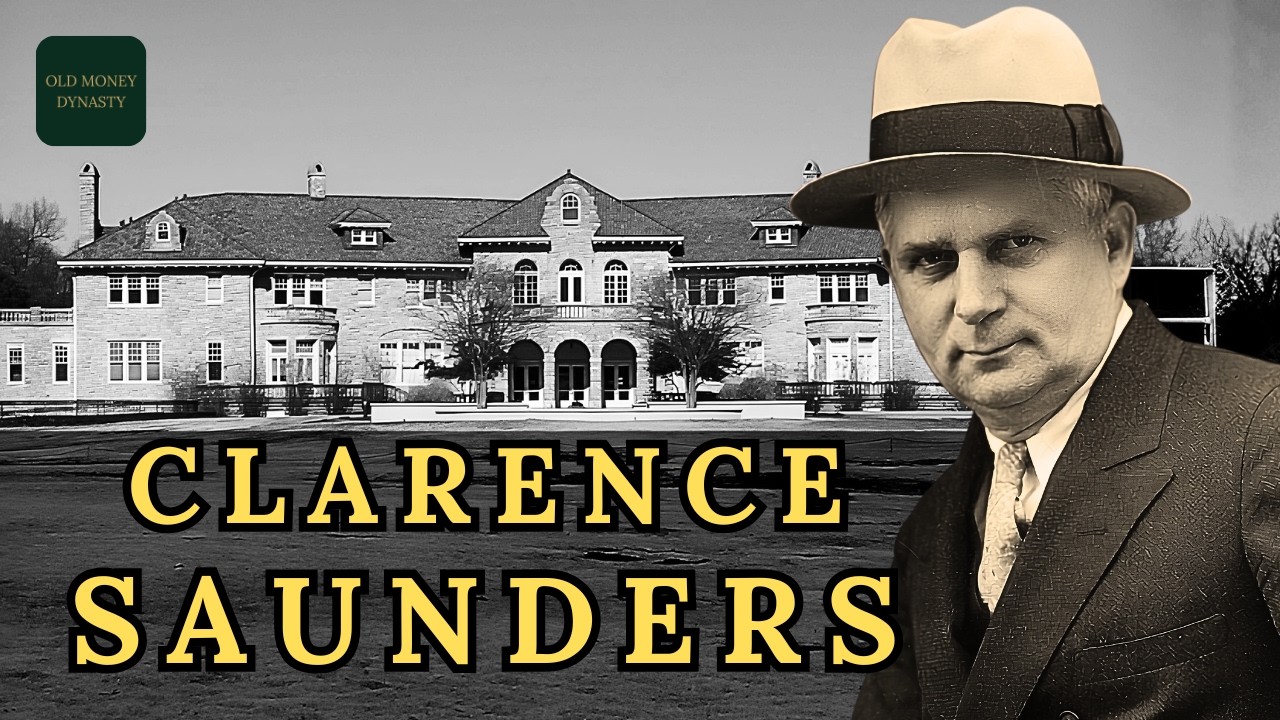
Saunders replaced that entirely. He gave shoppers baskets and guided them through a single, winding aisle that passed every product in the store, forcing them to see everything before reaching the exit. By eliminating the need for clerks to fetch items and eliminating credit, he slashed prices and built a retail empire that grew to more than 600 stores within five years of that first opening. His success made him wealthy, and he built a grand 36,000-square-foot mansion in Memphis, which he named “Cla-Le-Clair” after his three children.
The pink marble home cost a fortune—enough to build a small town—and he paid for it in cash, seemingly confident his wealth would never run dry. Saunders’ confidence soon turned to hubris on Wall Street. When a group of powerful traders, known as bears, began betting against his company’s stock, he decided to crush them. In a bold and risky maneuver, he bought up his own company’s shares to drive the price higher.
The price soared past $100 a share, and it appeared he had cornered the market and would collect a fortune from his enemies. But the victory was short-lived. In a single day, the New York Stock Exchange changed the rules mid-game, extending the deadline for the very traders he had trapped. The maneuver destroyed him financially.
The fortune he had amassed was gone, his stock was nearly worthless, and he lost the mansion before ever spending a single night in it. Most men would have retreated, but Saunders was not most men. He set about rebuilding his fortune, launching a new grocery venture, bankrolling a professional football team called the Sole Owner Tigers, and developing plans for a fully automated grocery store with no clerks at all. Yet the stock market crash of 1929 and the Great Depression derailed his grandest plans, and his automated store never got built.
Saunders would die having lost two fortunes, but his legacy was cemented. The concept of self-service he created in that small Memphis room became the blueprint for every supermarket that followed. The Pink Palace he built never became his home, but it still stands in Memphis today as a museum, housing a replica of the very first Piggly Wiggly store—preserving the beginning and the end of his strange and remarkable story under the same pink roof.