The case that became known around the world as the Lucan mystery was not, at its heart, a simple story of a disappearance. For years, the accepted version held that a violent attack in a basement had gone wrong, that the real target was the wife of the 7th Earl of Lucan, and that the earl had then vanished after killing the children’s nanny. But the full record contains details that complicate that tidy narrative, and some of them were printed at the time by men who were inside the club where the earl gambled. Those men said the games there had been fixed.
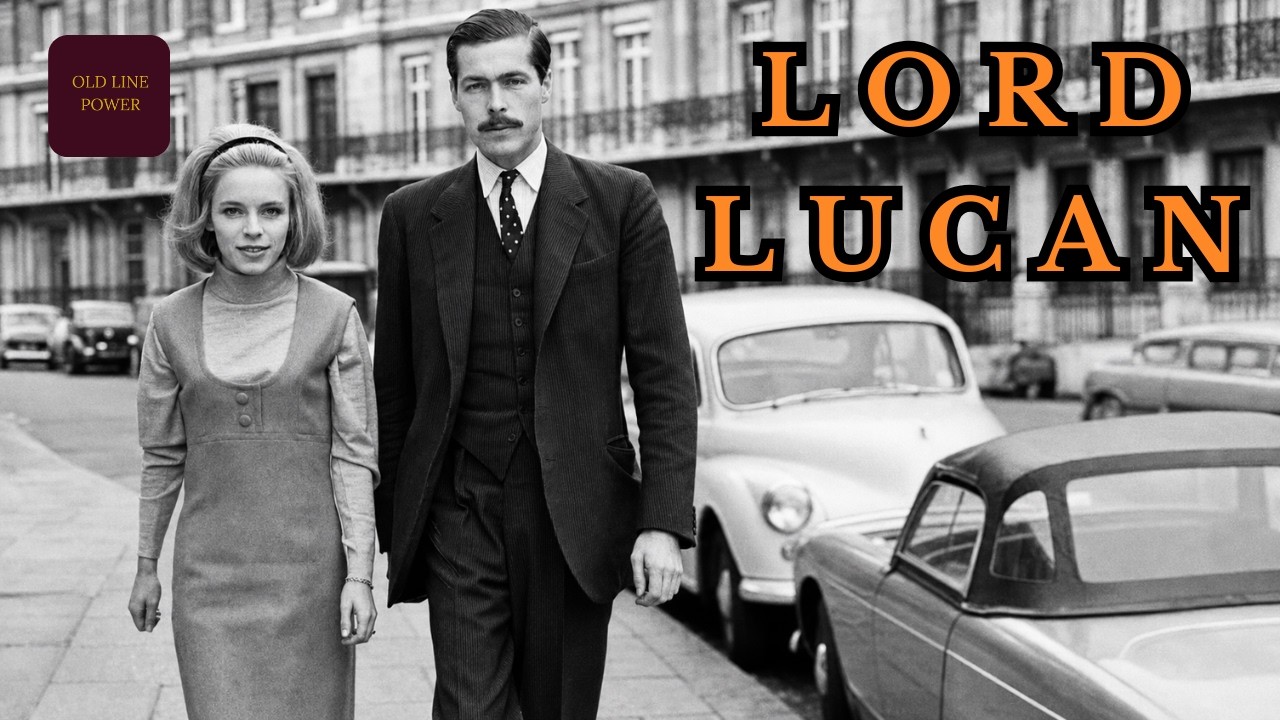
The question of what actually happened that night has never been settled. On the night of November 7, 1974, Sandra Rivett was working in the basement of 46 Lower Belgrave Street, the Lucan family home in London. She had swapped her evening off with another member of staff, so she was in the house when she should not have been. At around 8:40 p.
m. , she went to the first-floor landing and called down to the basement. When there was no answer, she went down the stairs. A few minutes later, Lady Lucan heard a cry.
She went to the top of the basement stairs and called into the dark. She was then attacked with a piece of lead pipe. The account Lady Lucan gave to police was consistent both times she told it. She said she struggled with her attacker, that the two of them ended up breathless at the top of the basement stairs, and that she recognised the man as her husband, Lord Lucan.
He was evasive at first, she said, but then he took her into a bedroom, told her to lay down towels so she would not stain the sheets, and asked whether there were any barbiturates in the house. He went into the bathroom to wet a cloth. Then she went into shock, and someone telephoned the police. The details of that evening are disturbing for reasons beyond the violence.
Two cups of tea were found in the basement, which suggested the attacker had paused to make a drink. The light bulb in the basement was unscrewed and sitting on a chair, meaning the room was dark. Lady Lucan said she had never entered the basement that night, and blood pattern analysis supported her account. Government scientists thought it likely that two pieces of lead pipe found nearby had been cut from the same length, though they could not prove it.
A letter later sent to a friend was written on paper torn from a pad found in the boot of the earl’s car. Lord Lucan was the last person in English legal history to be committed by a coroner to the Crown Court for unlawful killing. But he was never charged with murder. He was never tried.
And he was never found. A nationwide search turned up no trace of him, only a partial search by tracker dogs that found the skeleton of a judge who had disappeared years earlier. No body was ever recovered, and the search continued for decades. The reason for the delay between the attack and the inquest was a strange legal problem.
The inquest into Sandra Rivett’s death opened on November 13, 1974, before Gavin Thurston, the coroner for Inner West London. Thurston faced a dilemma: if he heard the full evidence in open court, with reporters present, it might poison any future trial. So he made a decision that shaped everything that followed. He effectively shelved the inquest, and the case has never been resolved in a court of law.
The marriage itself was already over long before the attack. Richard John Bingham became the 8th Earl of Lucan at the age of 48, after his father died of a stroke in 1964, only two months after Richard’s own wedding. The wedding took place at Holy Trinity Brompton on November 20, 1963, and the guest list was notable for who was not there. The great names of London society largely stayed away.
After the wedding, the couple lived in a series of homes, and they had three children. By the early 1970s, the marriage had collapsed. Lord Lucan moved out first to Eaton Row, then to a larger rented flat in Elizabeth Street, a three-minute walk from the house he had left. His wife always dated the end of the marriage to January 1973.
What he wanted from the marriage by that point was his children. He sought wardship, which is one of the older powers an English court holds. But the case did not go well for him. He surrendered the application before the judge had to rule against him, on the advice of counsel who could see where it was going.
The court had heard that Lady Lucan suffered from depression and anxiety, and that she still needed psychiatric support. The judge’s order was harsh: the earl was to pay costs, and he was effectively barred from pursuing the case further. People who had known the couple for years were asked to take a position on a marriage they had only ever seen from the outside. The earl’s own childhood added another layer of complexity.
His parents were agnostics and socialists, despite their title, and they preferred a plainer life than the one their children had been living in America. A letter from this period only makes sense if you know that background. He wrote to his brother-in-law, Bill Shand Kidd, rather than to his wife directly. The letter repeated the story of the intruder and said the circumstantial evidence against him was strong because his wife would tell everyone it had been him.
He said he intended to “lie doggo” for a while. The money was another problem. By the time of the attack, Lord Lucan was gambling heavily. He had raised money from friends, including 3,000 pounds in cash from the writer Taki Theodoracopulos, given to him only three nights before the murder.
All of it went the same way. He was not even playing the big table by then. What he said over a drink might have meant nothing, but it was not the kind of story a man invents for no reason. The practical question of where to put a body did not arise from a casual lie.
The two accounts of who Lord Lucan was do not sit easily together. One version is of a man who was evasive, desperate, and driven to violence. The other is of a man who was so deep in gambling debt that he could not see a way out. The records suggest he may have believed he had only one option left.
He never came to his wife’s rescue. He never appeared at any of the arrangements he made for the day of the attack. He missed three appointments in a single day, which was unlike him. The inquest into Sandra Rivett’s death was finally concluded, but the case was never closed.
The earl was never charged. The title survived, but the family was never the same. The search for the missing earl continued for decades, and it never entirely stopped. In 2016, a court formally declared him dead, but the mystery of what happened to him remains.
He was never found, and the question of what really happened in that basement has never been answered. The story that began with a violent attack in a London townhouse has never been fully resolved, and it may never be.