Federal agents seized the man who ran Louisiana’s underworld from his New Orleans home just after sunrise on April 4, 1961, bundled him onto a plane without a hearing or a phone call, and deposited him in Guatemala before the city even knew he was gone.
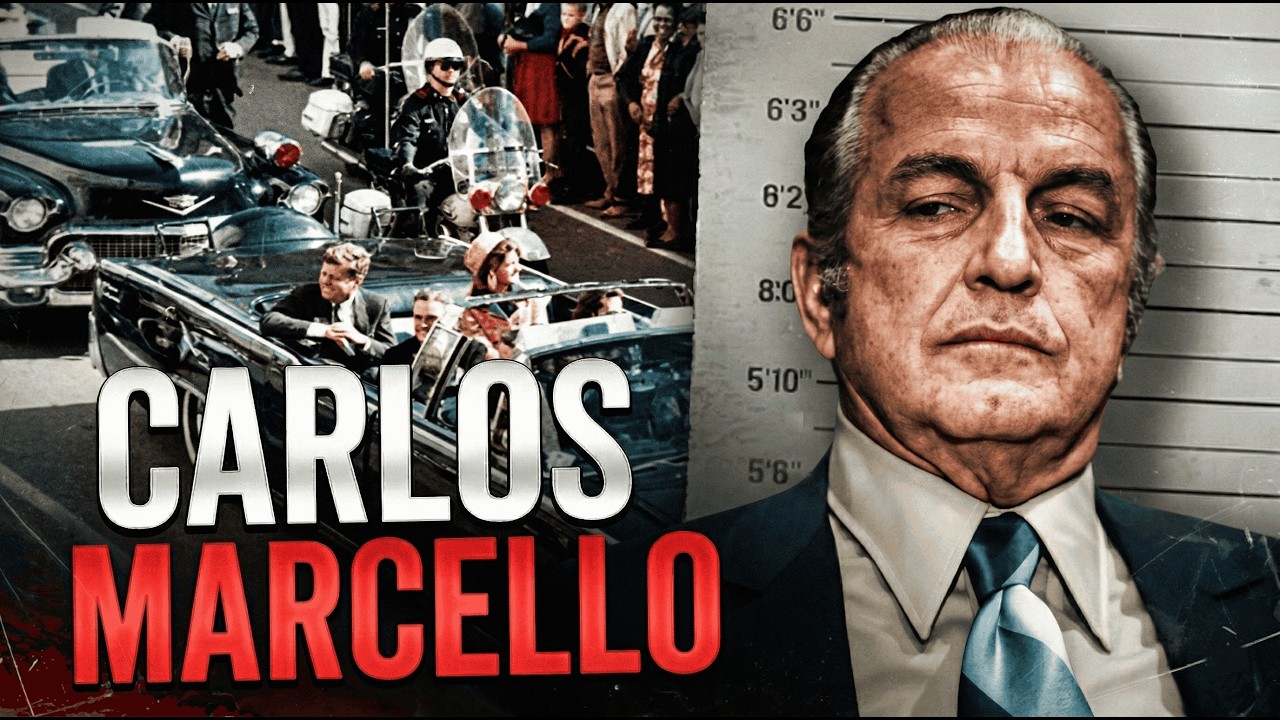
The man was Carlos Marcello, born Calogero Minacore in Tunis, Tunisia, on February 6, 1910, and for three decades he had operated the most durable criminal organization in the American South — a network of gambling, vice, labor control and political corruption that made New Orleans a toll booth for organized crime across the region.
The deportation was not routine immigration enforcement. It was a message, delivered with the full weight of the Kennedy administration, from a government that had concluded the boss of the New Orleans Mafia had to be removed by any means available.
Marcello was back in the United States within months, fighting his way through the courts and through the influence networks he had spent a lifetime building. The lesson he absorbed was brutal and permanent: the government would break its own rules to destroy him, so he would make certain they never could again.
That decision shaped the next thirty years of his life, and it shaped the way federal law enforcement would pursue organized crime for a generation.
To understand why Washington went to such extraordinary lengths, it is necessary to understand what Marcello had built. He was not a headline-seeking gangster. He was an administrator, a quiet power broker who controlled the docks, the gambling routes, the pinball and slot machine pipelines, and the political machinery that kept vice enforcement selective and profitable.
New Orleans in the early twentieth century was not merely jazz and parades. It was a port city where politics and crime operated as partners, where officials needed votes and workers needed jobs, and where a man who controlled the waterfront could choke an entire economy without ever touching a rival.
Sicilian organized crime had taken root around the French Quarter and the waterfront since the late 1800s. That world exploded into public view on October 15, 1890, when New Orleans Police Chief David Hennessy was murdered. The following year, on March 14, 1891, a mob stormed the parish prison on Marais Street and lynched eleven Italian suspects — nine shot inside, two hanged outside — in one of the largest mass lynchings in American history.
 The lynching did not erase the Mafia. It hardened it. Survivors learned a lesson that would define Marcello’s generation: be feared, be useful, and never be obvious.
Marcello came up in the French Quarter as a small-time operator, a compact, heavy-lidded man whom associates called “the little man” — not because he was weak, but because he looked like he belonged behind a counter rather than at the top of a criminal government. In a world of loud peacocks, he was deliberately unremarkable.
Early prison time, including a robbery conviction at Louisiana State Penitentiary at Angola, taught him patience and built the relationships that would sustain his rise. The Mafia is not built on loyalty or affection. It is built on favors, debts, and men who do not talk.
When Sam Carolla — known as Silver Dollar Sam — was finally deported to Italy in 1947, Marcello stepped into the vacuum not with a war but with a ledger. His policy was simple: everybody earns, nobody freelances. Outsiders could do business in New Orleans, but only with permission.
That policy turned the city into a gateway for national criminals. If you wanted access to ports, gambling, or vice in southern Louisiana, you paid respect to the local system. Dallas became an offshoot.
Parts of Florida became partnership territory. Marcello built relationships with figures like Santo Trafficante Jr. of Tampa and connected with national organized crime leadership without ever appearing to try.
The money came through mechanics, not magic. Slot machines and pinball routes, distributed through legitimate-sounding fronts like the Jefferson Music Company, generated rivers of cash. A single machine averaging one hundred dollars a week in net revenue, multiplied across two hundred machines, produced more than a million dollars a year — conservatively.
Multiply that across parishes and protected locations, and the need for bank robberies disappeared.
 Protection and licensing corruption turned illegal vice into predictable revenue. Brothels, bookmakers, and backroom clubs paid weekly. Friendly judges, police supervisors with relatives who needed work, and councilmen whose campaigns needed printing all formed part of a network that kept enforcement pointed at competitors rather than partners.
By March 24, 1959, Marcello was significant enough to be summoned before the United States Senate’s McClellan Committee investigating organized crime. He invoked the Fifth Amendment repeatedly. The committee’s orbit included two names that would define his next decade: Senator John F.
Kennedy and Robert Kennedy, the committee’s counsel who would become attorney general.
Marcello emerged from that era with a new enemy — not a rival gangster, but a federal crusade.
On November 22, 1963, President Kennedy was assassinated in Dallas, Texas. Three days later, Jack Ruby shot Lee Harvey Oswald inside Dallas Police Headquarters. Ruby was a nightclub operator whose connections have been examined for decades, and Marcello’s name was dragged into a storm of suspicion, conjecture, and later investigations.
Some authors alleged he had motive because of Robert Kennedy’s pressure. The House Select Committee on Assassinations later examined Marcello as part of its broader organized crime inquiry. But the disciplined conclusion remains: Marcello became a permanent suspect in America’s imagination without ever being conclusively proven by official findings to have organized the assassination.
That suspicion gave him a dark halo. It made people speak of him in whispers. It also made law enforcement look harder, which created pressure, which created mistakes.
In 1966, Marcello was convicted and served time for assaulting an FBI agent — a detail that revealed the quiet boss could still snap when the mask slipped.

By the late 1970s and early 1980s, the FBI had evolved. Wiretaps improved. Undercover operations became more aggressive.
Federal prosecutors learned that you do not beat a boss by catching him holding a gun. You beat him by catching him agreeing to take money.
In January 1982, a federal judge sentenced Marcello to seven years in prison for a conviction tied to a corruption and labor racketeering scheme involving bribes and kickbacks around state insurance contracts in Louisiana. The operation used undercover FBI agents posing as businessmen, recording the pitch and the agreement as proof that the system was not merely street crime but political crime.
In April 1982, Marcello received an additional ten-year federal sentence for an effort to bribe a federal judge in Los Angeles connected to a racketeering case. The instinct that had made him powerful — the instinct to fix problems with influence, to treat the legal system as another machine to grease — had finally turned on him.
Years later, in 1989, the Fifth Circuit Court of Appeals threw out Marcello’s conviction in the BriLab case and he was released. But the victory was bitter. He had suffered strokes.
His health was damaged. The machine no longer needed him the way it once had.
Carlos Marcello died on March 2, 1993, in Metairie, Louisiana. There was no street war, no dramatic funeral shootout, no final public confession. The organization faded, fragmented, and adapted.
Law enforcement pressure changed the landscape. New generations learned new methods.
His legacy lives in the way New Orleans crime and corruption are discussed today. When people talk about local power networks, about how difficult it is to separate business from politics, the Marcello era is the case study — not because it created corruption, but because it showed how corruption becomes normal, becomes the cost of doing business, becomes the joke everyone tells but nobody reports.
Carlos Marcello did not need to conquer America. He only needed to conquer one strategic place and make the rest of the country come to him. That is why he mattered.
And that is why his story should not be forgotten.